
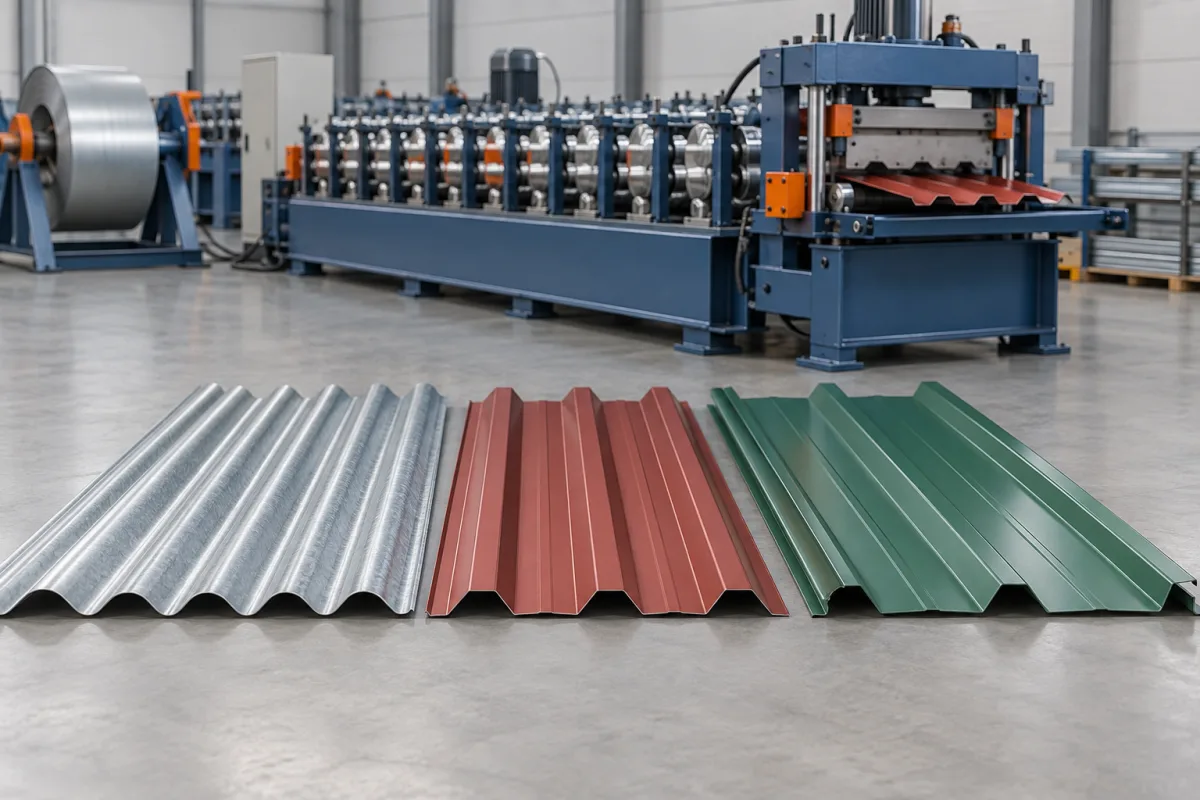
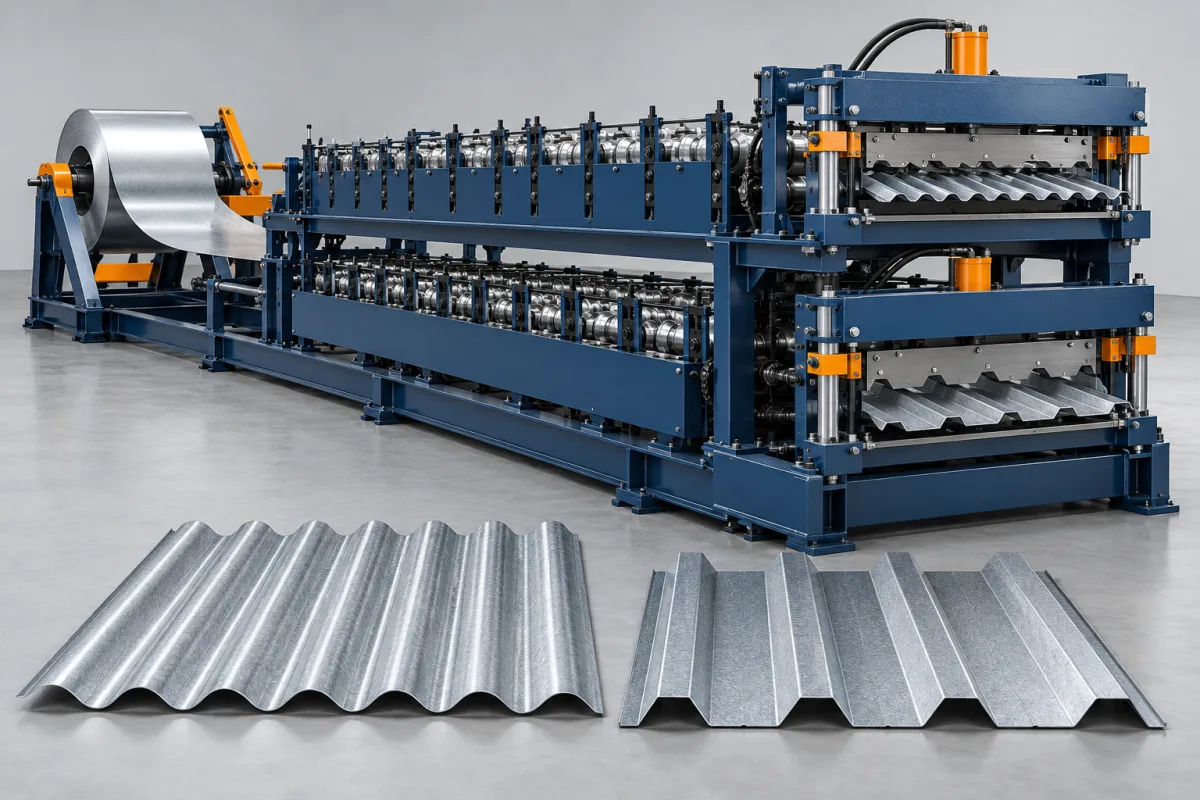
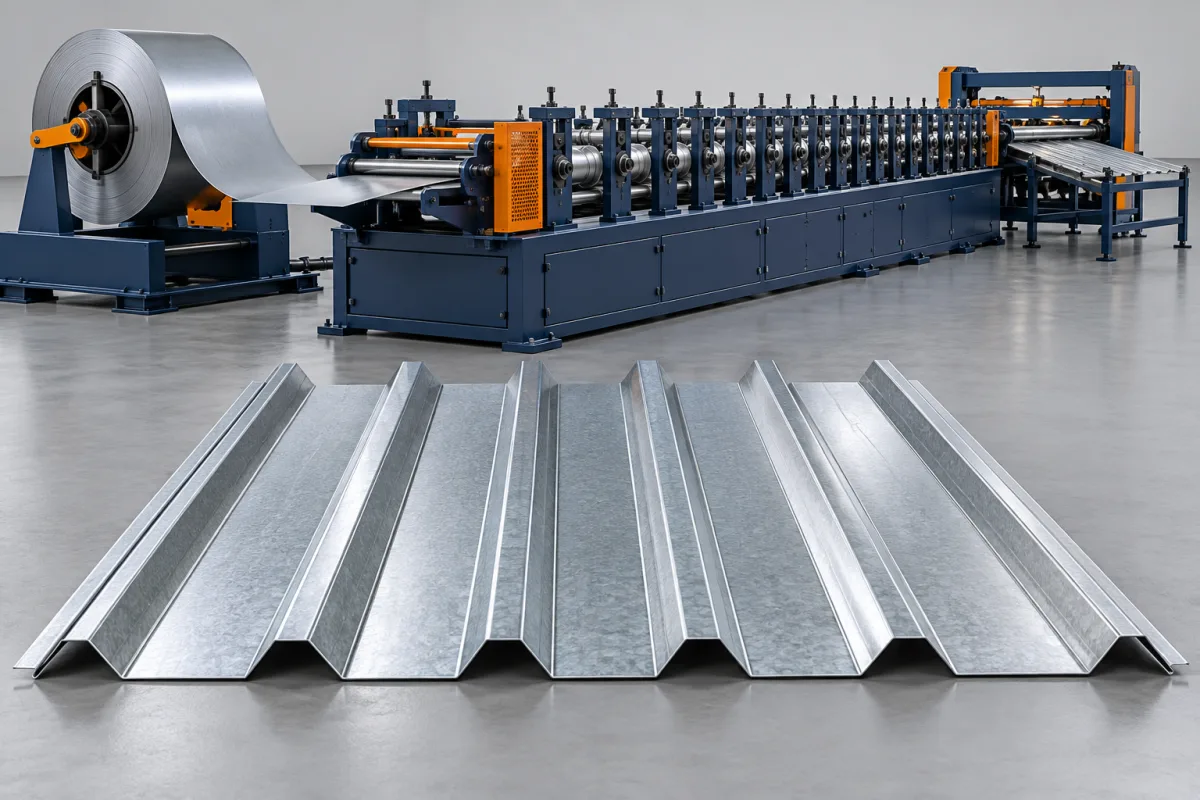
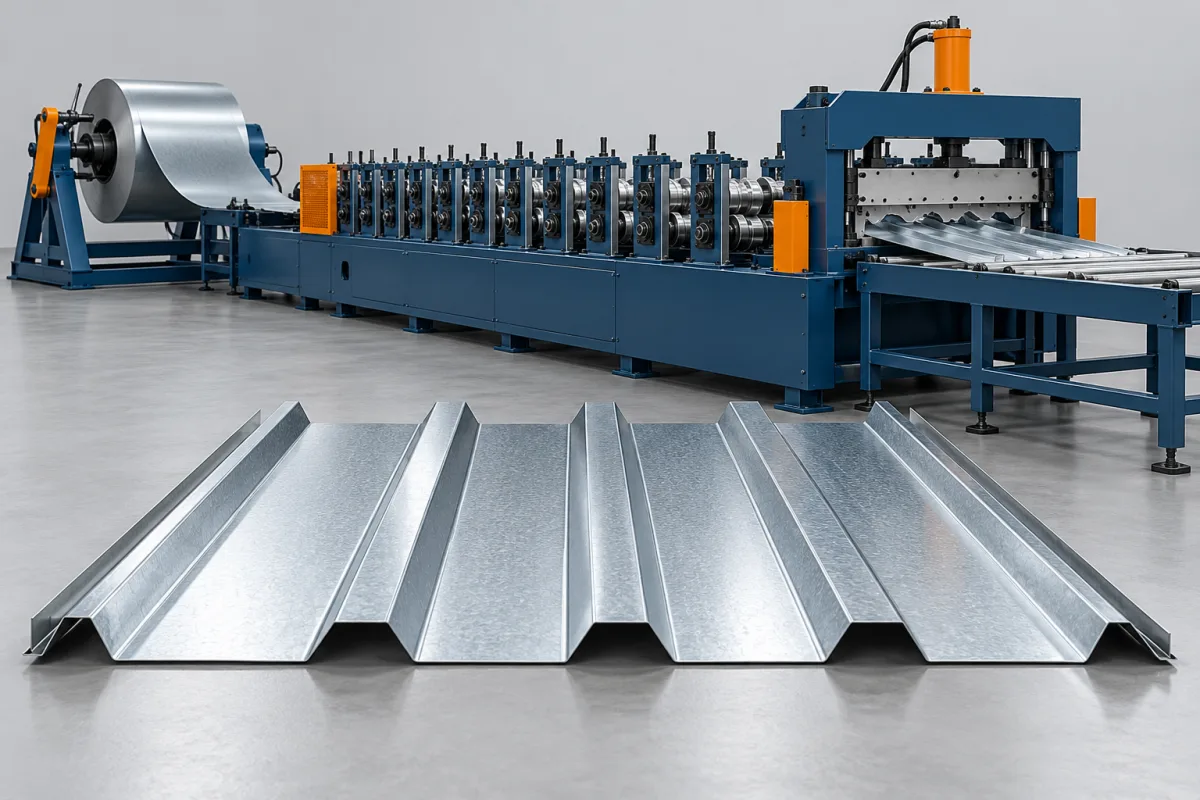
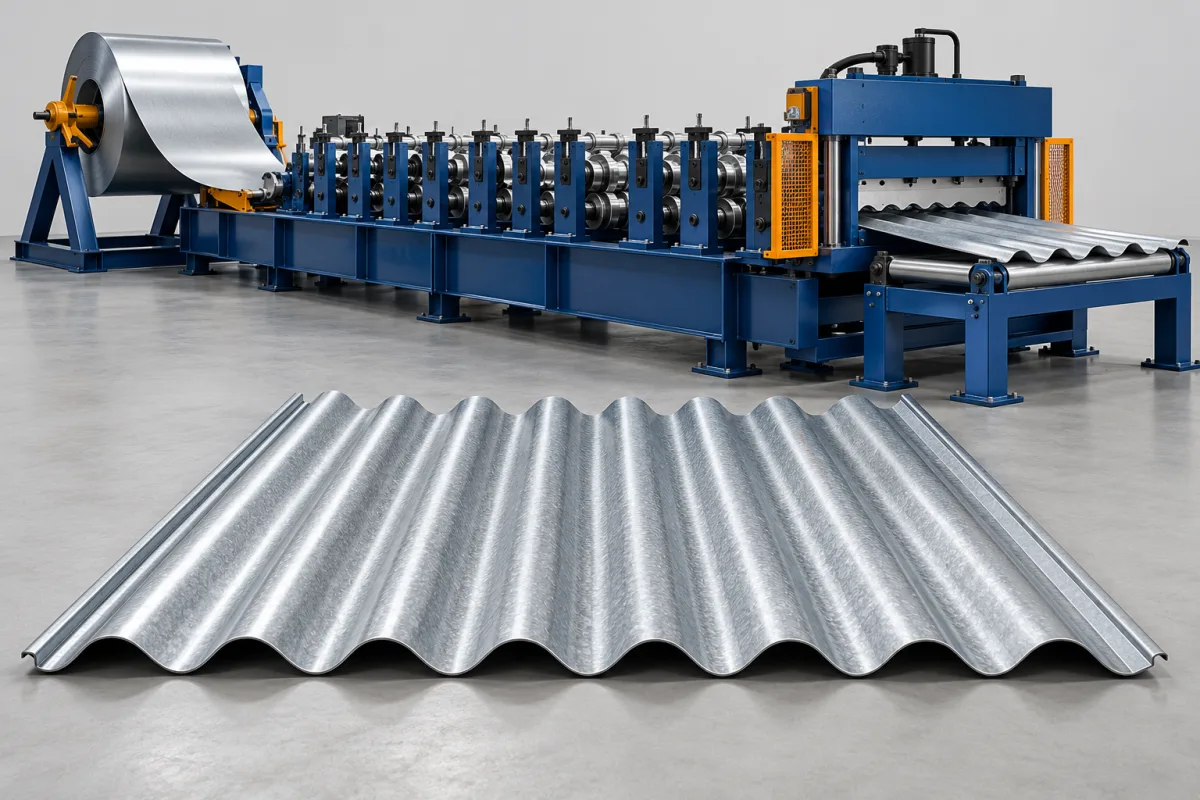
Roofing sheet roll forming machines cover several distinct panel families. Corrugated sheets use repeating rounded waves; trapezoidal sheets use angular ribs and flatter pans; an IBR specification identifies a particular market product that still needs its exact drawing. A double-layer machine describes a production arrangement for selected profiles, not another roof-sheet shape. Use those distinctions to choose the relevant product pages and prepare a useful equipment enquiry.
Start with the roofing sheet you intend to supply
Identify the full cross-section, both terminal edges and the installed lap. A photograph can explain the general appearance but seldom establishes bend geometry, effective cover or compatibility with an existing supply. Where replacement sheets must match another product, include representative mating samples and a controlled drawing.
Keep overall sheet width, effective cover and incoming strip width separately labeled. The strip develops into ribs and returns; part of the finished sheet is consumed by the overlap. Confusing these quantities can affect coil purchasing, tooling approval and the nominal area reported for an order.
Choose the right profile family
- Corrugated: review wave pitch, depth and how the terminal waves nest.
- Trapezoidal: define main ribs, pan features and the specific over-lap and under-lap.
- IBR: connect the commercial designation to an exact product drawing rather than treating the name as universal.
- Double layer: compare how two specified profiles share feeding, cutting and takeoff.
Profile similarity does not establish tooling interchangeability. A second rib pattern or another terminal return can need different rolls and cutting support even when the apparent panel width is unchanged.
Define a material and order matrix
List grade or alloy, thickness convention, coating and strip width for each required profile. Pair the values as real production combinations instead of interpreting separate maximum figures as one universal capability. Include the visible-face requirement and any protective layer in the trial material.
Add typical order lengths, quantities, color changes and profile transitions. A business producing repeated long runs has a different workflow from one delivering many small mixed orders. This matrix gives a better basis for comparing equipment than peak strip speed alone.
Compare the complete line boundary
Follow the route from coil loading through entry, forming, cutting and stacking. Confirm which equipment is included and which operations remain elsewhere. Long sheets need supported discharge, while frequent short sheets can create repeated handling demands. Protected packing may be essential for a painted roofing product.
For multi-profile equipment, identify shared resources and measure changeover through the first accepted sheet. Two forming paths do not automatically provide simultaneous output. Compare the proposed arrangement with dedicated lines using the actual order schedule and available operating space.
Use an assembled panel trial
Measure the section after cutoff and assemble adjoining sheets using the intended lap. Inspect effective cover, terminal geometry, finish and cut ends. Compare the product at discharge with its condition in the stack to distinguish forming defects from handling damage.
Count accepted sheets and accepted coverage over a defined trial period. Keep setup material and rejects visible. Production acceptance demonstrates the specified sheet; the roof system's structural and weather requirements remain part of its separate design and installation specification.
Build a quotation-ready roofing brief
Prepare the profile drawings, material combinations, length schedule, mating references, finish criteria and normal order pattern. Add coil-handling, layout and package requirements. Then use the detailed product pages in this category to compare the particular forming route, changeover and acceptance questions for each profile.
Continue your research
- Corrugated Roof Sheet Roll Forming Machine
- Trapezoidal Roof Sheet Roll Forming Machine
- IBR Roof Sheet Roll Forming Machine
- Double Layer Roofing Roll Forming Machine
- R Panel Roll Forming Machine
- PBR Panel Roll Forming Machine
- IBR 686 Roofing Sheet Machine
- IBR 762 Roofing Sheet Machine
- 7/8 Corrugated Roofing Sheet Machine
- 840 Trapezoidal Roofing Sheet Machine
- 1000 Trapezoidal Roofing Sheet Machine
- Glazed Tile Roof Panel Roll Forming Machine
- How Roofing sheet roll forming machine Works
- How To Choose a Roofing sheet roll forming machine
- Roofing sheet roll forming machine Price: What Affects the Cost?
- Materials and Thickness for Roofing sheet roll forming machine
- Production Speed and Output of Roofing sheet roll forming machine
- Roller, Tooling and Forming Design for Roofing sheet roll forming machine
- Common Defects and Troubleshooting for Roofing sheet roll forming machine
- Maintenance Checklist for Roofing sheet roll forming machine