
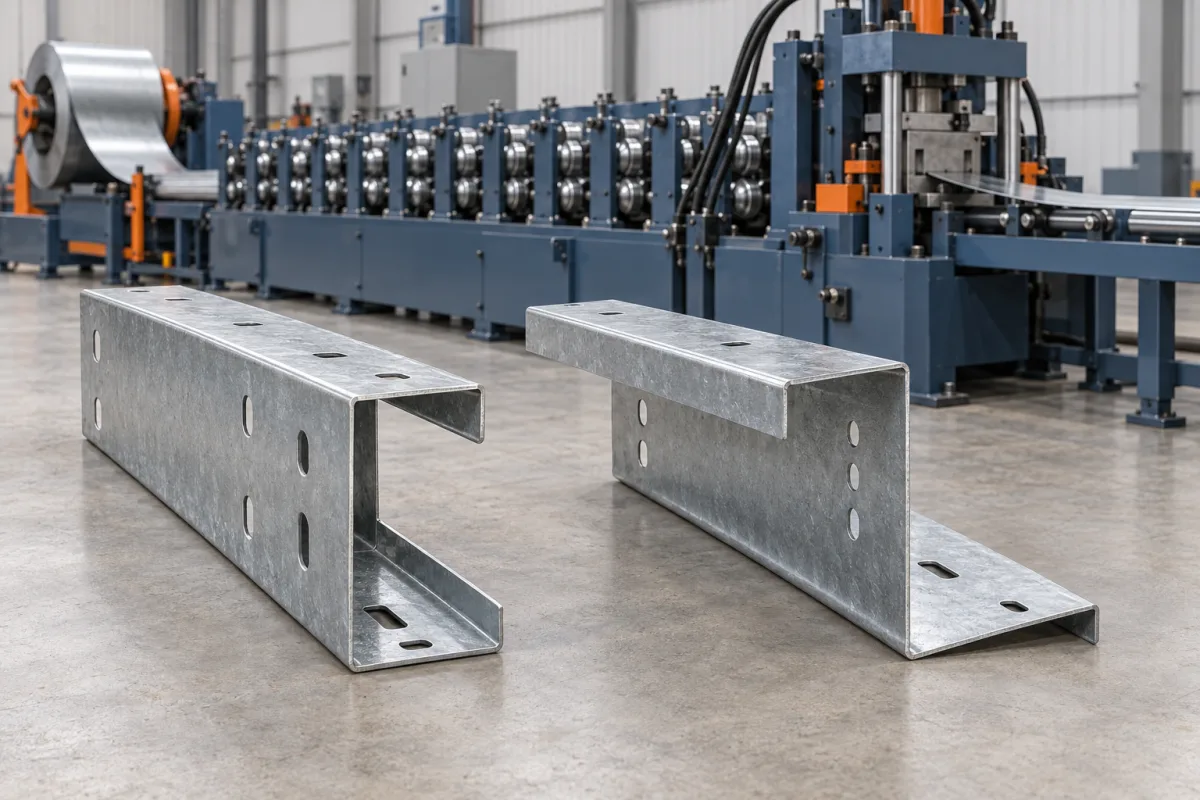
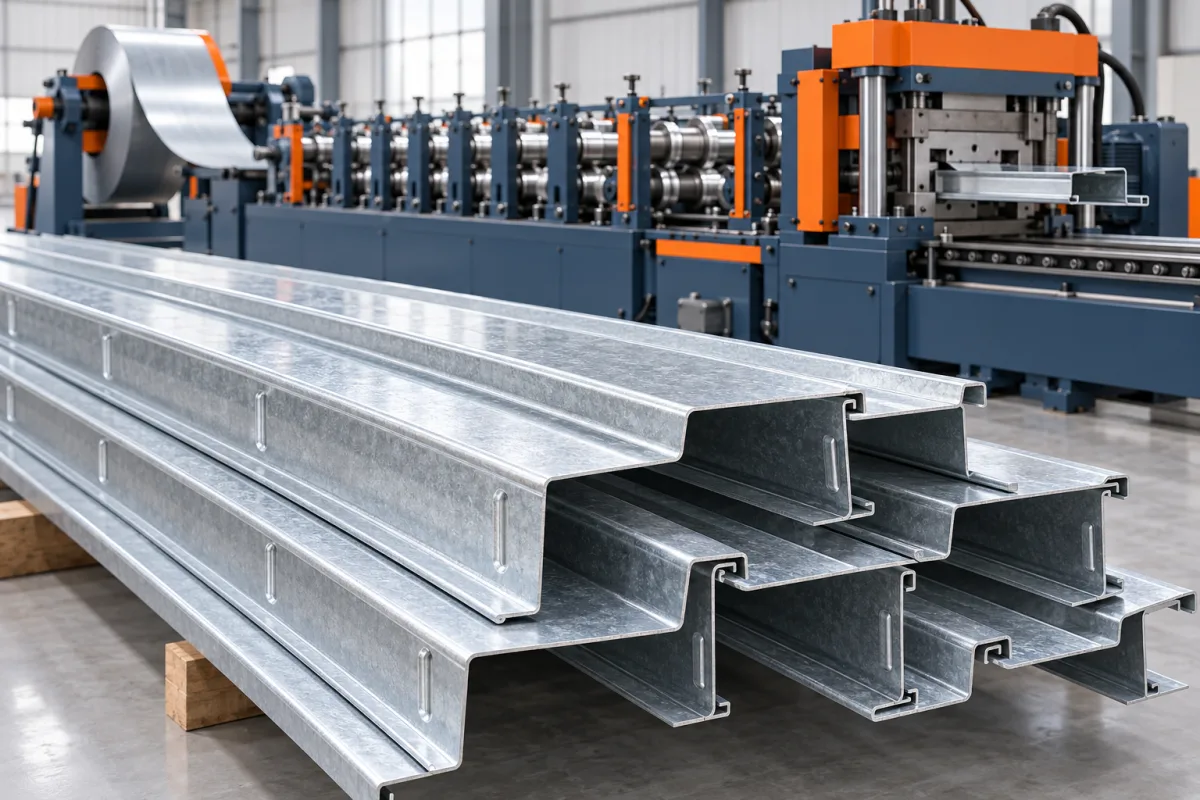
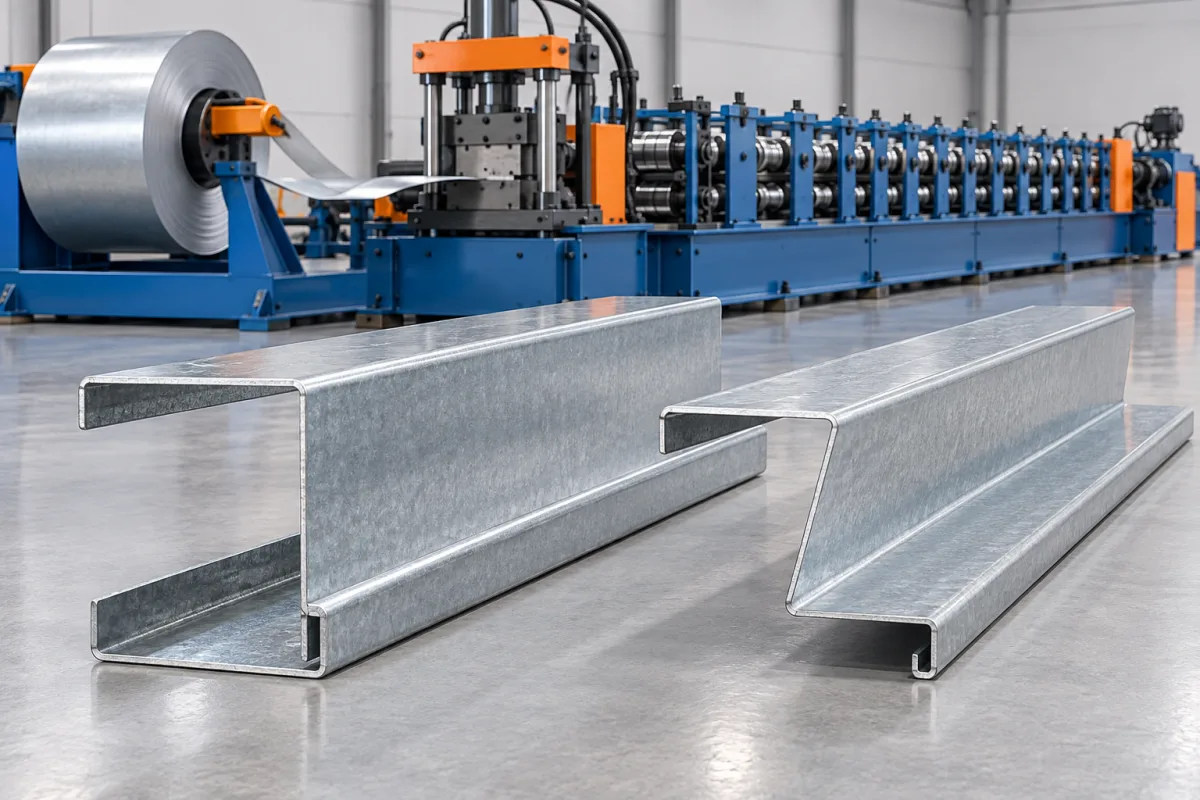
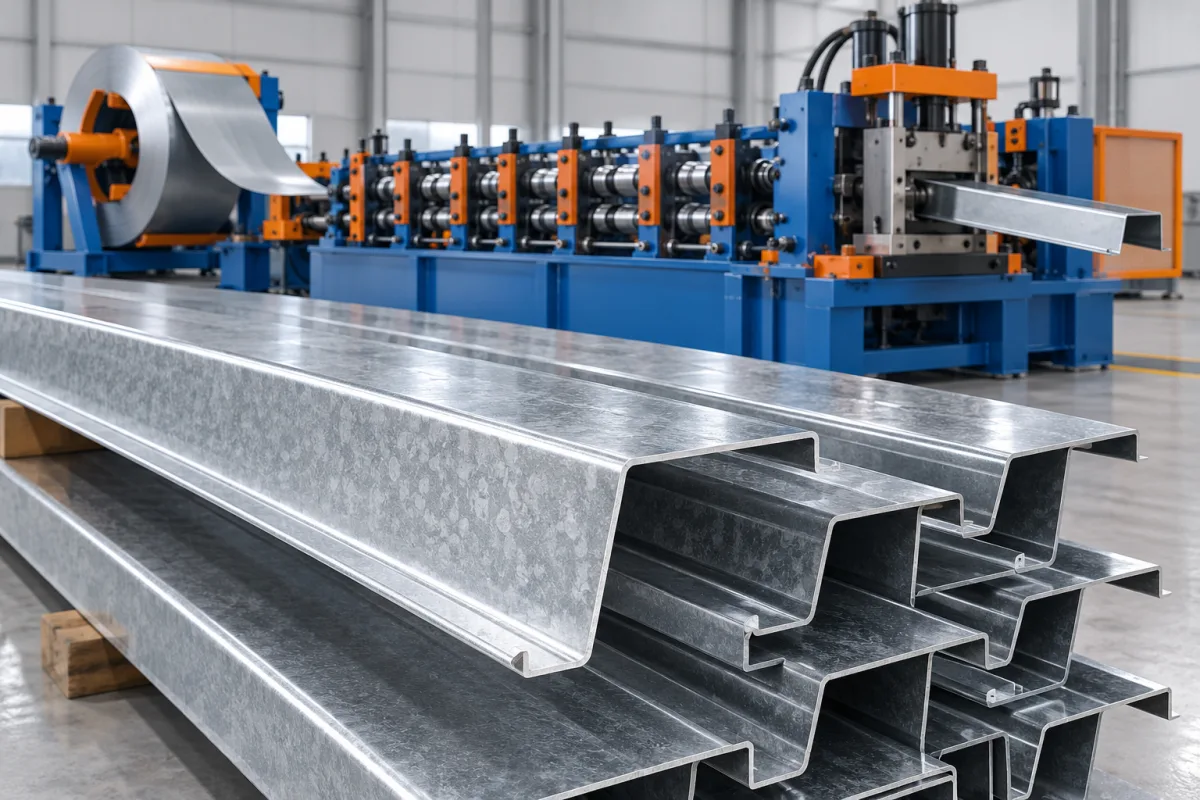
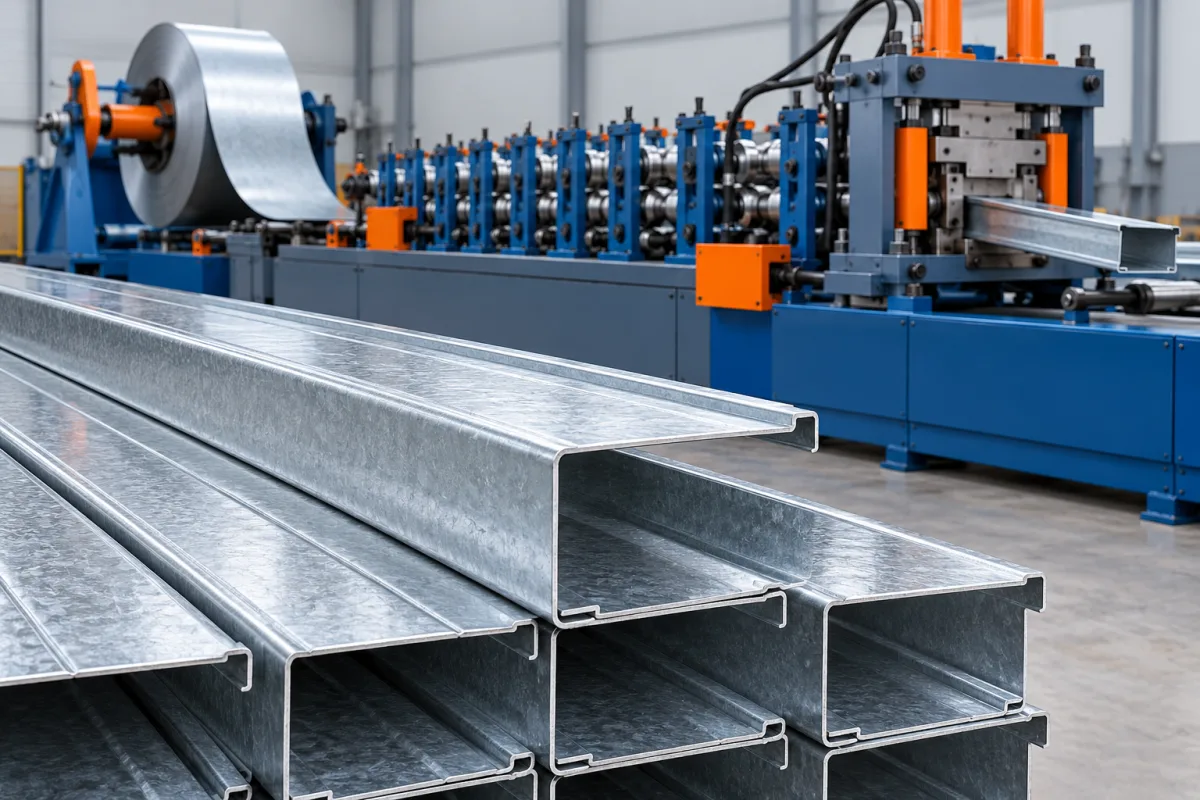
Purlin roll forming equipment produces defined structural sections with the lengths and connection features required by the component design. C, Z, combined CZ and sigma profiles differ in their geometry and changeover needs. Selecting a line begins with the complete section and hole matrix, not only a nominal web-depth range.
Choose the required structural-profile family
C sections have principal flanges extending to the same side of the web, while Z sections have opposing flange directions. Sigma profiles introduce their own web features and functional datums. A combined CZ line describes equipment intended to switch between specified C and Z products, not a separate structural section.
- Use C Purlin for stable or adjustable C-section production and its connection features.
- Use Z Purlin for section orientation, hole references and specified mating arrangements.
- Use CZ Purlin for the distinction between size adjustment and changing section family.
- Use Sigma Purlin for multi-bend geometry, web offsets and inspection references.
Build a complete section-and-feature matrix
List web, flange, lip and other functional dimensions with material grade, thickness and coating. Add hole and slot drawings, end references and the intended connection components. Separate independent ranges do not establish that every dimension and material can be combined.
For variants that look similar, define orientation and identification clearly. A hole in the wrong position relative to the finished section or cut end can make an otherwise accurate member unsuitable for its intended connection.
Compare the proposed production sequence
Review coil preparation, feature-making, forming, length control, cutting and discharge. Punching and cutoff may occur at different stages in different proposals. Ask how each route achieves the required final datums and supports the section through those operations.
The result to compare is the finished connection-ready member. A plain channel demonstration does not establish every hole program, size combination or end condition. Include the required dies, supports and any downstream work in the scope.
Measure changeover through accepted output
Separate changing web depth, changing flanges or lips, changing material and switching section family. Automation may cover some operations without covering all of them. Identify guide, punch, cutoff and inspection work as well as the movement of the forming stands.
Trial important transitions and a return to a previously accepted setting. Count setup material and the time required to produce a correctly formed and featured member. This gives a practical basis for comparing dedicated lines with equipment shared between product families.
Inspect the section and the connection together
Measure the complete geometry after cutoff using an agreed support method. Inspect both ends, hole datums, straightness and twist where specified. Trial the intended bracket, sleeve or overlap arrangement rather than treating each dimension as an unrelated measurement.
Keep manufacturing acceptance separate from structural design. The equipment's adjustment range is not a load-capacity table. The component design determines the required section and material; the line is evaluated on producing them reliably.
Compare complete production packages
Use a representative schedule of lengths, quantities, holes and profile changes. Include coil handling, punch dies, cutting components, discharge, identification and required inspection equipment in each proposal. Measure accepted members over the same operating boundary rather than ranking isolated strip-speed claims.
Prepare the controlled drawings, material combinations and normal order pattern before requesting configuration or pricing. The detailed product pages below explain the distinctions within each family and help turn a broad purlin enquiry into a demonstrable manufacturing requirement.
Continue your research
- C Purlin Roll Forming Machine
- Z Purlin Roll Forming Machine
- CZ Purlin Roll Forming Machine
- Sigma Purlin Roll Forming Machine
- 80-300mm CZ Purlin Roll Forming Machine
- 100-400mm CZ Purlin Roll Forming Machine
- Automatic Size Change CZ Purlin Machine
- Quick Change C Purlin Roll Forming Machine
- Quick Change Z Purlin Roll Forming Machine
- U Purlin Roll Forming Machine
- Omega Purlin Roll Forming Machine
- Variable Size Purlin Roll Forming Machine
- How Purlin roll forming machine Works
- How To Choose a Purlin roll forming machine
- Purlin roll forming machine Price: What Affects the Cost?
- Materials and Thickness for Purlin roll forming machine
- Production Speed and Output of Purlin roll forming machine
- Roller, Tooling and Forming Design for Purlin roll forming machine
- Common Defects and Troubleshooting for Purlin roll forming machine
- Maintenance Checklist for Purlin roll forming machine