
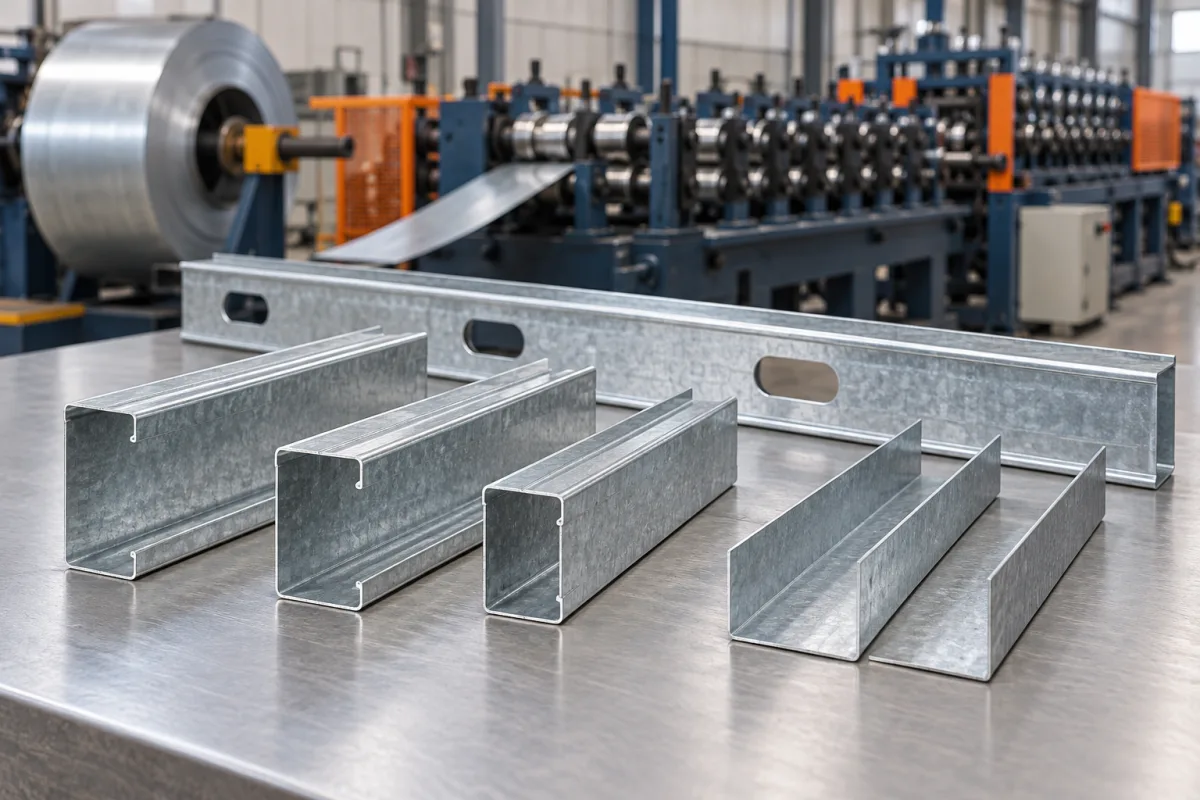
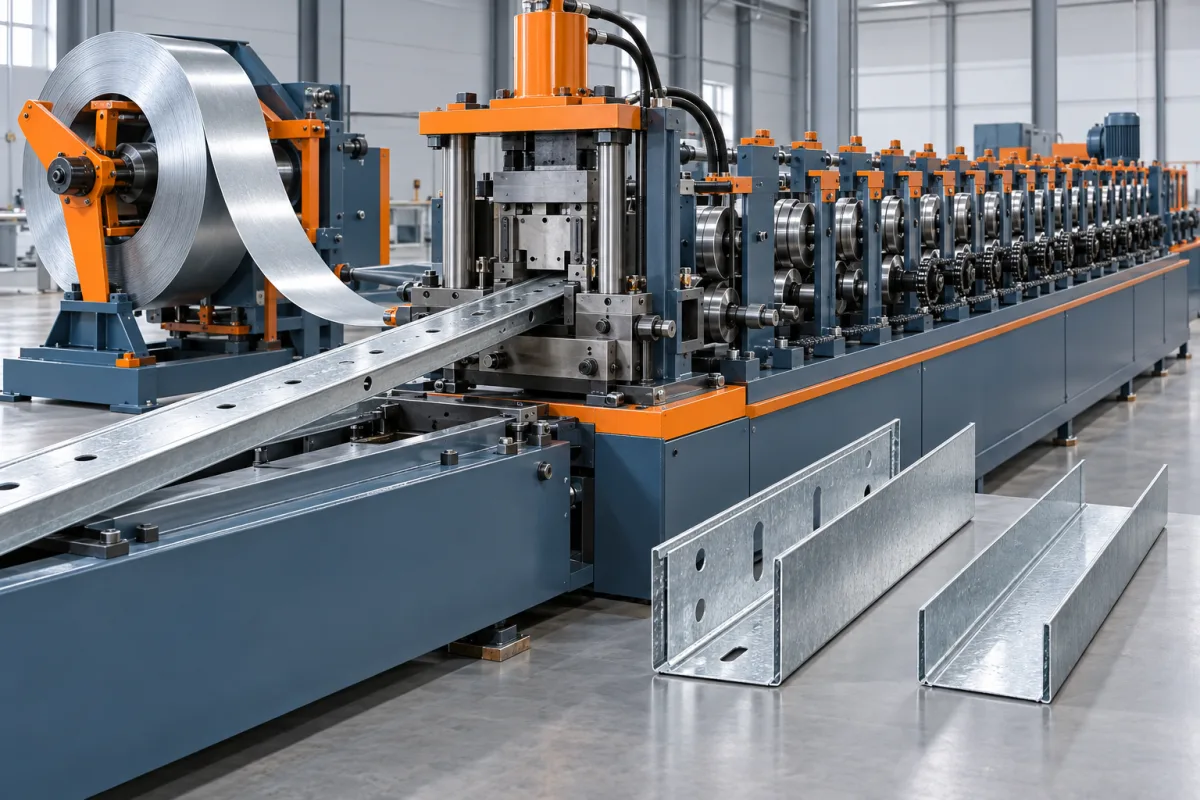
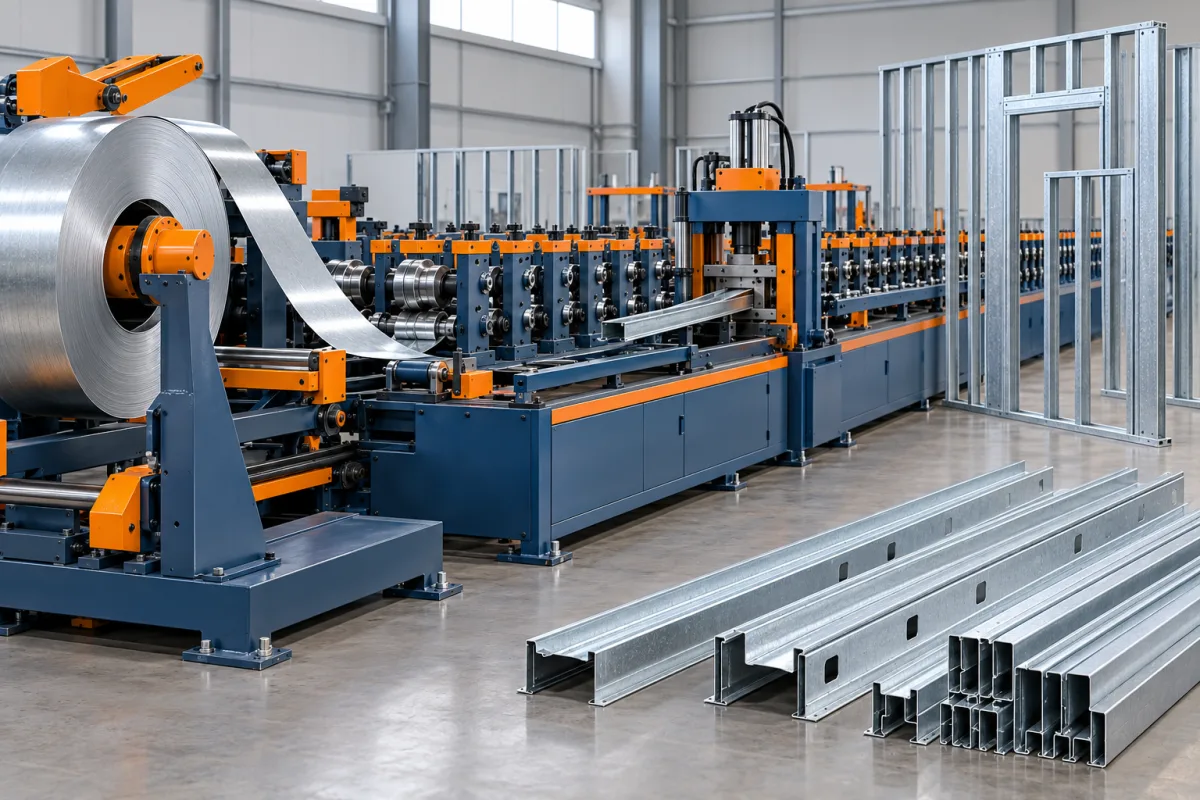
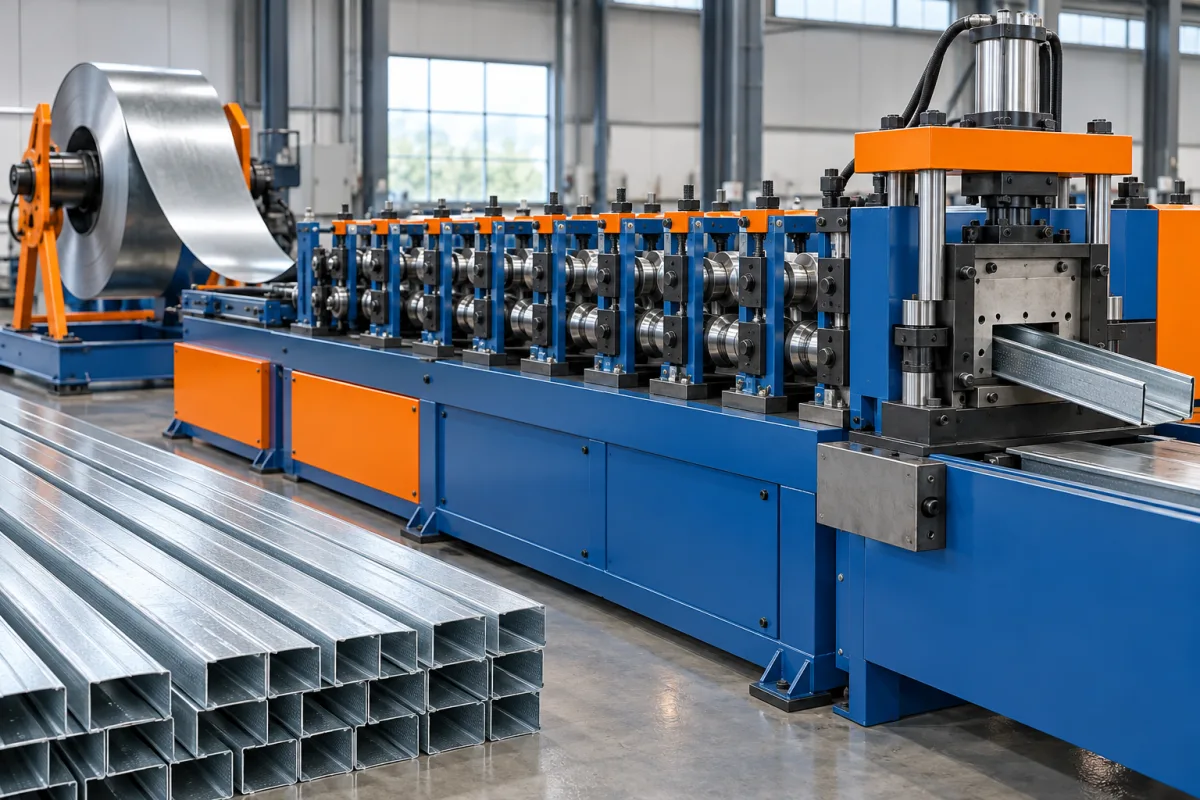
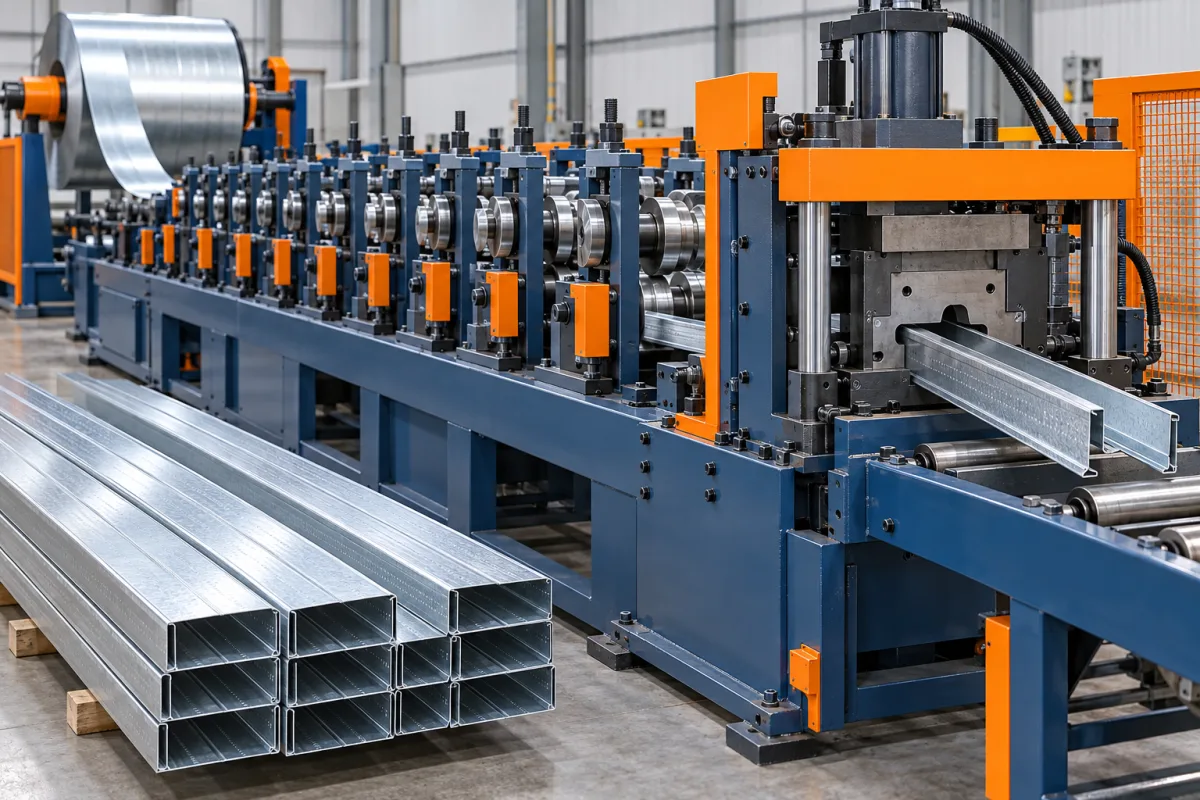
Stud and track equipment serves a defined light-steel component system. The stud provides the required member geometry and fixing faces; the companion track must provide the intended fit and connection arrangement. A complete framing workflow can add project-specific features, identification and order data beyond the manufacture of stock lengths.
Decide which finished products the line must deliver
A drywall-stud line, a track line and a combined stud-and-track arrangement have different stated scopes. Light-gauge steel framing equipment may also include feature programs and information handling for an engineered component workflow. Do not assume all of these capabilities follow from one broad framing-machine name.
- Drywall Stud: focus on web, flanges, lips, lining interfaces and required service features.
- Drywall Track: define the receiving section and its actual relationship to the stud.
- Stud and Track: compare shared equipment, tool changes and the paired production schedule.
- Light Gauge Framing: connect component drawings, features, identification and controlled project data.
Specify the stud-track interface
Provide drawings for both mating components. A shared nominal size label does not fully define internal clearance, flange geometry or the installation arrangement. Inspect the pair using the system's specified requirements rather than approving two outside widths independently.
Where service holes, notches or other features are required, show their dimensions and references. The forming operation and the feature program must produce the same intended part. A plain length of channel cannot demonstrate an entire component schedule.
Keep material and system requirements connected
State grade, base-metal thickness convention, coating and the permitted production combinations. Gauge terminology can be ambiguous without the applicable material definition. Use production-intent stock in trials and retain its identity with the approved samples.
The wall or framing design establishes the component's requirements. Changing material or section features because another configuration forms more easily does not establish equivalent performance. Keep design approval and manufacturing acceptance as distinct responsibilities.
Compare stock-length and project-order workflows
Stock production may emphasize repeat lengths, packaging and consistent paired sizes. Project-specific production can require mixed lengths, features and identification linked to the component schedule. List the real order pattern before deciding how much control or data integration is needed.
For any imported production data, define how drawings and revisions are translated into machine instructions and how the resulting part is checked. A successful file transfer is not proof that the correct geometry, features and identifiers were manufactured.
Review changeovers, cutting and handling
Ask which guides, roll tools, punch components and cutting supports change between sizes or between stud and track. Include first-off assembly checks in the transition time. Automatic adjustment of one dimension does not eliminate every manual or inspection task.
Check short and long members through normal discharge and bundling. Cut-end damage or mixed identification can make an accurately formed component difficult to use. These downstream operations belong in the equipment comparison alongside the former itself.
Release product against a representative trial
Run the specified materials, sizes and feature patterns. Inspect section geometry, ends and service features, then assemble the stud-track pair or relevant component connection. Record accepted quantity, setup rejects and any unresolved difference from the controlled drawing.
Prepare the product matrix, material schedule, normal orders and intended identification workflow for an enquiry. The pages in this category develop the separate stud, track and complete-framing decisions so the purchase can be based on finished usable components rather than an unqualified machine label.
Continue your research
- Drywall Stud Roll Forming Machine
- Drywall Track Roll Forming Machine
- Light Gauge Steel Framing Machine
- Stud and Track Roll Forming Machine
- C89 Light Gauge Steel Framing Machine
- C140 Light Gauge Steel Framing Machine
- Top Hat Light Steel Framing Machine
- Light Gauge Steel Floor Joist Machine
- Light Gauge Steel Wall Frame Machine
- How Stud and track roll forming machine Works
- How To Choose a Stud and track roll forming machine
- Stud and track roll forming machine Price: What Affects the Cost?
- Materials and Thickness for Stud and track roll forming machine
- Production Speed and Output of Stud and track roll forming machine
- Roller, Tooling and Forming Design for Stud and track roll forming machine
- Common Defects and Troubleshooting for Stud and track roll forming machine
- Maintenance Checklist for Stud and track roll forming machine