
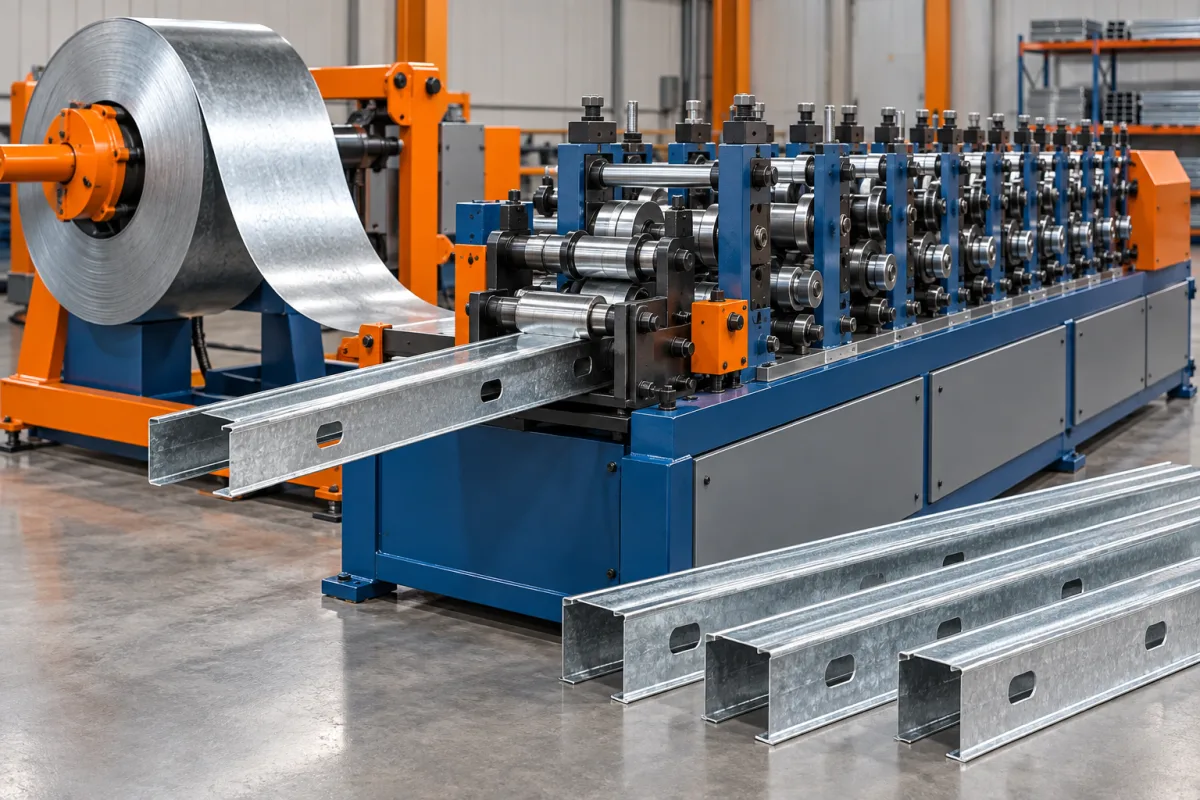
A C89 light gauge steel framing machine enquiry usually refers to a C-shaped framing member with a nominal 89 mm web. That dimension is only the beginning of the specification. Flange and lip geometry, steel grade, thickness, service openings and assembly features determine the actual framing product and the machinery needed to make it.
This application differs from producing generic C channel in stock lengths. A framing route often needs project-specific member lengths, connection features and identification that allow pieces to be assembled into panels or other designed components. The machine should be evaluated as part of that controlled design-to-production workflow.
What should C89 mean in the drawing?
Confirm that 89 mm refers to the nominal web dimension and identify the measurement convention. Show flange widths, lips, radii and any localized assembly features. Different framing systems can use similar web labels with different mating details.
Include the receiving track or mating member where it controls fit. A correctly sized stud web does not establish that the complete framing connection will assemble properly. The cross-section and connection references should be reviewed together.
Which framing features are needed?
Define the actual holes, slots, notches or other features used by the chosen framing system. Their locations should be tied to member ends and the final assembled reference. Do not assume that every operation found on another framing machine is needed or included.
- Connection and service-opening patterns.
- Member-end preparation and mating clearances.
- Feature orientation on web and flanges.
- Part identifiers and assembly references.
- Required unmodified zones near connections.
Keep the feature schedule consistent with the approved structural and assembly design. The machine should reproduce designed details, not create ad hoc holes because a convenient punch is available.
How does project data become a member?
The workflow needs a controlled way to translate approved member information into lengths, features and identification. Define the input format, revision handling and verification responsibilities. A production program should remain traceable to the correct project and member.
Test the complete data path with a small representative assembly. Confirm units, handedness, member identity and feature positions before a large batch. A successful file import alone does not prove that the resulting physical components will fit together.
What manufacturing route should be specified?
Coil preparation supplies strip to the defined feature-making and forming sequence. Progressive tools create the C89 section, and the cutting arrangement produces individual members. Marking and sorted discharge keep each piece associated with its assembly role.
Ask which features are made before or after forming and how access is maintained. The actual process must suit the geometry and material. Include any operation left for a separate workstation in the equipment and labor plan.
How should steel and thickness be reviewed?
Pair grade, base-metal thickness and coating with the approved framing section. Do not treat nominal web size as evidence of structural capacity or material interchangeability. The design and machine envelope both need the actual material specification.
Trial the intended material through features, forming and assembly. Inspect bends, hole condition and any localized preparation. Retain coil identification with first-piece and assembly records so later changes can be investigated consistently.
What makes assembly fit different from section accuracy?
Section measurements establish web, flange and lip geometry. Assembly checks establish how those members meet tracks, intersections and connectors. A member can pass one set of checks while failing the other because of feature position or end preparation.
Use representative frame components rather than a loose straight sample alone. Record any forcing, extra trimming or feature correction needed. Unplanned workshop modification should be treated as a deviation, not silently accepted as normal production.
How should output be measured for framing work?
Use accepted identified members or completed representative assemblies from a stated project mix. Frequent feature operations and short members can change the cycle substantially. Steady strip speed does not describe the entire framing workflow.
Include sorting and assembly support in the comparison where those are part of the required route. Correctly formed pieces that are poorly identified can consume significant time before they become usable frames.
What should a C89 acceptance project include?
- Confirm the section, material and member-data revision.
- Produce members with representative feature patterns.
- Measure section, length and feature registration.
- Check part identification and orientation.
- Assemble a representative frame or connection group.
- Record any additional correction work.
- Measure accepted output under the stated workflow.
Keep machine acceptance separate from structural design approval. The equipment trial proves manufacture of the specified components; the completed building system still requires its applicable design and verification.
Frequently asked questions
Does C89 specify the flange width?
No. It generally identifies a nominal web family. Flanges, lips and mating features must be shown separately on the controlled section drawing.
Can a purlin machine make C89 framing members?
Only if its tooling, feature operations, controls and handling cover the actual framing system. Similar C geometry does not establish project-data or assembly-feature capability.
Are service holes included automatically?
No. Define the required openings and their permitted locations in the approved design. The machine scope should identify the tools and controls that create them.
Can one machine also make C140?
That requires a specific multi-profile review. Ask for the tooling and changeover scope, material combinations and assembly checks for the second framing family.
What is the most useful first trial?
A small real assembly with representative lengths, connections and identifiers. It tests the full data-to-part workflow more effectively than a long unfeatured channel sample.
Specify C89 as a framing workflow
The strongest C89 brief connects the section to project data, connection features and assembly. That gives the equipment trial a practical target: correctly identified members that fit the intended frame without unplanned rework.

Continue your research
- Stud & Track Roll Forming Machines
- Drywall Stud Roll Forming Machine
- Drywall Track Roll Forming Machine
- C140 Light Gauge Steel Framing Machine
- Top Hat Light Steel Framing Machine
- Light Gauge Steel Floor Joist Machine
- How Stud and track roll forming machine Works
- How To Choose a Stud and track roll forming machine
- Stud and track roll forming machine Price: What Affects the Cost?
Configuration & specification inputs
Match the configuration to your section drawing, material and production requirements.
| Parameter | Requirement / confirmation needed |
|---|---|
| Profile geometry | Nominal 89 mm web framing family with approved flanges, lips, track fit and assembly details. |
| Material | Design-specified light-gauge steel grade and coating with traceable coil identity. |
| Thickness & grade | Base-metal thickness combinations approved for the framing section and feature operations. |
| Process route | Controlled member data, registered features, C89 forming, cutting, marking and sorted discharge. |
| Cutting | Project member lengths and end preparation tied to the correct drawing and assembly identity. |
| Output | Accepted identified members or representative assemblies under the stated feature-rich project mix. |
| Electrical supply | Utilities for coil feed, feature tools, forming, cutoff and identification equipment. |
| Acceptance | Section, length, feature registration, member orientation and real assembly fit without unplanned correction. |