
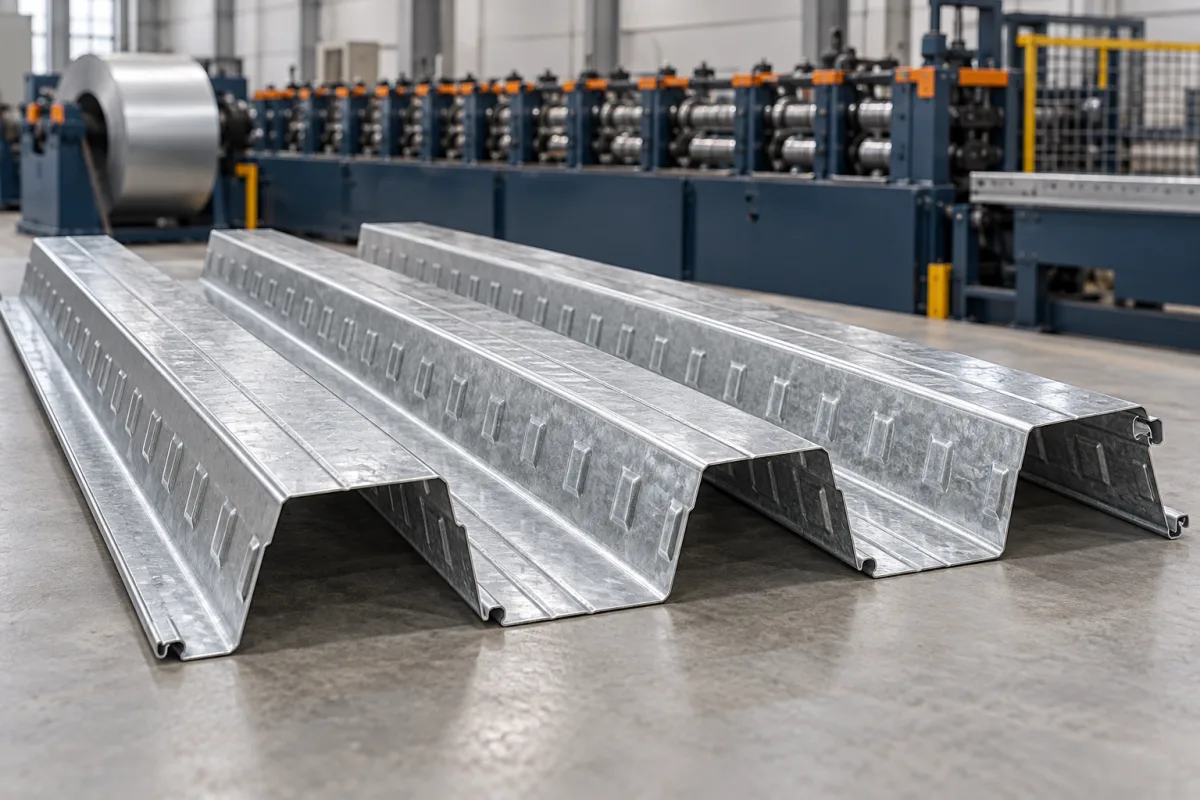
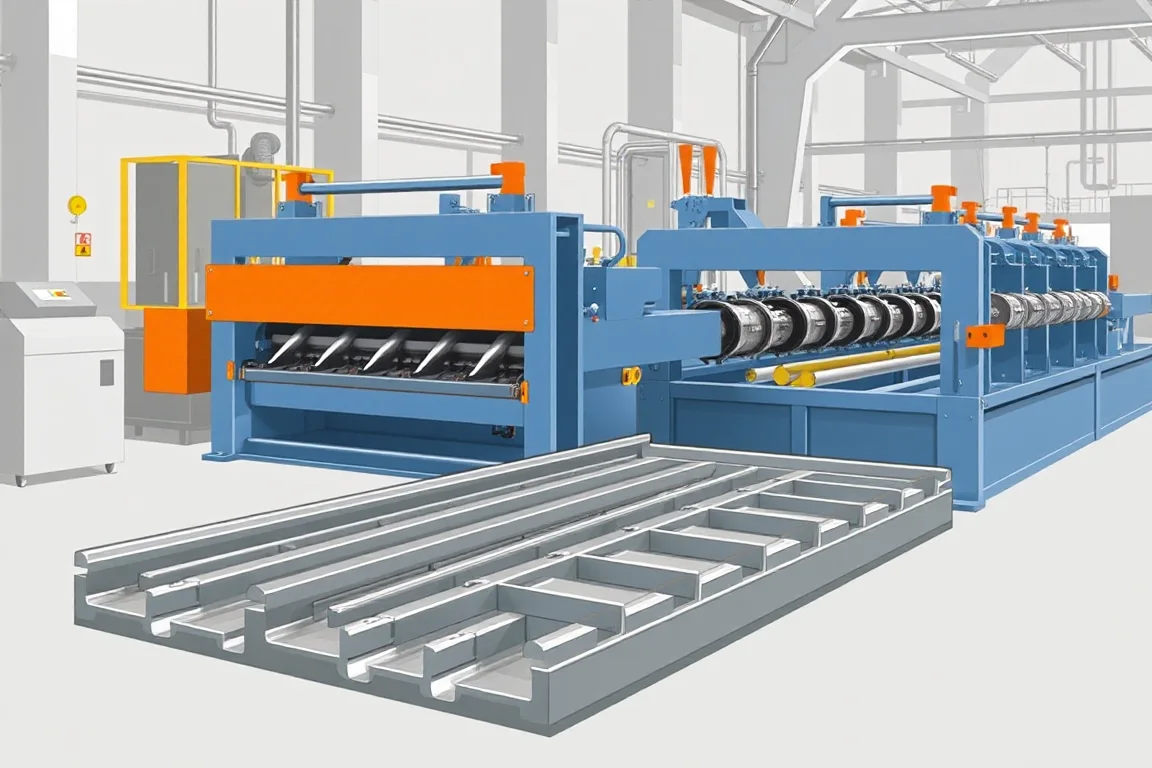
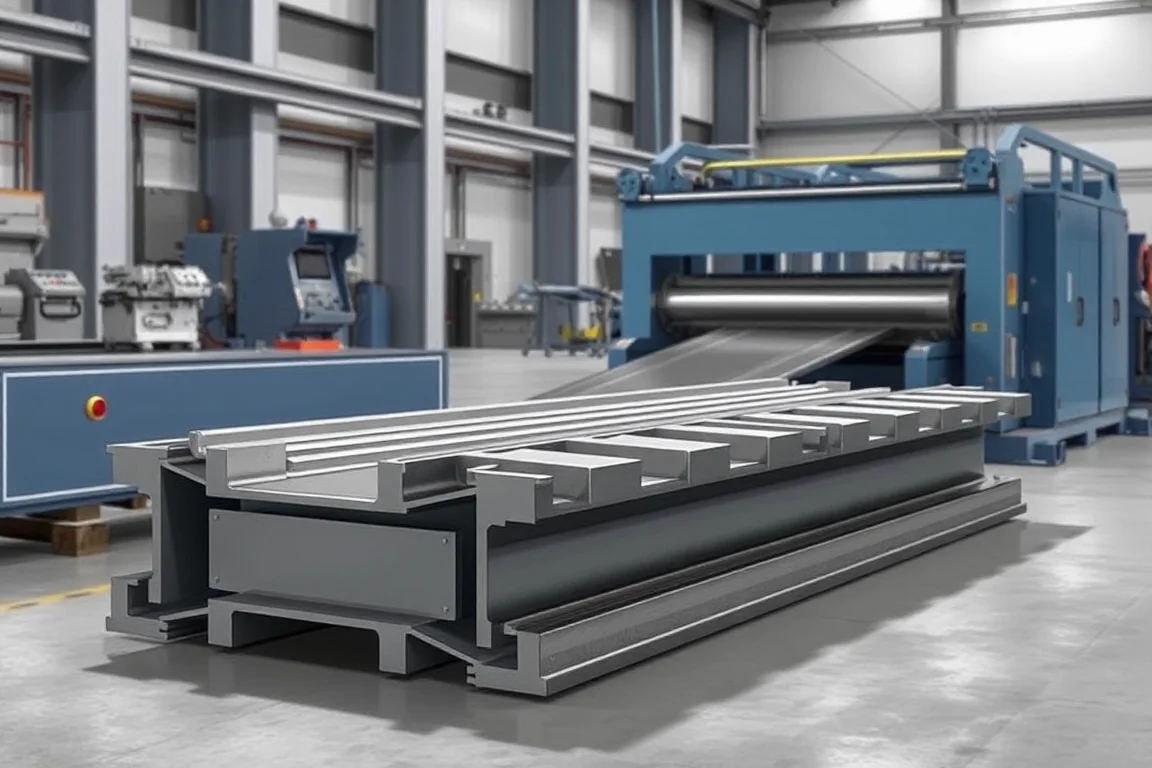
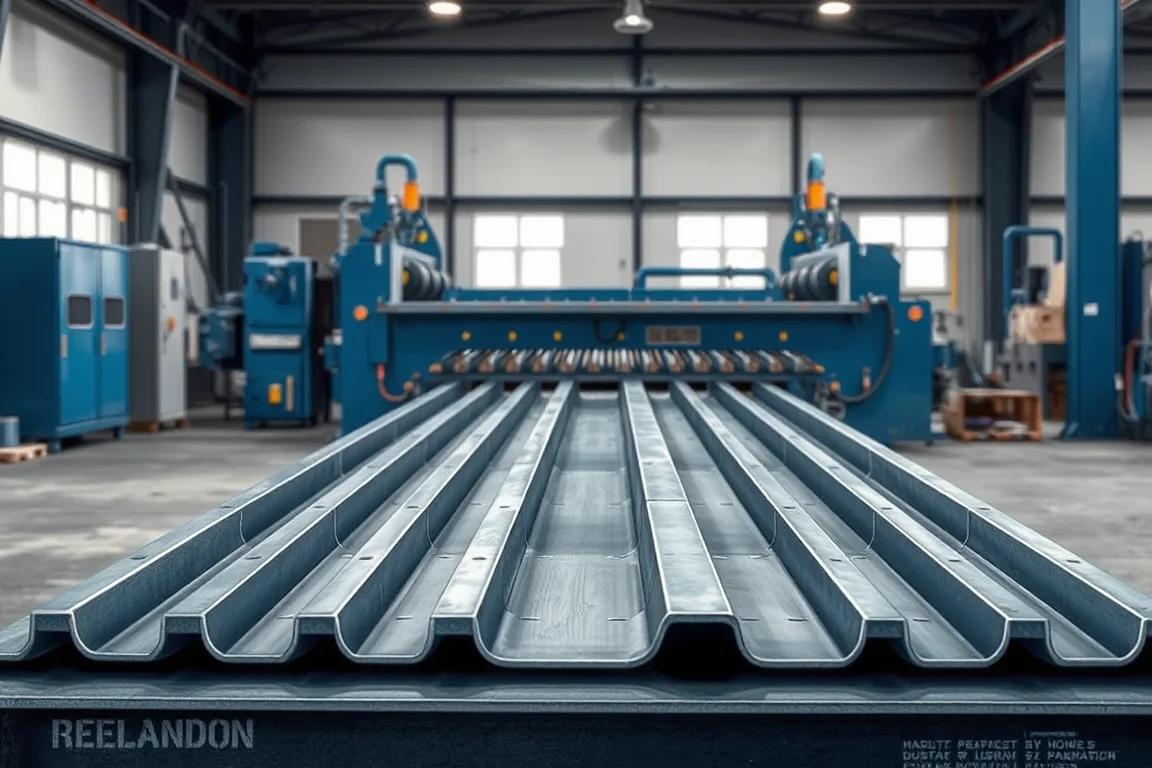
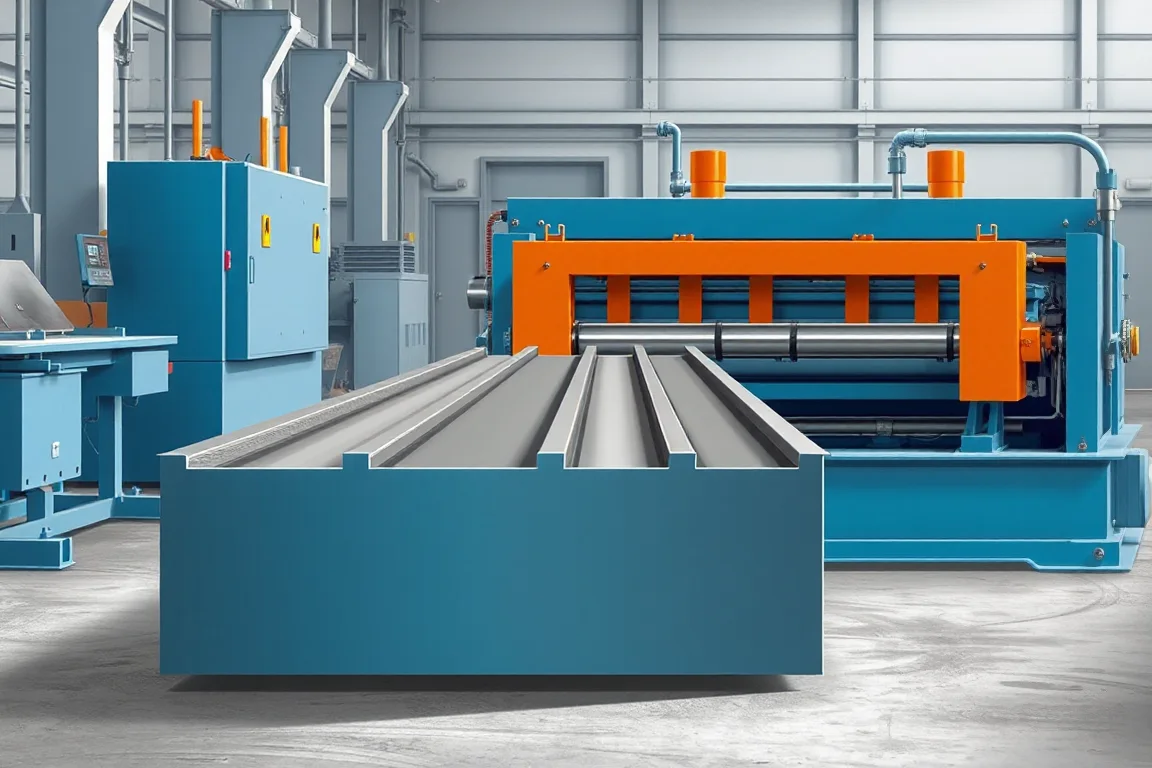
Metal deck roll forming equipment makes profiled sheets for a defined roof or floor system. Roof deck, floor deck and composite deck are not interchangeable simply because all have deep ribs. The selected cross-section, side lap, material and any specified embossing establish the manufacturing task and the equipment needed to deliver acceptable sheets.
Separate the deck's role from the machine category
Start with the engineered deck product and its intended application. Roof deck supports a particular roof-system arrangement; composite floor deck has requirements associated with its defined floor construction. The former is selected to reproduce that product, not to assign its span or load capacity.
- Floor Deck: identify the required floor-profile and connection details.
- Roof Deck: review roof-deck geometry, laps and handling.
- Composite Deck: include the specified embossments or other functional features.
- Metal Deck Line: compare the complete coil-to-stack route and equipment boundary.
Define the section beyond nominal depth
Deck depth is one dimension among many. Rib pitch, pan geometry, edge laps, returns and any re-entrant features need controlled drawings. A commercial profile label or an inch-depth designation is not enough to establish tooling compatibility.
Where embossments are required, define their geometry, position and inspection references. Do not accept a matching outer silhouette as proof that every functional deck feature is present. Keep the finished-product requirement connected to the appropriate process tools.
Review forming, cutting and support as one route
Follow the strip from payoff and entry through progressive forming and any feature operations to cutoff and stacking. Deep or complex sections need suitable support at transitions. Ask how the proposed line protects ribs and edges when the finished sheet is separated and discharged.
Use representative short and long sheets in the layout review. The ability to form a short section does not establish a practical route for handling the longest ordered product. Include stack format and finished-bundle removal.
Pair the profile with its material envelope
State grade, thickness convention, coating and width as actual production combinations. A trial using easier material or a different section should not be treated as evidence for the entire proposed range. Identify the combinations that need demonstration before acceptance.
Record incoming material identity and inspect the finished sheet after normal processing. This helps distinguish material variation, forming deviations and damage introduced by later operations. Any substitution must also meet the component design, not merely the former's preferences.
Inspect the deck and its mating edges
Measure the cross-section and assemble adjoining sheets to check the intended lap and cover. Inspect embossments where specified, cut-end condition and local rib deformation. Use agreed supports when assessing long sheets so temporary sag is not confused with permanent distortion.
Keep structural and system performance separate from the machinery trial. Accurate forming is necessary to meet a drawing, but it does not independently establish the performance of the completed roof or composite floor.
Compare accepted area and complete scope
Use accepted sheet length and effective cover to describe nominal deck coverage, with rejected sheets and setup material recorded separately. Include cutting, discharge and stack handling in the defined production period. Peak strip speed is only one part of the process.
For quotations, supply the full section, material combinations, embossing details, length schedule and acceptance method. Include tooling changes and handling equipment explicitly. The detailed deck pages below help narrow the required product and prevent a broad metal-deck label from hiding missing operations.
Continue your research
- Floor Deck Roll Forming Machine
- Roof Deck Roll Forming Machine
- Composite Deck Roll Forming Machine
- Metal Deck Roll Forming Line
- B Deck Roll Forming Machine
- N Deck Roll Forming Machine
- H Deck Roll Forming Machine
- 1.5 Inch Roof Deck Roll Forming Machine
- 2 Inch Composite Deck Roll Forming Machine
- 3 Inch Metal Deck Roll Forming Machine
- Dovetail Metal Deck Roll Forming Machine
- How Floor deck roll forming machine Works
- How To Choose a Floor deck roll forming machine
- Floor deck roll forming machine Price: What Affects the Cost?
- Materials and Thickness for Floor deck roll forming machine
- Production Speed and Output of Floor deck roll forming machine
- Roller, Tooling and Forming Design for Floor deck roll forming machine
- Common Defects and Troubleshooting for Floor deck roll forming machine
- Maintenance Checklist for Floor deck roll forming machine