
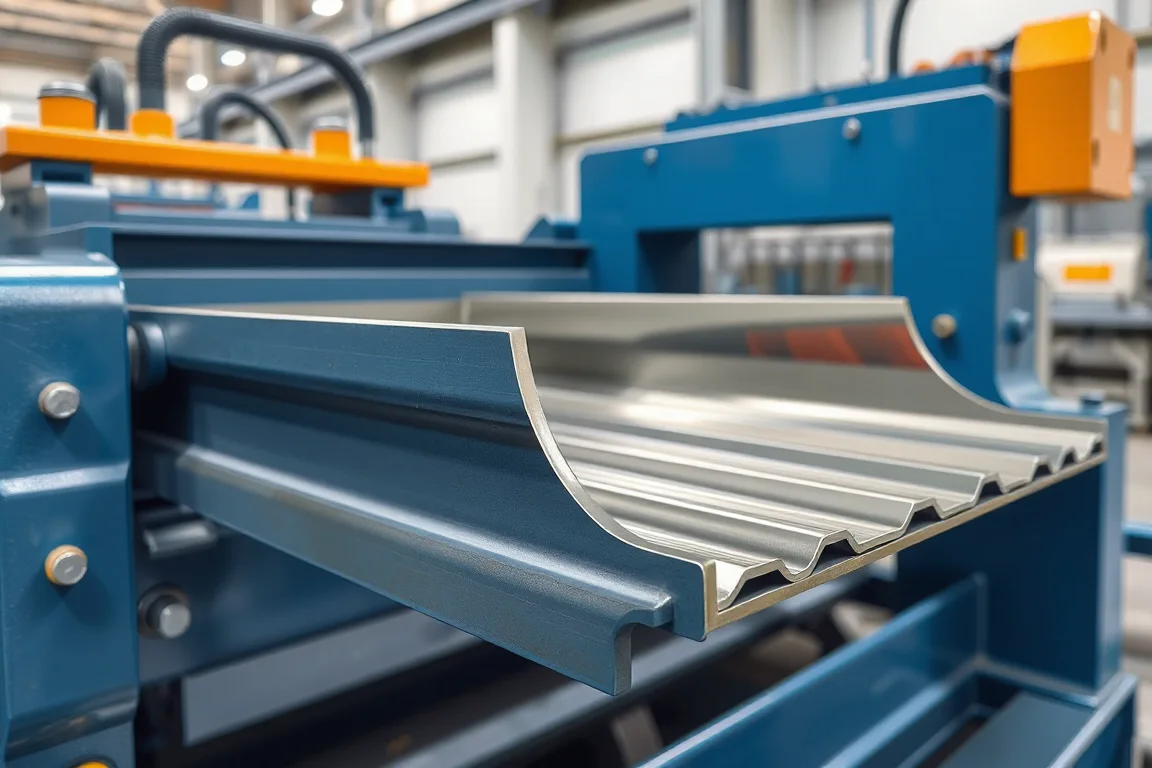
An H deck roll forming machine enquiry needs an especially clear product drawing because the H designation is not enough to identify one universal deck section. It may refer to a local or proprietary profile family. Before comparing machinery, establish the actual ribs, depth, laps, material and intended deck application.
The sensible starting point is a controlled section and an approved product reference, not an assumed relationship to B or N deck. This avoids buying tools for a name that different suppliers interpret differently and keeps the machine trial tied to a measurable finished product.
What does H deck mean in this project?
Ask the product designer or customer to identify the exact drawing, revision and application. Record whether the sheet is roof deck, floor form or another defined product. The equipment supplier should not have to infer those roles from the letter H.
If a physical sample is the starting reference, measure it and resolve any damage or inconsistency before creating the tooling drawing. An old sheet can help identify the product but should not silently define dimensions distorted during service or removal.
Which geometry must be documented?
Show depth, rib pitch, crest and valley widths, web angles, bend radii and both terminal edges. Identify any re-entrant or special shape explicitly. State effective cover separately from overall width and input-strip width.
- Define the section measurement datums.
- Show the complete side-lap assembly.
- Identify special embossments or perforations.
- Record material and finish combinations.
- State lengths and required end condition.
The drawing should be detailed enough that another person can inspect a trial sheet without relying on familiarity with the local product name.
How should roof and floor uses be separated?
The manufacturing requirements should follow the approved product function. A roof-deck profile and a composite floor-deck profile can require different features and qualification. Similar rib geometry does not establish identical use.
Where concrete interaction or another special function is intended, define the corresponding engineered features and acceptance requirements. Do not add a generic embossment pattern and assume it turns any H-shaped deck into a qualified composite product.
What forming route should be proposed?
Once the section is defined, the supplier can propose coil preparation, progressive forming, feature operations, cutting and discharge. The actual rib geometry and material determine the tool sequence and support needs. The proposal should explain those choices for the target product.
Identify optional operations separately. Embossing, venting, perforation, liners or other additions may require equipment beyond a basic deck former. A complete-line label should be replaced by a schedule showing how each required feature is made.
How should material limits be established?
Pair grade, base-metal thickness, coating and strip width with each approved H-deck variant. Independent maximum values are not a valid substitute for this matrix. Trial the combinations that represent normal demand and the demanding cases.
Keep material identity with the results and agree incoming-strip requirements. The forming trial should demonstrate the actual product, not borrow performance figures or certifications from another deck that happens to share a name.
What needs attention at the side lap and cutoff?
Join representative sheets using the specified lap arrangement and check cover without forcing the pieces. Measure terminal details near cut ends as well as in the middle. Cutting can introduce local distortion that affects assembly.
Review the cutoff support with the actual section, particularly if the profile has unusual or re-entrant features. Inspect end squareness, burr condition and any crushed ribs separately from overall section accuracy.
Can H deck share equipment with another profile?
Only after the actual drawings are compared. Shared depth or similar appearance does not establish common rolls, strip width or cutting tools. Request a matrix of common and exchanged components for every target product.
Demonstrate changeover through an accepted sheet and joined lap. Include feature tools and discharge adjustments where necessary. This gives a useful view of whether shared equipment suits the expected order pattern.
What should acceptance record?
- The exact H-deck drawing and application reference.
- Material identity and approved combination.
- Rib, web, lap and cover measurements.
- Special-feature and cut-end condition.
- Joined-sheet fit and normal package condition.
- Required profile-change recovery.
- Accepted output for the stated order mix.
Keep structural-product qualification and project design separate from the equipment trial. Clear boundaries prevent a successful forming demonstration from being mistaken for proof of every intended deck application.
Frequently asked questions
Is H deck one standardized cross-section?
Do not assume that from the name alone. Obtain the exact local or proprietary drawing and define its application before selecting tooling.
Can a supplier quote from a photograph?
A photograph may support an initial discussion, but it usually omits hidden laps, radii and material details. A controlled section and sample are needed for a meaningful production proposal.
Can it replace B or N deck?
Only through the relevant product and structural-design review. Machinery selection does not establish interchangeability between deck systems.
Does adding embossments make it composite deck?
No. The profile, embossment design and complete deck-slab system need their own engineering and qualification. A generic surface pattern is not sufficient.
What should be sent first?
Send the complete H-deck drawing, intended use, material matrix, side-lap detail and sample if available. Add lengths, special features and any other profiles required on the line.
Resolve the product identity before buying the machine
The H-deck project becomes straightforward once the ambiguous name is replaced by a controlled section and application. That gives tooling, quotation and acceptance a common reference and prevents expensive assumptions.

Continue your research
- Floor Deck Roll Forming Machines
- Floor Deck Roll Forming Machine
- Roof Deck Roll Forming Machine
- B Deck Roll Forming Machine
- N Deck Roll Forming Machine
- 1.5 Inch Roof Deck Roll Forming Machine
- How Floor deck roll forming machine Works
- How To Choose a Floor deck roll forming machine
- Floor deck roll forming machine Price: What Affects the Cost?
Configuration & specification inputs
Match the configuration to your section drawing, material and production requirements.
| Parameter | Requirement / confirmation needed |
|---|---|
| Profile geometry | Project-specific H-deck drawing with explicit ribs, depth, laps and intended application. |
| Material | Approved steel grade and coating or finish for the defined H-deck product. |
| Thickness & grade | Material-thickness and strip-width combinations reviewed against the actual controlled section. |
| Process route | Defined coil preparation, profile forming, specified features, cutting and supported discharge. |
| Cutting | Required lengths with usable ribs and laps, including any special re-entrant details. |
| Output | Accepted H-deck orders based on the resolved product and stated feature scope. |
| Electrical supply | Utilities determined from the actual forming and auxiliary-equipment schedule. |
| Acceptance | Drawing identity, rib and lap dimensions, features, joined fit and package condition. |