
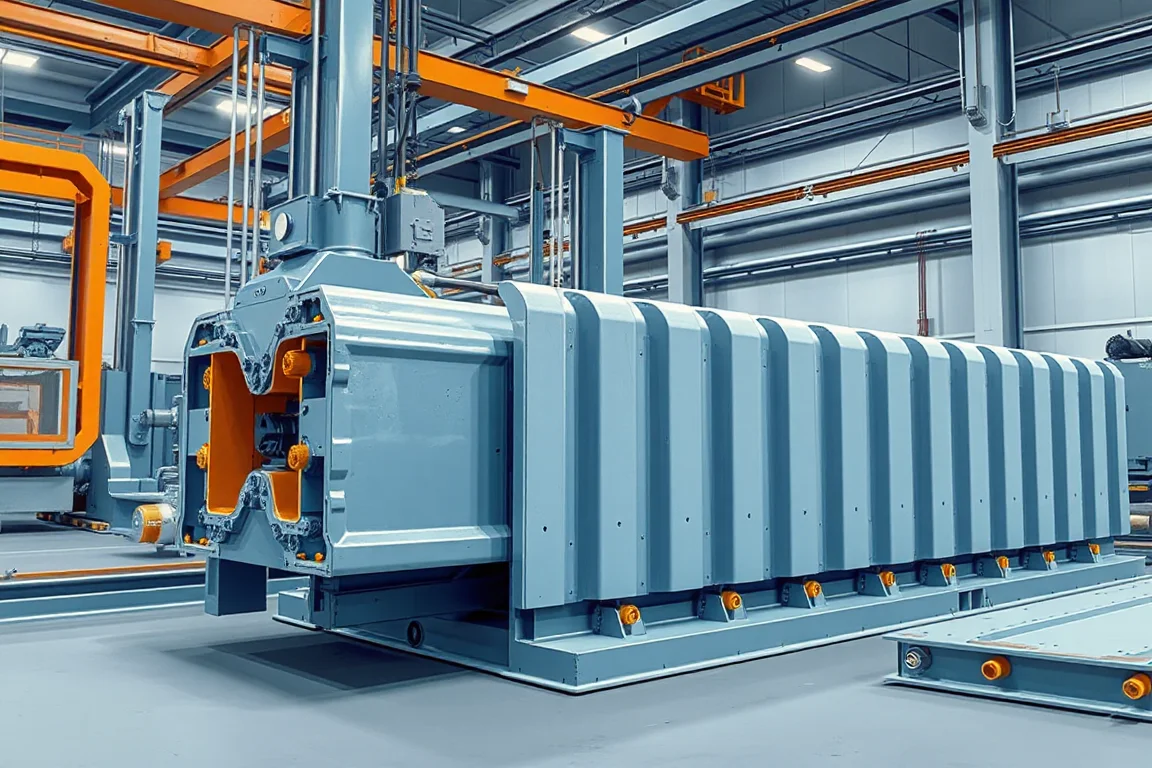
Floor deck maintenance should preserve profile geometry, functional features and the condition of complete sheets after stacking. The plan needs to cover payoff, forming, feature tools, cutting and handling. A mechanically running mill is not sufficient evidence that accepted deck production has been recovered after service.
Use the actual equipment maintenance requirements
Follow the maker's instructions for inspection, lubrication, replacement, isolation and release. Do not apply universal intervals or adjustment values to an unfamiliar line. Work should be assigned to personnel qualified for the relevant mechanical, electrical and hydraulic systems.
Identify assets and profile configurations in the record. A line serving several deck products may use different feature and cutting tools. The service history needs to show which components were affected.
Keep hazardous access under controlled isolation
Operators can report abnormal sounds, stops, alarms and product changes from permitted positions. Cleaning and inspection inside hazardous areas require the approved shutdown and isolation procedure. Moving strip and rolls remain hazardous at low speed.
Define how damaged guarding, leaks or abnormal motion are escalated and how the line is held from service. Production deadlines should not encourage bypassing protective arrangements. Authorized personnel must control return to operation.
Maintain coil loading and entry equipment
Inspect payoff and loading assets according to their documentation and intended coil envelope. Record conditions affecting material presentation. Keep the approved width, orientation and setup references available to the operating team.
A new deck or material range may change the equipment's duty. Review those additions against the maintenance and operating requirements rather than assuming the original plan covers every later product.
Preserve forming-tool identity and condition
Service tools through the supplied procedures and retain their profile references. Deep ribs, bearing surfaces and terminal laps are part of the approved geometry. Similar-looking components from another deck should not be substituted without confirmation.
Record repairs or replacements that could affect the section. The post-service inspection should evaluate the relevant dimensions and the complete adjoining-sheet relationship, not just the condition of the repaired part.
Treat functional feature tools as product-critical assets
Where embossments or other features are specified, maintain their tooling and references separately enough to identify the correct design. Inspect under safe isolation and record wear or damage according to the equipment instructions.
Verify feature geometry on the final sheet after service. A tool that cycles successfully has not automatically reproduced the approved product. Keep the material and profile identities with the release sample.
Inspect cutting support and end condition
Follow the cutting station's service requirements and confirm the correct section-specific components. Inspect both ends of representative sheets for length and local deformation. These are separate product checks.
Include supports and scrap-related arrangements in the task list. A cutting issue may involve the complete station rather than one blade or die. Use the manufacturer's diagnostic and service process instead of improvised adjustments.
Include discharge, nesting and bundle handling
Maintain the equipment that supports long sheets and forms the intended stacks. Damaged contact points or unsuitable recovery after service can deform laps and ribs downstream of correct forming.
Inspect product before and after this handling boundary where needed. Keep bundle-removal equipment within its own maintenance program and coordinate release responsibilities. The line's output is an accepted bundle, not merely a sheet at the roll exit.
Protect setups and inspection references
Use the supplied process for approved control configurations and authorized changes. Preserve profile, feature and length references so the team can recover a known product after maintenance without reconstructing settings from memory.
Maintain measuring equipment and identifiable reference samples. A damaged deck coupon or inconsistent support method can mislead inspection. Keep the approved datum scheme and assembled-cover method with the product record.
Release work through representative deck sheets
Select verification proportionate to the service while retaining normal first-off requirements. If tools affecting multiple profiles were serviced, choose the relevant recovery basket rather than only the easiest common sheet.
- Confirm profile, material and tool revisions.
- Complete the required equipment release.
- Produce identified representative sheets.
- Inspect ribs, bearing areas and functional features.
- Check length, cut ends and adjoining laps.
- Verify preservation through stacking and record acceptance.
For example, replacing a discharge support may resolve a lap dent without changing the forming setup. Inspect the sheet before and after that boundary to confirm the result. Conversely, feature-tool service needs a direct feature check even if the sheet's gross dimensions remain unchanged. A focused verification plus normal release avoids both missed risks and irrelevant paperwork.
Use service history to reduce recurring losses
Review the maintenance release basket when a new deck design is added. The old reference sheet may not exercise its particular lap, embossment or handling condition. Select verification samples that reflect the current route so the next uncommon order does not become the first meaningful test after service.
Connect maintenance findings with first-off rejects, feature deviations, end damage and handling losses. Investigate repeated conditions before simply increasing task frequency. A recurring symptom may point to a broader application or workflow issue.
Maintain verified spare references for the current deck catalog. Identify retired profile components clearly. A spare that fits mechanically but belongs to another lap or feature design can introduce a product error during urgent recovery.
Frequently asked deck maintenance questions
Should embossment tools be treated like cosmetic accessories?
No. If the feature is part of the approved deck design, its condition and identity belong in product-focused maintenance and release.
Why check stacking after servicing the mill?
The final sheet must survive the complete route. Handling can introduce defects after successful forming, and its condition may change during maintenance or repositioning.
Can one short coupon release every post-service condition?
No. Complete lengths, cut ends and adjoining-sheet fit may need verification. Choose samples that address the work performed and the approved product range.
What makes a useful maintenance record?
The exact asset, finding, authorized action, responsible person and product-verification result. Link it to material and profile identities so later investigations can reproduce the released condition.
Continue your research
- Floor Deck Roll Forming Machines
- Floor Deck Roll Forming Machine
- Roof Deck Roll Forming Machine
- B Deck Roll Forming Machine
- N Deck Roll Forming Machine
- H Deck Roll Forming Machine
- How Floor deck roll forming machine Works
- How To Choose a Floor deck roll forming machine
- Floor deck roll forming machine Price: What Affects the Cost?