
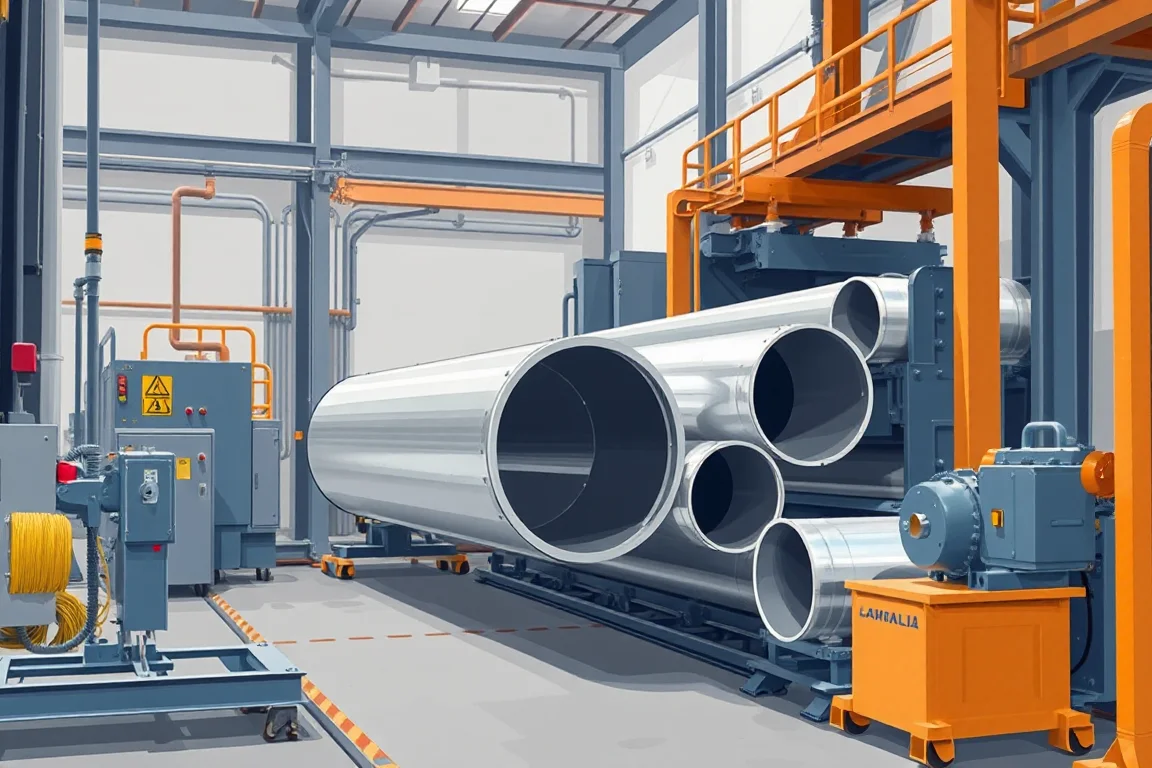
When buyers search for gutter roll forming machine production speed, they often expect a simple number. In practice, the speed that matters is the rate of accepted, install-ready gutter produced under real conditions. That rate depends on the profile being formed, the material and thickness, how coil is supplied, how the line is staffed, and how finishing steps such as outlets and elbows are handled. Understanding these relationships lets you specify, compare and improve a line without relying on unverified claims.
What production speed actually means for gutter lines
Production speed can be described at different points in the process. Instantaneous forming speed is how fast material moves through the forming stations under steady conditions. Effective line speed is the steady rate measured after startup and before the next interruption. Realized output is effective speed multiplied by the fraction of time the line is actually running and producing acceptable parts. These are not interchangeable, and a quote or datasheet that mentions only one of them gives an incomplete picture.
For gutter work, accepted output is the figure that determines labor cost, delivery reliability and material utilization. It counts only lengths that meet the required cross-section, straightness, bead or hem quality and joinery fit. Scrap, rework, coil changes, setup, punch cycles and unloading time all reduce realized output. A line that forms quickly but demands frequent adjustment or produces poor ends may deliver less accepted gutter per shift than a slower, more stable line.
How the process sequence creates and limits speed
A gutter roll forming line follows a logical sequence: coil payoff, section forming, edge or seam closure, cutoff, and then separate operations for outlets, elbows or downpipe components. Each stage has its own cycle time and its own potential to interrupt flow. The line speed is set by the slowest mandatory step, not by the forming stations alone.
Coil payoff can limit speed if the coil car, mandrel or accumulator cannot supply material smoothly. Section forming sets the baseline for material velocity. Edge or seam closure may add a dedicated station or a separate operation, and its reliability affects both speed and quality. Cutoff is often a flying or stationary shear whose cycle time must match the line speed and cut-length mix. Punching holes for hangers or outlets may occur in-line or offline; when inline, the punch cycle can become the bottleneck. Outlets and elbows are frequently separate operations, so they should be evaluated as their own workflow rather than assumed to run at line speed.
Profile and material effects on achievable speed
Profile geometry changes how much work each station must do. A simple K-style or ogee shape with generous radii forms with less resistance than a deep, complex section with tight bends. Beads, hems and stiffening ribs add forming steps and can require more stations or slower feed rates to avoid marking or cracking. The cross-section also affects cutoff: a profile with a wide, unsupported bottom may need special support to cut cleanly at speed.
Material type and thickness matter as well. Coated steel and aluminum behave differently in terms of springback, coating durability and forming loads. Copper requires its own process review because its ductility and surface sensitivity differ from steel and aluminum. Higher base-metal thickness generally increases forming loads and may reduce the speed at which a given station set can produce acceptable parts. The operating range for any specific material and thickness should be confirmed with the equipment supplier, because it depends on station design, roll material and lubrication.
Coil handling, setup and changeover time
Coil handling is a major hidden variable in gutter production. A line that runs well but takes a long time to load a new coil, thread the strip or change from one profile to another will lose output over a shift. The payoff arrangement, coil car, and any accumulator affect how quickly the line can recover after a coil ends. If the line must stop completely for each coil change, that downtime is part of the effective speed calculation.
Setup and changeover also matter. Changing from one gutter profile to another may involve swapping rolls, adjusting stations, changing cutoff tooling and resetting controls. The time required depends on the machine design and the skill of the operator. When comparing options, ask how changeover is performed and what evidence supports the claimed time. A quick-change design can improve realized output even if its steady running speed is similar to a slower alternative.
Downstream operations: outlets, elbows and downpipes
Gutter systems are not just straight lengths. Outlets, elbows and downpipe sections are often produced or finished separately. These operations can become the real constraint on installed productivity if they are not balanced with the gutter line. For example, if the gutter line can produce long runs quickly but outlets are punched and formed manually, the completed gutter system may leave the shop at a much slower rate.
Downpipe production introduces additional requirements. The seam quality and the fit with mating outlets or elbows determine whether the parts assemble correctly on site. A downpipe roll former may have its own speed and cutoff characteristics. When planning output, treat the gutter line and downpipe line as separate processes that must be coordinated rather than assuming one speed applies to both.
Measuring accepted output instead of nominal speed
To plan realistically, measure accepted output over a representative period. Start with actual running minutes, not nominal shift minutes, and subtract coil changes, setup, punch cycles, unloading and any unplanned stops. Then estimate or measure the fraction of material that meets quality requirements. Multiplying steady running speed by running minutes and by the good-output fraction gives an accepted length. This is a planning method, not a machine rating, and the inputs must come from your own operation or from verified trials.
Divide accepted length by the representative cut length only when the product mix and cutoff cycle allow that simplification. If the line produces a mix of long gutter sections and short outlet pieces, a single cut-length divisor can be misleading. It is better to model the actual cut-length and hole-pattern mix, including any secondary operations.
Comparing alternatives: dedicated lines, portable machines and hybrid setups
Dedicated workshop lines typically prioritize stability and higher steady speeds, with coil handling and material support designed for long runs. Portable gutter machines trade some speed and profile flexibility for transportability and on-site production. Hybrid setups may use a workshop line for standard profiles and a portable machine for custom or on-site work. Each choice affects realized output differently.
A dedicated line can achieve high effective speed when the product mix is stable and coil changes are infrequent. A portable machine may have lower steady speed but reduce handling and transportation of finished lengths. The better choice depends on where the bottleneck actually lies: material supply, forming, finishing, or logistics. Comparing nominal speed alone does not capture these differences.
Practical checklist for specifying and evaluating a line
- Define the profile cross-section, bead or hem, and downpipe seam and outlet interface in a dimensioned drawing.
- Specify base-metal thickness and grade, and ask how the operating range will be verified for each material.
- Map the full process sequence, including coil payoff, forming, edge or seam closure, cutoff and separate outlet or elbow operations.
- Measure running minutes rather than shift minutes, and track coil changes, setup and unloading separately.
- Count rejected or reworked material as a separate factor when calculating accepted output.
- Describe the intended cut-length and hole-pattern mix, and confirm how cutoff and punching cycles interact with line speed.
- Inspect the bead or hem, straightness and joining fit during acceptance, and check downpipe seam and mating outlets or elbows.
- Confirm voltage, frequency and phase requirements, and request a confirmed equipment schedule for installed power.
- Discuss drainage design in the context of the building and local requirements.
Frequently asked questions
Is there a standard production speed for gutter roll forming machines?
No single standard applies because speed depends on the profile, material, thickness, station design and auxiliary operations. Two lines with the same nominal forming speed can differ significantly in accepted output. It is more useful to define the speed you need for your specific product mix and to request evidence from a trial or a referenced installation.
How do coil changes affect production speed?
Coil changes interrupt forming and require the strip to be stopped, cut, threaded and restarted. The time lost depends on the payoff design, whether an accumulator is used and how quickly the operator can complete the change. Frequent coil changes reduce effective speed, so coil size and handling method are part of the speed equation.
Can one machine produce both gutters and downpipes at the same speed?
Not necessarily. Gutter and downpipe profiles have different cross-sections, seam requirements and cutoff needs. A line may be configured for one or the other, or may require changeover. Even if the same line runs both, the effective speed for each product can differ because of tooling, material and downstream handling.
What is the biggest bottleneck in gutter production?
The bottleneck is often not the forming stations. It can be coil payoff, cutoff cycle time, punching, outlet forming, unloading or changeover. To find it, measure time at each stage during a representative run and identify where the line waits. Improving a non-bottleneck stage will not increase accepted output.
How should I calculate the output I need?
Start from the required finished length per shift or per project, then work backward through the process. Account for running minutes, good-output fraction, coil changes, setup and secondary operations. Use the calculation as a planning tool, and replace estimates with measured data from trials or existing equipment as soon as it is available.
What quality checks affect accepted output?
Accepted output depends on the bead or hem, straightness and joining fit. For downpipes, the seam and the fit with mating outlets or elbows are critical. If these features do not meet requirements, the part may need rework or be rejected, which reduces the accepted length even if the line ran at full speed.
Why the bottleneck, not nominal speed, should drive decisions
Production speed for gutter roll forming is a system property. The useful question is not how fast the machine can run in isolation, but how much accepted gutter it can deliver with your profile, material, coil supply, staffing and downstream operations. By mapping the sequence, measuring running time and quality, and identifying the real constraint, you can compare alternatives on a basis that reflects installed productivity. That approach supports better specifications, more realistic planning and fewer surprises after installation.
Continue your research
- Gutter & Downspout Roll Forming Machines
- Gutter Roll Forming Machine
- Downspout Roll Forming Machine
- K Style Gutter Roll Forming Machine
- Half Round Gutter Roll Forming Machine
- Box Gutter Roll Forming Machine
- How Gutter roll forming machine Works
- How To Choose a Gutter roll forming machine
- Gutter roll forming machine Price: What Affects the Cost?