
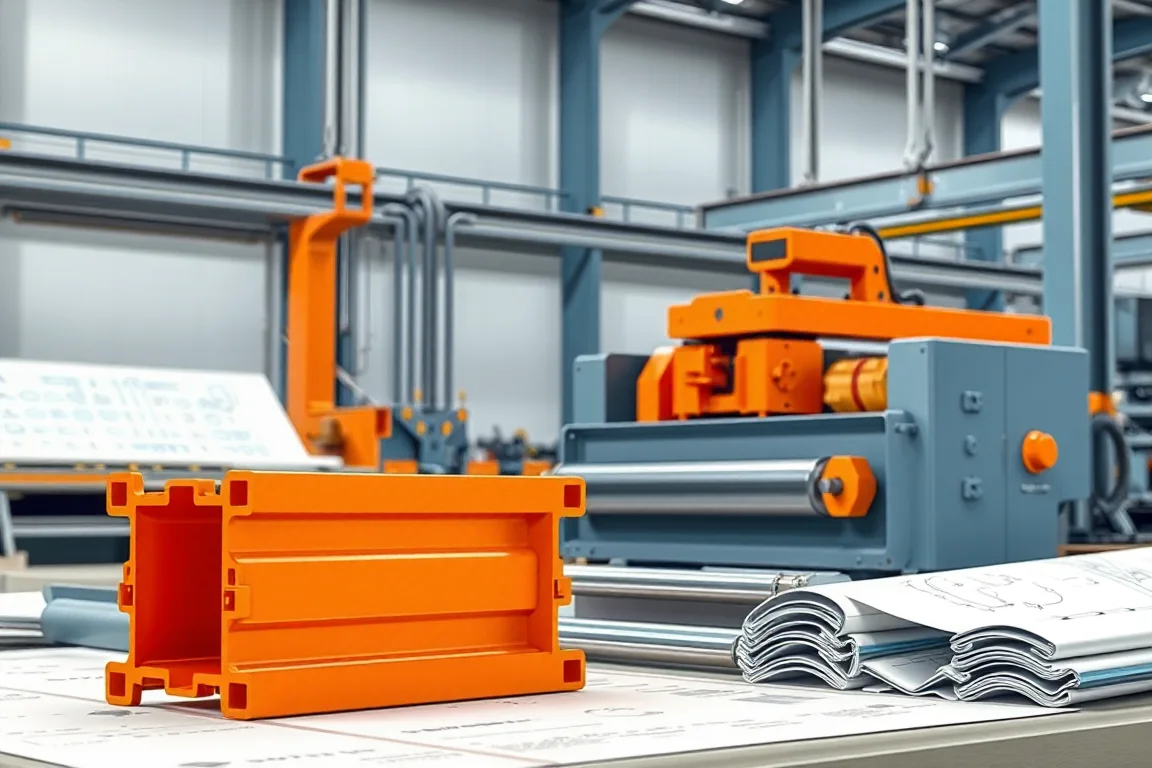
The price of a solar roll forming machine is not a single number with a standard multiplier attached. It reflects a defined manufacturing scope: which rail, post, or bracket profiles the line will produce; how the material is leveled, punched, formed, cut, and handled; what auxiliary equipment and utilities are included; and what evidence will be used to accept the output. Two quotations for what sound like the same machine can differ substantially because they cover different work. The practical approach is to fix one drawing and one scope checklist, then compare what each quotation actually delivers as accepted parts.
Why headline price can mislead
A low equipment price may exclude leveling, connection punching, special cutoff tooling, run-out tables, or the de-coiler. Those items still have to be purchased or improvised, so the real project cost is higher than the quoted figure. Conversely, a higher quotation may include a more complete line, clearer acceptance criteria, or tooling that reduces changeover scrap. What matters is the cost per accepted part under the intended production pattern, not the cost of the largest single item on the invoice.
Solar mounting parts are not all roll formed. Long rails with a consistent cross-section are a natural fit for roll forming. Short brackets, castings, or extrusions may be made by other processes. Confirm the cross-section, material, and joining method before assuming a roll forming line is the right investment. A machine quoted for a rail profile will not necessarily produce a post or a clamp body without different tooling and a different process plan.
Define the purchased scope before comparing prices
The first price driver is a precise statement of scope. A quotation should identify whether it covers a rail, a bracket, a post, or a complete family of sections. It should also state the process sequence. A typical sequence for a solar mounting section is leveling, connection punching, channel forming, cutoff, and inspection of mounting interfaces. Each step adds equipment, controls, tooling, and setup time. If a step is missing, the quotation is incomplete rather than cheaper.
The scope should also distinguish forming from downstream operations. Ground-post joining, hardware insertion, assembly, and packaging are separate from the roll forming process. If those operations are part of the project, they need their own budget line. Mixing them into a single vague figure makes it impossible to see where cost is actually incurred.
Tooling and profile complexity
Roll tooling is designed around a specific section. The number of forming passes, the presence of slots and lips, the bend radii, and the material grade all influence tooling cost. A profile with many small features or tight tolerances generally requires more engineering and more careful roll design than a simple open channel. Slots and lips often locate mounting hardware, so their position relative to the connection datums matters. Tooling that references the same datums as the section drawing reduces the risk of field fit problems.
Punching tools are a significant part of the scope. If holes or slots must be placed after forming rather than before, the tooling and line layout change. The quotation should state where each critical feature is created and how its position will be verified. A tooling package that is cheap but difficult to set up may cost more in scrap and downtime than a more thoroughly engineered package.
Machine configuration and forming length
The overall machine configuration affects price through the number of stands, the drive system, the base frame, and the control architecture. A longer forming section is not automatically better; it depends on the profile and the material. The buyer should specify the base-metal thickness and grade, and the supplier should verify the operating range. Thickness and grade are selection requirements, not verified machine ratings. If the reported range is not confirmed against the actual section, the price comparison is built on an assumption.
Cutoff is often underestimated. Confirm that the cutoff is supported by the profile, what cut lengths are needed, and what end quality is acceptable. Burrs, deformation, and inconsistent lengths create downstream rework. If secondary operations such as deburring or end forming are required, they belong in the scope and the price.
Punching, slots, and mounting interfaces
Solar mounting systems rely on slots, holes, and lips that engage clamps and other hardware. A machine that forms the section correctly but punches in the wrong place produces parts that will not assemble. The quotation should describe how punch position is held relative to the forming datums and how the first-off part is checked. A hardware fit trial using actual clamp or bracket samples is more informative than a dimensional check alone. It reveals whether the interface works in practice, not just on paper.
Acceptance criteria should include clamp fit, slot position, section straightness, and cut-edge condition. These checks are part of the delivered scope because they determine whether the output can be used. If a quotation does not address them, the price is not comparable to one that does.
Material handling and auxiliary equipment
Coil handling, de-coiling, feeding, and run-out tables add cost but also determine how safely and consistently the line runs. A line without adequate support may mark the material or lose alignment. The auxiliary equipment schedule should be part of the quotation. If it is omitted, the buyer may need to source it separately, which changes the effective price and the integration risk.
Changeover is another cost driver. If the line will run more than one profile, the time and scrap associated with changing tooling or adjusting stands must be understood. A machine that is inexpensive to buy but slow to change over can have a high cost per accepted part when production is varied.
Power, utilities, and installation
The buyer should state the voltage, frequency, and phase available at the site. The installed power requires a confirmed equipment schedule rather than an assumption. Utilities, foundation work, compressed air, and any dust or fume extraction are separate from the machine price. Transport, rigging, installation, and commissioning also need budget lines. These items are easy to overlook because they are not part of the machine itself, but they are part of the project cost.
Output and cost per accepted part
No verified model rating is available here, and a responsible quotation does not invent one. Accepted output per shift should be defined using the actual profile and material. Count completed, inspected parts, including punching, and account for changeovers. Short slotted brackets and long rails require different output calculations because the cycle time, handling, and cutoff behavior differ.
The cost per accepted part divides the total project cost by the number of parts that pass inspection. It includes tooling, equipment, auxiliary handling, transport, installation, utilities, training, and acceptance. It also includes scrap and rework. A machine with a lower purchase price can have a higher cost per accepted part if it produces more scrap, requires more manual handling, or takes longer to change over. This is why the lowest equipment price is not necessarily the lowest total cost.
What a useful budget separates
A practical budget separates engineering and tooling, machine equipment, auxiliary handling, transport, installation, utilities, training, and acceptance. It also states what is excluded. Excluded tools, utilities, and secondary operations should be recorded for every quote so that comparisons are made on the same basis. Without a defined scope, a numerical price range can obscure more than it explains. RollVanta does not publish invented equipment prices.
Comparing alternatives to roll forming
Roll forming is one option among several for solar mounting components. Press braking can be flexible for low volumes but is slower and less consistent for long sections. Extrusion is common for aluminum components and is a separate process with different tooling and cost structure. Stamping can produce short brackets efficiently at high volume. The right choice depends on the section geometry, material, volume, and the required mounting interfaces. Do not describe every solar rail or module frame as roll formed. Confirm the cross-section, material, and joining method before selecting the manufacturing process.
Within roll forming, a single-profile line and a multi-profile line have different cost profiles. A single-profile line may be simpler and less expensive to buy, while a multi-profile line may cost more initially but reduce the need for multiple machines. The tradeoff depends on the production mix and how often changeovers occur.
Decision checklist
- Use one drawing and scope checklist for every quote.
- Record excluded tools, utilities, and secondary operations.
- Confirm whether the quote covers a rail, bracket, post, or complete family.
- State base-metal thickness and grade; ask the supplier to verify the operating range.
- Confirm punching datums and plan a hardware fit trial.
- Define accepted output per shift with the actual profile and material.
- Compare changeover scrap and handling requirements, not only purchase price.
- Separate forming from assembly, certification, and in-service performance.
- Include transport, installation, utilities, training, and acceptance in the budget.
- Evaluate wind, snow, corrosion, and foundation requirements with the mounting-system designer.
FAQ
Does the machine price include tooling for more than one profile?
Not necessarily. Tooling is often quoted separately per profile. If the project involves multiple sections, ask for a clear listing of which profiles are covered and what tooling changes are required. A single-profile quotation is not comparable to a multi-profile quotation unless the tooling scope is stated.
How do punching and slots affect the price?
Punching adds tooling, controls, and line length. Slots and lips that locate mounting hardware require accurate position relative to the forming datums. If punching is omitted or moved downstream, the price changes and the risk of fit problems changes. The quotation should state where each critical feature is created and how it is verified.
Why is cost per accepted part more useful than purchase price?
Purchase price ignores scrap, rework, changeover time, and manual handling. Cost per accepted part spreads the total project cost over the parts that actually pass inspection. It reveals whether a lower-priced line is truly cheaper in operation. This is especially important when the production mix includes both long rails and short brackets.
Can I compare prices from different suppliers directly?
Only if the scope is identical. Differences in leveling, punching, cutoff, auxiliary handling, and acceptance criteria make direct comparison unreliable. Use one scope checklist and require each quotation to state inclusions and exclusions. Then compare the cost per accepted part under the same assumed production pattern.
What should I provide to get a meaningful quotation?
Provide a section drawing with connection datums, the material grade and base-metal thickness, the required cut lengths, the expected production mix, the available voltage and frequency, and a description of the acceptance checks. This lets the supplier quote a defined scope rather than a vague machine.
Are solar mounting components always roll formed?
No. Long rails are often roll formed, but brackets, posts, and clamps may be stamped, cast, or extruded. The cross-section, material, and joining method determine the appropriate process. Confirm these details before selecting roll forming, because a machine quoted for one process will not produce parts suited to another.
Continue your research
- Solar Mounting Roll Forming Machines
- Solar Strut Channel Roll Forming Machine
- Solar Mounting Rail Roll Forming Machine
- Solar C Channel Roll Forming Machine
- Solar U Channel Roll Forming Machine
- Solar Hat Channel Roll Forming Machine
- How Solar roll forming machine Works
- How To Choose a Solar roll forming machine
- Materials and Thickness for Solar roll forming machine