
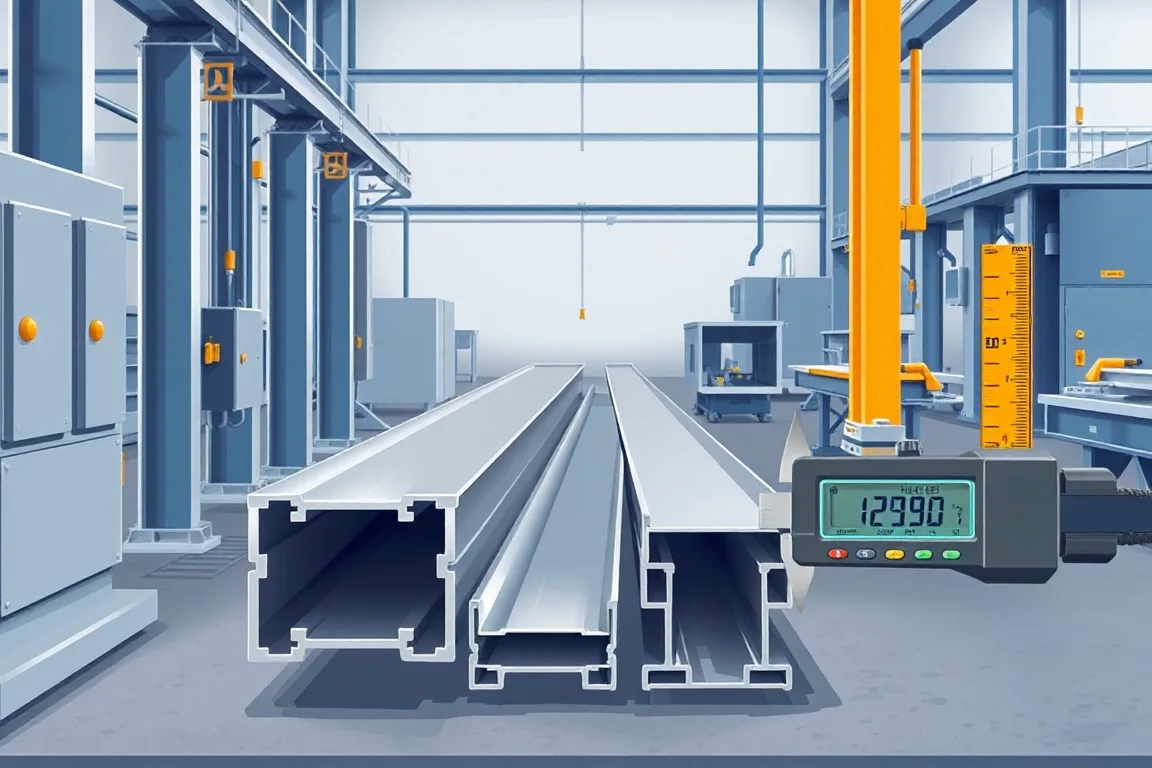
Solar mounting roll forming machines convert coated steel coil into rails, struts, purlins, and ground posts. The material and thickness you specify determine how the line must be set up, how the tooling should be designed, and what dimensional and surface quality you can expect. This page explains the decisions behind material and thickness selection and how they affect the forming process, from coil handling through cutoff and inspection.
Why material thickness cannot be chosen in isolation
The thickness of the base metal is only one variable in a set that includes yield strength, tensile strength, elongation, coating type and thickness, surface finish, and the geometry of the profile. A rail with a given base-metal thickness formed from a higher-strength steel will spring back differently and require different roll settings than the same rail formed from a lower-strength steel. The coating also matters: a thicker metallic coating or a different paint system changes friction, bend radius behavior, and edge condition. For these reasons, buying a machine rated only for a thickness range without reference to material grade and coating is not sufficient for production planning. The thickness you specify must be accompanied by the grade and strength range, and the machine supplier should verify that the combination is supported by the tooling design and the drive capacity.
From coil to formed section: sequence and interfaces
A typical solar mounting roll forming line begins with a coil car or uncoiler that feeds strip into a leveler. Leveling reduces coil set and crossbow so that the strip enters the forming stations consistently. The strip then passes through a series of forming stands, each performing a controlled bend. Between forming stages, the line may incorporate a punching station for slots, holes, or connection features. After forming, a cutoff press cuts the section to length. The interfaces between these stages matter because they share the same material and thickness. For example, a punch that is sized for one thickness may produce a different hole quality when the strip is thicker or stronger. A cutoff that uses a shear or die cut must match the section stiffness and the cut length tolerance. The forming sequence must be designed so that the strip is guided without excessive stretching or scratching, and so that the final section meets the profile drawing. The machine controls should allow individual station adjustments, but the range of adjustment is limited by the tooling and the material being run.
Deciding on material grade and strength
Solar mounting components are often made from structural steel with a protective coating. The grade designation typically includes a minimum yield strength. Higher strength allows a thinner section to carry the same load, but it also increases springback and may reduce formability. Lower strength is easier to form but may require greater thickness to achieve the same stiffness. The choice is a trade-off between material cost, weight, and forming difficulty. For a given profile, the machine must have enough power and the right number of forming stations to shape the material without overbending or cracking. The supplier should be able to state which strength range and thickness combinations have been verified for the proposed tooling. Do not assume that a machine that runs one grade can run all grades in the same thickness range.
Thickness specification: nominal and tolerance
Thickness should be specified as a nominal base-metal thickness with a permitted tolerance, preferably referencing a recognized standard for the coil. Ambiguous gauge numbers should be avoided because they do not define a precise thickness range. The design engineer for the mounting system will calculate required thickness based on wind, snow, and seismic loads, but the roll forming supplier needs the thickness range to design the roll gap and the cutoff. A wider tolerance band may require more frequent adjustments or a more robust forming strategy. Also, the thickness of the coating is separate from the base-metal thickness and must be stated independently.
Coating and surface condition
Coatings on solar mounting steel serve corrosion resistance and sometimes appearance. Common options include metallic coatings such as zinc or zinc-aluminum, and organic coatings such as paint or film. The coating affects forming because it can flake, crack, or transfer to the rolls if the bend radius is too tight or if the roll surface is not prepared. The exposed face of the profile—the side that will be visible or contact the module clamp—may require a smoother finish. When specifying material, state the coating type, coating weight or thickness, and which face is exposed. The roll forming line should be set up to avoid damaging the coating, and the cut edges should be treated according to the installation environment. Material thickness alone does not determine outdoor durability; the coating system and edge protection do.
Profile features that interact with thickness
Solar rails often include slots, lips, and stiffening ribs. These features locate mounting hardware and transfer loads. Their dimensions, such as slot width and lip height, are designed for a specific thickness and hardware engagement. If the thickness changes, the slot may not accept the hardware properly or the lip may not provide enough bearing. The punching station must reference the same datums as the section drawing so that holes and slots align with the formed profile. In some cases, secondary operations such as tapping or notching may be needed after forming. These operations must be planned with the same material and thickness in mind.
How thickness affects forming force and tooling
Thicker and stronger material requires greater force to bend. This affects the machine frame, the drive power, the roll shaft diameter, and the bearing selection. If a machine is designed for a given thickness range, running material at the upper end of that range may reduce the maximum line speed. The tooling must also be designed with the correct bend allowances and springback compensation for the material. In practice, a machine that is advertised to run a wide thickness range may not run all combinations at the same quality or speed. Ask for the specific material grade and thickness combinations that have been engineered and tested for the proposed line, rather than a single maximum thickness.
Acceptance criteria: what to check
After forming, the finished section should be checked against the profile drawing and the functional requirements. Key checks include section dimensions, straightness, twist, slot position, hole diameter, and cut-edge condition. For solar mounting, the fit with clamps and other hardware is critical. A hardware fit trial using actual clamps and fasteners can reveal interference or inadequate engagement. The cut edge should be free of excessive burrs or cracks that could affect coating integrity. The inspection plan should reference the same datums as the tooling and the drawing. The accepted output per shift should be defined with the actual profile and material, not with a generic speed rating.
Comparing alternatives: roll forming versus other processes
Roll forming is one option for producing solar mounting components. Competing processes include press braking, extrusion, and welding. Each has trade-offs. Roll forming can produce long, consistent sections at high volume with integrated punching and cutoff. Press braking is more flexible for low volumes and varied lengths but may be slower and less consistent for complex profiles. Extrusion is common for aluminum module frames but is a separate process from roll forming steel rails. Welding can join simple shapes but adds labor and may distort thin material. The choice depends on the profile complexity, material, volume, and required tolerances. For a given solar rail design, roll forming may be suitable if the profile can be formed from coated steel and if the production volume justifies the tooling cost.
Practical selection checklist
- State the material grade with minimum yield strength and tensile range.
- Specify nominal base-metal thickness and tolerance, not a gauge number.
- Describe the coating type, coating thickness or weight, and exposed face.
- Provide the profile drawing with datums for slots, holes, and bends.
- Identify the hardware that will engage the profile and request a fit trial.
- Confirm the required cut length and end quality.
- State the required output per shift with the actual profile and material.
- Verify the electrical supply characteristics for the proposed equipment.
- Agree on acceptance criteria for dimensions, straightness, and surface condition.
- Define which material and thickness combinations the supplier will support in writing.
Frequently asked questions
Can one roll forming machine handle multiple material thicknesses?
It can, within a range, but the tooling and machine settings may need to be adjusted or changed. The practical range depends on the profile, the material strength, and the design of the rolls. For each thickness, the roll gap and springback compensation may differ. A machine that runs one thickness well may not run a significantly thicker or thinner material without losing quality or speed. The supplier should specify the exact combinations that are supported.
How do I specify thickness without using gauge numbers?
Use a nominal thickness in millimeters or inches with a tolerance, and reference a recognized material standard for the coil. The standard will define the permitted thickness variation. Avoid gauge numbers because they are ambiguous and do not provide a clear tolerance. The mounting system designer should determine the required thickness based on structural calculations, and the roll forming supplier should confirm that the thickness can be formed.
What role does yield strength play in roll forming?
Yield strength affects how much the material springs back after bending and how much force is required to form it. Higher yield strength generally means more springback and higher forming loads. The tooling must be designed to compensate for the springback of the specific material. If the yield strength varies within a coil or between coils, the formed dimensions may vary. Specifying a yield strength range rather than a single minimum helps the supplier design robust tooling.
Does coating thickness affect the forming process?
Yes. A thicker coating can crack or flake if the bend radius is too tight. It can also change the friction between the strip and the rolls, affecting feed and surface finish. The coating type and thickness should be stated so that the roll surfaces and lubrication can be selected appropriately. In some cases, a protective film may be applied to prevent scratching; the film must be compatible with the forming process.
How can I ensure slots and holes align with hardware?
Provide the hardware drawing and request a fit trial with samples from the intended production material and thickness. The punching station must reference the same datums as the section drawing. Dimensional inspection of the first-off parts should include slot position and hole diameter. If the hardware does not fit, the tooling or the profile design may need adjustment before full production.
What should be included in an acceptance test?
An acceptance test should cover the full range of profile features: section dimensions, straightness, twist, slot position, hole quality, and cut-edge condition. It should also include a hardware fit check and a visual inspection of the coating. The test should be performed with the actual material grade and thickness, and the results should be recorded. The acceptance criteria should be agreed in writing before the machine is shipped.
Continue your research
- Solar Mounting Roll Forming Machines
- Solar Strut Channel Roll Forming Machine
- Solar Mounting Rail Roll Forming Machine
- Solar C Channel Roll Forming Machine
- Solar U Channel Roll Forming Machine
- Solar Hat Channel Roll Forming Machine
- How Solar roll forming machine Works
- How To Choose a Solar roll forming machine
- Solar roll forming machine Price: What Affects the Cost?