
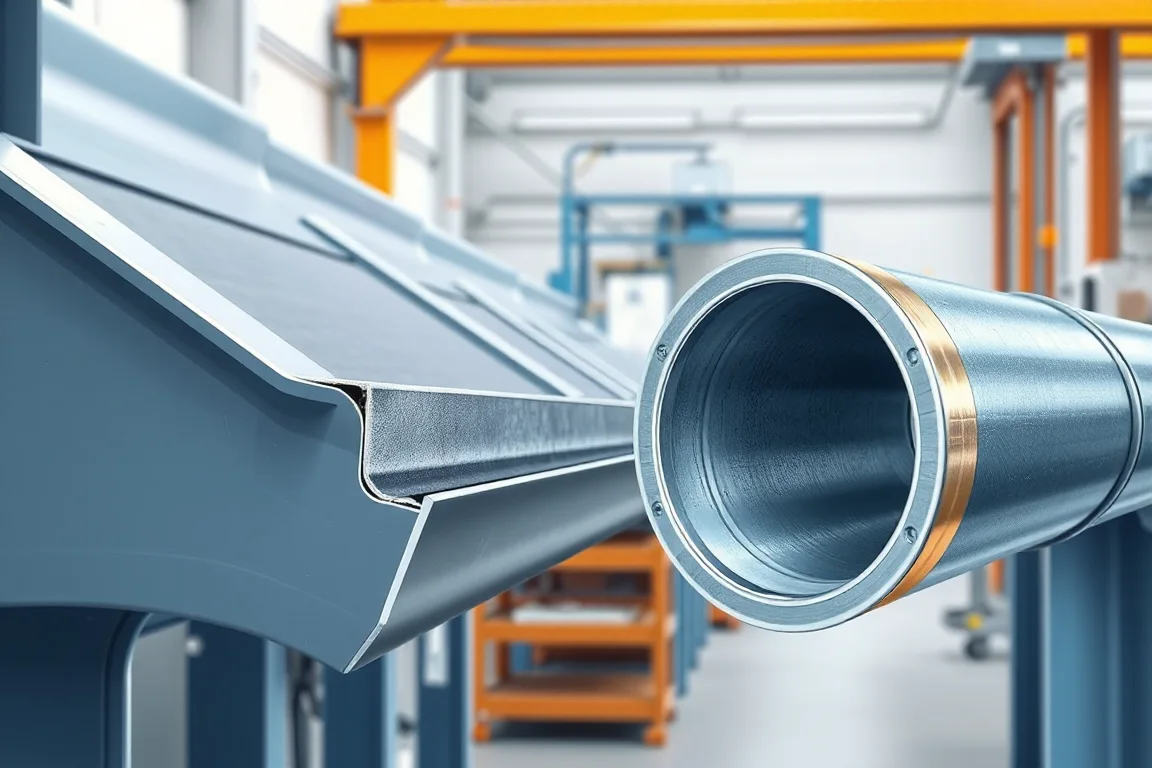
Gutter roll forming machine troubleshooting works best when the fault is framed as a change from a known-good reference. Instead of adjusting several settings at once, identify whether the deviation began with a coil change, a tooling or setup change, a cutoff event, or handling after the machine. The goal is to restore the approved profile and joint fit, not to force the machine into a cosmetically acceptable but functionally weak condition.
This article explains how to recognise common defect patterns, what evidence to collect, and how to compare practical alternatives for correction. It does not replace the equipment manufacturer's procedures, and it does not authorise reaching into running machinery or altering stored-energy components.
What does gutter roll forming machine troubleshooting actually involve?
Gutter roll forming is a sequence: coil payoff feeds strip into a series of forming stands that progressively bend the cross-section, edge or seam features are closed, and a cutoff separates the finished length. Outlets, elbows and downpipe seams are typically separate operations. Troubleshooting must therefore distinguish between a condition created early in the line and one created by a later operation or by handling.
A defect that appears only after cutoff, for example, may originate in the cutoff tool rather than the forming rolls. A joint that leaks may reflect seam geometry, sealant placement, installation practice or joint preparation rather than a forming fault. The purpose of troubleshooting is to narrow the source using structured evidence, not to assume every deviation requires a tooling change.
Collecting diagnostic evidence before changing anything
Useful evidence includes the part identity, the coil lot or material certificate reference, the drawing revision, and the measurement conditions. A measurement taken with a different method or on a different surface condition can make a good part look out of tolerance. Keep a known-good reference sample and measure the suspect part with the same instruments and the same reference points.
Record whether the fault started at a coil change, a setup change, a tooling change or a maintenance event. That single question often separates material-related variation from machine-related variation. Also note whether the defect appears before cutoff, after cutoff, or only after handling and stacking. If the fault appears before cutoff, forming or edge closure is the likely area. If it appears after cutoff, the cutoff tool, support or discharge path deserves attention.
Profile and cross-section defects
Profile defects include incorrect flange angles, uneven bead or hem, twist, bow, and inconsistent cross-section dimensions. These symptoms often relate to material properties, strip width, roll condition or setup consistency. A change in yield strength or coating condition can alter springback and require different forming effort, but the correct response is determined by the equipment manufacturer's procedure, not by arbitrary adjustment.
When the bead or hem is irregular, inspect the forming sequence and the edge preparation. A bead that is partly formed or crushed may indicate that the edge entered a pass misaligned, that strip width is inconsistent, or that a roll is worn or contaminated. Compare the suspect section with a known-good sample and identify which pass first shows the deviation.
Straightness, bow and twist
Straightness problems are frequently cumulative. A slight asymmetry in one pass can produce a visible bow or twist after several passes. Check whether the coil has a consistent camber or edge condition, because incoming material can contribute to directional deviation. However, do not assume that a thicker sheet will solve every straightness issue; thickness changes alter springback, roll load and cutoff behaviour together.
When bow or twist appears, compare the first formed section with the finished part. If the deviation is already present early, the issue is upstream. If the deviation develops gradually, examine the later passes and the cutoff support. Record whether the defect changes with coil lot or with line direction.
Cutoff and end-quality symptoms
Cutoff problems show up as burrs, deformed ends, length variation, or a cut that is not square to the profile. These symptoms can come from the cutoff tool condition, the support of the profile during cutting, or the material's response to the cutting action. A profile that is not fully supported can deform during cutoff even if the forming section is acceptable.
Inspect the cut end for evidence of tearing versus shearing. Investigate whether the cut length varies consistently or randomly. Consistent variation may point to a measurement or feed reference issue, while random variation may point to material slippage or a mechanical condition. Any inspection must be done with the line stopped and isolated according to the manufacturer's procedure.
Seam, joint and downpipe defects
For downpipes, check the seam and the mating outlets or elbows. A seam that is not closed consistently can leak, but the cause may be seam geometry, roll condition or material formability. Joint leaks may also relate to sealant selection, joint preparation or installation. Distinguish between a seam that is mechanically open and a joint that is mechanically closed but not sealed.
Compare the seam of the suspect part with a known-good part from the same tooling and material. If the seam geometry matches but the leak persists, the sealant or joint preparation may be the differentiator. If the seam geometry differs, the forming or closing stage is the likely source. Drainage design also matters, but it is a separate discipline from machine troubleshooting.
Material and coating effects
Coated steel, aluminum and copper do not behave identically in forming or joining. Coating damage can occur through roll contact, cutoff, or handling, and it may not be solved by changing thickness. Inspect coating damage without assuming that a thicker sheet will resolve every issue. Finish durability, bendability and joint compatibility should be reviewed together.
When a material change is suspected, compare incoming material certificates and coil identification. Do not assume one tool set handles steel, aluminum and copper equally. A material substitution may require a process review because forming loads, springback and joining behaviour differ.
Controlled diagnostic method
Document the defect with part identity, coil lot, drawing revision and measurement conditions. Compare incoming material, output before cutoff where safely observable, and the finished handled part. Change one controlled variable at a time under the equipment manufacturer's procedure. Do not reach into running machinery or improvise adjustments around stored energy. Escalate safety-related or qualified-process changes to the responsible engineer.
This method keeps the investigation defensible. It also prevents the common error of adjusting several stations to compensate for a single upstream cause, which can create a new defect elsewhere in the line.
Practical troubleshooting checklist
- Record whether the fault starts at a coil or setup change.
- Separate forming, cutting, joining and handling effects.
- Keep a known-good reference and use the same measurement method.
- Note whether the defect appears before or after cutoff.
- Compare the suspect part with the reference at each stage.
- Inspect bead or hem, straightness and joining fit.
- For downpipes, check seam and mating outlets or elbows.
- Document material lot, drawing revision and measurement conditions.
- Change one controlled variable at a time under the manufacturer's procedure.
- Escalate safety-related or qualified-process changes to the responsible engineer.
Comparing alternatives for correction
When a defect is confirmed, several correction paths may be available. Tooling adjustment, roll replacement, material substitution, revised cutoff support, or revised handling practice are all possible. Each has tradeoffs. Tooling adjustment may restore the profile but can affect other dimensions. Roll replacement may address wear but requires confirming that the new roll matches the approved design. Material substitution may improve formability but change joining behaviour and finish compatibility.
A process review is appropriate when the change affects safety, structural performance or the approved joint design. A handling review is appropriate when the defect appears only after the part leaves the line. Comparing these alternatives requires the same reference conditions and the same measurement method.
FAQ
Why does my gutter profile twist even when the forming rolls look clean?
Twist can originate from asymmetric strip entry, uneven roll pressure, material camber or a later pass that pulls the section. Clean rolls do not guarantee correct alignment or load balance. Compare the first formed section with the finished part and check whether the deviation is present early or develops gradually.
What should I check if the cutoff end is burred or deformed?
Inspect the cutoff tool condition, the support of the profile during cutting, and whether the cut length varies consistently or randomly. A profile that is not fully supported can deform during cutoff even when forming is acceptable. Perform inspection only with the line stopped and isolated.
How do I separate a seam leak from a sealant problem?
Compare the seam geometry of the suspect part with a known-good part made with the same tooling and material. If the seam is mechanically open, the forming or closing stage is likely involved. If the seam is closed but leaks, examine sealant selection, joint preparation and installation.
Can changing material thickness fix a forming defect?
Thickness changes alter springback, roll load and cutoff behaviour together, so it may shift the defect rather than resolve it. Coating damage and bendability also matter. Review finish durability, bendability and joint compatibility together before assuming a thickness change is the answer.
Why does the defect appear only after handling or stacking?
A defect that appears after handling may reflect the part's stiffness, support during discharge, or stacking practice rather than forming. Compare the part immediately after cutoff with the same part after handling. If the difference appears in handling, focus on the discharge and storage path.
When should I escalate a troubleshooting change to an engineer?
Escalate when the change affects safety, structural performance, the approved joint design or a qualified process. Do not reach into running machinery or improvise adjustments around stored energy. The responsible engineer should approve any change that could affect the machine's safe operation or the product's fitness for purpose.
Continue your research
- Gutter & Downspout Roll Forming Machines
- Gutter Roll Forming Machine
- Downspout Roll Forming Machine
- K Style Gutter Roll Forming Machine
- Half Round Gutter Roll Forming Machine
- Box Gutter Roll Forming Machine
- How Gutter roll forming machine Works
- How To Choose a Gutter roll forming machine
- Gutter roll forming machine Price: What Affects the Cost?