
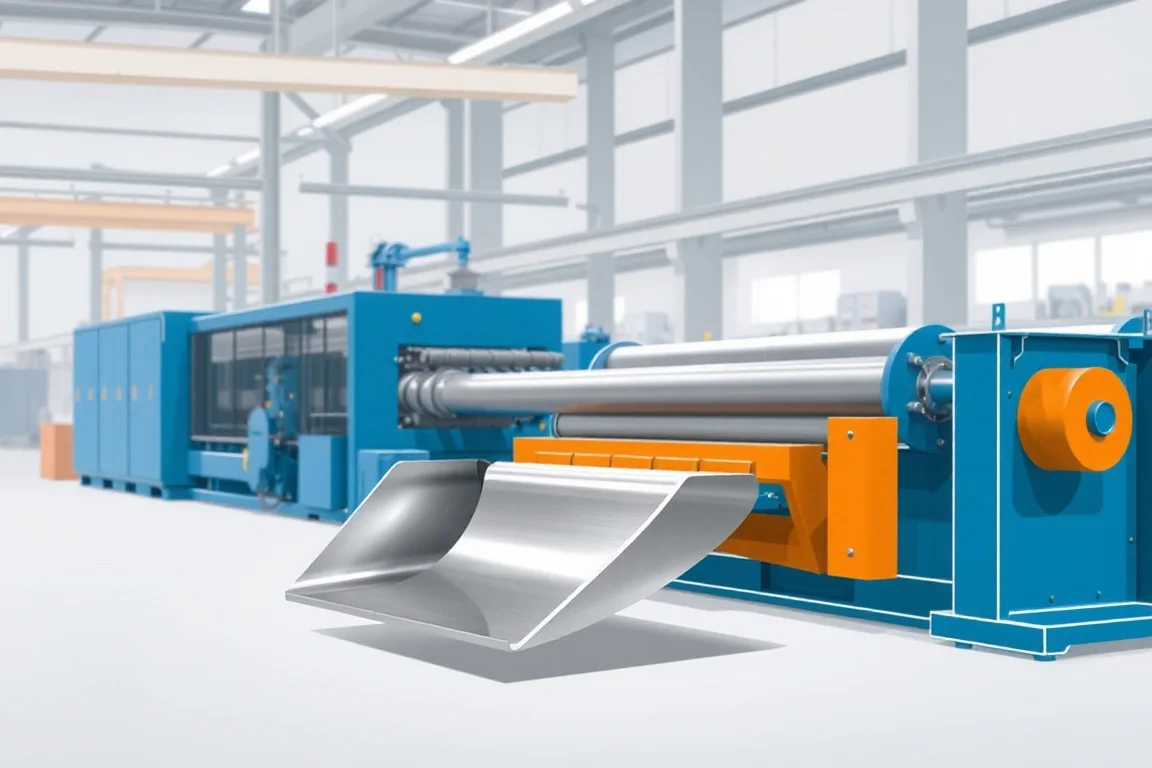
A gutter roll forming machine converts coil into the specified open rainwater-channel profile, then cuts it into the lengths needed for an order or installation. The important geometry includes the trough, back, front face, bead or hem and the interfaces used by hangers, end caps and outlets.
Choosing the machine begins with the gutter family and operating model. A portable jobsite route and a stationary factory line solve different handling and scheduling problems. Both should be evaluated around the actual profile, material and finished lengths rather than a general seamless-gutter label.
Which gutter profile will the business supply?
K-style, half-round, box and other regional gutter shapes have different cross-sections and accessory interfaces. Their names identify broad families but do not replace controlled drawings. Front beads, rear returns and depth can vary within a familiar commercial category.
Provide the complete profile and intended hangers, caps and outlets. If several sizes are required, list them separately with material and strip-width requirements. A machine that makes one nominal size does not automatically cover every regional version of that gutter.
What should the section drawing define?
- Trough width, depth and bottom geometry.
- Front face, bead or hem.
- Back height and fixing-related returns.
- Material, thickness and exposed finish.
- Hanger, end-cap and outlet interfaces.
- Required length range and cut-end condition.
Identify internal and external dimensions clearly. The visible front shape and the accessory fit deserve separate checks because a gutter can look correct while failing to accept its intended hanger or cap.
Portable production or a stationary factory line?
A portable arrangement can produce long runs near the installation location, reducing some transport constraints on finished lengths. It also requires planning for machine transport, coil supply, power, work area and supported discharge at each site.
A stationary line can suit repeat orders, multiple crews or broader factory handling. It needs storage and transport arrangements for finished gutters and a layout that supports the longest intended products. Neither route eliminates the need for proper accessory fabrication and installation planning.
Compare the actual business workflow: typical run lengths, profile changes, material colors, crew organization and delivery distances. Machine portability alone does not determine which arrangement produces the most useful output.
How does the forming sequence work?
The machine guides the strip and progressively develops the trough, back and front details. The completed profile is cut and supported as it exits. Feature work such as outlets or special ends may occur separately depending on the selected package.
- Confirm the profile, material, color and required length.
- Present the coil with the correct visible-face orientation.
- Guide the strip through progressive trough and edge development.
- Complete the bead, hem or other functional details.
- Cut the gutter with profile-appropriate support.
- Inspect and handle the finished run without distorting its section.
Ask how the equipment controls accessory-contact edges and how the takeoff supports long products. A successful short sample does not establish the handling of a full commercial run.
How should material and finish be specified?
List grade or alloy, thickness, width and coating for each profile. Aluminum, coated steel and other specified metals need their own tooling and process review. Matching nominal thickness is not enough to establish interchangeable forming behavior.
Trial the actual finish and inspect the exposed front, bends and cut ends. Scratches introduced by entry guides or runout supports can reduce saleable quality even when the profile dimensions are correct. Identify which surfaces need protection throughout the route.
Keep coil and color identification linked to the order. A long run produced from the wrong finish can be costly to replace, so order confirmation should occur before threading and production.
What should hanger and end-cap fit prove?
Use the intended accessories during tooling review and acceptance. Check how hangers engage the front and back and how caps meet the complete section. A similar-looking accessory from another profile family should not substitute without review.
Inspect fit at normal production lengths and near cut ends. Local flare can interfere with a cap even when the middle of the gutter is correct. Record unplanned reshaping or trimming rather than treating a modified sample as normal production fit.
The trial confirms manufacturing compatibility. Hanger spacing, drainage sizing, outlet placement and installation details belong to the selected rainwater system and project design, not to the roll former alone.
Which operations remain outside the gutter former?
Outlets, corners, mitres, stop ends and some accessory connections can require separate punching, cutting, folding or joining. Identify the equipment or purchased parts used for each. A continuous gutter profile is not a complete drainage installation by itself.
Downspouts and elbows are separate products with different forming or bending routes. Include them in a wider factory plan if needed, but do not assume a gutter line manufactures them through a simple setting change.
Where the project promises ready-to-install runs, define which of these operations are completed before dispatch and which are performed by the installation team.
How should profile and size changes be compared?
Ask which changes use adjustments and which need different roll tools, guides or cutting parts. A change between two related sizes can differ substantially from a change between K-style and half-round geometry.
Demonstrate a meaningful transition through to an accepted gutter with correct accessory fit, then recover the original configuration. Include setup scrap and inspection in first-good-product time. A quick mechanical movement is not the entire changeover.
For portable equipment, include the practical handling and storage of change parts. Flexibility that requires tools or space unavailable on normal jobsites may be less useful than it appears in a factory demonstration.
What should long-run handling prevent?
For portable work, review where the coil, machine and runout supports sit relative to the available work area. Access, surface condition and the route used to carry the finished gutter should be considered before production begins. A machine demonstrated on a spacious factory floor can face different practical constraints on a site, so the operating plan should reflect normal working locations without relying on improvised support.
Provide sufficient runout support and a clear path for removal. Long open profiles can be twisted or dented during handling, making it difficult to distinguish a forming issue from later damage. Use consistent support when judging straightness.
For factory supply, define nesting and transport protection. For site production, plan the transfer from machine to installation without relying on an unsupported length. The handling method should be demonstrated with representative products, not only described.
How should useful output be calculated?
Measure accepted gutter lengths for the actual profile, material and run-length mix. Coil loading, color changes, cutting, accessory work and handling can govern the result. Nominal forming speed does not account for the complete job.
For planning arithmetic only, twelve accepted runs at 8 metres each contain 96 metres of gutter. The number and size of outlets or downspouts cannot be derived from that total alone; they depend on the drainage design and project conditions.
Compare quotations with the same tools, coil handling, cutting, runout and accessory scope. Include site utilities, transport arrangements or factory storage according to the operating model.
What should acceptance include?
- Complete trough, front and back geometry.
- Material and visible-face condition.
- Cut-end quality and representative run straightness.
- Fit with intended hangers and caps.
- Required size changes and recovered production.
- Handling of representative short and long runs.
- Accepted output and clear accessory-production boundaries.
Retain the profile and accessory references with the setup record. They make future adjustments more controlled than judging the gutter only by its front appearance.
Frequently asked questions
Does seamless mean the whole drainage system has no joints?
No. It describes producing a continuous gutter run to the required length. Corners, outlets, ends and other system connections still need their specified details and installation work.
Can one machine make every gutter shape?
Only the configured profiles should be assumed. Different beads, troughs and returns can require tools or another route. Supply the actual profile family and demonstrate the required changes.
Is a portable machine always preferable?
It depends on run lengths, jobsite access, crew organization and delivery needs. Compare the complete workflow with a stationary arrangement rather than choosing solely by portability.
Does the former make downspouts?
Not automatically. Downspouts are closed-section products with their own seam and accessory requirements. Treat them as a separate production route.
Why use actual hangers in the trial?
The bead and rear geometry determine fit. A profile can look correct but be incompatible with the intended accessory. Controlled assembly checks complement the dimensional measurements.
What should an enquiry include?
Provide profile and accessory drawings, materials, finishes, lengths and expected order mix. State whether production is portable or factory-based and which accessory operations are included. This defines a practical gutter-production package.

Continue your research
- Gutter & Downspout Roll Forming Machines
- Downspout Roll Forming Machine
- Downspout Elbow Machine
- K Style Gutter Roll Forming Machine
- Half Round Gutter Roll Forming Machine
- Box Gutter Roll Forming Machine
- How Gutter roll forming machine Works
- How To Choose a Gutter roll forming machine
- Gutter roll forming machine Price: What Affects the Cost?
Configuration & specification inputs
Match the configuration to your section drawing, material and production requirements.
| Parameter | Requirement / confirmation needed |
|---|---|
| Profile geometry | Gutter trough, front bead, back and intended accessory contacts |
| Material | Specified rainwater-product alloy/grade, thickness and exposed finish |
| Thickness & grade | Review actual profile and material combinations |
| Process route | Guided coil, progressive trough and edge development, supported cutoff and run handling |
| Cutting | Preserve bead and back geometry for end-cap fit |
| Output | Accepted gutter runs including coil/color changes and handling |
| Electrical supply | Confirm site or factory supply and complete equipment utility requirements |
| Acceptance | Measure full profile, fit intended hangers/caps and demonstrate representative long-run support |