
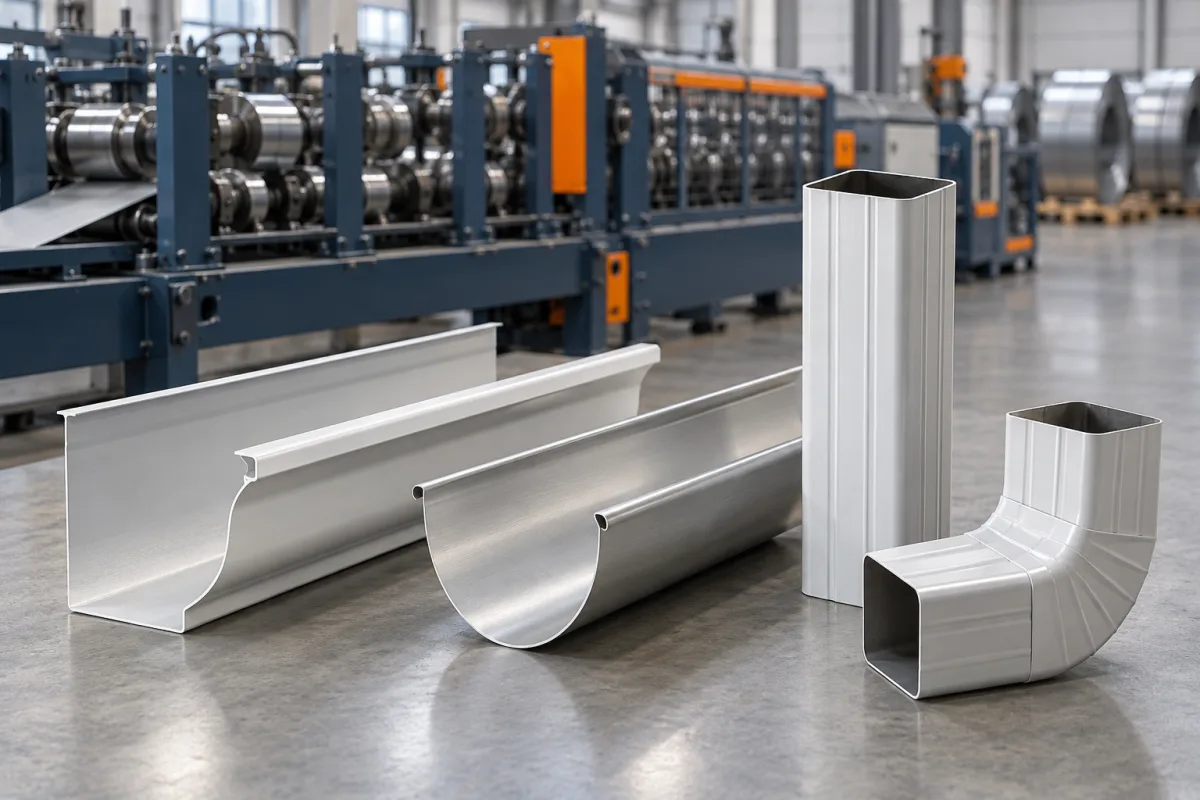
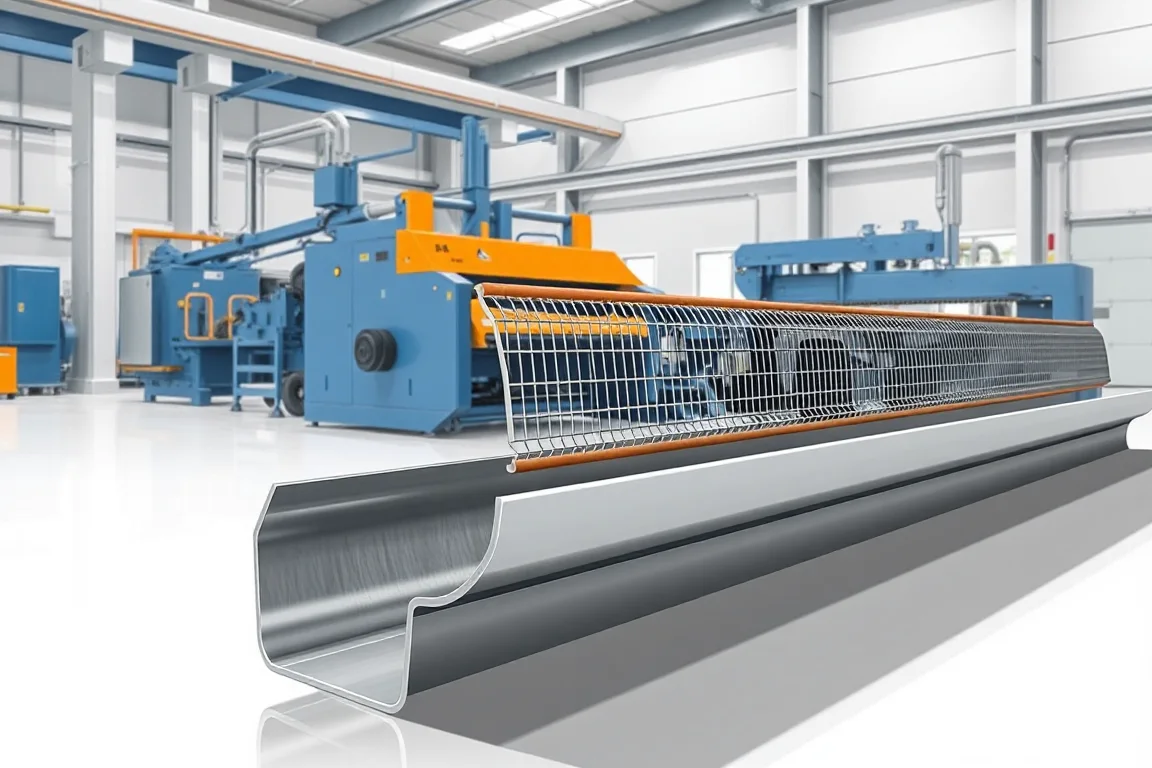
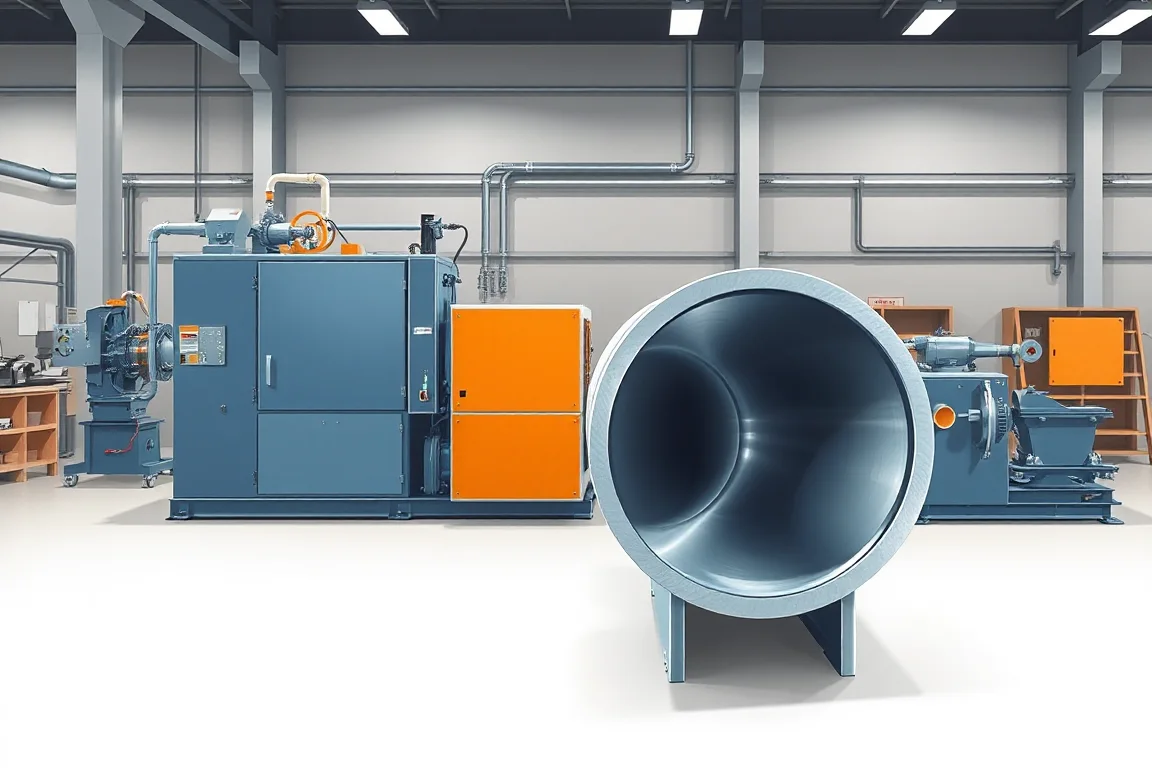
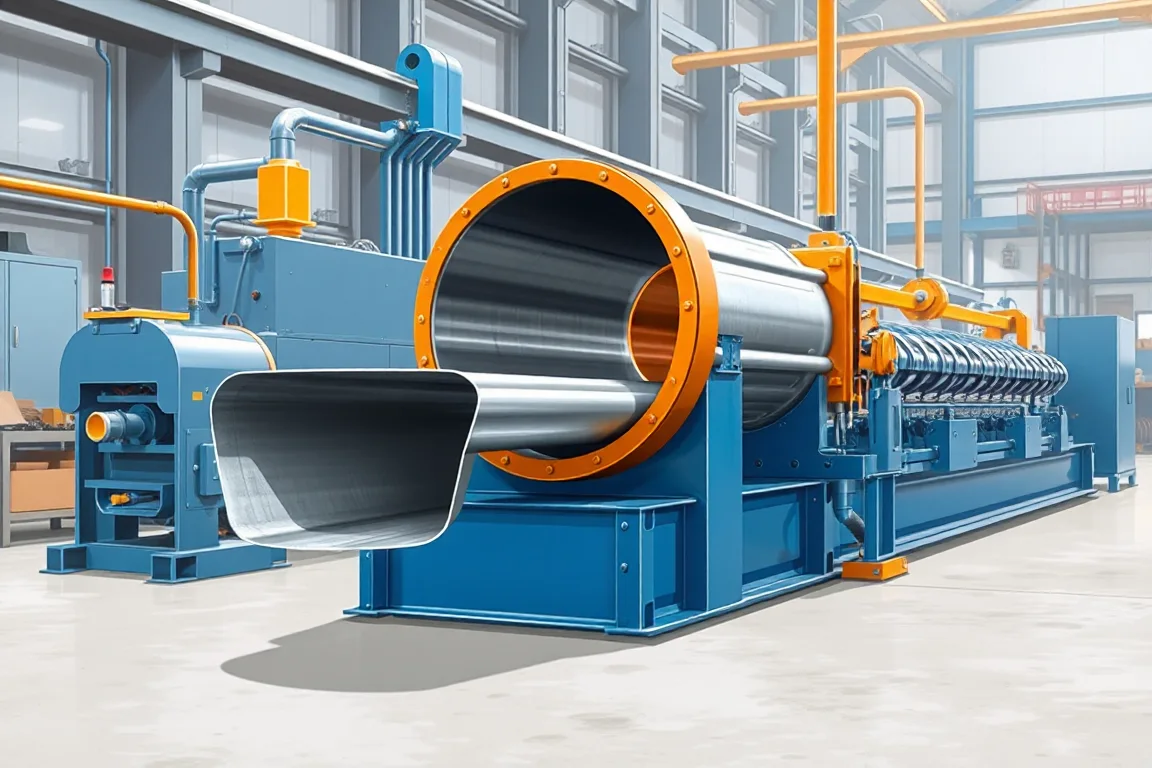
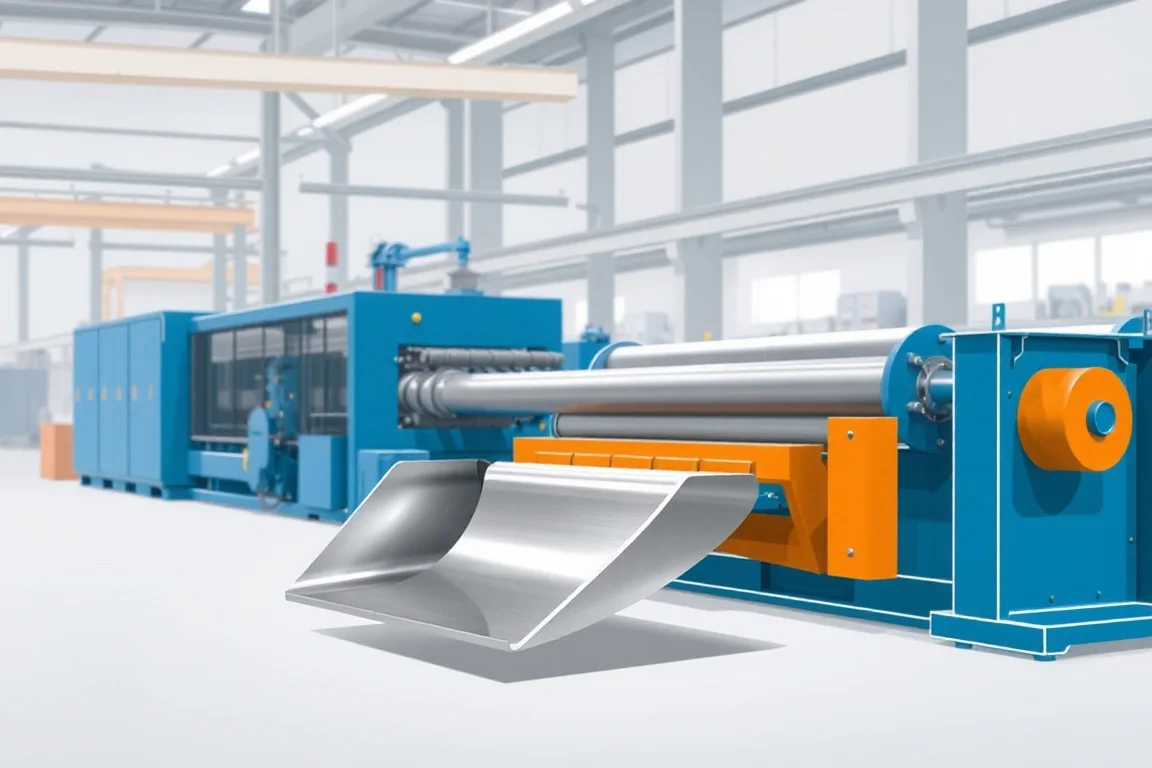
Rainwater-product equipment makes distinct parts of a drainage system: open gutters, closed downspouts, elbows and guards. These components share an installation but have different section, joining and fabrication requirements. Begin with the finished product and its fitting interfaces instead of assuming that a gutter or downspout former supplies every accessory automatically.
Choose the component and its mating system
A gutter needs the intended cross-section, lips and hanger arrangement. A downspout needs its shape, seam and connection fit. Elbows change direction and may use a separate process, while guards have their own support and opening pattern. Provide the associated fittings during specification.
- Gutter: compare profile shape, edge beads, hangers and length handling.
- Downspout: define seam closure, fitting dimensions and end preparation.
- Elbow: identify the required bend product and connection route.
- Gutter Guard: review support geometry, perforation or other specified construction.
Define profile names with actual drawings
K-style, half-round, box, square and rectangular descriptions identify families, not every dimension needed for tools. Show corners, returns, beads, seams and exposed faces. A fitting system may depend on those details even when the outside size appears familiar.
Distinguish forming a straight length from making corners, outlets, end closures or elbows. List accessory manufacture and supply explicitly. This makes the equipment boundary clear before comparing a bare former with a broader production package.
Review material and finish requirements
Specify the metal, grade or temper where applicable, thickness convention and coating. A painted steel component and an aluminum component should not be assumed to use identical tools or settings simply because their dimensions match.
Trial the intended material and inspect tight beads, seams and cut ends. Protect appearance-sensitive faces through takeoff and packing. Keep material identity with the approved samples so changes in stock can be reviewed against known results.
Choose a practical production and handling route
Factory and portable production have different material-flow requirements. Review coil loading, utilities, support for long open sections and the next operation after forming. A long gutter that leaves the machine accurately can still be distorted by inadequate receiving support.
For closed downspouts, inspect the seam and any required end preparation after cutting. Confirm how elbows and connectors are supplied and trial their fit. The straight-pipe former should not be credited with operations outside its actual scope.
Approve components with their fittings
Test gutters with the specified hangers, closures and outlets. Test downspouts with their intended elbows or sleeves. Inspect the product after normal handling and avoid forcing a section into a fixture that conceals its actual free-state geometry.
Drainage sizing and installation performance belong to the defined building system. A machine's width adjustment or profile label does not establish the required hydraulic capacity or attachment design for a project.
Compare finished-length output and total scope
Count accepted finished components with the required seam and end work. Custom lengths, color changes, fitting operations and handling can determine practical delivery. State those conditions when comparing output instead of using uninterrupted strip speed alone.
Prepare profile and fitting drawings, material combinations, length requirements and the expected factory or site workflow. The detailed pages below separate each manufacturing route and help ensure that the equipment purchase covers the rainwater products the business intends to supply.
Continue your research
- Gutter Roll Forming Machine
- Downspout Roll Forming Machine
- Downspout Elbow Machine
- Gutter Guard Roll Forming Machine
- K Style Gutter Roll Forming Machine
- Half Round Gutter Roll Forming Machine
- Box Gutter Roll Forming Machine
- Round Downspout Roll Forming Machine
- Square Downspout Roll Forming Machine
- Rectangular Downpipe Roll Forming Machine
- How Gutter roll forming machine Works
- How To Choose a Gutter roll forming machine
- Gutter roll forming machine Price: What Affects the Cost?
- Materials and Thickness for Gutter roll forming machine
- Production Speed and Output of Gutter roll forming machine
- Roller, Tooling and Forming Design for Gutter roll forming machine
- Common Defects and Troubleshooting for Gutter roll forming machine