
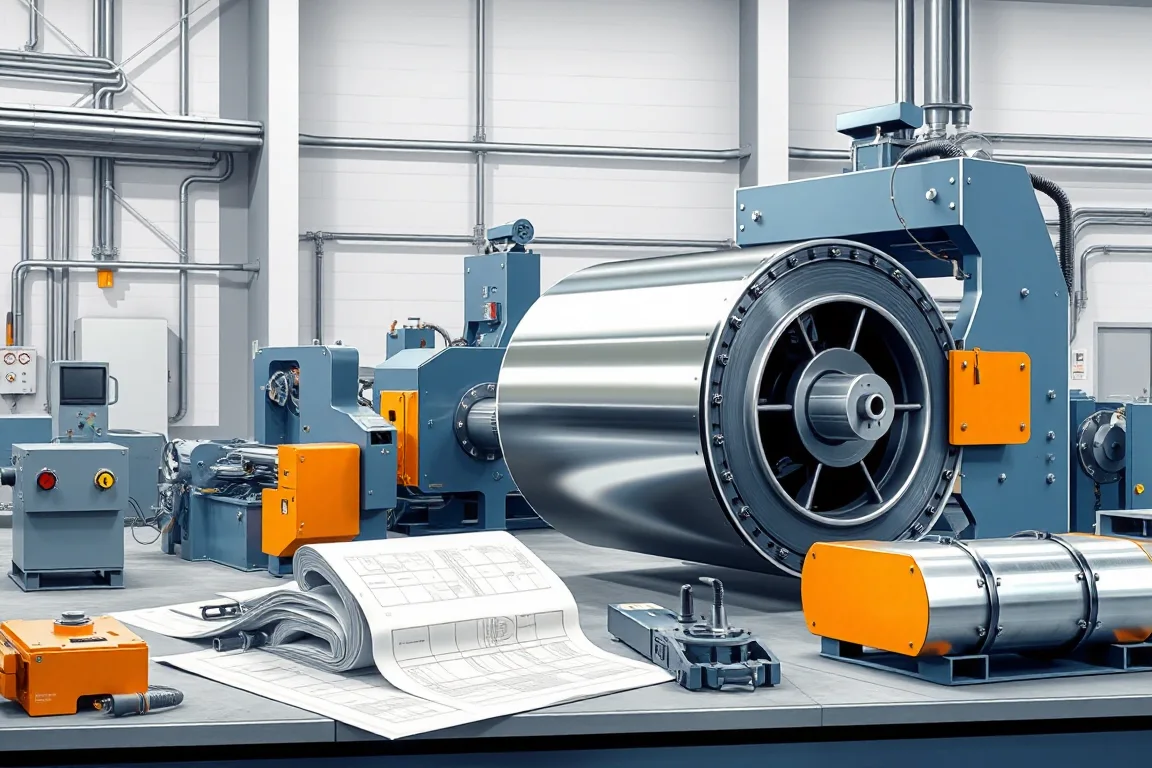
Coil processing line cost depends on the material envelope, finished products and supplied route. A standalone processing unit and a complete installation with entry, tooling, exit handling and packaging are different purchases. Compare them through a common scope and a realistic accepted-output scenario rather than a generic price range.
Define the investment boundary
List coil handling, entry preparation, the required processing operations, exit equipment and package movement. Include tools, controls and inspection-related items supplied with the line. Identify installation and site services that are outside the machinery contract.
Separate the main equipment price from the installed project budget. Foundations or other site work where required, utilities, lifting, training and startup materials can add costs. Their treatment should be explicit rather than assumed from the word complete.
Connect the material range to equipment scope
Thickness, width, grade or alloy and coil dimensions need to be considered together. A broad set of combinations can require a different arrangement from a narrow repeated workload. Ask which product cases drive the proposed equipment and tooling.
Do not pay for an apparent envelope that is described only by separate maxima. Conversely, do not exclude a necessary requirement merely because a lower-priced proposal avoids it. Use the actual input/output matrix as the commercial baseline.
Count slitting tooling and change work
For a slitting route, include the tools and components needed for the required width patterns. Review change frequency, setup method and the exit handling scope. A basic pattern demonstration does not establish the cost of serving many small orders.
Record consumables, tool service and replacement responsibilities. These affect operating work even if they are not prominent in the initial quotation. Compare what is included rather than assuming all tooling packages are equivalent.
Review cutting and stacking scope
For cut-to-length production, compare the feeding, cutting and stacking arrangement against the actual sheet schedule. Short sheets, long sheets and surface-critical products can impose different handling requirements. Identify equipment omitted from a machine-only price.
Check the final stack and package condition during trials. A cheaper exit arrangement may be suitable, but its effect on labor, surfaces, edges and sustained output should be understood rather than hidden outside the comparison.
Evaluate leveling through the required quality
Define the input assumptions and final shape requirement before comparing leveling proposals. The equipment should be assessed against the intended material combinations and measurement method. A broad promise to improve flatness does not identify the accepted product result.
Include any necessary inspection and process-development work in the project budget. The value of an arrangement depends on producing usable material for the customer or next operation, not simply on adding another processing stage.
Calculate operating cost per accepted quantity
Use a consistent interval and include the selected categories of material, labor, energy, consumables and maintenance. Divide by accepted delivered quantity under the same boundary. Keep trim, rejects and unfinished output separate.
For a hypothetical job with 2,400 currency units of included processing cost and 24 accepted tonnes, the included processing cost is 100 per accepted tonne. If only 20 tonnes are accepted for the same included cost, it becomes 120. These values demonstrate the calculation and are not service prices or equipment quotations.
Assess automation with the actual workload
Automated loading, tooling changes, stacking or packaging can alter work content, but the benefit depends on utilization and order mix. Compare the time, staffing and yield evidence for representative jobs. Include the support and maintenance responsibilities of the added equipment.
Test a lower-utilization scenario and a schedule with more frequent changes. A premium justified by continuous high-volume production may have a different recovery period in a service center handling many small orders.
Include material yield and order planning
Slitting patterns, edge trim, sheet schedules and startup losses influence accepted material yield. Use realistic order combinations and the agreed product requirements. Do not count unusable remnants as accepted output simply to improve a theoretical utilization figure.
Keep material-value effects separate from processing cost where useful. Their relative importance can change with the material and market, so the financial model should allow the assumptions to be updated without altering the technical production evidence.
Budget installation and sustaining support
Review the full layout, storage and movement requirements, site preparation, utilities and safety-related interfaces with the responsible specialists. Assign each item to a supplier or the operator. Gaps between contracts can become significant late costs.
Include training, setup references, service documentation and replacement-tool information. A line that is difficult to return to an accepted condition after maintenance can consume internal time and disrupt orders even when its purchase price was attractive.
Normalize quotations before making a decision
Create a shared checklist for the material envelope, products, tooling, output trials, handling, installation and support. Mark each item as included, excluded or unresolved. Obtain clarification where a proposal depends on an unstated assumption.
Compare capital cost and accepted-output scenarios separately, then consider them together. The goal is not the largest possible specification or the lowest isolated price. It is a defined route that makes the intended products with credible operating assumptions and clear responsibilities.
Frequently asked cost questions
Why avoid a universal price range?
The supplied functions, material combinations and handling scope vary substantially. A useful quotation corresponds to a defined project rather than an unspecified category name.
Should trim be ignored in cost calculations?
No. Record material yield separately and use accepted quantity as the relevant denominator. Distinguish recovered scrap value from saleable product output.
Is the installed budget the same as the equipment quote?
Not necessarily. Site work, utilities, handling interfaces, training and launch activities may be outside the quoted machinery scope.
How should an automation option be compared?
Use realistic jobs and explicit savings assumptions, including changes, support and lower utilization. Avoid treating a best-case demonstration as a guaranteed business result.
Continue your research
- Coil Processing & Auxiliary Equipment
- Steel Coil Slitting Line
- Cut To Length Line
- Narrow Strip Steel Coil Slitting Line
- High Speed Steel Coil Slitting Line
- Heavy Gauge Steel Coil Slitting Line
- How Coil processing line Works
- How To Choose a Coil processing line
- Materials and Thickness for Coil processing line