
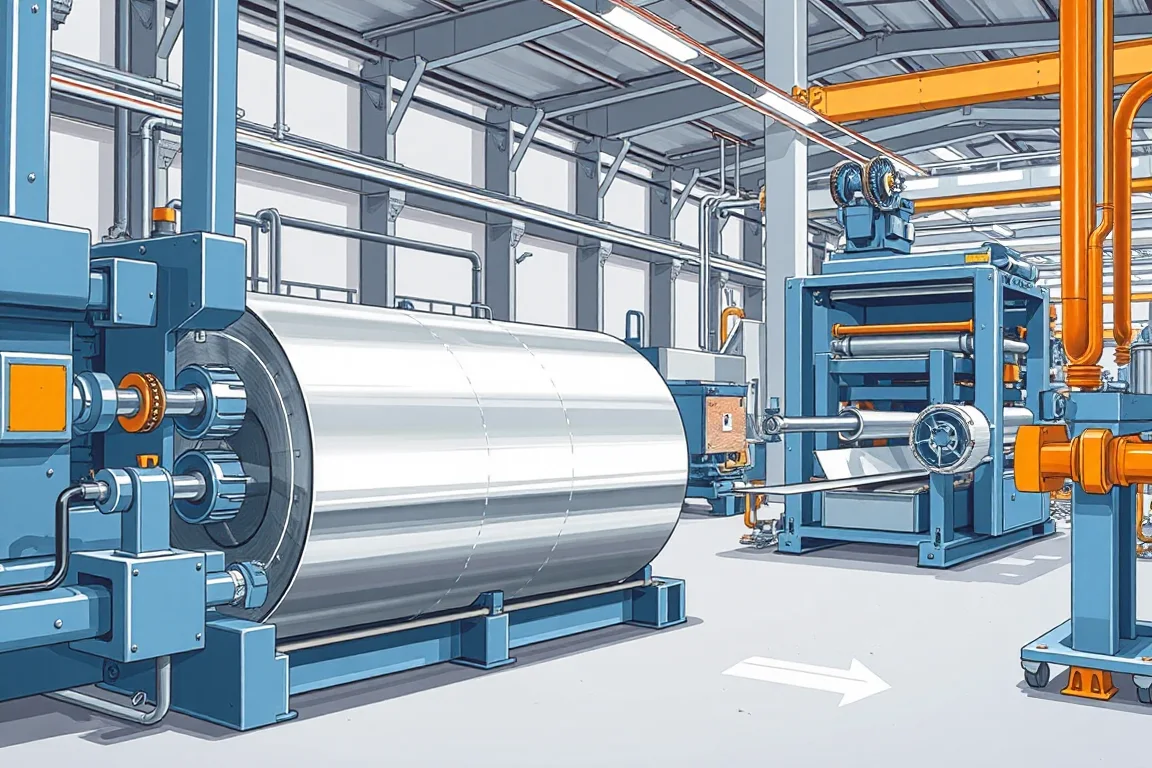
A coil processing line prepares coiled metal for the next manufacturing or sales operation. The route may produce narrower recoiled strips, flat cut sheets or blanks, depending on the equipment supplied. Define that finished output first: slitting, leveling and cut-to-length processing solve related but different tasks.
Identify what should leave the line
A slitting route divides a wider coil into narrower strips and commonly prepares them as coils. A cut-to-length route produces sheets or blanks of the specified length. A project combining operations needs a clear map of which functions are included and how material moves between them.
State the output dimensions, edge condition, flatness or shape requirements, surface finish and packaging format. These characteristics determine the useful acceptance boundary. Material that has passed a cutting station may still need inspection and handling before it is saleable.
Load and identify the incoming coil
The entry arrangement must suit the coil mass, width, inside diameter, outside diameter and material requirements. Record the actual combinations rather than independent maximum values. Identify how each coil is traced into the resulting slit coils or sheet bundles.
Coil loading and strip preparation use substantial moving material and equipment. Follow the supplied operating and safeguarding procedures. A general process description should not be treated as instructions for manually handling or threading a live line.
Establish a controlled strip path
Entry equipment supports and presents the strip to the required operations. The route may include preparation, feeding and buffers according to the selected configuration. Ask how the proposed arrangement handles coil transitions and protects the required surface.
Keep material tracking and orientation clear through the path. For surface-critical work, identify which face is exposed and what contact is permitted. An unexplained guide or handling mark can affect the finished product even when its dimensions are correct.
Understand the role of leveling
Where included, leveling addresses the required strip or sheet shape through the selected equipment and controlled settings. Its suitability must be reviewed against the material and dimensional range. It is not a universal promise that every incoming shape problem can be corrected.
Agree the final shape measurement method and support condition. A sheet held flat during processing may not represent its relaxed condition after cutting. Inspection should reflect the product and later operation for which the material is being prepared.
Follow the slitting route when narrow coils are required
Slitting divides the strip longitudinally into the required width pattern. The tooling and downstream arrangement need to suit the material, thickness and number of cuts. Include edge requirements and the permitted trim in the production brief.
The resulting strips need controlled handling and the specified coil build or discharge format. Check widths, edges, surface condition and packaging after the complete route. A width measurement at the slitter does not establish the condition of the final shipped coil.
Follow cut-to-length production when sheets are required
A cut-to-length route produces the specified sheet lengths and requires appropriate feeding, cutting and stacking arrangements. The selected configuration determines how those operations interact. Ask how the proposed line handles the actual sheet sizes and order sequence.
Inspect length, squareness, edge condition and relaxed shape using agreed methods. Include representative short and long sheets. A correct cut length alone does not prove that the sheet meets the complete customer requirement.
Coordinate buffers and operation timing
Different stages can operate with different motion or cycle requirements. The line layout may use buffering or other coordination to connect them. Ask which arrangement is proposed and what site preparation or space it requires.
Review the complete material flow during a trial. A short demonstration can hide an imbalance by accumulating work between operations. Record the beginning and ending material state when measuring sustained output.
Inspect after final handling
Recoiling, stacking, strapping and movement can affect the delivered condition. Check coil build, sheet edges and visible surfaces after the normal handling route. Use the agreed packaging format rather than an unusually gentle demonstration arrangement that cannot be maintained in production.
Keep identification attached to each output package. If one master coil becomes several products, the record should explain which material went into each. Correct dimensions under an incorrect grade or coil identity are not acceptable delivery.
Include changes and yield in the production report
Width patterns, sheet sizes, material changes and coil transitions all influence output. Record accepted quantity, trim, startup material, rejects and elapsed time. Keep the output measure aligned with the product: accepted mass, sheets or coils may each be useful.
Do not use the fastest isolated strip movement as the complete route's capacity. Tool changes, cutting cycles, handling and inspection can determine how much material becomes accepted output during a shift.
Validate the route against the next operation
Include the requirements of the customer or downstream process in acceptance. A blank intended for later forming may need particular shape and surface characteristics; a slit coil needs the specified width, edge and handling condition. Those requirements should be stated before the trial.
The useful handover includes the approved material range, process scope, tooling, setup references, inspection methods and handling instructions. It connects the equipment to a repeatable finished-product requirement rather than a list of loosely related coil-processing functions.
Frequently asked process questions
Are slitting and cut-to-length the same operation?
No. Slitting divides material longitudinally into narrower strips; cut-to-length produces specified sheet or blank lengths. A combined project must define both routes and their interfaces.
Does every line need the same leveler?
No. The equipment must suit the material envelope and required final shape. Obtain a reviewed proposal and representative evidence for the intended products.
Why inspect after recoiling or stacking?
Handling can affect coil build, edges and surfaces after cutting. Acceptance should cover the condition delivered to the next process or customer.
What should a trial record contain?
Input coil identity, dimensions and material, tooling and setup, accepted output, waste, time boundary and final inspection results. Include the normal handling and identification route.
Continue your research
- Coil Processing & Auxiliary Equipment
- Steel Coil Slitting Line
- Cut To Length Line
- Narrow Strip Steel Coil Slitting Line
- High Speed Steel Coil Slitting Line
- Heavy Gauge Steel Coil Slitting Line
- How To Choose a Coil processing line
- Coil processing line Price: What Affects the Cost?
- Materials and Thickness for Coil processing line