
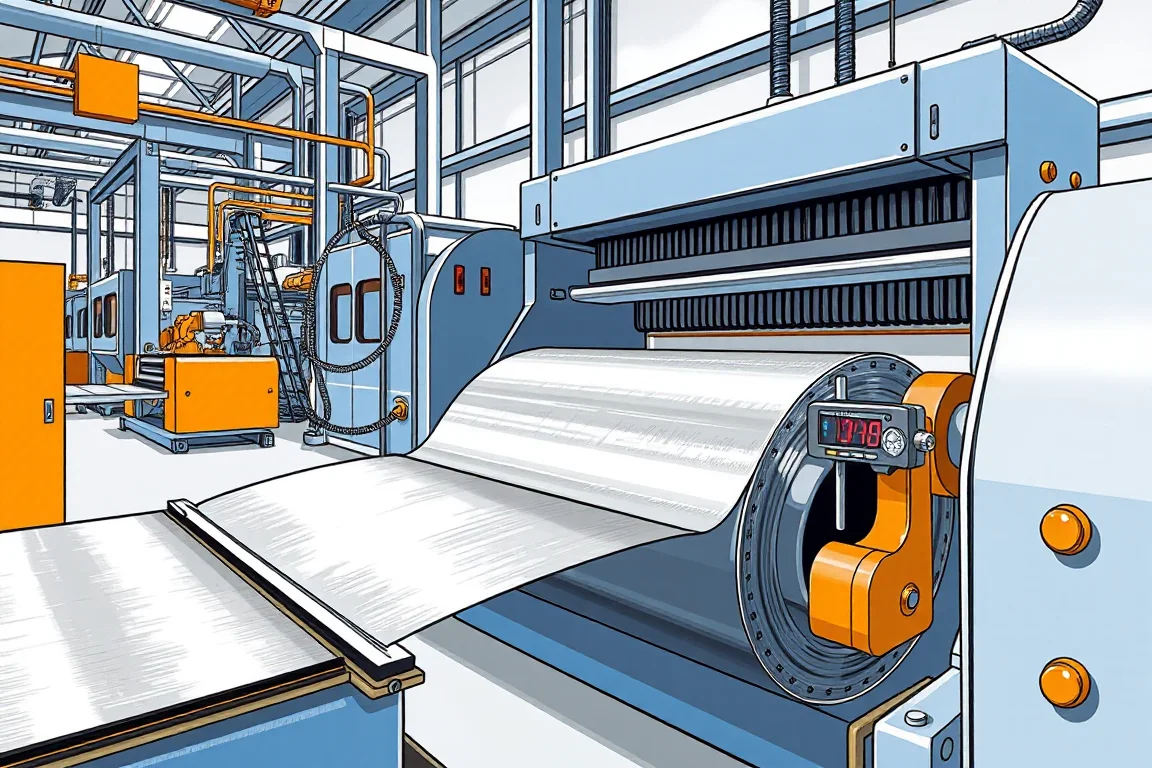
Material and thickness requirements for a coil processing line should describe the full input and output combinations. Grade or alloy, width, coil format, surface condition and the intended slit coil or sheet all affect the project. A maximum thickness number alone does not establish that a line can deliver the required product quality.
Identify the material precisely
Record the material designation, condition and applicable purchase specification. Include the supplier records needed for traceability. Broad terms such as steel, stainless or aluminum do not define every property and surface requirement relevant to processing.
Keep coatings, finishes and protective film visible in the brief. Identify the exposed face and permitted contact conditions where appearance matters. A dimensional trial on ordinary material does not automatically demonstrate surface-critical production.
Pair thickness with width and grade
Create a matrix of actual required combinations. Include the output route and important quality requirements for each row. This prevents independent maximum width and maximum thickness claims from being interpreted as a demonstrated simultaneous capability.
Separate launch requirements, occasional orders and future possibilities. The supplier's proposal should identify which combinations are included and what evidence supports them. Keep unreviewed cases explicit rather than expanding the scope through inference.
Specify coil dimensions and condition
State coil mass, inside diameter, outside diameter and width alongside the material and thickness. Describe the incoming condition that the equipment is expected to handle. These inputs affect entry handling as well as the principal processing operation.
Record the relevant incoming checks and any agreed limits. Material that falls outside the defined supply condition should be reviewed through the responsible procedure, not silently treated as a machine-performance test.
Define thickness terminology and measurement
For coated materials, clarify whether values describe base metal or another finished measurement. Use consistent units and references in the drawing, order and equipment discussion. A nominal commercial description may not be the same as the value used for technical assessment.
Agree how variation is measured and recorded. The purpose is to establish a shared project basis, not to impose a universal tolerance from a generic article. Trial materials should represent the conditions that normal purchasing permits.
Connect slitting requirements to the material
For slit products, specify width patterns, number of strips, edge condition and final coil format. Ask how the tooling and setup are reviewed for each important material-thickness combination. Do not transfer a setting from a different material without the required technical review.
Inspect the delivered slit coil, including surface and edge condition after recoiling and normal movement. An acceptable width at an intermediate point does not establish every requirement of the final product.
Connect cut-to-length requirements to final sheet quality
For sheets or blanks, state length, squareness, edges, surfaces and relaxed-shape requirements. Include representative short and long products. Keep the downstream use visible where it imposes additional requirements on the processed material.
Agree the support and measurement method for shape inspection. A sheet restrained flat during processing can differ from the released product. Use a consistent acceptance condition so that trials and later production can be compared meaningfully.
Review leveling within a defined envelope
Where leveling is included, identify the incoming assumptions and required outgoing result. Ask which material and dimensional combinations have been reviewed. Do not assume the same equipment and setup will correct every possible coil-shape condition.
Discuss any later operation that is relevant to the material's required behavior. The responsible technical parties should determine the appropriate validation. A visually flat sample is useful evidence only within the conditions and requirements it actually represents.
Protect surface-critical material through the route
Identify contact, guides, processing tools, cutting, stacking and packaging stages where the surface could be affected. Use production-intent finishes in trials. A line can meet length and width requirements while failing the appearance expected by the customer.
Inspect before and after normal handling to locate any damage. Keep coil identity and orientation with samples. This helps distinguish incoming defects from marks introduced during processing or movement.
Select representative trial combinations
Include normal jobs and cases that test important boundaries, such as a demanding surface, narrow strip pattern or long sheet. The heaviest or thickest material is not necessarily the only meaningful challenge. Explain why each trial belongs in the plan.
Retain incoming measurements, tools and setup references, output inspections and handling conditions. If substitutes are used, document the unresolved differences. A sample should demonstrate a defined combination, not imply approval of an entire loosely described material range.
Manage supplier and product changes
A new material supplier, finish, thickness condition or output requirement may warrant review even when the broad material name is unchanged. Use the controlled change and first-product procedure to establish what evidence is needed.
Keep purchasing, operating and inspection references aligned. When a problem appears after a coil transition, verify material and measurement information before assuming tool wear or equipment damage. A shared material matrix makes that investigation faster and more reliable.
Frequently asked material questions
Can maximum width and thickness be combined automatically?
No. Ask which simultaneous combinations are reviewed and demonstrated for the specified material and output. Independent limits do not define a complete processing envelope.
Does leveling guarantee flatness for any incoming coil?
No universal guarantee should be assumed. Define incoming conditions, outgoing requirements and representative trial evidence for the selected equipment.
Why include packaging in a material trial?
The finish and edges must survive the normal delivery route. Processing-only samples can miss damage introduced during recoiling, stacking or strapping.
What makes an accepted material sample useful later?
Its identity, incoming measurements, setup and tool references, output results and inspection conditions. Without that context it is difficult to know which production combination it represents.
Continue your research
- Coil Processing & Auxiliary Equipment
- Steel Coil Slitting Line
- Cut To Length Line
- Narrow Strip Steel Coil Slitting Line
- High Speed Steel Coil Slitting Line
- Heavy Gauge Steel Coil Slitting Line
- How Coil processing line Works
- How To Choose a Coil processing line
- Coil processing line Price: What Affects the Cost?