
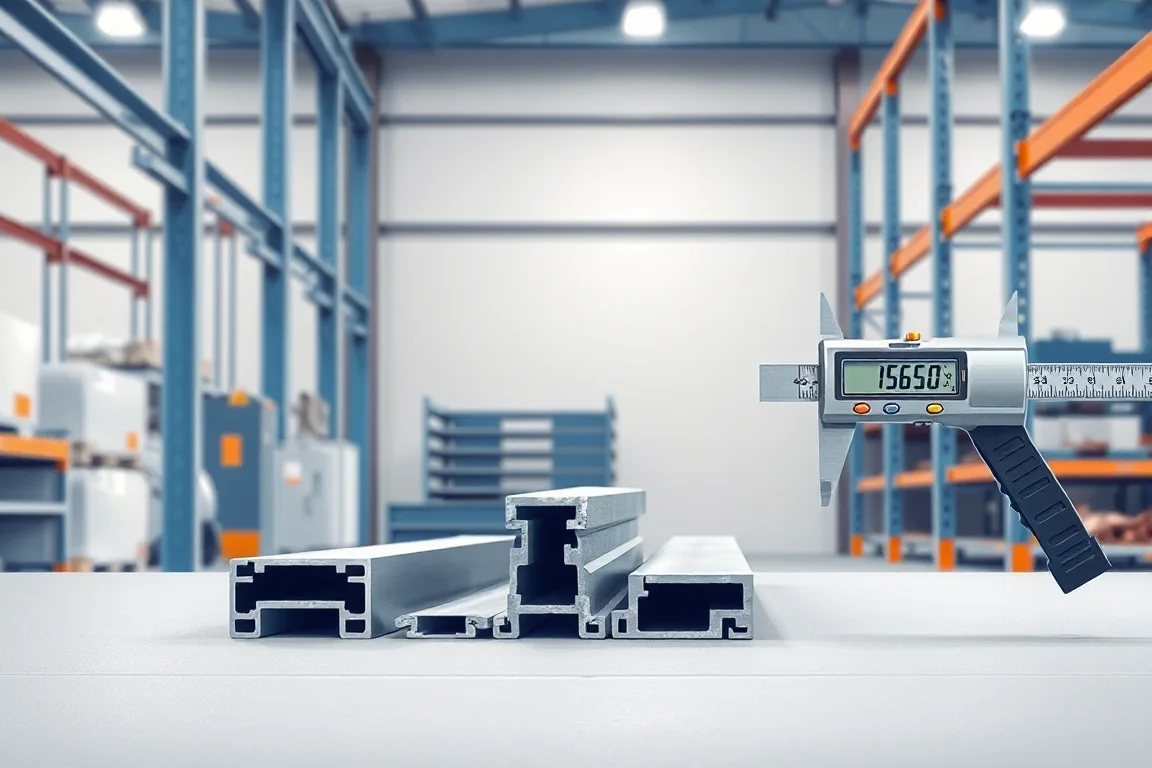
The material and thickness question is not about a single optimum strip. A storage rack is an assembly of upright frames, beams and connectors, and each part imposes different demands on a roll forming line. The right specification depends on which component you are forming, what grade and strength the coil carries, and how thickness is stated and measured.
This guide explains how thickness interacts with roll forming, why an ambiguous gauge number is a weak basis for a purchase, and how to define an operating envelope that a supplier can support with evidence.
Why thickness is a forming variable, not just a strip dimension
In roll forming, strip is progressively bent through a series of roll stands. The thickness of the base metal determines how much material resists bending, how the neutral axis sits within the section, and how much springback must be compensated in the roll design. A strip that is slightly thicker or stronger than assumed will not simply pass through unchanged: bend radii may open, flange lengths may drift, and hole positions relative to the web can shift.
Coating is often measured together with metal in incoming inspection, but the two behave differently in the line. A coating or protective film adds to overall caliper yet contributes little to stiffness. Forming forces and springback are governed mainly by the base-metal thickness and its strength. If a specification states only total measured thickness, the forming behaviour can be misjudged when the metal underneath is thinner or harder than planned.
Stating grade, thickness and finish without ambiguity
A workable material callout separates several quantities. State the steel grade or grade family, the strength range, the nominal base-metal thickness, and the permitted thickness variation. Keep coating type, coating mass or thickness, and surface finish as separate requirements, including which face is exposed and which is concealed after assembly.
Gauge numbers are a common source of error because they are nominal labels with a history, not a measurement. Two coils sold as the same gauge can differ in actual base-metal thickness. For a forming line, the accepted range matters more than the label. Where a supplier asks for a single thickness, provide the nominal and the permissible spread around it.
Per-component thinking: uprights, beams and panels
Uprights, beams and shelf panels are not interchangeable from a material standpoint, even within the same racking system. A structural upright generally carries the more demanding section geometry: a more complex profile, a connector-hole pattern, and often the thicker or stronger strip. A beam may be a single formed section or a built-up section, and its mating geometry with the connector must line up with the upright holes. A shelf panel or a shelf return is frequently a lighter, simpler profile where surface finish and flatness may matter more than load-bearing stiffness.
This is why recording material and thickness per component is more useful than one line-level number. It lets the profile and tooling be discussed part by part, and it keeps a light panel from being used as evidence that the line also handles a heavy upright.
How thickness and grade move through the process
A typical sequence for rack components runs: punching, section forming, cutoff, then welding or assembly where the design requires it, followed by inspection. Each interface has a material sensitivity.
- Punching: hole size, hole roundness and burr condition depend on grade and thickness. Harder or thicker strip increases tool loads and can change hole quality if the punch and die are not matched to the material.
- Forming: springback and bend radius behaviour shift with strength and thickness. Roll design and stand settings are chosen around an assumed material, so an unplanned change can show up as angular error or twist.
- Cutoff: the cutting method must suit the formed section, not only the flat strip. Thickness affects cut force and end deformation; profile-supported cutting can reduce collapse of the section at the cut.
- Welding and assembly: a box beam may be assembled from more than one formed section. A forming line does not automatically include the joining operation, connector attachment or any rack-system approval. Those are separate capabilities with their own quality checks.
Thickness variation across the coil and the line
Thickness is rarely perfectly constant along a coil, and variation can be systematic — crown or edge effects — or random. Progressive forming tends to accumulate small errors, so a strip that wanders within its permitted range can still produce a section that drifts in straightness, hole position or flange angle. When comparing options, ask how the line accommodates the thickness range you actually intend to buy, and how that range was established.
Also consider whether incoming material is measured as base metal or as total caliper with coating. Two suppliers quoting to the same nominal number may be measuring different things. Agreeing the measurement method up front avoids disputes later.
Comparisons: gauge, nominal base metal, and total caliper
Three common ways to describe thickness lead to different decisions:
- Gauge number: convenient but ambiguous. It does not state a measurement, so it cannot define a forming envelope on its own.
- Nominal base-metal thickness with a tolerance: directly relevant to forming forces, springback and hole quality. This is the most useful basis for a tooling discussion.
- Total caliper including coating: useful for handling, coil weight and coating specification, but a poor proxy for forming behaviour.
A robust approach uses base-metal thickness as the primary forming input, treats coating as a separate requirement, and records both. When a supplier offers a machine for a range of thicknesses, ask which combinations of grade and thickness in that range have been demonstrated, rather than accepting a list of unrelated maximum values.
What an operating envelope should contain
An operating envelope for a storage rack roll forming machine is a set of supported combinations, not a single maximum. It should identify the grade or strength band, the base-metal thickness range with permitted variation, the profile or family it applies to, and any assumptions about coating or film. A mill that processes one grade at a given thickness has not thereby demonstrated the same capability for every harder or softer material.
Because rack components differ, an envelope may reasonably be different for an upright line and a beam line. Ask for written supported combinations for the specific parts you intend to run.
Material effects on acceptance
Machine acceptance should verify an agreed component drawing. The hole pattern and connector fit can be more critical than an overall channel width. Test beam connector engagement with the upright, inspect repeated holes for position and quality, and measure section straightness. For built-up box beams, include the joining operation and its quality checks in acceptance.
Rack load capacity is a separate matter. It must be established for the finished racking design, using the as-built section and the relevant structural verification. A forming machine producing a dimensionally correct section is evidence about the machine and the part, not about the load rating of an assembled rack.
Quote scope and accepted-output cost
When comparing quotations, align scope before comparing cost. A quote for a forming line may or may not include punching stations, cutoff, welding or assembly, tooling for more than one profile, commissioning and training, and spares. Material handling at the entry and exit, coil loading, and packaging of finished lengths are further scope items.
Accepted-output cost is the useful economic comparison. It relates the delivered, inspected component — meeting an agreed drawing and acceptance criteria — to the resources consumed, including scrap, rework, tool maintenance and changeover. A lower-cost line that yields a higher reject rate or needs more frequent tool intervention can cost more per accepted part. Because material cost is often a large share of component cost, how efficiently the line uses strip and how well it handles the intended thickness range both feed directly into accepted-output cost.
Practical checklist for specifying material and thickness
- List each component: upright, beam, shelf panel, connector part.
- For each, record grade or grade family and strength range.
- State nominal base-metal thickness and permitted variation, separately from coating.
- Record coating type and finish, and identify the exposed face.
- Define each hole type and the datum used to locate it.
- Provide representative samples from the intended coil supplier.
- Ask for written supported combinations of grade and thickness, per profile.
- Confirm the cutoff method suits the formed section and end-quality requirement.
- Clarify whether welding, connector attachment and rack-system approval are in or out of scope.
- Agree acceptance tests: connector engagement, repeated-hole inspection, section straightness.
FAQ
Can one machine form every rack thickness?
No single forming line is universally suitable across all grades and thicknesses. Roll design and stand capability are built around an assumed material. A line may cover a useful range for a given profile, but the supported combinations should be stated and demonstrated rather than assumed.
Why is a gauge number not enough to specify strip?
A gauge number is a nominal label, not a measurement. Actual base-metal thickness can vary between coils sold as the same gauge, and gauge does not convey strength. For forming, the relevant inputs are grade, strength range, and nominal base-metal thickness with its permitted variation.
Does coating thickness count toward forming thickness?
Coating adds to total caliper but contributes little to stiffness and springback, which are governed mainly by the base metal. Measure and specify base-metal thickness for forming decisions, and treat coating as a separate finish requirement.
How does thickness affect the hole pattern?
Thicker or stronger strip increases punch loads and can change hole quality, burr formation and hole position relative to the web. Because connector fit depends on repeated hole positions, hole quality and location should be part of acceptance, not just the overall section width.
Is thickness the same requirement for a beam and an upright?
Not necessarily. A structural upright often uses thicker or stronger strip for its more complex profile and hole pattern, while a beam or shelf panel may use a different grade or thickness. Specify and verify per component rather than applying one number across the system.
How should I judge a machine's claimed thickness range?
Treat a range as a set of supported combinations. Ask which grade, thickness, profile and coating assumptions apply, and whether the intended parts have been run. A published maximum alone does not establish capability across harder or softer materials.
Continue your research
- Storage Rack & Shelving Roll Forming Machines
- Rack Upright Roll Forming Machine
- Pallet Rack Beam Roll Forming Machine
- Teardrop Rack Upright Roll Forming Machine
- Pallet Rack Box Beam Roll Forming Machine
- Pallet Rack Step Beam Roll Forming Machine
- How Storage rack roll forming machine Works
- How To Choose a Storage rack roll forming machine
- Storage rack roll forming machine Price: What Affects the Cost?