
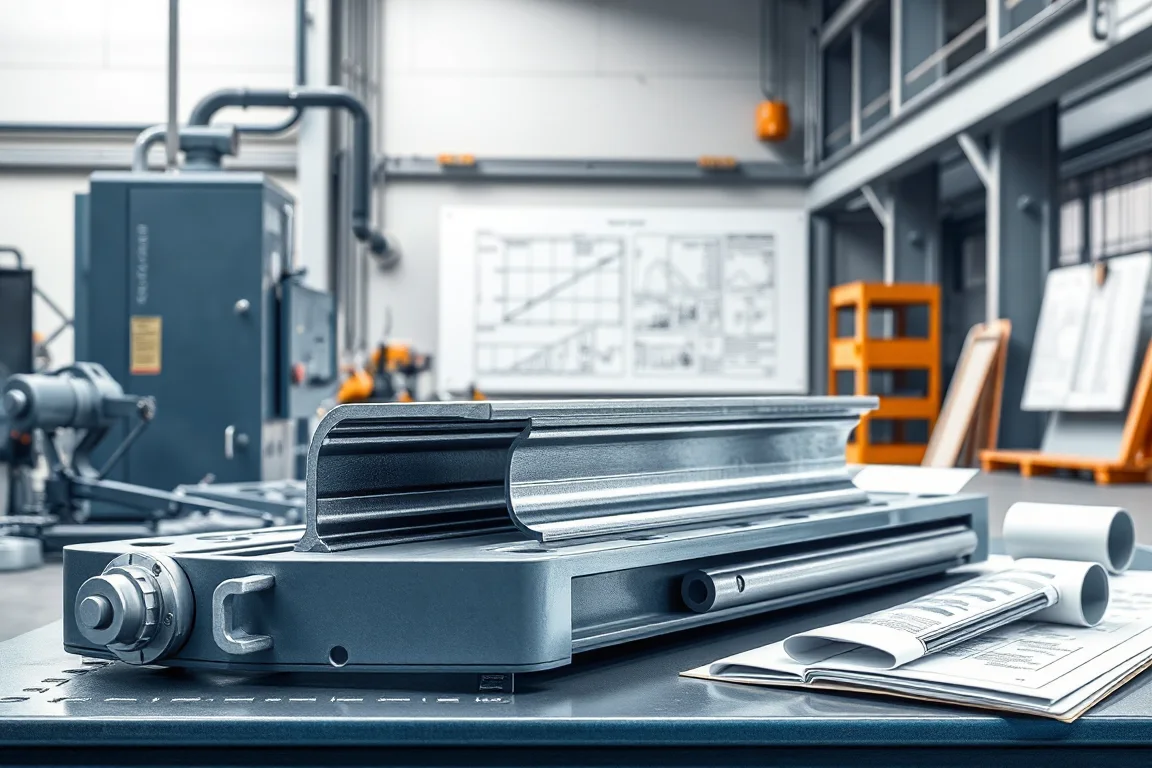
The purchase price of an automotive roll forming machine is shaped less by the bare machine frame and more by the complete, traceable production system built around a specific part. Two projects can produce the same nominal section and still land at very different prices because one has a confirmed coil feed, in-line piercing, joining and dimensional verification sequence, while the other leaves those operations to separate equipment or manual stations. To compare quotes intelligently, you need a single scope definition that covers every step between coil and accepted output, then a way to evaluate the total cost per accepted part rather than the lowest equipment line item.
Why an automotive roll forming machine quote varies so much
A roll forming machine for automotive work is not a catalog product with one configuration. It is an engineered system. The same profile might be formed on a machine with a simple cutoff, or on a line that integrates sweeping, piercing, welding or adhesive application, and in-line gauging. The quote changes because the scope changes. Suppliers may price only the forming mill, or they may include coil handling, tooling sets, cut-off dies, downstream joining, controls, safety systems, transport, installation, training and acceptance trials. Without a written scope, a lower headline number often means more work is being handled elsewhere—or not priced at all.
Automotive buyers also face qualification obligations that general industrial buyers do not. A component that is part of a vehicle structure or safety system must be validated as an assembly, not just as a section that matches a drawing. That validation work—forming simulation, tooling trials, gauge studies, joining qualification and documentation—carries cost that may sit with the machine supplier, the tooling supplier, the part manufacturer or the vehicle program. If those responsibilities are not named, the price comparison is incomplete.
Scope items that commonly appear in a quotation
Most quotes can be broken into the same broad buckets. Ask for each line to be identified so you can judge what is included and what is excluded.
- Engineering and simulation: forming simulation, flower pattern development, stress and springback analysis, and tooling design. This determines whether the physical tooling will produce the required section before steel is cut.
- Tooling: roll sets, cut-off dies, piercing and notching tools, and any joining fixtures. Tooling is often the largest single cost driver and is specific to the profile, material and thickness.
- Machine equipment: the forming mill, drive system, feed and straightener, cutoff press, and any integrated joining equipment. Frame size, number of stations and drive architecture affect this line.
- Auxiliary handling: coil cars, uncoilers, accumulators, part conveyors, stacking or packaging equipment. These are easy to overlook in a machine-only quote.
- Controls and instrumentation: PLC, HMI, recipe management, data logging, and any in-line measurement such as laser gauging or vision systems.
- Transport, installation and utilities: shipping, rigging, foundation work, electrical supply, compressed air and commissioning. These costs scale with distance, site conditions and whether the supplier supervises installation.
- Training and documentation: operator and maintenance training, spare parts lists, drawings, and traceability records.
- Acceptance: factory acceptance testing, site acceptance testing, measurement method, sampling plan and the criteria that define a conforming part.
A useful budget separates engineering and tooling from machine equipment, auxiliary handling, transport, installation, utilities, training and acceptance. When those categories are mixed into a single price, you cannot tell whether you are comparing machines, service levels or risk transfer.
How the production sequence defines the equipment price
The sequence from coil to finished part is the backbone of the price. A typical traceable line moves through coil feed, precision forming, feature and cut operations, joining, and dimensional verification. Each interface is a potential cost and a potential failure point.
At the feed end, the coil must be presented at a controlled tension and alignment. If the material is sensitive to surface quality or thickness variation, a straightener or leveler may be required. At the forming section, the number of stations and the roll design determine how the material flows. Fewer stations can reduce machine cost but may increase the risk of defects or limit the range of sections that can be produced. At the cut-off, profile support and cut quality matter: a cutoff that crushes or distorts the section creates scrap and downstream assembly problems. If piercing, welding or sweeping is integrated, the machine must provide access to those features and the controls must coordinate them.
Joining is a common scope boundary. Some lines produce a formed section that is later welded or riveted in a separate cell. Others integrate joining into the line. Integrated joining can reduce handling and work-in-process, but it adds equipment, controls and validation cost. The right choice depends on part geometry, production volume, and whether the joining process is stable enough to run in-line.
Material and thickness: why they change tooling and machine cost
Automotive steel grades and coatings vary widely. A material with higher strength or greater springback requires more forming stations, more robust rolls, and sometimes different roll materials or surface treatments. Thickness affects the force required, the roll diameter and the frame stiffness. Because the buyer must specify the base-metal thickness and grade, the supplier cannot finalize tooling until those are confirmed. A machine that is quoted for a narrow thickness range may be less expensive than one designed for a broader range, but it also limits future flexibility. The tradeoff is between initial cost and the ability to run a family of parts without new tooling.
Cutting and end-forming: small features with large cost impact
The cutoff and any secondary operations often decide whether the line meets the assembly interface. A profile-supported cutoff that produces a clean, dimensionally stable end may require a dedicated die and a press with enough tonnage and control. If the part needs holes, notches or tabs, those features can be pierced in-line or offline. In-line piercing reduces handling and improves positional accuracy relative to the forming datum, but it adds tooling and press capacity. Offline operations may be cheaper to tool but add labor, floor space and the risk of datum shift. The buyer should confirm the profile-supported cutoff, cut lengths, end quality and any secondary operations as part of the scope.
Output, speed and the cost per accepted part
No verified model rating is available here, and a single no-load speed figure is a poor basis for comparison. What matters is accepted output per shift with the actual profile and material, including changeover time, scrap rate and the time required for inspection. A machine that runs faster but produces more scrap or requires frequent adjustment may cost more per accepted part than a slower, more stable line. Cycle-time calculations should include the approved inspection and traceability process, because measurement and documentation consume production time. When comparing quotes, ask for a documented output estimate that states assumptions about material, profile, changeover frequency and scrap allowance.
Installation, utilities and site readiness
Installed power requires a confirmed equipment schedule. The buyer should state the available voltage, frequency and phase. If the site supply does not match, transformers, phase converters or rewiring may be needed, and those costs belong in the budget. Foundation requirements, floor loading, compressed air quality and dust or fume extraction for any joining process are also part of the total cost. A quote that excludes these items is not necessarily cheaper; it simply shifts the cost to the buyer later.
Acceptance criteria, traceability and qualification
Acceptance should be agreed before tooling approval. That means defining datums, the measurement method, sampling frequency and the criteria that separate a conforming part from a nonconforming one. Validation should use the actual material and part configuration, not a substitute. For automotive programs, traceability may require lot control, data logging and records that link each part to its coil and process parameters. These requirements influence controls, software and documentation, and therefore price. A forming simulation or trial evidence can reduce risk, but it does not replace assembly-level validation. A roll-formed safety-related component is not validated simply because the section matches a drawing; vehicle or assembly performance requires separate engineering and testing.
Checklist for comparing automotive roll forming machine quotes
Use one drawing and one scope checklist for every quote so that differences are visible rather than hidden.
- Confirm the profile, datum scheme, holes, joining flanges and assembly interfaces.
- State the drawing-specified material and base-metal thickness, and ask the supplier to verify the operating range.
- List every process step from coil feed to dimensional verification, and mark which steps are included.
- Identify excluded tools, utilities, secondary operations and handling equipment.
- Agree the cutoff method, end quality and any required secondary operations.
- Define accepted output per shift using the actual profile and material, including changeover and inspection time.
- State voltage, frequency and phase, and request a confirmed equipment schedule for installed power.
- Agree datums, measurement method and acceptance criteria before tooling approval.
- Separate production hardware from part-validation responsibilities.
- Review forming simulation or trial evidence where relevant.
- Compare changeover scrap and handling requirements, not only purchase price.
- Include transport, installation, utilities, training and acceptance in the budget.
Alternatives to a fully integrated automotive roll forming line
Buyers sometimes consider a stand-alone roll forming machine with manual or semi-automatic downstream operations, or they may outsource forming and bring parts in for assembly. A stand-alone machine can have a lower initial cost and simpler controls, but it may require more labor, more floor space and more material handling. Outsourcing can reduce capital expenditure and shift tooling responsibility, but it adds logistics, lead time and less control over traceability. A fully integrated line typically has the highest initial cost but can reduce work-in-process and improve dimensional consistency when the part volume justifies it. The right choice depends on annual volume, part complexity, available labor and the cost of poor quality.
FAQ
What determines the price of an automotive roll forming machine?
Price is driven by the scope of the complete system: engineering and simulation, tooling, machine equipment, auxiliary handling, controls, transport, installation, training and acceptance. The profile, material, thickness, required features and joining method all influence tooling and machine configuration. A quote that covers only the forming mill will be lower than one that includes a traceable line with in-line joining and verification.
Why can two quotes for the same profile differ so much?
They usually differ because the scope differs. One quote may include simulation, dedicated tooling, in-line piercing and a profile-supported cutoff, while another may exclude those items or price them as options. Differences in controls, safety systems, traceability and acceptance testing also change the total. Comparing line items rather than headline numbers reveals the real difference.
How should I compare cost per accepted part instead of purchase price?
Define accepted output per shift with the actual profile and material, then include changeover time, scrap rate, inspection time and any rework. Add the cost of tooling maintenance, spare parts and utilities over the expected production period. A machine with a higher purchase price can have a lower cost per accepted part if it produces less scrap and requires fewer adjustments.
Does a higher price guarantee better quality?
No. Price reflects scope and risk allocation, not a guarantee of quality. Quality depends on tooling design, forming simulation, material consistency, process control and acceptance discipline. A well-defined acceptance plan and traceability process are more reliable indicators than price alone.
What should be excluded from a machine price and budgeted separately?
Common exclusions include foundation and civil work, electrical supply upgrades, compressed air, fume extraction, coil handling, part conveyors, spare parts, operator training beyond a basic session, and part-validation testing. Transport and installation supervision are also frequently excluded. Each should be identified and budgeted.
How does material thickness affect the machine and tooling cost?
Thicker or higher-strength material increases forming forces, which can require a stiffer frame, larger rolls and more stations. It may also require different roll materials or coatings to resist wear. A machine designed for a narrow thickness range may cost less, but it may not accommodate future parts without new tooling or machine modifications.
Can I reduce cost by omitting in-line joining or piercing?
You can reduce initial equipment cost by moving joining or piercing offline, but that may add labor, handling, floor space and the risk of datum shift between operations. The tradeoff depends on production volume and the positional accuracy required. If the assembly interface demands tight control, in-line operations may be worth the added cost.
Continue your research
- Automotive Roll Forming Machines
- Automotive Bumper Beam Roll Forming Machine
- Automotive Door Beam Roll Forming Machine
- Automotive Seat Rail Roll Forming Machine
- Automotive Window Guide Channel Roll Forming Machine
- Heavy Truck Side Member Roll Forming Machine
- How Automotive roll forming machine Works
- How To Choose a Automotive roll forming machine
- Materials and Thickness for Automotive roll forming machine