
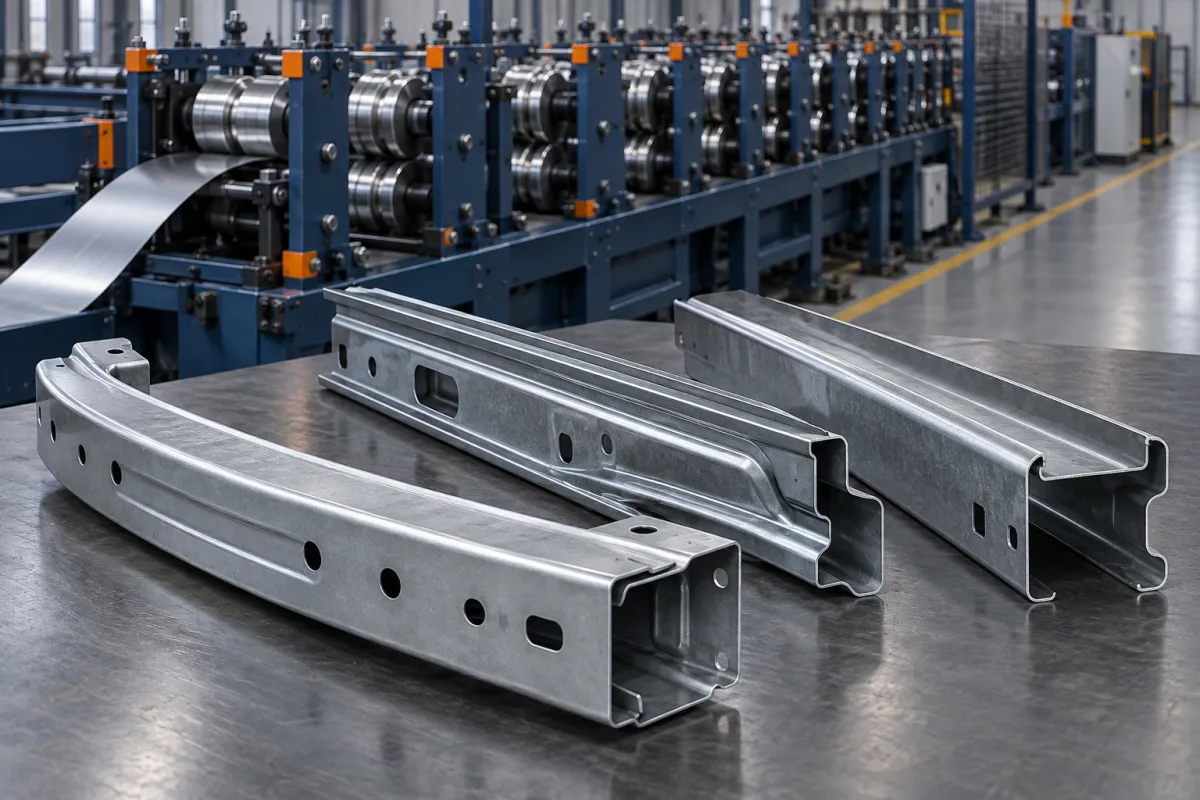
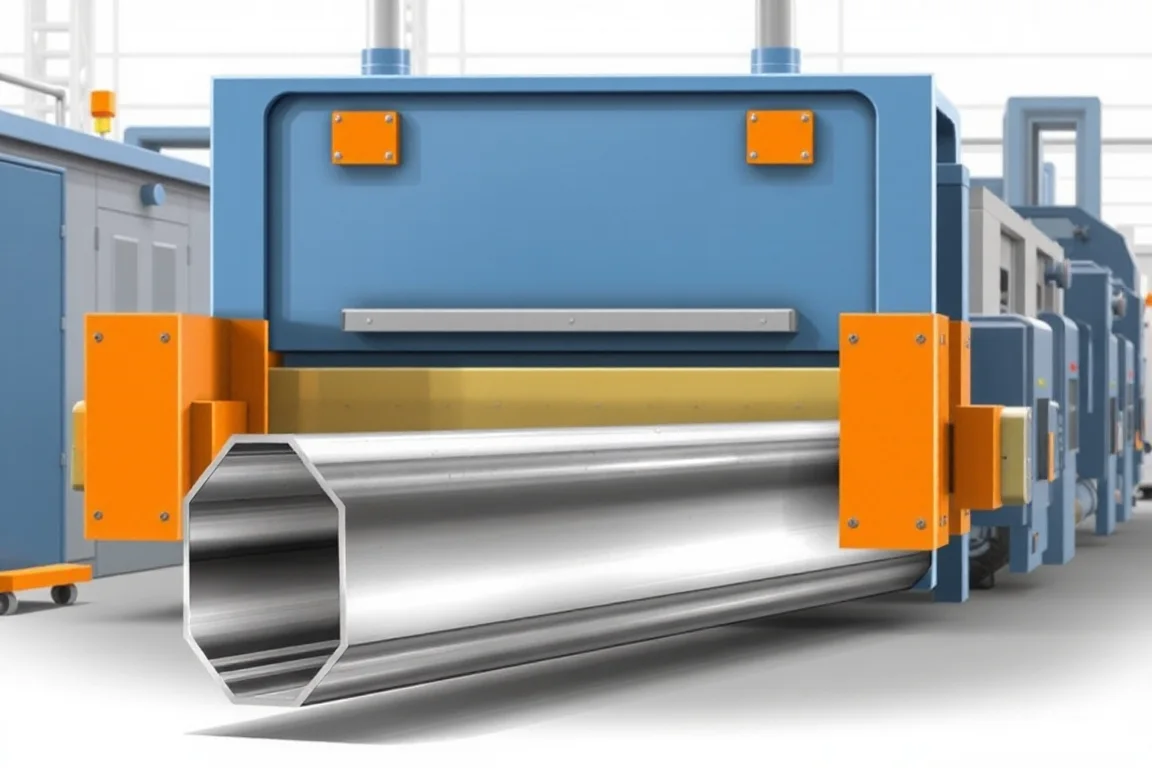
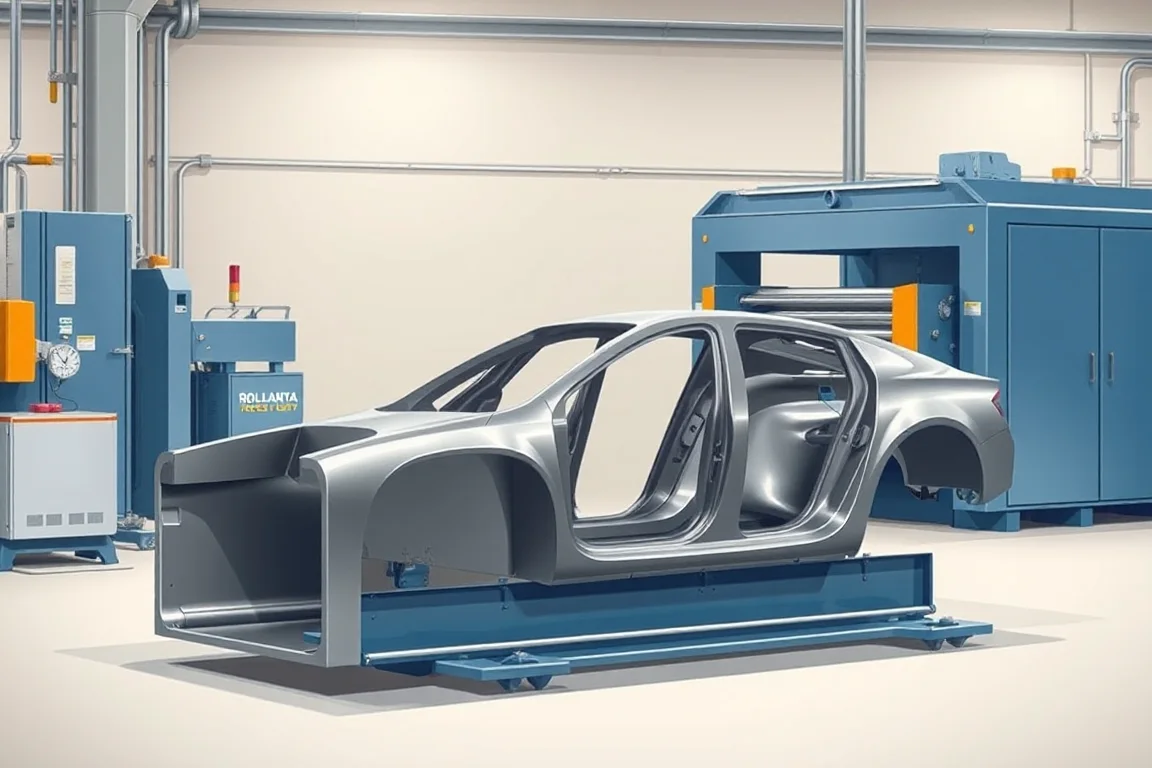
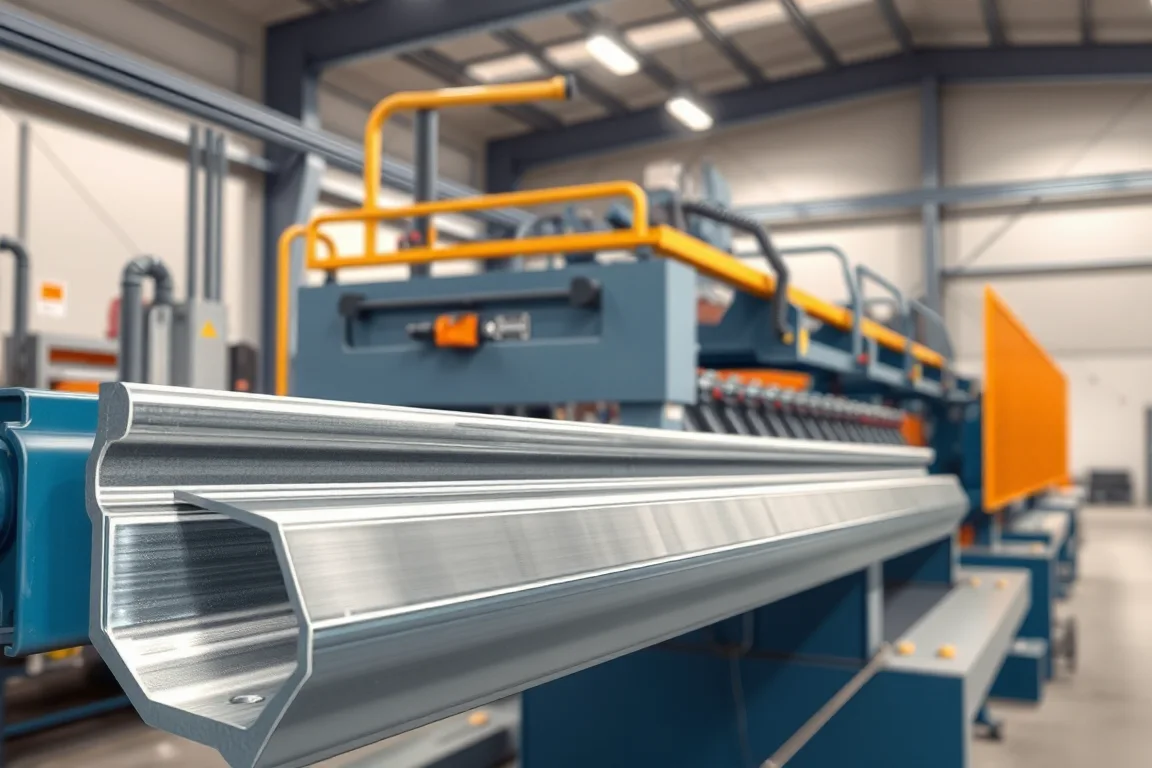
Automotive roll forming equipment is specified around a controlled component and its validation process. Bumper reinforcements, door beams, body profiles and truck members have different geometries, materials and downstream operations. A general ability to form metal sections does not establish that one line can manufacture or qualify every automotive part.
Identify the exact part and manufacturing boundary
Start with the approved drawing, revision, material requirements and functional datums. Determine which features are constant along the part and which require local shaping, piercing, joining or other operations. A long component is not automatically a simple constant-section roll-forming task.
- Bumper Beam: review section production alongside required shaping, joining and part validation.
- Door Beam: define the controlled member and its end or assembly interfaces.
- Body Structural Profile: coordinate datums, features and downstream manufacturing.
- Truck Side Beam: separate continuous section forming from variable or local geometry.
Connect material identity to trials
Specify grade, strength requirements, thickness, coating and permitted incoming variation. Use the actual production material in the relevant trials and retain its identity with the samples. A convenient substitute can give a different forming result and does not establish the required part process.
Material changes should follow the responsible engineering and approval process. The machine's ability to produce a similar-looking section is not evidence that the substituted component has the same performance.
Review the complete process chain
Show coil preparation, forming, feature-making, cutting, shaping and joining as applicable. Identify operations integrated into the line and those supplied separately. Include fixtures, gauges and data or identification needs where required by the production control plan.
A quotation for a loose section differs from one for a finished part route. Assign the boundaries of tooling development, trials, inspection and qualification support so important tasks are not assumed to belong to another supplier.
Use functional datums for inspection
Measure the surfaces and features that control assembly and function. Define whether the part is checked free or restrained and which fixtures or methods are used. A visually straight sample or a nominal outside dimension is not a complete acceptance plan.
Compare geometry before and after downstream operations where necessary to locate distortion. Keep setup, material and tool identity with the observations. For qualified parts, changes affecting the process should follow the agreed control requirements.
Distinguish manufacturing acceptance from vehicle performance
A line trial can demonstrate that the agreed route produces the required component geometry and features. Vehicle or safety-related performance involves the defined part and assembly validation. Do not transfer another manufacturer's ratings or qualification to a new roll-formed component.
Deviations need an approved disposition rather than local reshaping to make a sample appear acceptable. The production plan should explain how rejected parts, process changes and inspection records are controlled.
Compare accepted parts from the defined route
Output calculations need the required feature cycles, downstream operations, inspection and traceability. An uninspected straight-section speed is not a finished automotive-part delivery rate. Use the actual order and control-plan boundary when comparing proposals.
Prepare controlled drawings, material combinations, assembly references, inspection methods and production requirements. The detailed pages in this category develop component-specific questions so equipment selection follows a defined part process rather than an unsupported general automotive capability claim.
Continue your research
- Automotive Bumper Beam Roll Forming Machine
- Automotive Door Beam Roll Forming Machine
- Car Body Structural Profile Roll Forming Machine
- Truck Side Beam Roll Forming Machine
- Automotive Seat Rail Roll Forming Machine
- Automotive Window Guide Channel Roll Forming Machine
- Heavy Truck Side Member Roll Forming Machine
- Trailer Side Wall Post Roll Forming Machine
- EV Battery Tray Frame Roll Forming Machine
- How Automotive roll forming machine Works
- How To Choose a Automotive roll forming machine
- Automotive roll forming machine Price: What Affects the Cost?
- Materials and Thickness for Automotive roll forming machine
- Production Speed and Output of Automotive roll forming machine
- Roller, Tooling and Forming Design for Automotive roll forming machine
- Common Defects and Troubleshooting for Automotive roll forming machine