
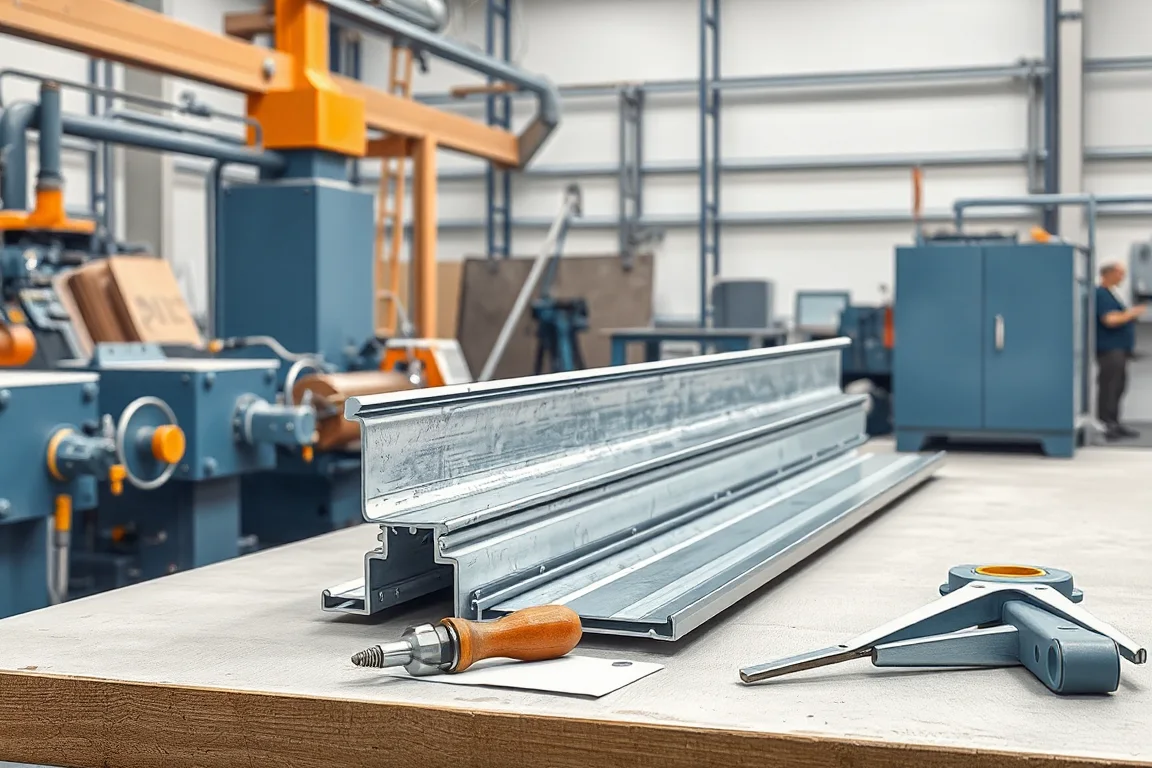
Choosing a greenhouse roll forming machine is not a single specification decision. A greenhouse contains several distinct profile families: a gutter that carries water, a film-lock channel that grips covering material, a structural post or support section, and a connection hole pattern for assembly. Each family has its own section geometry, joint logic, and fitness-for-purpose criteria. The machine is selected around the component, not around the word greenhouse. Many hydroponic growing channels are plastic extrusions with their own die, cooling, and material system; a metal roll forming line is not a substitute for a plastic extrusion process when the part must contact nutrient solution or withstand a particular cleaning environment.
Start With the Component Function, Not the Machine Label
A gutter drainage profile is shaped to collect and direct water, with a section that can join end-to-end or to a downpipe without leaking in service. A film-lock channel is shaped to hold a retaining element, such as a wire, spring, or clip, that presses covering material into the channel. A support section carries structural load and its connection holes align with posts, trusses, or brackets. A connection-hole pattern is part of the component definition and affects punching access, flat pattern, and cutoff timing.
The selection question is therefore: which manufacturing process suits this component? If the answer is a metal roll formed section, the next question is whether the machine is scoped for that section family. A line built for a simple open gutter may not have the roll stations, edge conditioning, or punch access needed for a film-lock return or a structural post with multiple hole groups. Treating all greenhouse profiles as one product class leads to a machine that forms something close but fails at assembly or in service.
Define the Material and Base-Metal Envelope Before Comparing Machines
The buyer specifies the base-metal thickness and grade, and the operating range requires supplier verification against the actual section. Material and coating suitability are separate from formability. A coating or metallic protection system chosen for humid greenhouse air may not be suitable for contact with nutrient solution or repeated cleaning chemicals. That is an application-specific limit, not a machine feature.
When comparing lines, hold the material envelope constant. A machine demonstrated on a thin, ductile material may behave differently on a higher-strength or thicker grade, especially at tight radii, at punched edges, and at the cutoff. The material envelope should be written as a required range, not as a single nominal value. If the intended product mix spans different grades or thicknesses, the comparison must include the tooling and changeover consequences of that span.
Match the Process Sequence to the Profile
A typical metal greenhouse section line follows a sequence from coil preparation to finished length. Coil preparation includes decoiling, and may include straightening or feeding. Connection punching comes next so that holes and notches are placed while the strip is flat and accessible. Section forming then bends the strip through a series of roll stations to the required geometry. Cutoff separates the finished length. After cutoff, secondary operations such as end forming or hardware insertion may be required if the profile or joint needs them.
The sequence matters because punching before forming is usually easier to tool and inspect, but some hole positions may distort during forming. Punching after forming can preserve hole location but may require access inside a closed section. The right order is a function of the profile and the joint. A film-lock channel may need a continuous return and a clean edge that does not snag the covering. A gutter may need a joint feature that aligns with a connector or seal. These are interface decisions, not just forming decisions.
Evaluate Cutoff and End Quality as Part of the Finished Part
Cutoff is where the machine definition meets the assembly drawing. Confirm the profile-supported cutoff method, the cut lengths required, and the end quality expected. A shear cutoff, a saw cutoff, and a die cutoff produce different end conditions. Some ends need deburring or a specific flatness for a joint or gasket. Some profiles close at the end and need a controlled opening. Some joints rely on an overlap or a formed lip.
End quality is an acceptance characteristic, not a cosmetic detail. If the greenhouse drawing calls for a joint that seals or a film-lock edge that retains hardware, the cutoff and any secondary operation must be included in the scope. A quote that covers forming but not end preparation is incomplete for the component. Compare lines on the finished part, not on the coil-to-cutoff portion alone.
Separate Production Capability From Assembly and Certification
Production is the repeatable creation of the section at the required length and hole pattern. Assembly is how that section joins to other parts on the greenhouse. Certification and in-service performance are separate questions about strength, drainage, corrosion, and compatibility with growing systems. A machine can produce a geometrically correct section that still fails at assembly if the holes do not align, or fails in service if the material and coating are wrong for the environment.
Keep these layers distinct when choosing. The machine scope should be judged on the production layer: can it form the section, punch the holes, and cut the length to the drawing revision? Assembly and in-service questions belong in the acceptance plan and material selection. For growing systems, evaluate suitability for the actual nutrient and cleaning environment with specialist input, because a channel called hydroponic is not automatically suitable for contact with nutrient solution.
Compare Alternatives: Dedicated Line, Convertible Line, and Outsourced Supply
A dedicated line is tooled for one profile family and one material envelope. It can offer simpler changeover and tighter focus, but it limits future product mix. A convertible line carries multiple tooling sets or adjustable stations and can run several sections, but changeover time, setup skill, and tooling storage become part of the decision. An outsourced supply option avoids capital tooling but shifts control of lead time, drawing revision, and material traceability to another party.
The trade-off is between focus and flexibility. If the greenhouse project uses a small number of stable profiles, a dedicated approach may be easier to validate. If the product mix is expected to change, a convertible line needs a changeover demonstration for the intended mix, not just a statement that changeover is possible. If production depends on equipment outside the quote, such as a separate punch press or a coating step, include that equipment in the comparison. Otherwise the quoted line and the real production system are different things.
Build a Requirement Matrix With Required, Included, and Excluded Columns
A practical way to make the decision is a comparison matrix with three columns: required, included, and excluded. For each candidate line, list the profile, material, thickness range, hole pattern, cut length, end treatment, and any secondary operation. Mark what the quote includes and what it explicitly excludes. This exposes gaps that a general description can hide.
Ask each supplier to answer against the same drawing revision and the same material envelope. Separate a confirmed capability from a proposed future option. If a feature is described as available but not demonstrated, treat it as proposed. This keeps the comparison honest and makes later acceptance measurable.
What a Meaningful Demonstration Should Show
A useful demonstration produces the finished component and checks it against the greenhouse drawing. Check film-retaining hardware fit, drainage joints, and connection holes. For a film-lock channel, confirm that the retaining element engages and releases as intended. For a gutter, inspect the joint for alignment and any seal or overlap feature. For a structural or support section, verify hole location and edge condition at the connection points. For growing systems, evaluate material and coating suitability for the actual nutrient and cleaning environment.
Demonstration should also show the changeover if the intended product mix requires it, and should produce enough parts to judge repeatability at the start, middle, and end of a run. Agree acceptance measurements before committing to tooling. Measurements should be tied to the drawing, not to a generic tolerance.
Power, Utilities, and Site Fit Are Buyer-Provided Requirements
The buyer states voltage, frequency, and phase. Installed power requires a confirmed equipment schedule that includes the line and any auxiliary equipment. The buyer should also confirm the available floor area, coil handling, and material flow through the plant. These are site requirements, not machine ratings. A line that fits the process but not the building is still a poor choice. Treat utility and layout information as part of the requirement matrix.
Acceptance Checks for Greenhouse Interfaces
Acceptance should be organized around interfaces. For film-lock channels, the interface is the retaining hardware and the covering material. For gutters, the interface is the joint and the drainage path. For structural sections, the interface is the connection hole pattern and the mating bracket or post. For growing systems, the interface is the nutrient and cleaning environment. Each interface has a check that can be performed on the finished part.
Define these checks before the machine is built. If a check cannot be measured, the requirement is not yet clear enough to enforce. This is how the production layer is connected to assembly and in-service performance without pretending the machine alone guarantees them.
Decision Checklist
- Name the component function: drainage gutter, film-lock channel, support section, or connection-hole pattern.
- Confirm the process family: metal roll forming versus plastic extrusion or another method.
- Write the material envelope as a required range, with grade and coating noted separately.
- Define the hole pattern and whether punching occurs before or after forming.
- Specify cut length, end quality, and any secondary operation.
- State the required profile and material for comparison, plus the drawing revision.
- List required, included, and excluded items for each candidate quote.
- Request a changeover demonstration for the intended product mix.
- Agree acceptance measurements for film-lock fit, drainage joints, and connection holes.
- Evaluate growing-system suitability for the actual nutrient and cleaning environment.
Frequently Asked Questions
Can a metal greenhouse gutter line also produce hydroponic NFT channels?
Not as a substitute for a plastic extrusion system. Many hydroponic NFT channels are plastic extrusions with a different material and process. A metal roll forming line may produce a channel shape, but the suitability for contact with nutrient solution and cleaning chemicals is a material and coating question that needs specialist confirmation. A channel called hydroponic is not automatically suitable for that environment.
What is the difference between a film-lock channel and a gutter profile when choosing a machine?
A film-lock channel is defined by its compatibility with a retaining element that grips the covering material. Its critical features are the return shape, edge condition, and hardware fit. A gutter is defined by drainage and joint features, including the section shape and any overlap or seal. They require different section geometry, different interface checks, and potentially different punch and cutoff tooling. Choose the machine around the specific section family.
How should I specify base-metal thickness for a greenhouse roll forming machine?
State the base-metal thickness and grade as a required range and ask the supplier to verify the operating range against the specific section. A single nominal value is often not enough because forming behavior changes with grade and thickness. The material envelope should be held constant when comparing lines, and any coating or protection system should be specified separately from formability.
Why does cutoff and end quality matter for greenhouse profiles?
Cutoff produces the end condition that meets the assembly drawing. A joint that seals, a film-lock edge that retains hardware, or a connection that overlaps may depend on a specific end quality. Different cutoff methods produce different ends. Include cutoff and any deburring or secondary operation in the scope, and check the finished end against the drawing during acceptance.
What should a machine demonstration include for a greenhouse profile?
A meaningful demonstration should produce the finished component and check it against the greenhouse drawing. Check film-retaining hardware fit, drainage joints, and connection holes. If the intended product mix requires changeover, demonstrate it. Produce enough parts to judge repeatability across a run. For growing systems, evaluate material and coating suitability for the actual nutrient and cleaning environment.
How do I compare quotes from different greenhouse roll forming machine suppliers?
Use a matrix with required, included, and excluded columns. Compare the same material, section family, and finished-part scope, against the same drawing revision. Ask each supplier to separate confirmed capability from a proposed future option. If production depends on equipment outside the quote, include that equipment in the comparison. Power, utilities, and site fit should be listed as buyer-provided requirements.
Continue your research
- Greenhouse Profile Roll Forming Machines
- Greenhouse Gutter Roll Forming Machine
- Greenhouse Channel Roll Forming Machine
- Greenhouse Film Locking Channel Machine
- Greenhouse Crop Support Channel Machine
- Greenhouse Purlin Roll Forming Machine
- How Greenhouse roll forming machine Works
- Greenhouse roll forming machine Price: What Affects the Cost?
- Materials and Thickness for Greenhouse roll forming machine