
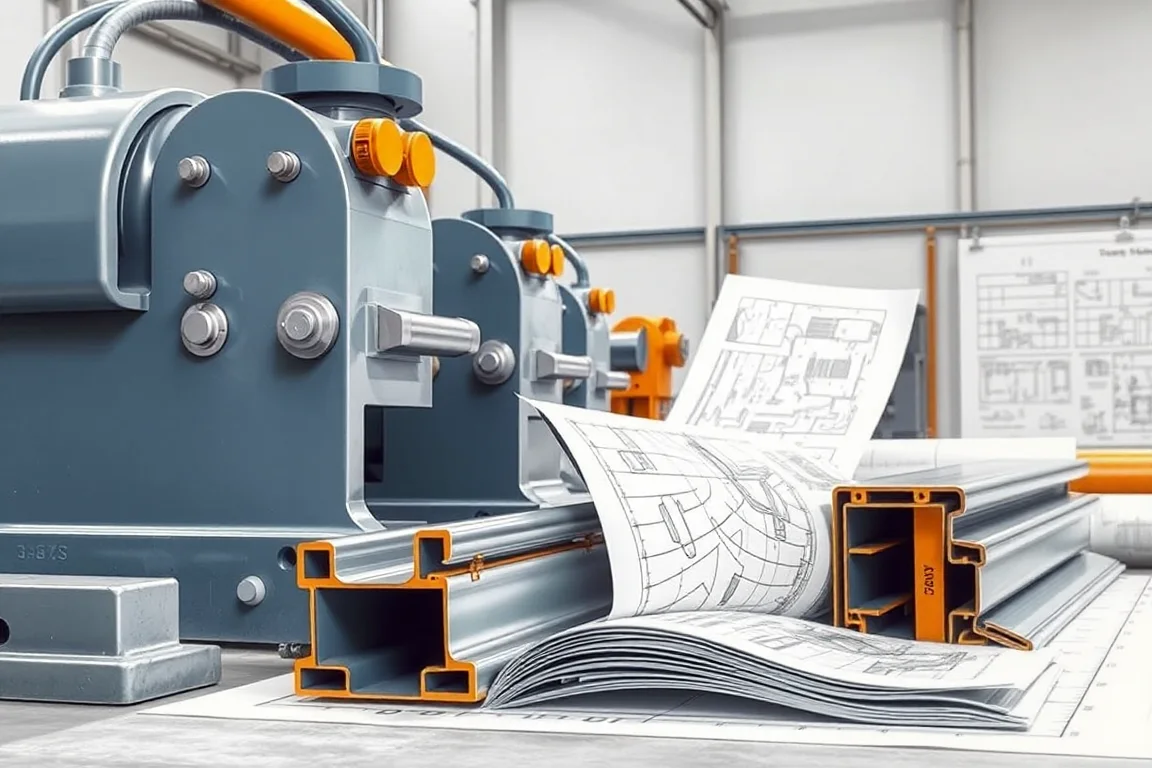
Greenhouse roll forming machine price is not a single number that can be published as a universal guide. It is the result of a defined scope: which profiles the line must make, what material and base-metal thickness range it must accept, what connection punching and cutoff operations are included, how finished lengths are handled, and what acceptance evidence is required. Without that scope, any numerical price obscures rather than explains. RollVanta does not publish invented equipment prices. Instead, this guide explains the variables that drive cost and shows how to compare quotes on a like-for-like basis.
Why Greenhouse Roll Forming Machine Price Resists a Simple Answer
A greenhouse roll forming machine is not one product. It is a system configured around a family of long, slender sections. Structural posts, drainage gutters, film-lock channels and support rails perform different functions. A line tooled for one section may not produce another without changing rolls, dies, cutoff arrangements and handling. The quotation therefore reflects engineering and tooling specific to the buyer's drawing, not a catalogue item. Two quotes for a ‘greenhouse roll forming machine’ can differ by multiples because one covers a single film-lock channel and the other covers a gutter section with connection punching, variable-length cutting and assisted handling.
The Profile Scope Is the Largest Cost Driver
The profile drawing defines almost everything downstream. A film-lock channel has a relatively compact cross-section with a retention geometry. A drainage gutter is a deeper, more open section with joint details. A structural support section may need stiffening returns, holes or notches. Each additional profile family adds tooling, changeover time and setup scrap. When a quote lists ‘greenhouse profiles’ without separating them, the buyer cannot see whether the price includes one shape or five. Ask for each profile to be priced and described separately. If a supplier cannot break the scope down, the comparison is unlikely to be meaningful.
Material and Thickness Affect Tooling and Machine Structure
Base-metal grade and thickness influence roll load, shaft size, drive power, and the amount of springback the forming passes must control. A line intended for thin, protected steel sections is not automatically suitable for heavier structural sections. The buyer should specify base-metal thickness and grade, but the operating range requires supplier verification against actual trial forming. Material coating also matters: a protected surface is handled differently from bare metal to avoid marking. Plastic growing channels are produced by a different process and should not be assumed to be within the same forming scope.
How the Forming Process Sequence Maps to Cost
A typical line involves coil preparation, connection punching, section forming, cutoff, and greenhouse-interface checks. Each stage has a cost consequence. Coil preparation may include a decoiler, a straightener or a combination. Connection punching can be integrated into the line or performed offline; integrated punching adds tooling and synchronisation but can reduce handling and secondary operations. Section forming uses a series of roll stands whose number and design depend on profile complexity. Cutoff can be a simple stop-and-cut or a flying cut for continuous output; the choice affects length accuracy, end quality and line speed. The greenhouse-interface check is not a machine station but an acceptance step: film-retaining hardware must fit, drainage joints must align, and connection holes must match the greenhouse drawing.
Tooling, Changeover and Setup Scrap in the Quote
Roll tooling is often the least visible cost in a quotation. It includes roll design, turning, heat treatment, and assembly into stands. If multiple profiles are required, changeover tooling and handling arrangements add cost. Setup scrap is the material consumed while bringing the line to stable output; on long sections, this can be significant. A quote that excludes changeover scrap or assumes it away is not a complete cost. Compare quotes on the basis of accepted output per shift for the actual profile and material, not on a nominal line speed that may never be reached with the buyer's section. Because no verified model rating is available here, the buyer should define accepted output with the supplier and test it during acceptance.
Punching, Cutting and Secondary Operations
Connection holes for bolts, brackets or film-retaining hardware are usually punched before forming or within the line. In-line punching requires tooling and a control interface; offline punching introduces a separate operation, more handling and possible hole-to-form misalignment. Cutoff must be confirmed as profile-supported: the cut must not crush the section or leave an unacceptable end. Variable cut lengths are common for greenhouse bays, so length setting and measurement need attention. Secondary operations such as bending, curving or joining are often outside the forming scope. If the greenhouse design requires curved arches or joined gutters, those operations need separate pricing and process planning. A quote that silently excludes them will understate the installed cost.
Automation, Power and Utilities
Automation level ranges from manual loading and simple length control to automated coil feed, punching, cutting and stacking. Higher automation reduces labour per part but increases electrical, control and maintenance scope. The buyer should state voltage, frequency and phase. Installed power requires a confirmed equipment schedule rather than an assumption. Utilities also include compressed air if used, extraction or cooling where applicable, and floor space for coil storage, line length and finished-length handling. These items often sit outside the machine price but inside the project budget.
Handling Long Members and Variable Cut Lengths
Greenhouse sections are long and often produced in variable lengths. Handling them without damage or distortion requires an organised plan: support tables, run-out racks, lifting arrangements and a clear packing area. Long members can sag or twist if unsupported during and after cutting. A line that produces good sections but delivers them into an unplanned handling area can generate more scrap and damage than expected. Handling is not a machine rating; it is a system design decision that affects the cost per accepted part.
Acceptance Criteria and Their Cost Implications
Acceptance should be defined before purchase. For structural and film-lock components, check that film-retaining hardware fits, drainage joints align, and connection holes match the greenhouse drawing. For growing systems, evaluate suitability for the actual nutrient and cleaning environment. A channel called ‘hydroponic’ is not automatically suitable for contact with nutrient solution; material and coating suitability need specialist confirmation. Acceptance criteria influence cost because they determine how much inspection, documentation and possible rework are included. A lower-priced machine that fails interface checks is not lower cost in practice.
How to Compare Quotes and Build a Project Budget
A useful budget separates engineering and tooling, machine equipment, auxiliary handling, transport, installation, utilities, training and acceptance. Each line should be itemised. Compare the cost per accepted part, not the purchase price alone. Consider changeover scrap, handling requirements, maintenance access, and the cost of secondary operations. If a quote is significantly lower, identify what is excluded: a second profile, in-line punching, variable-length cutting, run-out tables, installation, training or acceptance support. The lowest equipment price is not necessarily the lowest cost per accepted part. Without a defined scope, a numerical price range can obscure more than it explains.
Practical Checklist for Buyers
- Prepare one profile drawing and a scope checklist for every quote.
- List each profile separately: structural, gutter, film-lock, support.
- State base-metal thickness, grade and coating.
- Specify connection hole positions and any notches.
- Confirm whether punching is in-line or offline.
- Define cut lengths and end quality requirements.
- Record excluded tools, utilities and secondary operations.
- Agree an acceptance test using the actual profile and material.
- Include handling, packing and transport in the budget.
- Compare changeover scrap and handling, not only purchase price.
- Verify material and coating suitability for the service environment.
Frequently Asked Questions
Does a higher machine price always mean a better greenhouse roll forming machine?
No. A higher price may reflect additional scope, such as more profiles, in-line punching, higher automation or longer run-out handling. A lower price may exclude those items. The relevant comparison is the cost per accepted part under the buyer's actual profile, material and acceptance criteria. If the scope is not itemised, price alone does not indicate fitness for purpose.
Why can two quotes for the same greenhouse profile differ so much?
They may include different tooling, different cutoff arrangements, different automation, or different handling and installation scope. One quote may assume a single profile and manual handling; another may include multiple profiles, in-line punching, automated length control and acceptance testing. The difference is usually scope, not merely margin. Ask for a line-by-line breakdown before comparing totals.
Should I buy a line that can make gutters and structural posts?
A multi-profile line can reduce the number of machines, but it adds tooling, changeover time and setup scrap. If gutters and structural posts have very different thickness or section complexity, a single line may be a compromise. A better decision is to compare the total cost of accepted output for each option, including changeover labour and scrap, rather than assuming one machine is inherently cheaper.
How do I include secondary operations in the price comparison?
Identify every operation after forming that the greenhouse design requires, such as bending, curving, joining, or additional hole punching. Ask each supplier to state whether those operations are in scope, out of scope, or available as an add-on. Then estimate the cost of performing them separately. A forming-only quote can appear competitive until secondary operations are added back into the project budget.
What acceptance evidence should I request before final payment?
Request a documented acceptance test using the actual profile and material. The test should demonstrate that film-retaining hardware fits, drainage joints align, and connection holes match the greenhouse drawing. It should also confirm cut length and end quality. For growing systems, material and coating suitability for the nutrient and cleaning environment needs specialist confirmation. Acceptance evidence is part of the purchase scope and should be agreed before order.
Why is cost per accepted part more useful than machine price?
Machine price ignores material utilisation, setup scrap, changeover time, handling damage and secondary operations. Cost per accepted part captures the resources actually consumed to produce a saleable section. It allows a meaningful comparison between a low-cost line that requires frequent adjustment and a higher-cost line that produces stable output with less waste. The buyer should define accepted output with the supplier for the actual profile and material.
Continue your research
- Greenhouse Profile Roll Forming Machines
- Greenhouse Gutter Roll Forming Machine
- Greenhouse Channel Roll Forming Machine
- Greenhouse Film Locking Channel Machine
- Greenhouse Crop Support Channel Machine
- Greenhouse Purlin Roll Forming Machine
- How Greenhouse roll forming machine Works
- How To Choose a Greenhouse roll forming machine
- Materials and Thickness for Greenhouse roll forming machine