
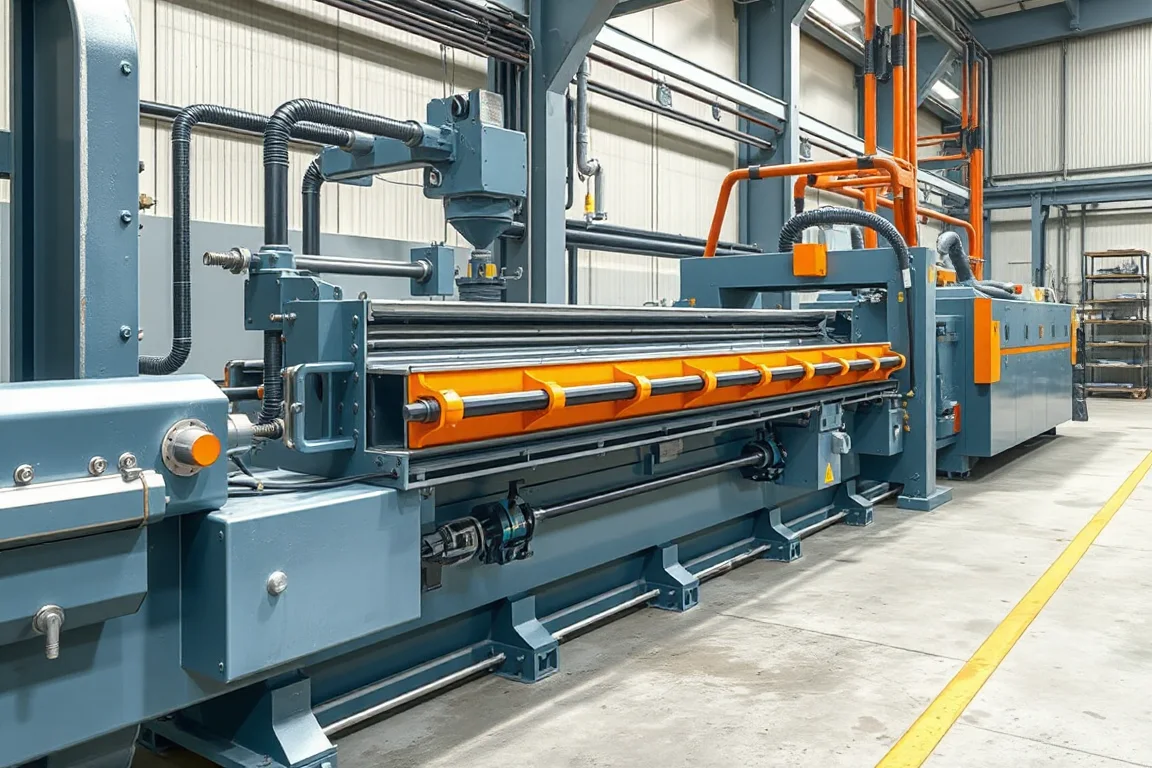
The greenhouse film locking channel machine is a roll forming line that turns metal coil into the long, slotted profile used to grip plastic film against a frame. The machine's purpose is to create a continuous channel with an opening, returns, and fixing points that accept a retaining wire, strip, or spring. This article separates that specific component from nearby profile types, explains the forming sequence, and details what must be checked before a line is accepted. The goal is to help a buyer match the machine to the actual film-retention hardware and the greenhouse's structural drawing, rather than relying on a generic profile description.
What a film locking channel does on a greenhouse
A film locking channel is the edge component that holds plastic sheeting in place. The film is laid over the channel, and a wire or spline is pressed into the channel opening, trapping the film between the spline and the channel returns. The channel must have a consistent opening width, smooth returns, and enough stiffness to resist wind and film tension without deforming. It is distinct from gutters, which manage water; from crop support channels, which carry plants or trellises; and from structural members, which carry loads. Mixing these functions in one profile or one machine specification usually leads to poor fit or weak retention. The machine's job is to form the channel profile reliably, but retention performance also depends on the spline, the frame spacing, and the installation method.
Why the channel profile and retaining hardware must be designed together
The channel opening, return depth, and spring-back after forming determine whether a spline will lock the film without cutting it or slipping. If the opening is too wide, the spline may not grip; if too narrow, insertion becomes difficult and the film may tear. The coating condition matters as well: a rough or damaged coating inside the channel can abrade the film over time. The machine should be specified with a sample of the actual retaining wire or strip, so the forming rolls can be set to produce the correct gap and return geometry. Without that, a visually similar wire may not perform in service. The greenhouse's wind resistance depends on the complete fastening and structural system, not on the channel alone. For these reasons, the machine quotation should reference the retaining element's dimensions and the expected film thickness.
Production route: from coil to finished interface
A typical production route for a metal film locking channel is coil preparation, connection punching, section forming, cutoff, and greenhouse-interface checks. Coil preparation may include uncoiling, flattening, and feeding the strip at a consistent tension. If the channel requires holes for fasteners, those are punched before forming, while the strip is flat and easy to locate. Section forming then progressively bends the strip through a series of rolls to create the channel's cross-section, including the opening and returns. Cutoff follows, using a die or shear that matches the profile so the cut end stays within the allowed distortion. Finally, the interface checks confirm that the formed channel accepts the intended spline and that any holes align with the greenhouse frame drawing.
Punching before forming versus after forming
Punching before forming is common for holes that lie on flat areas of the strip, because the punch tooling is simpler and the hole position can be controlled by the feed length. Punching after forming is sometimes used for holes that must be located relative to the formed features, but it requires a more complex press or a secondary operation. If the holes are close to a bend, punching before forming can distort the hole shape during bending, so the sequence must be tested with the actual material and thickness. The machine specification should state which holes are punched in-line and which require a secondary operation, so the buyer can plan the workflow.
Material selection and corrosion protection
Greenhouse environments often combine humidity, condensation, and chemical exposure from fertilizers or cleaning agents. These factors influence the choice of base metal and coating. A generic galvanized description may not be sufficient if the channel is used in a growing system where nutrient solutions or acidic cleaners are present. The buyer should specify the expected environment and the required coating class, then verify that the forming process does not damage the coating at the bends or cut ends. Plastic growing channels, such as those used in nutrient film technique, are made by extrusion, not roll forming. A metal gutter line is not a substitute for a plastic extrusion system. If the application is a metal film-lock channel, the material grade and thickness must be stated by the buyer, and the machine's operating range must be confirmed by the supplier.
Machine configuration for film-lock channels
A film-lock channel machine is configured around the profile drawing. The number of forming stations, the roll design, and the cutoff type all depend on the section complexity and the base-metal thickness. For a simple channel with few bends, fewer stations may suffice; for a profile with returns and a precise opening, more stations are needed to control spring-back and dimensional consistency. The cutoff should be capable of cutting the profile without crushing the opening or leaving a heavy burr. If the greenhouse design requires curved or joined sections, those secondary operations may be outside the forming line's scope and should be listed separately in the quotation. The machine's electrical supply must be stated by the buyer as voltage, frequency, and phase, and the installed power requires a confirmed equipment schedule rather than an assumption.
Assembly boundaries: what the machine does and what it does not
The roll forming machine produces the channel profile and may punch holes and cut lengths. It does not install the spline, attach the channel to the frame, or tension the film. Those are assembly operations done on site or in a separate fabrication step. If the channel requires welding, bending, or attaching brackets, those processes need their own equipment and fixtures. The buyer should separate the machine scope from the assembly scope in the quotation. For example, a machine that forms and cuts the channel does not include the hardware that holds the film, nor does it include the frame members that support the channel. Confusing these scopes can lead to unexpected costs or fit problems. The greenhouse-interface checks at the end of the forming line are meant to verify that the channel matches the drawing, not that the complete greenhouse assembly is watertight or wind-resistant.
Inspection and acceptance checks for the formed channel
Acceptance checks should focus on the features that affect film retention and assembly. The channel opening, return dimensions, and surface condition should be measured on first-off pieces and on a representative sample from steady production. The actual retaining wire or strip should be trialed in the channel, not a visually similar substitute. Connection holes should be checked against the greenhouse drawing for position and diameter. Cut ends should be examined for distortion and burrs that could damage film or injure handlers. If the channel is coated, the coating should be inspected at bends and cut edges for cracks or exposed base metal. These checks are done with agreed gauges and fixtures, and the results recorded. The machine's output should be defined as accepted parts per shift with the actual profile and material, not as a theoretical speed.
Comparing production alternatives for film retention
Roll forming is one way to make metal film-lock channels; other routes include press braking, extrusion, and folding. Roll forming suits long, constant-profile runs with consistent hole patterns. Press braking is more flexible for short runs or prototypes but slower for long lengths and less consistent in the channel opening. Extrusion is used for plastic channels, which have different mechanical properties and corrosion behavior. Folding from sheet can produce a channel but may not achieve the same dimensional control or surface finish. The choice depends on the required length, material, and quantity. For a greenhouse project with many long members, roll forming typically offers better repeatability and lower labor per part, but it requires a dedicated machine and a clear profile drawing.
Practical checklist for specifying a film locking channel machine
- Provide a profile drawing that shows the channel opening, return geometry, and hole locations relative to the retaining spline.
- State the base-metal grade and thickness, and the coating type and class expected in service.
- Supply a sample of the actual retaining wire or strip so the machine can be set to match it.
- Define which holes are punched in-line and which require secondary operations.
- Specify cut lengths, end quality requirements, and any need for curved or joined sections.
- State the electrical supply and confirm the installed power from a complete equipment schedule.
- Agree on acceptance criteria: channel opening, return dimensions, hole position, coating condition, and cut-end quality.
- Plan for handling long members and variable cut lengths, including unloading and packaging.
- Separate the machine scope from assembly, certification, and in-service performance responsibilities.
FAQ: specific questions about film locking channel machines
Can the same machine make gutters and film-lock channels?
It depends on the profile and the machine's roll set. Gutters typically have a different cross-section, with drainage joints and a water-carrying shape, while film-lock channels have a narrow opening and returns for the spline. A machine can be designed with interchangeable roll sets for multiple profiles, but the changeover, setup, and tooling cost must be evaluated. If the profiles are very different in width or complexity, a single machine may not be practical. The buyer should specify each profile separately and ask for a changeover plan. The machine's capability for both profiles should be demonstrated with the actual materials, not assumed from a generic description.
What determines whether the channel will hold film under wind load?
Film retention under wind depends on the channel-spline interface, the film thickness and elasticity, the spacing of the channel along the frame, and the frame's structural stiffness. The channel must be formed with a consistent opening so the spline compresses the film uniformly. If the opening varies along the length, some areas may release while others hold, leading to localized failure. The machine's ability to maintain the opening within a narrow tolerance is therefore critical. However, the machine alone cannot guarantee wind resistance; the complete fastening system, including the frame and the installation method, must be designed for the load. The buyer should verify the channel dimensions with the spline and film samples, and rely on the structural engineer for the overall design.
How should corrosion protection be specified for a greenhouse film-lock channel?
Corrosion protection should be specified based on the actual environment: humidity, condensation, contact with soil or fertilizer, and cleaning chemicals. A coated metal channel may need a coating that resists the specific chemicals used. The forming process can crack coatings at bends, so the coating's flexibility should be matched to the bend radii. Cut ends are often unprotected and can corrode, so they may require touch-up or a design that hides them. The buyer should state the expected environment rather than relying on a generic galvanized label. For growing systems, the suitability of the material for the nutrient and cleaning environment must be evaluated separately. Plastic channels may be preferred in some aggressive chemical exposures, but they have different mechanical properties.
Why is punching done before forming, and when is it better after?
Punching before forming is common because the strip is flat and the hole locations can be set accurately by the feed length, and the tooling is simpler. However, if a hole is near a bend, the bending operation can distort the hole or change its position. In that case, punching after forming may be better, but it requires a press that can access the formed profile and may need a secondary operation. The decision should be tested with the actual material and thickness. The machine quotation should clearly state which holes are punched in-line and which are done separately, so the buyer can plan the production flow and avoid surprises.
What acceptance tests should be performed on the first channel produced?
The first-off channel should be checked against the drawing for opening width, return geometry, hole positions, and overall straightness. The actual retaining spline should be inserted to confirm it locks the film without excessive force or slippage. Cut ends should be examined for burrs and distortion. If the channel is coated, the coating should be inspected at bends and cut edges for cracks or bare metal. These checks should be repeated on a sample from steady production to confirm the process remains stable. The acceptance criteria should be agreed in writing before the machine is shipped, and the tests should use the same gauges and fixtures that will be used in production.
Can a roll forming machine also assemble the spline into the channel?
Typically no. Roll forming machines form and cut the metal profile. Inserting the spline or wire is an assembly step that is usually done on site or in a separate workstation. Some automated systems may integrate the insertion, but that is a different scope and requires additional equipment. The buyer should separate the forming scope from the assembly scope in the quotation. If the machine is expected to perform any assembly, that must be specified and demonstrated. Otherwise, the machine's output is a formed channel, and the film retention is completed later by installers.

Continue your research
- Greenhouse Profile Roll Forming Machines
- Greenhouse Gutter Roll Forming Machine
- Greenhouse Channel Roll Forming Machine
- Greenhouse Crop Support Channel Machine
- Greenhouse Purlin Roll Forming Machine
- Greenhouse Steel Column Roll Forming Machine
- How Greenhouse roll forming machine Works
- How To Choose a Greenhouse roll forming machine
- Greenhouse roll forming machine Price: What Affects the Cost?
Configuration & specification inputs
Match the configuration to your section drawing, material and production requirements.
| Parameter | Requirement / confirmation needed |
|---|---|
| Profile geometry | A film-locking channel must match its retaining wire or strip. The channel opening, returns and coating condition should be assessed with the actual film-retention assembly. |
| Material | Specified protected metal sections; plastic growing channels use a different process |
| Thickness & grade | Buyer to specify base-metal thickness and grade; operating range requires supplier verification. |
| Process route | Coil preparation → connection punching → section forming → cutoff → greenhouse-interface checks |
| Cutting | Confirm profile-supported cutoff, cut lengths, end quality and any secondary operations. |
| Output | Define accepted output per shift with the actual profile and material. |
| Electrical supply | Buyer to state voltage / frequency / phase. Installed power requires a confirmed equipment schedule. |
| Acceptance | Inspect contact surfaces and cut ends using the agreed acceptance criteria. Trial the actual locking components rather than a visually similar wire. The greenhouse's wind resistance depends on the complete fastening and structural system. |