
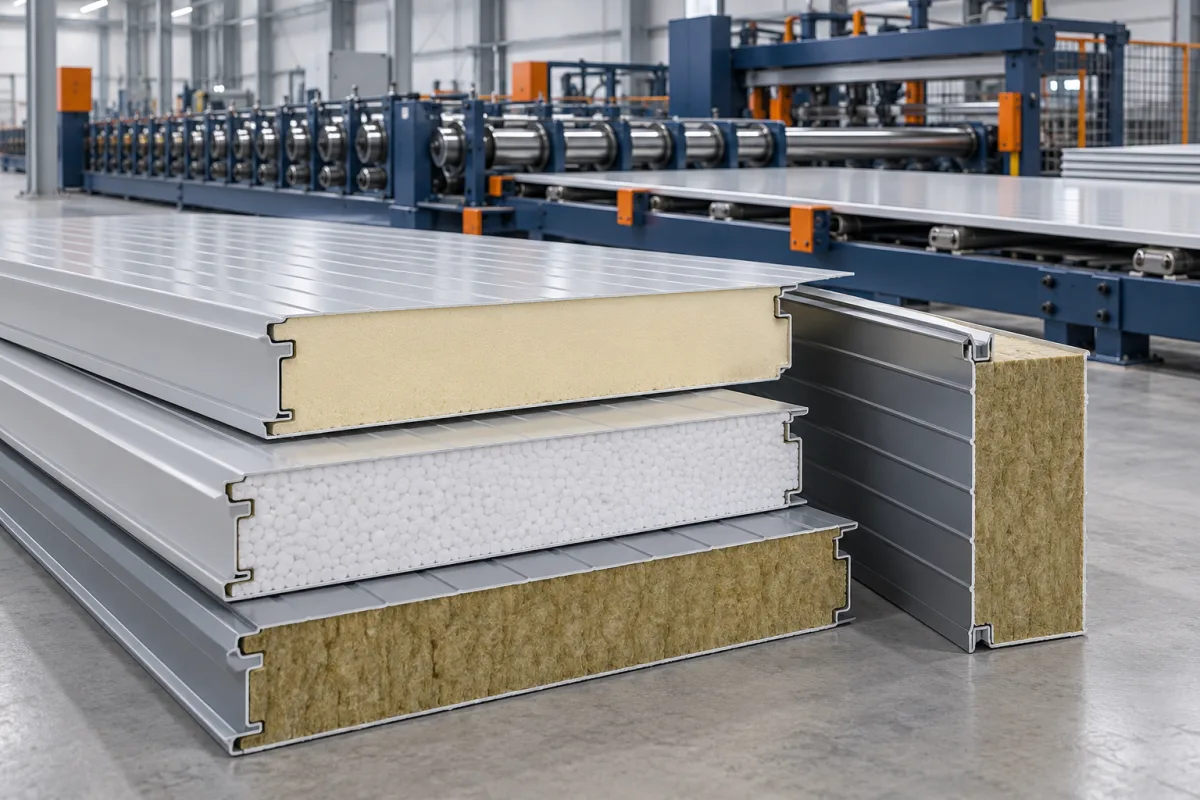
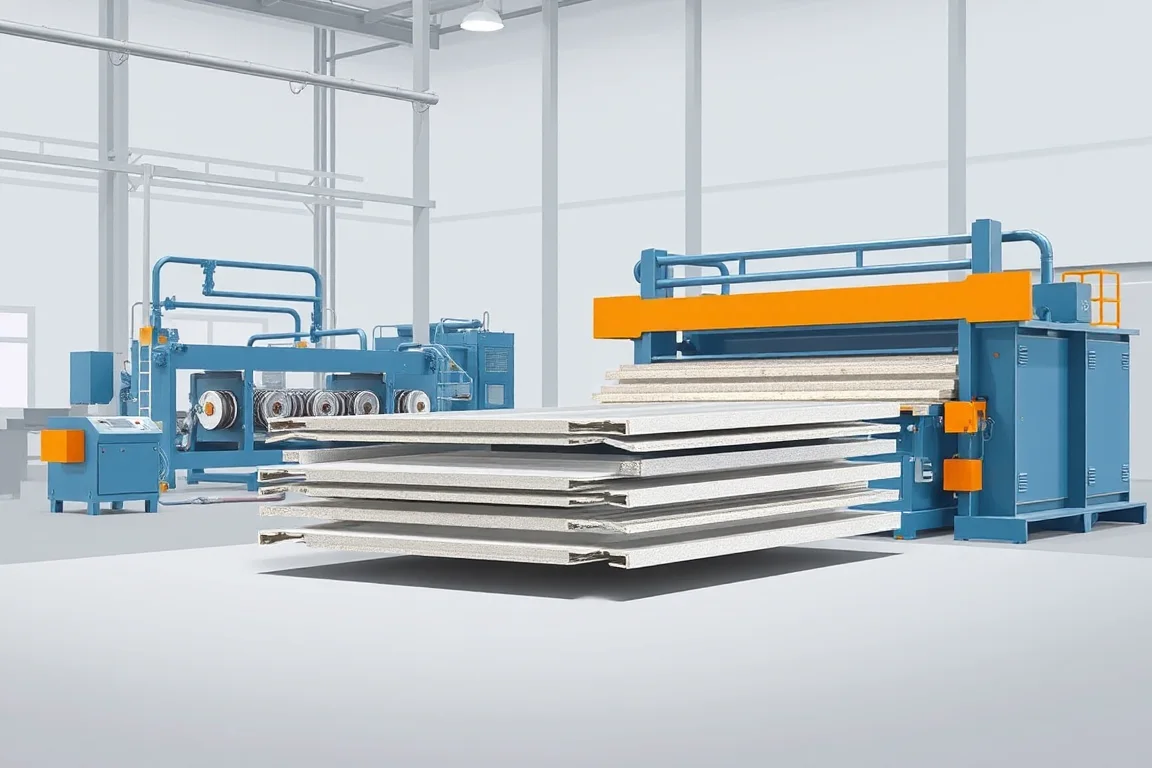
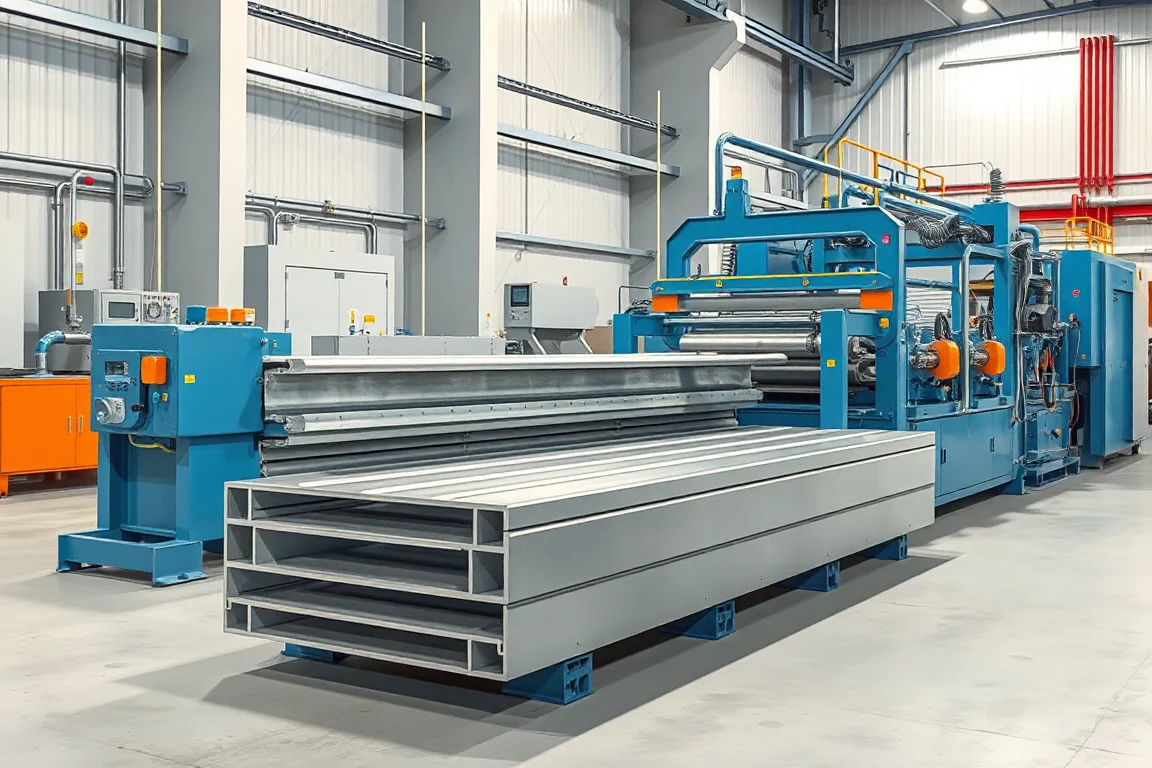
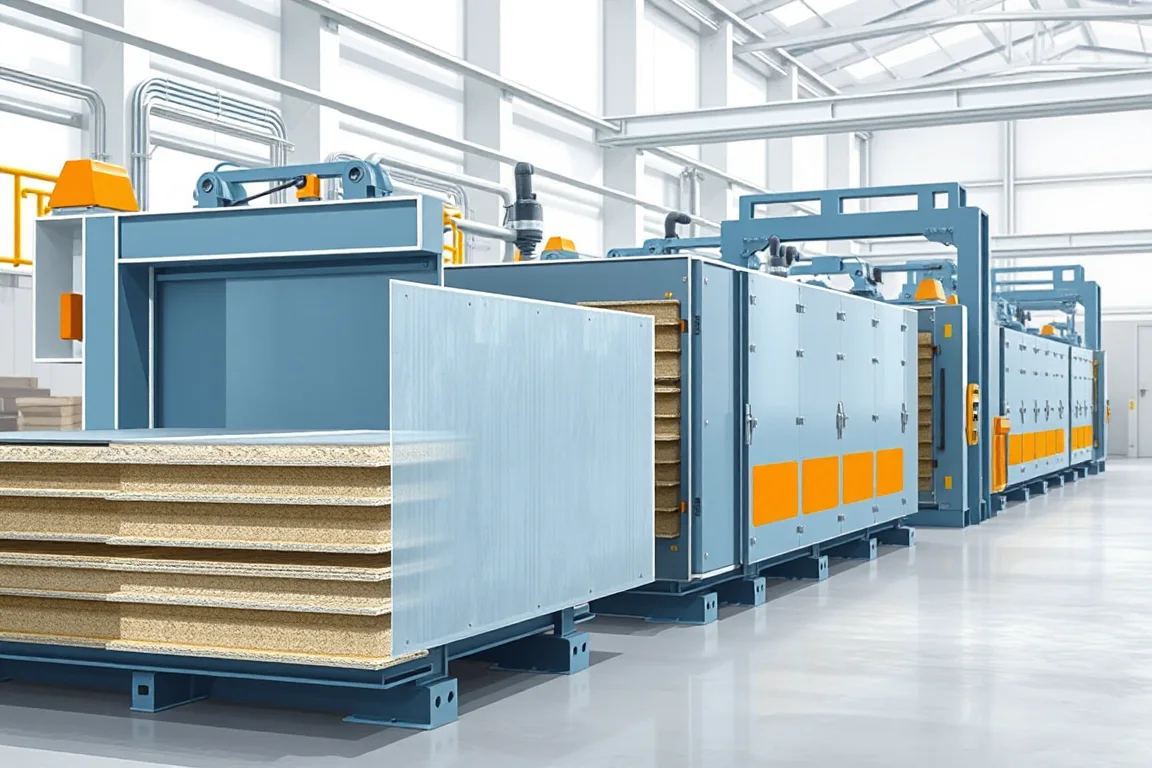
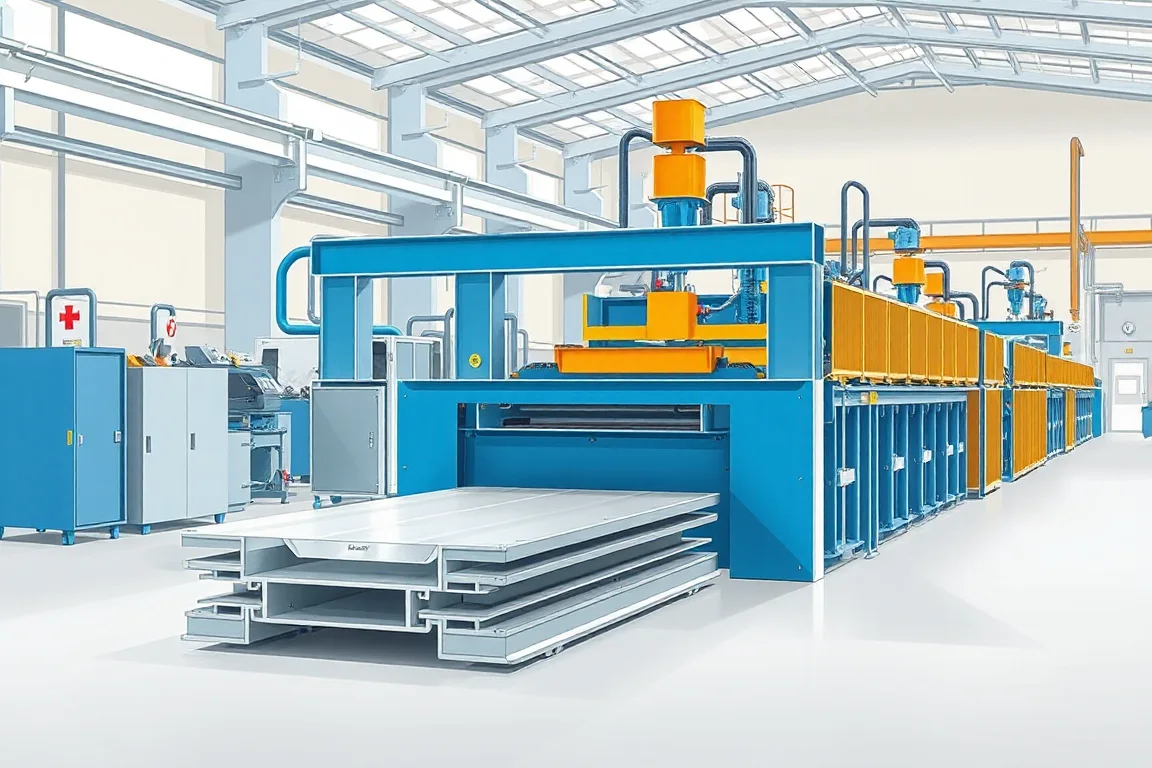
Insulated sandwich-panel production combines metal facings, a specified core and a controlled bonding or reactive-foam route. EPS, mineral wool and polyurethane-family constructions are not interchangeable core labels for the same equipment. Start with the complete panel, its joint, intended application and required product evidence before selecting the manufacturing line.
Choose the core and production route together
Board-core lamination, prepared mineral-wool arrangements and reactive-foam processing can require different equipment and controls. Continuous and discontinuous layouts also create different pressing, curing and order-handling questions. The facing roll former is only one part of the complete route.
- EPS Line: define boards, facings, bonding and panel finishing.
- Rockwool Line: review core preparation, arrangement and the specified bond process.
- PU Line: coordinate the selected chemical system with dispensing, pressing and curing.
- Continuous Line: assess the integrated material flow and the stages governing accepted output.
Specify the whole panel construction
Provide facing profiles, panel thickness, core requirements, joint geometry and the intended mounting interfaces. Roof and wall panels can require different facings and edge details. A simple thickness change may affect pressing, support or other parts of the process.
Include required ends, hardware or special features where applicable. A panel face that looks correct is not enough if the joint, bond or core arrangement does not match the defined product.
Assign material-system responsibilities
Identify the facing material, surface preparation, adhesive or chemical system and core properties. Storage and processing conditions should follow the selected suppliers' requirements. Chemical handling, extraction, cleaning and utilities need specialist review rather than improvised operating assumptions.
Keep supplied materials and trial conditions traceable. When a result changes, the team needs to distinguish facing geometry, core preparation and bonding-process causes instead of treating every defect as a roll-tool adjustment.
Review the process from facing preparation to finished package
Show forming, core preparation or dispensing, bonding, pressing, curing, cutting and handling as applicable to the chosen route. State which equipment and utilities are included. An offer for metal facings is not equivalent to an integrated insulated-panel plant.
Plan how lengths, thicknesses and product changes move through the complete process. Stabilization, curing and cutting requirements can influence usable output more than the speed of the facing strip alone.
Define product and process acceptance
Use the agreed methods to inspect dimensions, joint fit, bond quality and core properties. Include representative panel assemblies and completed edges. Keep trial materials, conditions and deviations with the approval record.
Fire, thermal or other performance claims require evidence for the defined finished construction. A core name or equipment capability does not establish a classification by itself. Assign responsibility for the necessary product testing and approval separately from machinery commissioning.
Compare accepted panels under stated conditions
Count panels that meet the required checks after the process has reached the agreed operating condition. Record rejects and changeover effects. A no-load facing speed is not a production rate for the completed sandwich construction.
Prepare the panel drawings, material-system requirements, product mix, utilities and acceptance plan. The pages in this category explain the different core and line routes so equipment can be compared as a complete, controlled manufacturing process rather than a collection of similarly named machines.
Continue your research
- EPS Sandwich Panel Production Line
- Rockwool Sandwich Panel Production Line
- PU Sandwich Panel Production Line
- Continuous Sandwich Panel Production Line
- EPS Wall Sandwich Panel Production Line
- EPS Roof Sandwich Panel Production Line
- Rockwool Wall Sandwich Panel Production Line
- Rockwool Roof Sandwich Panel Production Line
- PU PIR Sandwich Panel Production Line
- Cold Room Sandwich Panel Production Line
- Garage Door Sandwich Panel Production Line
- How Sandwich panel production line Works
- How To Choose a Sandwich panel production line
- Sandwich panel production line Price: What Affects the Cost?
- Materials and Thickness for Sandwich panel production line
- Production Speed and Output of Sandwich panel production line
- Roller, Tooling and Forming Design for Sandwich panel production line
- Common Defects and Troubleshooting for Sandwich panel production line