
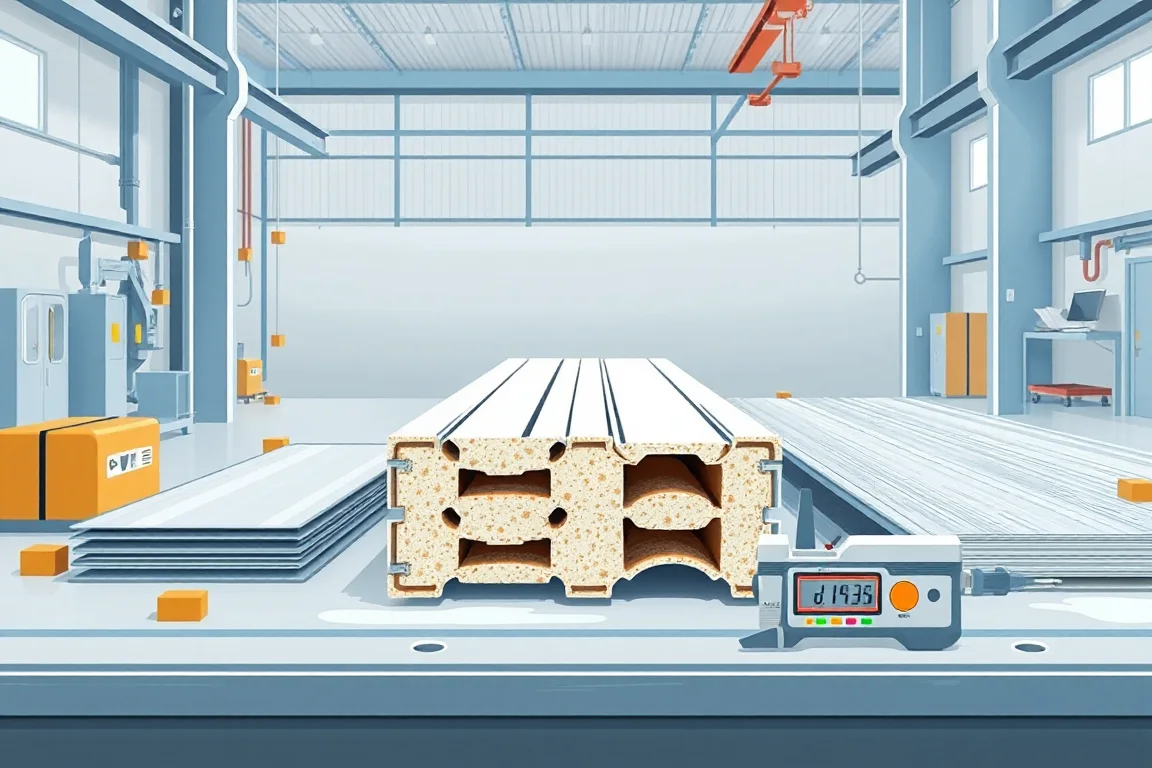
Sandwich panel material specifications must describe the complete construction: both facings, the core, the bond system and the joint details. Overall panel thickness is not the same as facing-metal thickness. Keeping these inputs separate is essential when selecting equipment, comparing panel variants and planning meaningful production trials.
Define both facings independently
Record material designation, base-metal thickness, coating, visible finish and profile for each face. An exterior facing and an interior facing may have different requirements. Do not assume that one generic coil description adequately defines the pair.
Identify the surface that contacts the core and the surface that remains exposed. The requirements for bonding and appearance are different, and both should be addressed in the material and process brief. Include protective film where it forms part of the intended route.
Separate the thickness definitions
State overall panel thickness, core geometry and facing-metal thickness with units and measurement references. Ribbed facings and shaped joints can make an informal thickness description ambiguous. Use the controlled panel drawing to explain where each value applies.
For coated metal, clarify whether a stated value refers to base metal or another finished measurement. Keep the same definition in purchasing, development and acceptance records. This prevents apparently matching numbers from describing different materials.
Specify the core system and supply format
Identify the chosen core material and the form in which it enters the production route. Foam-based and preformed-core systems need different preparation and processing arrangements. The line proposal must describe the actual system being supplied.
Obtain the validated material requirements from the responsible suppliers. Do not substitute a generic density, adhesive or chemical recipe from another panel. A material name alone does not define all the conditions needed for a reliable finished construction.
Review the bond as a system requirement
The facing, core and bonding process need to be compatible within the specified panel system. Include surface condition, material preparation and the inspection evidence required for acceptance. The result must be evaluated through the appropriate product-specific methods.
A panel that looks complete can still require bond assessment. Keep the materials and process references associated with the samples used for testing. Changes to one input should be reviewed for their effect on the whole construction.
Include joints, seals and local details
The panel edge can combine formed metal, core geometry and additional components. Show the complete joint rather than just overall width. Identify the materials and features that control engagement with the neighboring panel.
Trial representative assemblies and inspect the joint after normal handling. Nominally correct individual panels may still fit poorly when the edge relationships are wrong. Keep assembly observations alongside dimensional and material checks.
Build a panel-material matrix
Use one row for each required combination of core, facings, thickness, width, profile and finish. Mark launch products and later possibilities separately. This makes the actual equipment and validation scope easier to understand than a list of unrelated maximum values.
Select trial cases that represent normal production and important differences. A change in facing finish or joint can warrant attention even when overall panel dimensions remain the same. Explain what each trial is intended to demonstrate.
Control storage and incoming condition
Follow the material suppliers' handling, storage and use requirements. Identify how inputs are labeled, protected and released for production. Damaged or incorrectly identified material can complicate troubleshooting long after it has entered the line.
Record the relevant incoming checks and any permitted deviations. If a development trial uses substitute material, state the substitution clearly. Do not allow an early sample to become an accidental approval of a broader or different material system.
Inspect after the full production route
Evaluate facings, core, joints and cut ends after forming, bonding and cutting. Include the normal handling and packaging steps in the acceptance boundary. Surface damage or edge deformation may appear after the principal process seems complete.
Use consistent measurement methods and release conditions. Keep long-panel support and the timing of any required checks with the records. A result is more useful when another team can repeat the same inspection and understand the conditions under which it was obtained.
Separate material names from performance claims
A core description does not automatically establish a thermal, structural or fire-related claim for the finished panel or building assembly. Those claims belong to the specified construction and its supporting evidence. Do not transfer a classification from a different panel simply because one material appears similar.
Identify the technical review and testing needed for the intended use. Keep this work distinct from routine checks that the equipment produces the required dimensions and appearance. Both can be necessary, but they answer different questions.
Review changes before extending the approved range
A new facing supplier, coating, core input or joint detail may affect the established process. Use the responsible change-review procedure to determine the evidence needed. Record the affected products and any revised setup or inspection references.
The strongest material specification is a shared, controlled reference connecting purchasing, equipment operation and quality review. It does not depend on guessed universal values. It identifies the actual panel system and the combinations demonstrated by its trials.
Frequently asked material questions
Does panel thickness specify the metal facing?
No. Overall panel thickness and facing-metal thickness are separate values. State both with units and the relevant drawing references.
Can one material name prove a panel classification?
No. Performance evidence must correspond to the actual panel or assembly. Similar core names do not establish identical construction or results.
Why test the joint when the panel dimensions are correct?
The joint depends on the relationship between several local features. Representative assembly can reveal engagement problems not explained by overall dimensions alone.
What should trigger review of an established setup?
Changes to facings, core inputs, bonding requirements, geometry or other relevant material conditions. The responsible technical process should determine the required validation rather than assuming interchangeability.
Continue your research
- Sandwich Panel Production Lines
- EPS Sandwich Panel Production Line
- Rockwool Sandwich Panel Production Line
- EPS Wall Sandwich Panel Production Line
- EPS Roof Sandwich Panel Production Line
- Rockwool Wall Sandwich Panel Production Line
- How Sandwich panel production line Works
- How To Choose a Sandwich panel production line
- Sandwich panel production line Price: What Affects the Cost?