
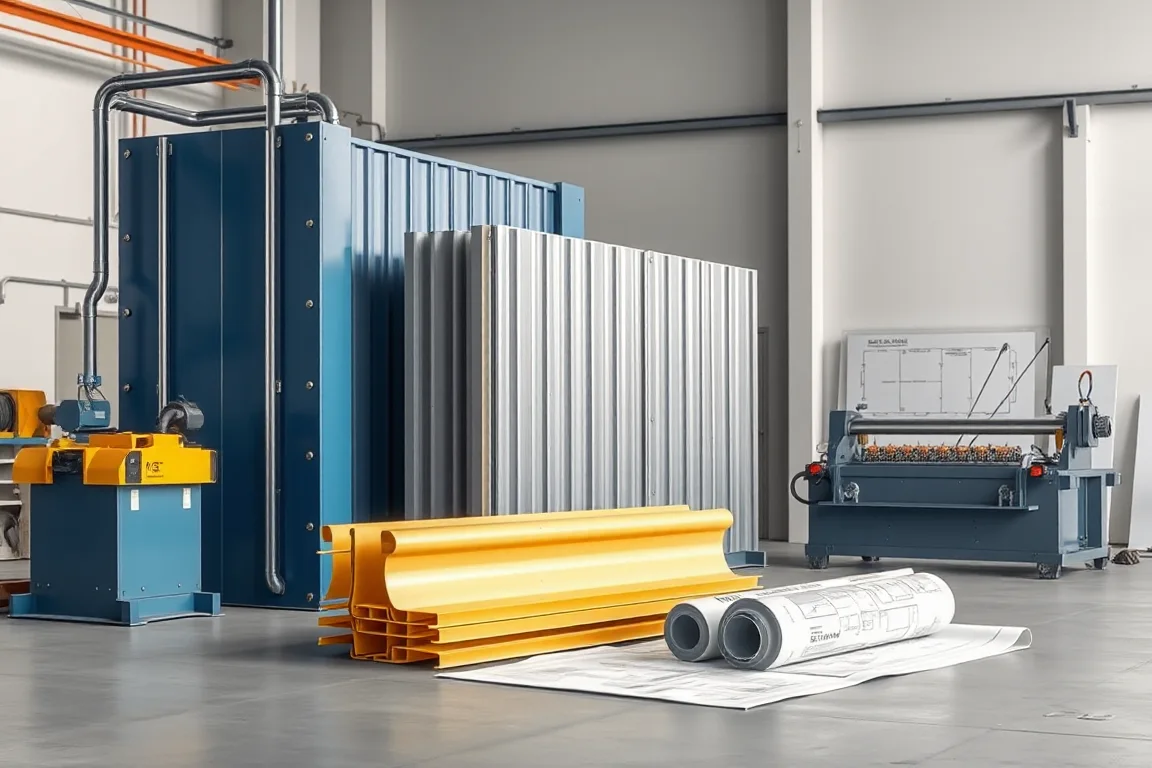
A sandwich panel line price is meaningful only when the panel system and supplied scope are defined. A quotation may cover selected facing equipment or an integrated route from raw materials to packaged panels. Normalize that boundary before comparing investment, and keep product development and launch costs separate from the main machinery price.
Identify what the quotation actually delivers
List input handling, facing preparation, core preparation, bonding, panel geometry control, cutting and finished-panel handling. Record which operations are integrated and which are supplied separately. Include the tools and controls needed for the specified panel families.
Mark exclusions explicitly. Storage, site preparation, utilities, extraction, lifting and packaging can sit outside a principal line quotation. Their absence from the headline figure does not make them unnecessary to the planned production route.
Connect cost to the core and panel system
Different core routes require different preparation and processing arrangements. A multi-core project may involve additional equipment, transitions and validation. Compare the exact systems included instead of treating all sandwich panels as one interchangeable product.
Overall panel thickness, facing geometry, joint details and length range also affect the scope. Ask which combinations are included and demonstrated. Independent maximum values can conceal a much narrower usable product envelope.
Review facing and joint tooling
Count the required upper and lower facing profiles, finishes and edge variants. Identify change tools and the equipment needed to recover alignment after a transition. A simple facing profile and a demanding joint arrangement may require different development work.
Keep tooling and accepted panel geometry connected. Buying additional tools is useful only when the complete route can produce the corresponding panel. Confirm whether each quoted variant includes core and joint validation as well as the facing rolls.
Separate automation from the work it replaces
Automated material movement, cutting, stacking or identification may change staffing and flow, but its value depends on workload. Compare the complete operation, including interruptions, format changes and support work. Do not assume every added automated feature produces the same saving in every factory.
Evaluate a representative order basket and an alternative with smaller batches. The equipment premium should be assessed against realistic utilization, accepted output and the work actually removed from the process.
Include the installed operating environment
Review site preparation, full layout, material storage, utilities, access and finished-panel movement. Obtain process-specific requirements from the responsible suppliers and site specialists. Those requirements may affect the project budget beyond the equipment purchase.
Assign responsibility for each interface. Unclear ownership can create late additions during installation even when each individual supplier believes its own scope is complete. A shared installation checklist makes the budget more credible.
Calculate accepted-area cost rather than gross output cost
Use material, labor, energy, consumables and other relevant operating costs over an agreed interval. Divide by accepted panel area released under the same boundary. Keep rejected panels, startup losses and unfinished material separate so they are not treated as saleable production.
For a hypothetical shift with 6,000 currency units of included operating cost and 1,000 square metres of accepted panels, the included cost is six per square metre. If accepted area falls to 800 with the same included cost, it becomes 7.50. These are illustrative arithmetic assumptions, not market prices.
Examine changeovers and yield
Thickness, profile, finish, core or length changes can consume time and materials in different ways. Ask for measured transitions relevant to the business. A long uninterrupted demonstration does not show the cost of frequent short orders.
Separate avoidable rejection from planned process losses and record both. A proposal with a favorable nominal running rate can still have a different accepted-area cost when the actual transition pattern is included.
Budget for product and process validation
Trials, material evaluation, inspection methods and any required product-performance evidence belong in the launch plan. Identify what the equipment contract includes and what the producer must arrange separately. Avoid assuming a machine purchase supplies all evidence needed for future panel claims.
Keep the validation baseline controlled. Changing core materials, facings or joint details may alter the evidence required. Early clarity about the intended panel system reduces the risk of paying for development around a product that later changes substantially.
Compare lifecycle support concretely
Review training, operating documentation, maintenance access, consumables and replacement tooling. Ask how process questions and new panel variants are handled. The ability to restore a controlled accepted setup affects ongoing production effort.
Use specific deliverables rather than general service language. A supplied spare-parts list, documented setup reference and clear responsibility for troubleshooting are easier to evaluate than an unqualified promise of comprehensive support.
Normalize the final investment comparison
Create one scope sheet covering the product matrix, equipment, tooling, installation, trials and support. Mark each proposal's included, excluded and unresolved items. Then compare capital cost and operating scenarios using the same accepted-panel boundary.
Keep uncertain assumptions visible and test a less favorable utilization case. A credible investment decision does not need an invented universal price range. It needs a clear product, consistent scope and defensible evidence for the production assumptions that drive the calculation.
Frequently asked cost questions
Why do two line quotations differ so much?
They may include different core systems, panel ranges, handling, utilities, tooling or services. Compare a common scope before attributing the difference to equipment quality alone.
Is cost per gross square metre sufficient?
No. Accepted area is the useful denominator for saleable output. Keep startup, rejects and unfinished panels visible in the calculation.
Should testing and launch work be in the budget?
Yes. Identify the required product and process validation and who supplies it. Those activities do not disappear because they are absent from the main machinery quotation.
How should a higher automation price be justified?
Through realistic operating scenarios showing accepted output, work content and losses. Include format changes and lower utilization instead of relying only on a best-case long run.
Continue your research
- Sandwich Panel Production Lines
- EPS Sandwich Panel Production Line
- Rockwool Sandwich Panel Production Line
- EPS Wall Sandwich Panel Production Line
- EPS Roof Sandwich Panel Production Line
- Rockwool Wall Sandwich Panel Production Line
- How Sandwich panel production line Works
- How To Choose a Sandwich panel production line
- Materials and Thickness for Sandwich panel production line