
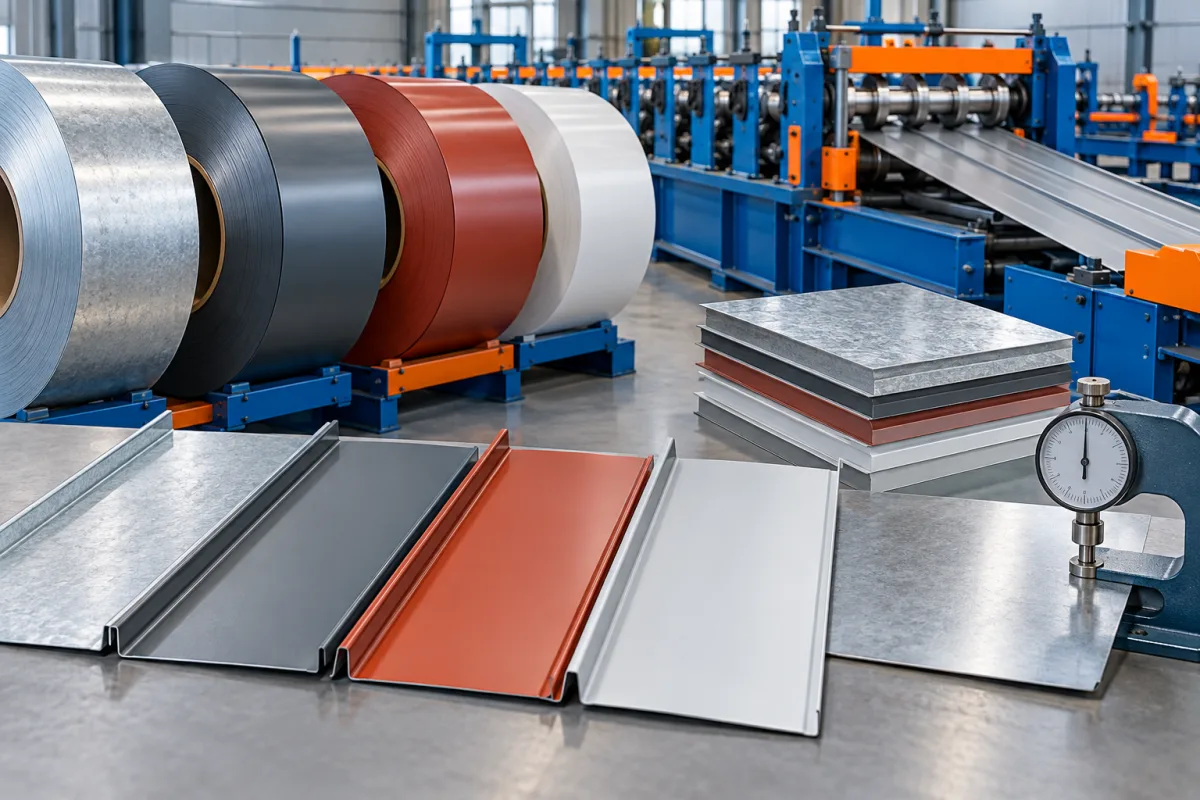
Standing seam material approval must cover the panel pan, the formed returns and the final joint. A coil that looks satisfactory after forming may behave differently when assembled with a clip or closed by the specified seamer. The material specification therefore needs to follow the complete roof-panel route.
Define thickness together with material identity
State the grade or alloy, thickness convention, coating and permitted variation. A nominal thickness by itself does not describe the metal's forming response. For coated stock, clarify whether the figure refers to base metal or the total measured section.
Associate each combination with the exact panel profile. Two seams with the same height may have different bends and engagement surfaces. An approval for one should not automatically be extended to another simply because they share a general standing seam description.
Inspect the material through the tight edge features
The hooks and returns create functional mating surfaces. Their final geometry after forming depends on the approved material and tooling route. Inspect the completed edges, not just a flat coil coupon or an isolated bend.
Where mechanical closing is required, inspect the seam after the specified operation. Where the design snaps together, observe engagement using the correct attachment components. The relevant material trial is the one that reaches the product's intended assembled condition.
Review steel and aluminum separately
Do not assume equal nominal thickness makes the two materials interchangeable in a tool set. Provide the intended grades or alloys and ask for evidence covering the required combinations. The review should include geometry, surface condition and the final joint.
Material selection for the roof also involves environmental exposure and compatibility with other components. Those questions belong to the complete roof-system design. A line's ability to form a particular metal does not establish that every clip, fastener or accessory is appropriate for it.
Specify coating behavior at forming and closing
Identify the exterior face and finish system. Inspect bends and contact areas after forming, cutting, handling and joint assembly. A finish trial that stops before seam closure can miss a commercially important stage.
Record protective film status throughout the test. If film obscures the surface, use the agreed inspection method to assess the underlying coating. Keep any later film or finish substitution in the change-review process rather than treating it as an unrelated purchasing decision.
Use developed strip width, not pan width
The strip supplies both seam edges as well as the connecting pan. The required input width must come from the approved section development. Pan width, overall formed width and effective cover are different references and should be labeled explicitly.
When changing width on an adjustable line, use the configuration's specified material and setup requirements. Do not assume that adding a chosen amount to the desired cover always gives the correct strip width across unrelated seam profiles.
Incoming strip condition helps explain later appearance
Record the relevant coil condition and identity before production. If pan waviness or another shape concern appears, compare samples across the process rather than immediately changing seam tools. Material, forming, handling and installed supports can all require investigation.
Use consistent viewing and support conditions for appearance checks. A sample approved flat on a bench and a long panel viewed in an installed assembly answer different questions. Preserve both observations when they matter to the product specification.
Build a profile-specific trial matrix
Select combinations that meaningfully test the required envelope. The difficult case may involve a particular seam return, finish or attachment rather than simply the greatest thickness. Ask the responsible specialists to explain the matrix and retain its rationale.
- Profile and seam revision.
- Material grade or alloy and thickness convention.
- Strip width and protective layers.
- Specified clip or fixing arrangement.
- Closing method and equipment where applicable.
- Open-section, assembled-joint and finish results.
Evaluate substitutions before production release
Keep unused reference coil or traceable material documentation where the quality plan requires it. A formed sample without its material identity can show geometry but cannot explain whether a later purchasing substitution matches the approved trial.
A replacement coil with the same nominal thickness may differ in material properties, finish or width. Compare it with the approved matrix and determine what review or testing is required. The relevant question is whether it produces the specified panel and joint, not whether it fits through the entry.
Retain the decision with the order. If engagement changes after substitution, the team needs to identify which material was used and what evidence supported release. Undocumented roll adjustments can otherwise hide the relationship between the change and the result.
Separate manufacturing approval from roof suitability
A successful material trial confirms aspects of producing and assembling the panel. Roof suitability also depends on the selected system and project conditions. Do not infer structural or weather-performance ratings from a coil thickness or a closed seam sample.
The equipment brief should identify the party responsible for each approval. This lets the manufacturer provide useful production evidence without turning it into a broader claim that has not been established. Clear responsibilities reduce gaps between material supply, panel production and installation.
Frequently asked seam material questions
Can thicker material cure a loose snap joint?
Not as an uncontrolled fix. The joint must match its approved material and geometry. Changing thickness can alter other dimensions and closing behavior, so investigate the original mismatch and review any substitution.
Does a coating that survives forming necessarily survive seaming?
The closing stage is a separate part of the product route and should be included in trials. Inspect the specified finish after the actual assembly method instead of assuming the earlier result covers it.
Can a steel profile trial approve aluminum production?
No. Obtain evidence for the intended aluminum alloy and profile combination. Similar dimensions do not remove the need to review forming response, coating and joint compatibility.
What should be kept from the trial?
Identified open panels and an assembled seam sample, with coil information, measurements, attachment references and closure observations. The record should show exactly which combination was approved and under what conditions.
Continue your research
- Standing Seam Roll Forming Machines
- Standing Seam Roll Forming Machine
- Snap Lock Standing Seam Machine
- 25mm Snap Lock Standing Seam Machine
- 38mm Snap Lock Standing Seam Machine
- 1 Inch Mechanical Lock Standing Seam Machine
- How Standing seam roll forming machine Works
- How To Choose a Standing seam roll forming machine
- Standing seam roll forming machine Price: What Affects the Cost?