
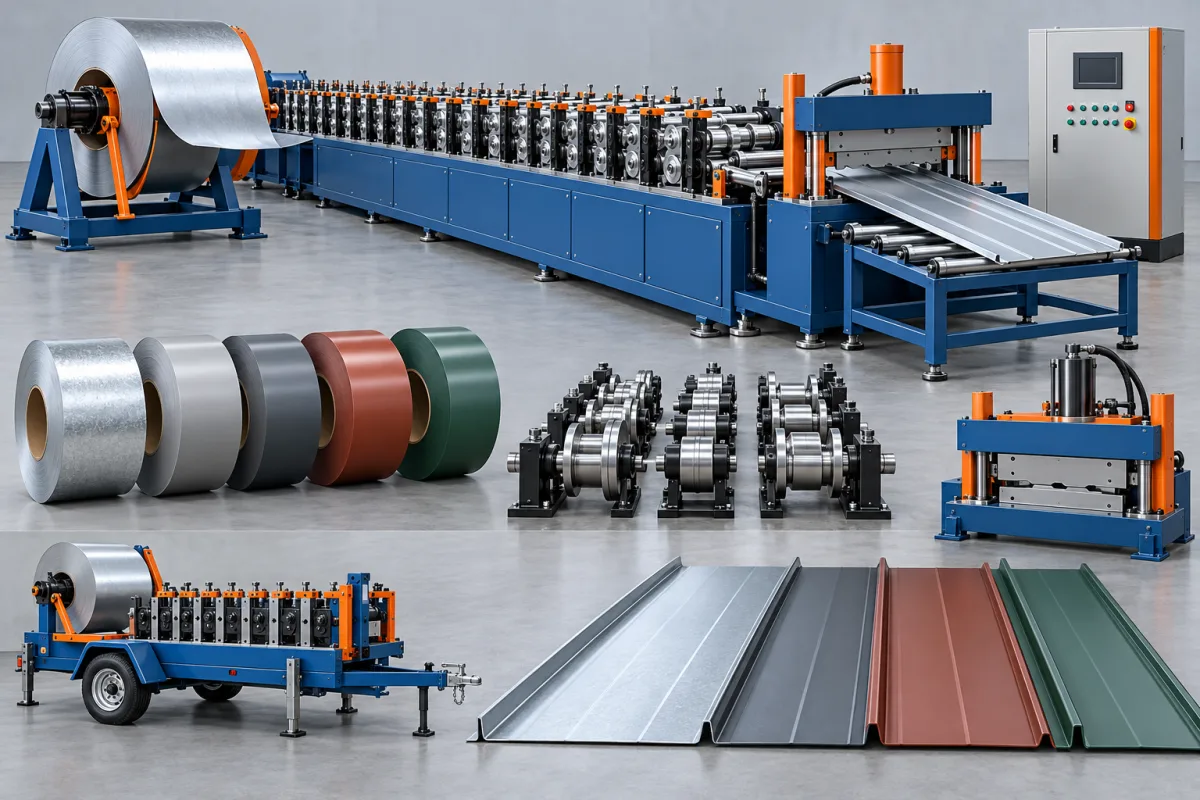
The cost of a standing seam roll forming project depends on the selected roof systems, the production location and the equipment needed to deliver usable panels. The former's price is only one part. Tool sets, compatible closing equipment, coil handling and long-panel logistics can materially change the investment comparison.
Price a defined panel system
Provide the open section, assembled seam, material combinations and attachment details. A quotation based only on seam height can omit important differences in hooks, returns or fixing arrangement. The equipment must make the actual system the business intends to sell.
Separate profiles that share an approved adjustment from those requiring another tool set. A package containing several genuinely different seams has a different scope from one with several widths of the same seam. Make that distinction visible before comparing totals.
Identify what the former does not include
A mechanically seamed roof can require separate closing equipment. Clips, end-preparation tools, trims and other accessories may also come from separate sources. List them as project items rather than assuming they are included in the phrase standing seam line.
For each item, identify purchase, commissioning and training responsibilities. The goal is a complete route from coil to an accepted roof panel and its required fabrication operations. A missing component can delay the project even when the former itself is ready.
Compare portable and workshop costs on the same basis
Portable production may change delivery and long-panel handling requirements, but introduces site setup, transport of equipment, suitable power and coil-loading arrangements. Workshop production concentrates resources in one location but requires a practical finished-panel delivery route.
Use actual project types in the comparison. A series of nearby jobs with good access differs from dispersed sites with difficult staging. Do not assume that eliminating one transport activity removes all logistics cost; it may move the work to another stage.
Tooling variety has both capital and scheduling effects
Additional profiles require a defined set of tools and change components. They also create changeover and first-off approval work. Estimate how often those profiles will be used and whether orders can be grouped without creating delivery problems.
Ask for the cost of adding a profile later and the engineering boundaries of the machine. Buying every possible option at the start can tie up capital, while omitting a necessary interface can make later expansion difficult. The decision should follow confirmed demand and documented compatibility.
Include the actual material and finish envelope
A proposal covering one steel profile should not be compared directly with one covering multiple metals and seam configurations. Specify grade or alloy, thickness convention, widths and finish. Include representative joint-closing trials for the combinations that matter.
Appearance and seam quality affect accepted yield. Material that forms a visually acceptable pan but suffers unacceptable damage at the closing stage has not delivered the intended product. Include those checks in the acceptance scope rather than discovering them after purchase.
Build a project-cost worksheet
Divide the worksheet into equipment, site or workshop preparation, delivery and recurring operation. Mark each quotation item as included, optional, excluded or unresolved. A blank line should trigger clarification, not an assumption of free supply.
- Former, profile tools and required change parts.
- Coil support, loading and panel discharge arrangements.
- Seam-closing equipment and product-specific accessories.
- Transport, installation, training and trial material.
- Power, storage, inspection and protective packing facilities.
- Documented spares, service requirements and future options.
Calculate a portable-versus-delivery example
Assume, purely for planning, that one project would incur 1,600 budget units of finished-panel transport and special handling from a workshop. An onsite route instead requires 700 units of equipment transport, 450 units of setup labor and 250 units of additional site services. Its comparable logistics total is 1,400 units, a difference of 200 units before other effects.
These are not market prices or a recommendation. Replace them with actual quotations and include differences in waste, available working time and project risk. A small apparent saving can disappear if unsuitable site access introduces delays; another project may have a very different result.
Evaluate an extra tool set with realistic use
Suppose an additional profile package requires 12,000 budget units and enables an estimated 3,000 units of annual contribution after its extra material, labor and changeover costs. A simple recovery period is four years before financing and other ownership effects. If demand is half the estimate, that period doubles.
The example shows why profile count is not automatically value. Confirm demand, margin and the operational burden of switching. Do not count gross sales as the return on tooling; use a consistent contribution calculation with the actual additional costs.
Protect the budget through acceptance evidence
Reserve a separate allowance for buyer-supplied trial coils and the agreed inspection work. Assigning these expenses early avoids an acceptance delay caused by uncertainty over who will provide representative material and mating components.
Require the specified panels, attachments and closing method in the trial. Inspect complete lengths after cutting and handling. Record the recovered result after a relevant profile or width change. This evidence reduces the risk of purchasing nominal flexibility that does not meet the product requirement.
Keep equipment acceptance separate from roof-system performance approval. The project may need both, with different responsible parties. Clear boundaries help budget the required work without presenting a machine trial as certification of the complete roof.
Frequently asked standing seam cost questions
Is the cheapest former the cheapest way to enter the business?
Only if the complete route meets the required products and logistics. Missing tools, closing equipment or handling can change the total substantially. Compare installed scope and accepted output.
Does portable production always save money?
No. Savings depend on transport, site access, setup, power and order pattern. Calculate the complete logistics for representative projects rather than relying on a general claim.
Should a field seamer be included in every quote?
Include it when the selected roof system requires that closing route and the project scope assigns it to the equipment supplier. Snap engagement and other designs need their own defined equipment and procedure.
How should future profiles be budgeted?
Obtain a written distinction between supported adjustments, additional tool packages and new engineering work. Combine that scope with realistic demand and changeover costs before committing capital.
Continue your research
- Standing Seam Roll Forming Machines
- Standing Seam Roll Forming Machine
- Snap Lock Standing Seam Machine
- 25mm Snap Lock Standing Seam Machine
- 38mm Snap Lock Standing Seam Machine
- 1 Inch Mechanical Lock Standing Seam Machine
- How Standing seam roll forming machine Works
- How To Choose a Standing seam roll forming machine
- Materials and Thickness for Standing seam roll forming machine