
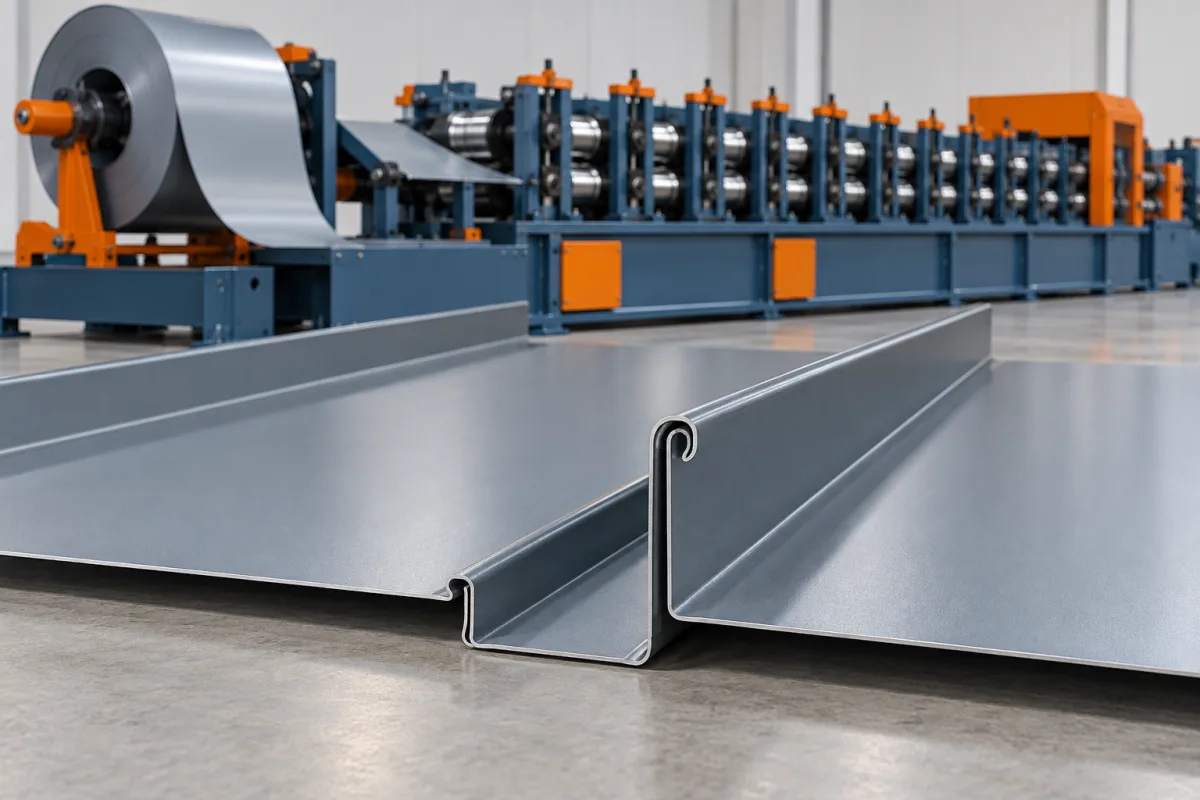
A 38 mm snap lock standing seam machine makes a roof-panel profile with a nominal 38 mm raised seam and complementary edges that engage using the specified snap-lock method. The useful machine specification includes the complete lock, attachment and pan geometry. A seam-height label by itself does not establish compatibility with another panel or clip.
This profile should be treated separately from a mechanically seamed product and from a shorter snap-lock joint. Even where two panels look similar from above, their hidden returns and engagement sequence can be different. The equipment trial needs to reproduce the actual joint that will be installed.
What should the 38 mm designation mean?
State the seam-height datum on the drawing and confirm whether 38 mm is a nominal metric designation or shorthand for another dimension. A 1.5-inch dimension equals 38.1 mm, but the more important distinction is still the complete edge shape rather than the small difference in naming.
Show both mating edges before and after engagement. Include the pan, return depths, contact surfaces and functional openings. This avoids approving a profile solely because its outside height matches the requested value.
How should the attachment arrangement be selected?
A clipped snap-lock system needs the intended clip shape and its relationship to the panel return. A fixing-flange system needs the flange, fastening access and any specified slots. These are different manufacturing requirements and should not be merged into a generic description.
Use production-intent attachment samples during tooling review. A convenient substitute can give a misleading impression of fit. Record the relevant component revision with the panel drawing so later production uses the same interface reference.
What changes compared with a 25 mm snap-lock profile?
The taller nominal seam can require different edge development, strip allowance and cutting support. The joint may also use a different attachment system. A height change is therefore not automatically a simple adjustment within the same roll set.
Compare the full cross-sections and ask for a variant matrix. Identify which guides, rolls, feature tools and cutoff parts are shared and which are exchanged. The matrix should explain how an accepted first panel is recovered after changing profiles.
How does the line form the joint?
Controlled entry feeds strip through stages that develop the panel pan and progressively shape the two seam edges. The final return dimensions depend on the forming sequence and the material's response. The proposed route should explain any required holes, slots or notches as separate operations.
After cutting, the takeoff must preserve the raised edges. Inspect the seam near both cut ends and after normal handling. A lock that fits at mid-length but is crushed at its end is not a satisfactory finished panel.
Which material combinations should be trialed?
Pair steel grade or aluminum alloy and temper with thickness and coating. Include protective film if it is part of the process. Do not assume that every material within a nominal thickness range will form and engage identically.
Check coating condition at tight returns and inspect the pan under agreed lighting and support. Then assemble panels using the specified attachments. Keeping material identity with the trial results makes later coil changes easier to investigate.
Can widths and face features vary independently?
A line may support several pan widths while retaining one seam family, but that ability must be defined in the equipment proposal. Optional beads, ribs or striations also need a clear tool and adjustment scope. The user should know which combinations are approved together.
Demonstrate a representative width change and inspect both edges afterward. Pan width, effective cover and joint condition should all recover correctly. Timing only the width adjustment overlooks the work needed to prove the next order is acceptable.
What handling and production arrangement is appropriate?
Factory production and portable jobsite production have different coil loading, support and discharge constraints. Define the intended arrangement and the longest required panels. The line layout must account for material movement and finished lengths, not just the machine frame.
Compare accepted panels from a realistic order. Cutting frequency, length changes and handling can limit output even when the forming process has spare speed. Include required inspection and package preparation in the production basis.
How should the engaged seam be accepted?
- Verify the unassembled returns and nominal seam height.
- Check intended clips or flange features.
- Inspect the cut ends and coating.
- Engage several panels using the approved sequence.
- Measure cover and inspect joint continuity.
- Repeat after a required width or material change.
- Record accepted pieces after normal handling.
Unexpected resistance or looseness should be recorded, not hidden by local modification. The manufacturing trial should demonstrate a reproducible joint using the components specified for the product.
Frequently asked questions
Are all 38 mm snap-lock profiles compatible?
No. Height does not define the returns, opening or clip interface. Compare controlled drawings and actual mating components before assuming panels or attachments can be exchanged.
Is 38 mm identical to 1.5 inches?
One and a half inches is 38.1 mm. Confirm the actual drawing dimension and tolerance rather than substituting labels. The complete joint geometry remains the deciding specification.
Can the line also make mechanical-lock panels?
Only if the corresponding tooling and equipment are included. Mechanical-lock panels have their own edge preparation and seam-closing requirements, which need separate acceptance.
Does a taller seam establish roof suitability?
No. Suitability comes from the specified roof system, materials, attachments and project design. Nominal height alone does not establish slope limits or structural performance.
What should accompany the enquiry?
Send the full joint drawing, attachment samples, material matrix, widths, lengths and any special features. Identify factory or portable use and the expected order mix.
Approve the entire snap-lock interface
A 38 mm machine proposal becomes meaningful when the seam, attachments, material and handling are evaluated together. That approach makes changeover and acceptance about usable roof panels rather than a nominal height.

Continue your research
- Standing Seam Roll Forming Machines
- Standing Seam Roll Forming Machine
- Snap Lock Standing Seam Machine
- 25mm Snap Lock Standing Seam Machine
- 1 Inch Mechanical Lock Standing Seam Machine
- 1.5 Inch Mechanical Lock Standing Seam Machine
- How Standing seam roll forming machine Works
- How To Choose a Standing seam roll forming machine
- Standing seam roll forming machine Price: What Affects the Cost?
Configuration & specification inputs
Match the configuration to your section drawing, material and production requirements.
| Parameter | Requirement / confirmation needed |
|---|---|
| Profile geometry | Nominal 38 mm snap-lock joint with drawing-defined returns, pan and attachment arrangement. |
| Material | Grade or alloy and temper paired with coating and the intended clip or fixing-flange system. |
| Thickness & grade | Approved combinations demonstrated through forming and snap engagement. |
| Process route | Guided entry, pan and seam development, specified features, cutting and protected takeoff. |
| Cutting | Required lengths with intact raised edges near both panel ends. |
| Output | Accepted snap-lock orders under stated width-change, inspection and handling conditions. |
| Electrical supply | Factory or portable supply and auxiliaries matched to the chosen arrangement. |
| Acceptance | Open-edge dimensions, correct attachments, joined cover, seam continuity and finish after handling. |