
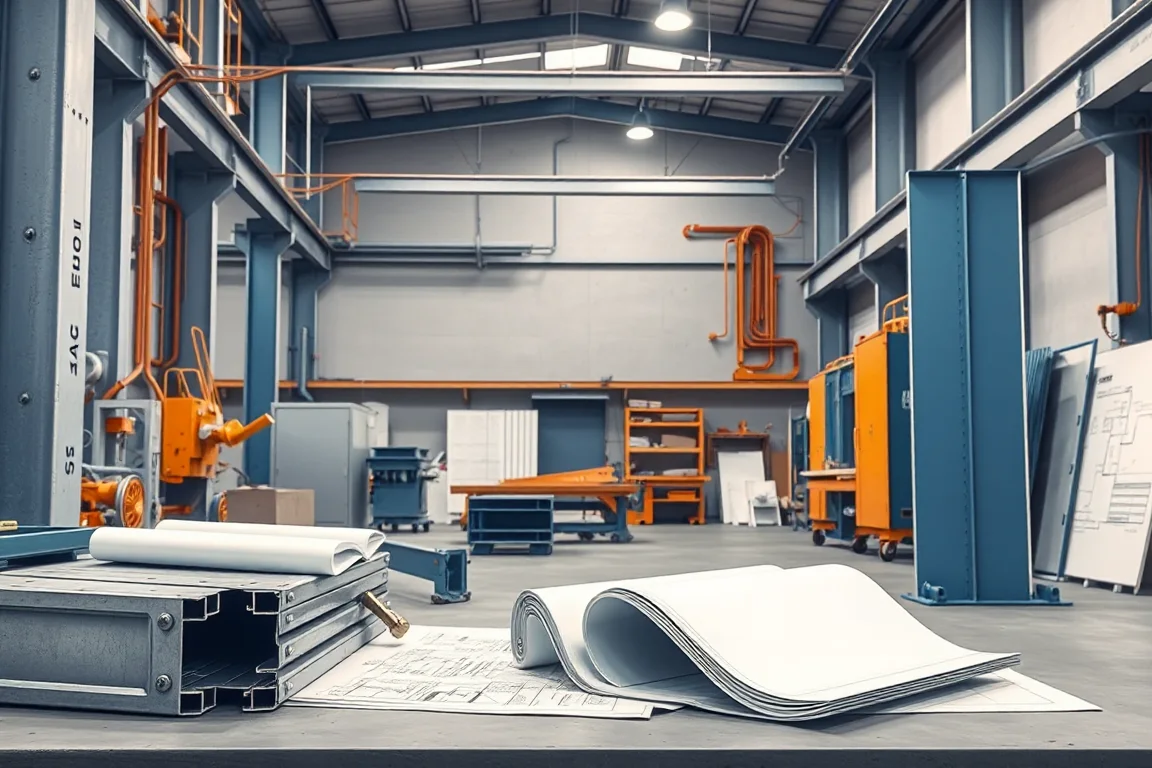
A door frame roll forming machine price is seldom a single number for a single machine. Most quotes bundle a coil or blank feed, a forming section, punching and notching stations, a cutoff, and sometimes corner assembly or handling. The price therefore reflects how much of the finished frame production route is included, not just the length or mass of the roll former. Two quotes can look comparable on the first page and differ substantially once tooling, auxiliaries and acceptance criteria are listed side by side. Understanding what sits inside and outside a quote is more useful than searching for a market-wide figure, because the frame profile, material, hardware pattern and corner detail vary from project to project.
Why a door frame roll former has no single list price
A door frame is a shaped assembly, not a simple channel. It typically includes a rebate that receives the door leaf, seal lands, jamb returns, and provisions for hinges, a latch or strike, and sometimes an adjustable base or fixing points. Each of those features changes the number of forming passes, the complexity of the rolls, and the punching or notching stations required. A machine configured for one profile family and one hardware pattern is a different engineering exercise from a machine intended to run several frame depths or handing arrangements. Because the configuration is project-specific, published list prices for generic roll formers describe a different product than a door frame line.
What a quotation typically includes and excludes
A complete quotation usually covers the decoiler or blank feeder, the forming stations, the punch and notch tooling, the cutoff, the control system, and the drive. It may or may not include corner assembly equipment, run-out tables, stacking, packaging, transport, installation, commissioning, operator training, and spare tooling. Utilities such as electrical supply preparation and compressed air, foundations or floor preparation, and local safety compliance are frequently outside the equipment scope. When comparing suppliers, the useful question is not which total looks lower but which scope each total represents. A quote that omits punching or corner preparation is not cheaper in practice if those operations must still be purchased elsewhere.
How profile complexity changes tooling cost
The frame rebate, the returns at the jamb, and any folded or hemmed edges all influence roll design. More bends generally mean more forming stations, and tight internal bends or deep returns can restrict tool access and demand careful roll parting. If the frame includes a stepped rebate for a seal or an asymmetric return, the rolls must produce that geometry consistently without marking the visible face. Tooling cost scales with the number of distinct profiles, the tolerance expected on the rebate and seal lands, and whether the same line must accommodate more than one frame size or handing. A simple profile run in a single material is a different tooling proposition from a multi-variant frame family.
Punching, notching and corner preparation
Hinge and strike positions, fixing holes, and any corner notching are usually created by dedicated stations rather than by the forming rolls. These stations add cost because each pattern needs its own tooling, and position changes may require adjustment or additional tooling sets. The sequence matters: whether notching happens before or after forming affects how the material behaves and how the corner is prepared for joining. Corners may be mitred, notched for a corner cleat, or left for a separate joining operation. A quote that lists forming only will not produce a frame ready for assembly, so the corner preparation method should be stated explicitly and priced within the same comparison.
Material and thickness assumptions in the price
Quotes are normally prepared around a specified sheet steel grade and a base-metal thickness range. The thickness the buyer states and the range the supplier can confirm drive the required drive power, roll strength and cutoff capacity. Stainless steel or other alloys behave differently in forming and usually need separate tooling validation rather than being assumed to run on the same setup. If a quotation does not state the material grade and thickness basis, the price cannot be compared with another quote prepared on different assumptions. The acceptance criteria for the rebate, seal land and hardware fit should also be tied to that stated material.
Cutoff, length control and end quality
The cutoff determines cut length accuracy and the quality of the cut ends. A profile-supported cutoff that matches the frame section is generally needed to avoid deformation at the cut, particularly where returns and rebates are present. Some frames need secondary operations after cutting, such as deburring or additional notching, and those may sit outside the roll former scope. Length control also affects material yield: if cut lengths are set manually or changed frequently, setup time and scrap rise. The quote should state the cutoff type, the supported profile, and whether any secondary end operations are included.
Automation, changeover and handling
Automation affects price in two ways: the control and drive package, and the handling equipment around the line. A manually adjusted line with simple length setting costs less up front but takes longer to change over between profiles or frame variants. Powered adjustment, stored recipes, and automatic positioning reduce changeover time and scrap but add cost. Handling matters because door frames are long and awkward to move; infeed support, run-out tables, transfer and stacking equipment are often separate line items. For a workshop running many short batches, changeover and handling may dominate the real cost per frame even when the base machine price is modest.
Cost per accepted output rather than equipment price
A more reliable way to compare quotes is cost per accepted frame, using a representative door schedule rather than a theoretical continuous-strip speed. Accepted output depends on how often the line changes length or hardware position, how quickly it changes over, how much scrap appears during setup, and how many frames pass inspection without rework. If the profile is difficult to form, if the cutoff disturbs the section, or if corner preparation is inconsistent, the effective output falls even when the machine runs well. A lower equipment price can therefore produce a higher cost per accepted frame once changeover, scrap, handling and rework are counted. RollVanta does not publish invented equipment prices; the honest comparison is built from a defined scope and a known door schedule.
How to assess a quote without a benchmark price
Read each quote against a single scope checklist built from one drawing. Record which items are included, which are excluded, and which are assumed. Ask whether the forming, punching, notching, cutoff and corner preparation are all priced, and whether transport, installation, utilities, training and acceptance are covered. Note the stated material grade and thickness basis, the profile variants the tooling supports, and the changeover method. Then compare the total against the accepted output you actually need for your door schedule. This approach exposes differences that a headline price hides and gives a defensible basis for negotiation.
Practical decision checklist
- Use one representative frame drawing and one scope checklist for every quote.
- Confirm whether punching, notching and corner preparation are included or separate.
- State the sheet steel grade and thickness, and ask what range the supplier confirms.
- Clarify whether notching occurs before or after forming, and how corners are joined.
- Check the cutoff type, supported profile and any secondary end operations.
- Record changeover method, handling equipment and utility requirements.
- List transport, installation, training, spares and acceptance as separate lines.
- Estimate cost per accepted frame from a real door schedule, not strip speed.
Comparing alternative supply routes
One route is a single integrated line covering forming, punching and corner preparation. It simplifies coordination and acceptance but commits the buyer to one supplier's tooling and control philosophy. Another route combines a forming machine with separate punching and corner equipment, which can suit buyers who already own suitable presses or who want flexibility across suppliers; it adds integration work and interface risk. A third route is a modular line built up over time, starting with forming and adding stations later. Modularity spreads capital cost but can complicate alignment, guarding and control integration when new modules arrive. Each route trades upfront simplicity against flexibility, and the right choice depends on how many profiles and variants the workshop expects to run.
Acceptance testing and what it should prove
Acceptance should demonstrate the finished product, not only the machine. Inspect the rebate and seal lands on formed sections, then assemble a representative corner joint and test actual hardware fit at hinge and strike positions. Measure the finished frame after assembly as well as the unjoined section, because assembly can reveal twist or alignment issues that a formed section alone does not show. Confirm that cut ends, punched holes and notched corners meet the drawing. Agreement on these checks before purchase turns a price discussion into a performance discussion and clarifies which supplier carries responsibility for the finished frame.
Application-specific limits to keep in view
A machine that forms fire-door frame profiles does not certify a fire-rated assembly. The rating depends on the complete tested and approved door system, including installation, hardware and the surrounding construction. A roll forming machine contributes the frame geometry and consistency; it does not confer a certification or a rating on the installed assembly. Buyers should keep the machine acceptance criteria separate from any building-code or fire-test approval process, and should not treat a forming capability as evidence of compliance.
Frequently asked questions
Why can't I get one price for a door frame roll forming machine?
Because the machine is configured around a specific frame profile, material, hardware pattern and corner detail. Forming, punching, notching, cutoff and corner preparation may be quoted together or separately, so the scope differs between suppliers. A price without a stated scope cannot be compared meaningfully with another quote.
Does a lower equipment price mean a lower production cost?
Not necessarily. Cost per accepted frame includes changeover time, setup scrap, handling and rework. A cheaper machine that changes over slowly or produces sections needing correction can cost more per finished frame than a higher-priced line with better tooling and controls. The comparison should use a real door schedule.
Is corner assembly included in a roll forming machine quote?
Often it is not. Corner preparation may involve notching, mitring or cleat provision, and the joining operation itself may be a separate machine or manual process. Ask explicitly how the corner is prepared and joined, and whether that equipment and its tooling are inside the quoted scope.
How does material grade affect the quotation?
The grade and thickness basis influence drive power, roll strength and cutoff capacity, so quotes prepared on different assumptions are not directly comparable. Stainless or other alloys behave differently in forming and generally need separate tooling validation. State the grade and thickness, and ask what range the supplier confirms.
What should acceptance testing cover?
It should cover the rebate and seal lands, actual hardware fit at hinge and strike positions, a representative assembled corner joint, and the finished frame measured after assembly. Cut ends, punched holes and notched corners should match the drawing. These checks show whether the line produces the product you need.
Can the same machine run several frame sizes?
Possibly, but tooling and changeover provisions determine what is practical. Multiple depths or handing arrangements may require additional tooling sets and adjustment time. Confirm which variants the tooling supports and how changeover is performed before assuming one line covers a whole frame family.
Continue your research
- Door & Window Profile Roll Forming Machines
- Steel Door Frame Roll Forming Machine
- Window Frame Roll Forming Machine
- Hollow Metal Door Frame Roll Forming Machine
- Garage Door Track Roll Forming Machine
- Door Reinforcement Channel Roll Forming Machine
- How Door frame roll forming machine Works
- How To Choose a Door frame roll forming machine
- Materials and Thickness for Door frame roll forming machine