
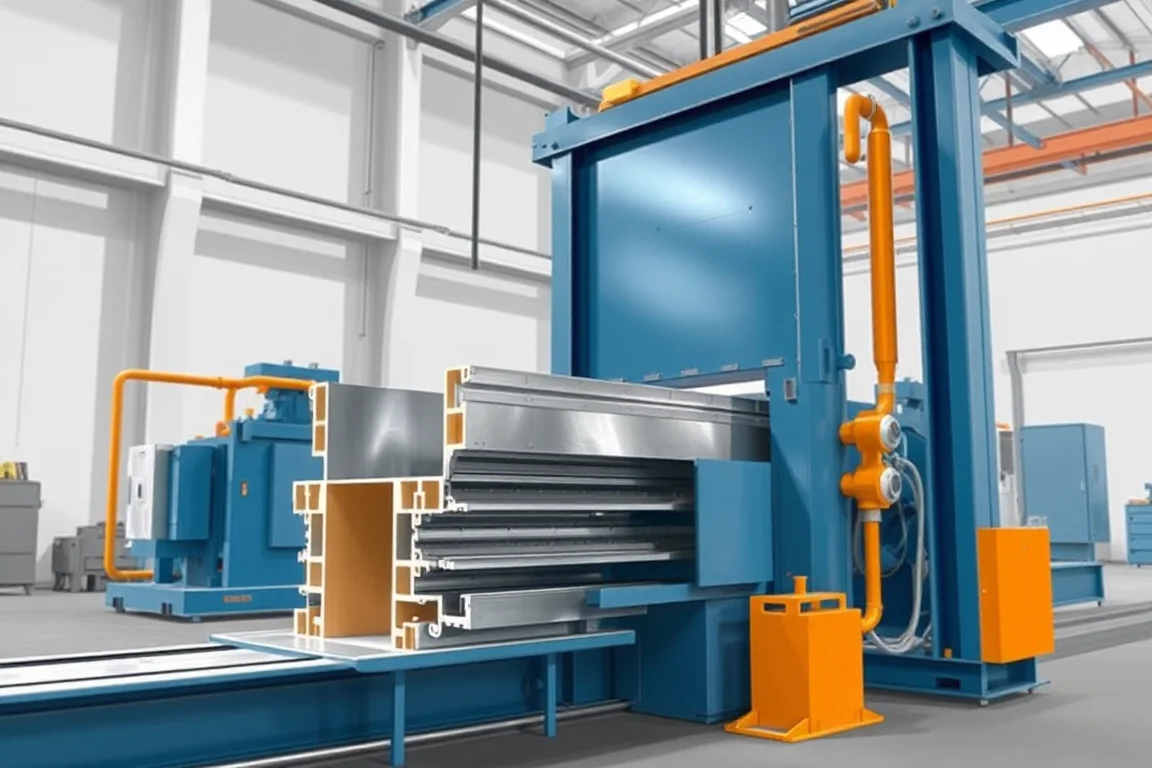
A door reinforcement channel roll forming machine produces the longitudinal stiffening member that sits within a door leaf, frame or panel assembly. The channel is not just a bent strip; it is a locating and load-sharing element whose section shape, wall thickness and hole pattern must match the surrounding construction. This page explains how to specify and assess such a machine by treating the reinforcement channel as an assembly component, not a generic profile.
The role of the reinforcement member
In a door, a reinforcement channel typically resists bending or twisting of the leaf, holds hardware, or ties the door skin to an internal frame. It may also provide a fixing plane for hinges, closers or lock cases. The channel often sits behind a face sheet, inside a hollow section, or between two skins. Its job is to carry local loads into the door structure without distorting the visible surface.
Because the reinforcement is hidden, its performance depends on how it interacts with the rest of the assembly. A channel that is too flexible may allow the door to rack; one that is too stiff or poorly located may telegraph through a thin skin or interfere with hardware. The roll forming machine therefore has to deliver a consistent section and repeatable hole positions, because field fixes are rarely possible after the door is assembled.
Section drawing and panel envelope
The starting point is a section drawing that shows the channel's outside dimensions, leg lengths, bend radii and any stiffening returns or lips. The drawing must also show the available panel envelope: the space between skins, the distance from the door edge, and the clearance around locks, glazing or insulation. A channel with a wide flange may fit in one door style but not another, so the machine specification should be tied to a defined envelope rather than a nominal size.
Forming a channel with tight radii or deep legs can require more forming stations and careful roll design. The machine must be able to produce the section without cracking at the bends or excessive springback. The profile drawing should define the tolerance band on flange width, leg height and bend angle, because these dimensions directly affect how the channel seats in the panel.
Material and finish matched to door construction
The base material should be specified by the door designer. Common choices include low-carbon steel, galvanized steel, and sometimes stainless steel for corrosive environments. Thickness and grade are selection requirements, not machine ratings; the machine's forming rolls and cutoff tooling must be validated for the actual material and thickness range. Stainless steel, for example, work-hardens differently and usually needs separate tooling validation.
Finish also matters. A galvanized or coated coil can affect friction in the forming rolls and the quality of cut edges. If the channel will be welded, the coating type and thickness may influence weldability. If it will be bonded, surface condition and cleanliness matter. The machine should be able to handle the specified coil without marking or coating damage that would later cause adhesion or corrosion problems.
Hole/slot datums and fixing access
Where the door design requires holes or slots, reinforcement channels need defined feature locations for fasteners, wiring or hardware. These features are typically positioned from a datum on the section, such as the centerline of the web or a reference edge. The machine's punching or drilling station must place these features within the tolerance required by the door assembly. If holes are misplaced, screws may miss the internal frame or the hardware may not align.
Feature placement also interacts with cutoff length. If the channel is cut after punching, the distance from the cut end to the first hole must be controlled. Some designs use a slot rather than a round hole to allow adjustment during assembly. Programming may change feature positions when the installed tooling supports them. Different hole shapes, sizes or access requirements can still need physical tool changes; define both in the variant matrix.
Progressive forming and cutoff
A roll forming machine for door reinforcement channels typically uses a progressive sequence: coil is fed through a straightener, then punched or notched, then formed in a series of roll stands, and finally cut to length. The number of forming stations depends on the section complexity. Simple open channels may need fewer stations; channels with lips, joggles or return flanges need more.
Cutoff is often done with a flying die or a stationary shear that matches the channel cross-section. The cutoff must produce a clean end without deformation that would prevent the channel from sliding into the panel. If the channel is part of a welded assembly, the cut end may need to be square and burr-free. The machine's cutoff requirements should be confirmed against the profile support and the end quality needed for the next operation.
Open channels versus other reinforcement routes
An open channel is one option among several. A suitably designed closed section can offer different torsional behavior, but it may not fit the available panel envelope or may be harder to fasten. A folded or hemmed section can provide a smooth edge but may require more complex tooling. A flat plate with stiffening ribs is another route, often used where the reinforcement is surface-mounted rather than concealed.
The comparison below is qualitative; actual selection depends on the door design.
- Open channel: Simple to form, easy to punch, good for concealed stiffening; less torsional stiffness than a closed section.
- Closed tube: Higher torsional stiffness and clean appearance; harder to form inline and to access for fasteners.
- Folded/hemmed section: Returned edges whose condition must be inspected; assess stiffness, tooling and tolerances against the actual design.
- Flat plate with ribs: Easy to integrate with skins; less efficient as a bending member.
Roll forming is particularly suited to open channels because the strip can be progressively bent while the edges remain accessible for punching. If the design requires a closed section, a different process route may be more appropriate.
Variant changes and member identification
Door families often include multiple lengths, hole patterns and minor section variations. A roll forming machine can accommodate variants by using programmable punching and cutoff, but the forming rolls themselves are usually fixed to one section family. If the section changes significantly, a new set of rolls may be needed. Variants should be identified by a clear part number or marking so that the correct member is used in assembly.
Member identification can be applied by stamping, inkjet or labels. The machine's control system should track which variant is running and apply the correct features. If the channel is cut to length, the identification should remain legible after cutting and handling.
Straightness and end inspection
Straightness matters because a bowed channel can force the door out of shape or prevent it from fitting into the panel. Inspection should include a check for bow, twist and camber over the specified length. End inspection should confirm that the cut is square, free of excessive burrs and matches the required length. Hole positions should be checked against the datum, especially the first and last holes.
A practical checklist for incoming or first-article inspection:
- Confirm the section dimensions against the drawing, including flange width, leg height and bend angle.
- Check material thickness and grade against the specification.
- Measure hole and slot positions from the stated datum.
- Verify cut length and end squareness.
- Inspect for surface damage, coating loss or cracks at bends.
- Check straightness over the full length.
Trial within representative door components
The most reliable acceptance check is to install the reinforcement channel in a representative door construction. This may be a full-size door leaf or a section that includes the same skins, frame and hardware interfaces. The trial should confirm that the channel fits without forcing, that fasteners align, and that the door surface remains flat after assembly. If the door is bonded or welded, the trial should include those joining processes and any finishing steps.
Any performance target, such as stiffness or hardware load capacity, belongs to the door assembly's design and test plan rather than the section name alone. The roll forming machine's role is to deliver consistent parts that meet the drawing; the door designer remains responsible for validating the assembled performance.
Output, scope and five FAQs
Production output should be defined in accepted parts per shift with the actual profile and material, not as a theoretical maximum. The machine's scope typically includes coil handling, forming, punching, cutoff and controls. Electrical supply, installed power and any secondary operations must be confirmed in the equipment schedule. The buyer should specify voltage, frequency and phase, and the supplier should verify the operating range for the intended material and thickness.
Acceptance checks should be agreed before shipment and repeated on installed equipment. They should include the reinforcement inside a representative door construction and the effect of joining and finishing on alignment. The machine specification should remain separate from the door performance specification.
FAQ 1: How do I determine the correct channel section for my door?
Start with the door designer's structural requirements and the available panel envelope. The section must fit between skins or within the frame without interfering with hardware. The drawing should define the outside dimensions, leg lengths and bend radii. If you do not have a section, the door designer or a structural engineer should provide one based on the loads and stiffness needed. The roll forming machine is then specified to produce that section.
FAQ 2: Can one roll forming machine produce different channel lengths and hole patterns?
Yes, if the machine is equipped with programmable punching and cutoff. The forming rolls are usually dedicated to one section family, but length and supported feature positions may be changed by program; new feature shapes or sizes may require different tools. If the section dimensions change beyond the roll's capability, a new set of rolls is required. Variant changes should be identified in the control system to avoid mixing parts.
FAQ 3: What material thickness can a door reinforcement channel roll forming machine handle?
The thickness range depends on the machine design, roll strength and drive power. The buyer must specify the base-metal thickness and grade, and the supplier must verify the operating range. Stainless steel or high-strength steel may require different tooling and may reduce the maximum thickness. Do not assume a machine can handle all thicknesses without validation.
FAQ 4: How are holes and slots positioned during roll forming?
Holes and slots are typically punched in a separate station before or during forming. The position is measured from a datum, such as the web centerline or a reference edge. The machine's control system coordinates the punch with the feed length so that features are placed correctly relative to the cut end. For critical hardware, a trial assembly should confirm alignment.
FAQ 5: What should I check when the reinforcement channel arrives?
Inspect the section dimensions, material thickness and grade, hole positions, cut length, end squareness and straightness. Look for surface damage or cracks at bends. The most important check is to install the channel in a representative door component and confirm fit, fastener alignment and surface flatness. Any performance testing should follow the door assembly's test plan, not the channel alone.

Continue your research
- Door & Window Profile Roll Forming Machines
- Steel Door Frame Roll Forming Machine
- Window Frame Roll Forming Machine
- Hollow Metal Door Frame Roll Forming Machine
- Garage Door Track Roll Forming Machine
- Steel Door Threshold Roll Forming Machine
- How Door frame roll forming machine Works
- How To Choose a Door frame roll forming machine
- Door frame roll forming machine Price: What Affects the Cost?
Configuration & specification inputs
Match the configuration to your section drawing, material and production requirements.
| Parameter | Requirement / confirmation needed |
|---|---|
| Profile geometry | A reinforcement channel strengthens or locates parts within a door assembly. Identify the bonding, welding or fastening interface and any restrictions on surface condition. |
| Material | Specified sheet steel; stainless or other alloys need separate tooling validation |
| Thickness & grade | Buyer to specify base-metal thickness and grade; operating range requires supplier verification. |
| Process route | Blank/coil preparation → feature punching → frame forming → cutoff → corner assembly |
| Cutting | Confirm profile-supported cutoff, cut lengths, end quality and any secondary operations. |
| Output | Define accepted output per shift with the actual profile and material. |
| Electrical supply | Buyer to state voltage / frequency / phase. Installed power requires a confirmed equipment schedule. |
| Acceptance | Check the reinforcement inside a representative door construction. Include the effect of joining and finishing on alignment. Any performance target belongs to the door assembly's design and test plan rather than the section name alone. |