
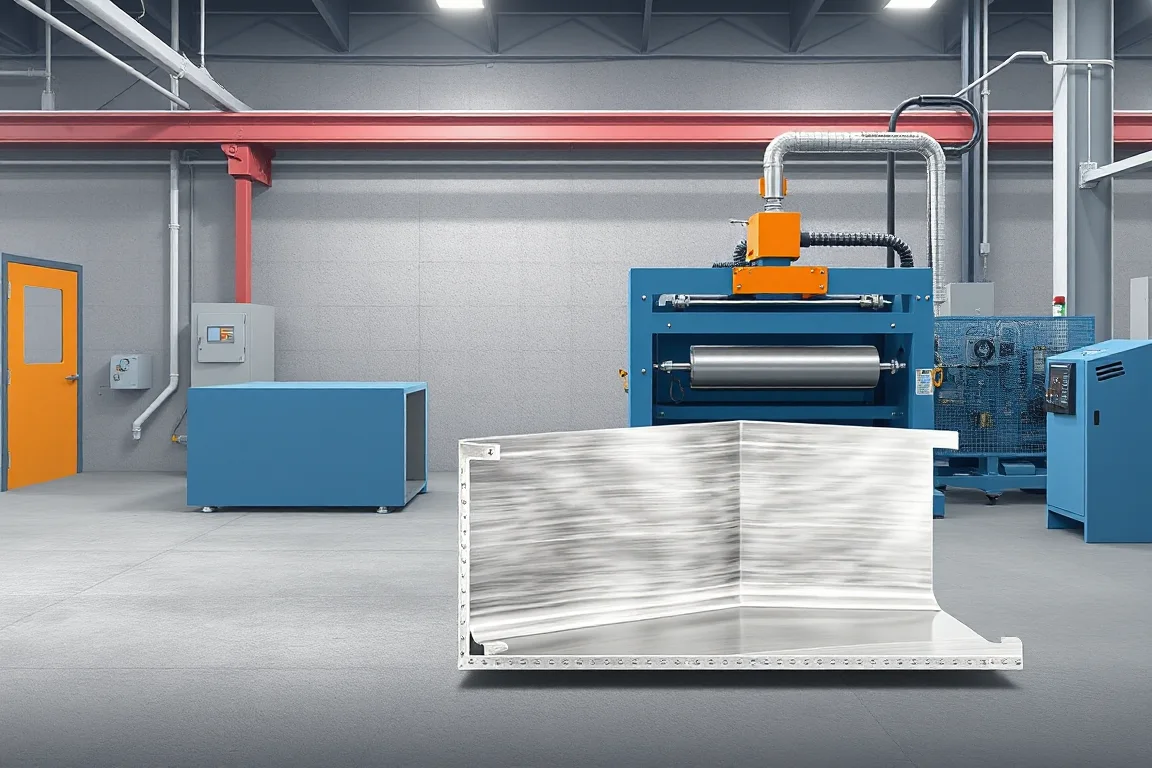
A steel door frame roll forming machine produces the longitudinal jamb and head profiles used in a specified door-frame construction. The useful product is more than a shaped channel: its rebate, stop, returns and hardware preparations must match the door leaf, wall interface and corner assembly.
The equipment should be selected around the actual frame catalogue, including wall depths, profiles, handing and feature schedules. A line that makes a good loose section may still leave significant work in punching, reinforcement, corner preparation and assembly, so those operations need an explicit project scope.
Which steel frame construction is intended?
Identify whether the frame uses welded corners, a knock-down arrangement or another defined assembly method. Show the jambs, head and any sill or threshold relationship. Their profiles may share some geometry but differ in length, hardware features and end preparation.
Also define the wall interface and frame depth. A change in wall thickness can affect the frame section, returns or adjustment arrangement. It should not be treated as a simple dimensional change without reviewing the complete construction.
What should the section drawing show?
- Frame depth and wall-receiving geometry.
- Rebate, stop and door-contact references.
- Returns, hems and visible faces.
- Seal or gasket accommodation where specified.
- Hardware and reinforcement interfaces.
- Corner and end-preparation details.
Provide the intended door leaf and hardware references. Overall frame width alone cannot establish the clearances, stop position or hinge relationship that make the assembly function.
How does the forming route work?
The proposed line guides the strip, creates required features, develops the stepped section and cuts or prepares the member ends. Some hardware and corner operations may remain separate. The supplier should identify the actual sequence and the finished output of each stage.
- Release the correct frame profile, length and handing data.
- Identify and guide the specified coil.
- Produce included hardware, fixing or corner features.
- Develop rebates, stops and returns through the forming passes.
- Cut and prepare the required jamb or head ends.
- Inspect and identify members for reinforcement and assembly.
Ask how feature references are preserved through the stepped bends. A correctly punched flat strip is not automatically a correctly prepared finished jamb.
How should hinge and strike preparations be specified?
Provide hardware drawings and the required position from the finished member datums. Hinge, strike, latch and other preparations can differ by door size and handing. The control system should select the correct schedule without relying on informal operator interpretation.
Identify any reinforcement plates, threaded components or welded attachments separately. A former that creates an opening does not necessarily complete the hardware mounting arrangement. The production route must include the required support and joining operations.
Inspect preparations on completed members and assemble the intended hardware during trials. Check location, seating and access rather than only whether a cutout resembles the hardware outline.
What changes with door handing?
Handing can change which jamb receives particular features and how those features are oriented. Define it using the project's agreed convention and drawings. Ambiguous labels such as left frame can create different interpretations between detailing, production and assembly.
Use a representative trial containing both required hands. Check part marks, feature positions and the assembled frame relationship. A successful demonstration of one symmetrical head does not establish the workflow for handed jambs.
Keep similar members identifiable through collection and finishing. A correctly formed jamb becomes unusable for an order if it is paired with the wrong head or opposite-hand preparation.
How should material and finish be reviewed?
Specify grade, thickness, strip width and finish for each frame family. The stepped section and tight returns need to be assessed with the actual material response. A convenient trial coil should not substitute silently for the intended catalogue material.
Identify visible faces and coating requirements. Inspect bends, corners and hardware areas after the relevant operations. If finishing follows fabrication, final appearance and fit should be checked after that stage as required by the product plan.
Retain material identity with reference samples and setup records. This supports later investigation of springback, surface marks or changed hardware fit without assuming every issue originates at the same machine setting.
What profile flexibility should be demonstrated?
Separate changes in frame depth, rebate, stop and return geometry. A proposed line may adjust some dimensions while retaining others, or require different tools for another section. Request a matrix of rolls, guides, punches and cutoff components.
Demonstrate a meaningful profile change through to accepted members, including hardware references and corner fit. Then return to the original configuration. First-good-product time should include inspection and setup scrap, not only tool movement.
If the factory makes many small orders, include order-data entry and sorting in the production study. Geometric flexibility has limited value if the workflow produces mixed or incorrectly identified frame parts.
Why are corners and end details a separate review?
The frame's final opening and alignment depend on how jambs meet the head. Specify mitres, notches, tabs or other end features according to the chosen construction. Straight cutoff alone may not create assembly-ready members.
Use the intended fixture and joining method to assemble a representative frame. Measure the opening, diagonals and relevant stop or rebate alignment. Record unplanned grinding, bending or forcing instead of treating a corrected sample as an effortless production result.
Joining can introduce deviations after the roll-formed section is correct. Compare component and assembled measurements so later troubleshooting addresses the stage that actually changed the geometry.
How should door and seal interfaces be checked?
Use the specified leaf and relevant hardware or controlled references in a trial assembly. Check the relationships required by the design, including the stop, rebate and seal position where applicable. The machine trial should reproduce the intended interfaces without inventing universal clearances.
Where several leaf or seal families use the same frame name, identify them separately. A small return or groove difference can affect compatibility. Keep manufacturing fit distinct from the complete door assembly's required performance verification.
What handling and packing arrangements are practical?
Protect visible faces, rebates and prepared hardware areas during collection. Define whether members are supplied loose, as matched sets or as assembled frames. Each output has different space, identification and handling needs.
Labels should connect jambs and heads to the correct order, profile, handing and material. Keep incomplete parts awaiting reinforcement or finishing distinct from accepted finished members. This is especially important when several similar frame sizes run together.
How should output and price be compared?
Measure accepted frame sets or complete frames according to the supply boundary. Forming, hardware preparation, reinforcement, corner work and finishing can all limit the route. A bare profile speed does not describe the rate of usable door frames.
For planning only, 120 three-sided frames require 240 correctly prepared jambs and 120 heads, plus their specified hardware and reinforcement. That component count illustrates why producing extra heads cannot compensate for missing handed jambs.
Compare quotations with equivalent profile matrices and secondary operations. Include tools, inspection aids, controls, handling, training and commissioning. Identify any door-system qualification responsibilities separately from machine supply.
What should acceptance include?
- Section dimensions and visible-face condition.
- Hardware features from the correct finished datums.
- Correct handing and member identification.
- End and corner preparation.
- Representative frame assembly and leaf/hardware fit.
- Required profile changes and recovered production.
- Final finish, packing and accepted set quantities.
Retain matched frame samples and setup records. They provide a practical reference for future orders and help separate forming, feature and assembly issues.
Frequently asked questions
Does the line make the door leaf too?
Not unless leaf-production equipment is separately included. Frame members and door leaves have different constructions and operations. Define the supply boundary clearly.
Can frame depth change automatically?
Only within the supported profile arrangement. Rebate, stop and return changes may need tools. Review the complete section matrix rather than assuming every wall-depth variant is a simple control setting.
Are hinge openings enough to mount hinges?
Not necessarily. The design may require reinforcement or other attachment details. Include the complete hardware preparation and inspect it with the intended hinge.
Why include both door hands in a trial?
It checks feature orientation, data selection and part identification. A line can form the section correctly while preparing the wrong jamb for an order. Handed production needs its own workflow demonstration.
Does a frame fit trial establish fire or security performance?
No. Those requirements apply to the defined complete door assembly and its relevant evidence. Machine acceptance verifies manufacture of the specified components.
What should an enquiry contain?
Provide frame, corner and hardware drawings, materials, finishes, size range and handing conventions. Add the intended supply boundary and order mix. This defines a complete steel-frame production route.

Continue your research
- Door & Window Profile Roll Forming Machines
- Window Frame Roll Forming Machine
- Fire Door Frame Roll Forming Machine
- Hollow Metal Door Frame Roll Forming Machine
- Garage Door Track Roll Forming Machine
- Door Reinforcement Channel Roll Forming Machine
- How Door frame roll forming machine Works
- How To Choose a Door frame roll forming machine
- Door frame roll forming machine Price: What Affects the Cost?
Configuration & specification inputs
Match the configuration to your section drawing, material and production requirements.
| Parameter | Requirement / confirmation needed |
|---|---|
| Profile geometry | Frame depth, rebate, stop, returns and door/hardware interfaces |
| Material | Approved steel grade, thickness and finish for each frame family |
| Thickness & grade | Trial actual section and material combinations rather than a generic frame range |
| Process route | Job and handing data, features, stepped forming, end preparation, reinforcement and frame assembly |
| Cutting | Produce jamb/head ends compatible with the selected corner construction |
| Output | Accepted prepared frame sets or complete frames according to the supply scope |
| Electrical supply | Confirm utilities for forming, feature tools, end work, joining and handling |
| Acceptance | Measure sections and hardware datums, verify both hands, assemble frames and inspect final finish |