
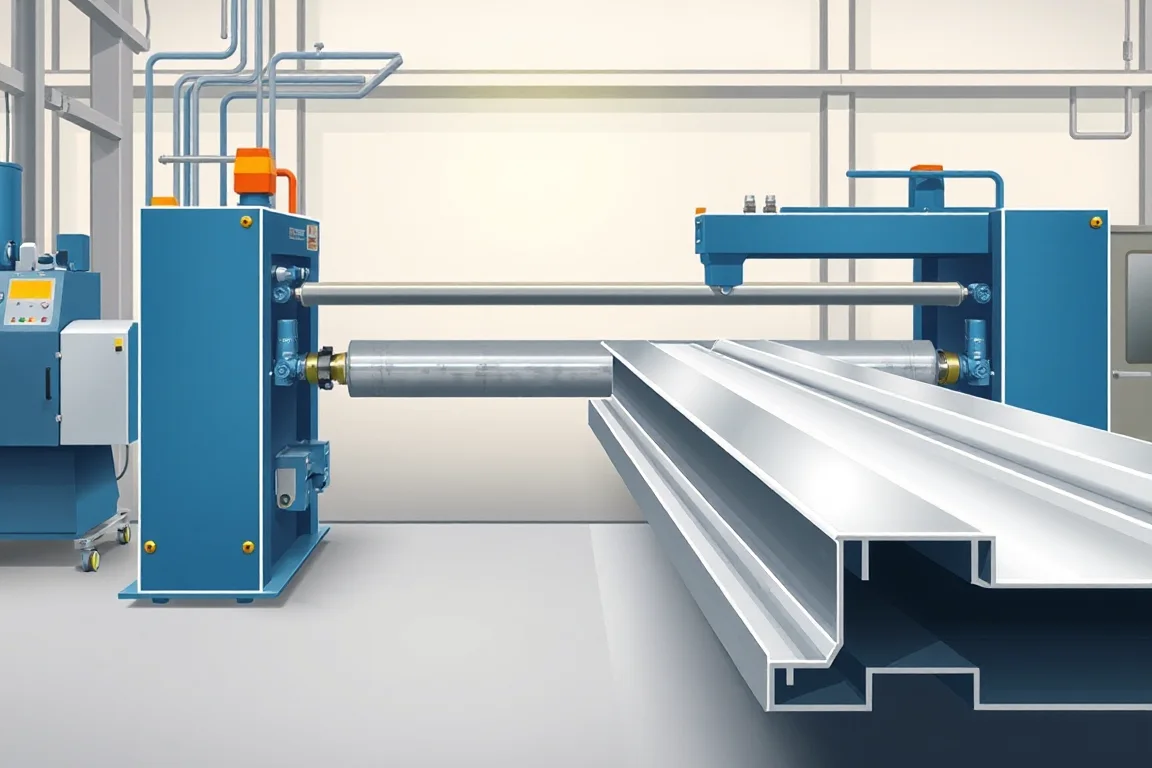
A fire door frame roll forming machine manufactures the steel profiles specified for a defined fire-door frame construction. The manufacturing task includes the section, hardware preparations, reinforcements, corner details and material requirements associated with that product. It is not simply an ordinary frame given a fire-related name after forming.
The equipment project should begin with the frame design and the applicable qualification plan for the intended market. Accurate manufacture supports that plan, but the machine itself does not confer a fire rating. The practical objective is repeatable production of the controlled frame configuration.
What distinguishes the production brief?
The frame belongs to a door assembly with defined components and permitted variations. Its material, section and preparations need to match the relevant product documentation. Changes that appear minor to a tooling operator can be meaningful to the assembly definition.
For equipment selection, identify the exact frame families and the versions the factory intends to produce. Keep development samples separate from configurations released for commercial manufacture. This avoids treating a successful prototype as authorization to market every similar-looking variant.
Which documents should be available before tooling?
- Controlled frame-section and assembly drawings.
- Material and thickness specifications.
- Hardware, anchor and reinforcement details.
- Corner and end-preparation requirements.
- Permitted size, profile and handing variants.
- Inspection, identification and qualification responsibilities.
The machine supplier needs the manufacturing requirements, while the responsible product team needs to manage the assembly qualification and authorized marking process. Keep those roles explicit rather than burying them in a general complete-line description.
How should the frame section be defined?
Show frame depth, rebate, stop, returns, bends and all functional seating surfaces. Identify the relationship with the intended leaf and any specified seals. A broad outside dimension does not describe the interfaces that need to remain consistent.
Provide clear measurement datums and distinguish internal from external dimensions. If several wall-depth variants share one stop arrangement, state that directly. If another variant changes the rebate or return, treat it as a separate configuration rather than assuming a simple width adjustment covers it.
Retain approved reference samples that match the controlled drawings. A sample from another frame family should not become the unofficial tooling target merely because it is readily available.
What does the production sequence include?
- Release the correct frame configuration and component schedule.
- Verify and identify the specified material.
- Produce included hardware, fixing and corner features.
- Progressively form the section and functional returns.
- Cut and prepare jamb and head ends.
- Add required reinforcement and assemble corners using the defined process.
- Inspect and finish the complete frame according to the product plan.
The detailed order depends on the equipment and frame construction. Ask which stages are integrated and which remain separate. A formed jamb is an intermediate component when reinforcement or corner work is still required.
Why are hardware and reinforcement details critical?
Hinges, strikes, closers and other specified hardware connect through defined preparations and supporting details. The manufacturing drawing should show the complete arrangement, not only the visible opening. Reinforcement and attachment operations may require separate tools or fixtures.
Inspect feature positions from finished datums and check the intended hardware fit. Handing and member orientation need explicit control. A correctly shaped frame with the wrong preparation schedule is not the specified product.
Do not add, remove or relocate preparations informally to make a demonstration easier. Changes should pass through the responsible product process, especially where they affect the qualified assembly configuration.
How should material control be organized?
Specify grade, base-metal thickness, coating and incoming condition for each frame family. Keep the material identity linked to production orders and retained inspection records. Similar profiles made from different stock should remain distinguishable through finishing.
Use the actual specified material during forming trials. Record any development substitution separately. A successful section made from another thickness or grade can be useful engineering information, but it is not the same as accepted production of the intended frame.
Inspect bend and surface condition with the complete route in mind. Reinforcement, joining and finishing can introduce changes after the former, so material and process records should remain available through final inspection.
What should corner and anchor operations prove?
The corners establish the finished frame opening and alignment. Specify the end preparation, fixture and joining method for the selected construction. Measure the assembled result rather than assuming correct loose-member lengths guarantee a correct frame.
Anchors and other wall interfaces also need the specified geometry and attachment. Their manufacture may be separate from the roll-forming route. Identify who supplies them and how their installation is checked before the frame is considered complete.
Compare measurements before and after joining when a deviation appears. A corner-induced alignment problem should not automatically be corrected by changing the main profile tools.
How should profile and size changes be managed?
Use a configuration matrix showing supported frame sections, materials, lengths and hardware schedules. Separate adjustable dimensions from those requiring new rolls, punches, cutoff parts or fixtures. The controller's flexibility does not expand the approved product family by itself.
Demonstrate relevant transitions and a return to an accepted original setup. Include final frame measurements and hardware checks in the recovery assessment. Tool movement alone is not an adequate first-good-product result.
Keep setup references tied to the correct drawing revision. This is a practical way to avoid mixing features from different configurations during a busy sequence of small orders.
What does an assembly trial demonstrate?
Use the intended leaf, hardware and other specified references to assess manufacturing fit. Check opening geometry, stop and rebate alignment, hardware seating and the condition of the completed corners. Record unplanned force or modification.
The trial is useful evidence that the production route reproduces the intended interfaces. It is not a fire test, a certification decision or permission to apply a certification mark. Those activities follow the applicable product qualification and oversight arrangements.
Keep this distinction operationally clear without weakening the manufacturing trial. The frame should still be measured and assembled thoroughly; it simply should not be assigned performance claims that the trial did not establish.
How should identification and finishing be handled?
Maintain the link between frame configuration, material, order and inspection status. Marking or labelling should follow the authorized product process where relevant, and the production system should not create unapproved certification claims.
Define the final coating and inspection condition. Protect hardware preparations and visible surfaces through packing. Similar-looking frames with different approved configurations should not be mixed because they share a finish color.
Keep development pieces, rejects and parts awaiting rework separate from accepted production. A clear physical and record-based distinction is more useful than relying on an operator to remember which sample was only a trial.
How should output and quotation scope be compared?
Measure accepted frame sets or complete frames, including required preparations, reinforcement, corner work and inspection. A profile-forming speed omits much of the work that determines the usable output of a fire-door frame factory.
Compare quotations for equivalent product matrices and delivery boundaries. Separate forming equipment, secondary tools, fixtures, finishing, inspection and qualification services. Identify training and the records needed to repeat accepted configurations.
For planning only, a batch of 80 three-sided frames requires the correct 160 jambs and 80 heads, plus their specified reinforcements and anchors. The complete component set, not the total metres formed, determines whether the order can be finished.
What should machine acceptance include?
- Material and drawing identity for each trial configuration.
- Section, feature and end-preparation measurements.
- Correct hardware schedule and handing.
- Reinforcement, corner and anchor manufacturing checks.
- Representative complete-frame and hardware fit.
- Required changes and recovered production.
- Final finish, identification and accepted quantities.
Retain the approved manufacturing references and unresolved items. This provides a useful production baseline while leaving product qualification and authorized marking to their assigned process.
Frequently asked questions
Does the machine make a frame fire rated?
No. It manufactures specified components. Fire-related performance and authorized identification belong to the defined door assembly and applicable qualification arrangements, not to the name of the forming machine.
Can ordinary frame tooling be used?
Only where it reproduces the required controlled section and material configuration. Hardware, reinforcement and corner details still need review. Similar appearance does not establish an equivalent product.
Can hardware holes be changed freely?
Changes should follow the responsible product review and permitted configuration. Do not move or add preparations informally to suit a convenient tool or hardware sample.
What does a trial door assembly prove?
It checks manufacturing fit, dimensions and the included process. It does not replace the required fire-performance evaluation or certification process for the complete assembly.
Should labels be applied during machine trials?
Ordinary production identification can support traceability. Any certification marking must follow the relevant authorization and product process. A successful machinery demonstration does not create that authorization.
What should an enquiry include?
Provide controlled frame, hardware, reinforcement and corner documents, materials, permitted variants and the intended supply boundary. Identify qualification responsibilities separately. This defines a precise and manageable manufacturing project.

Continue your research
- Door & Window Profile Roll Forming Machines
- Steel Door Frame Roll Forming Machine
- Window Frame Roll Forming Machine
- Hollow Metal Door Frame Roll Forming Machine
- Garage Door Track Roll Forming Machine
- Door Reinforcement Channel Roll Forming Machine
- How Door frame roll forming machine Works
- How To Choose a Door frame roll forming machine
- Door frame roll forming machine Price: What Affects the Cost?
Configuration & specification inputs
Match the configuration to your section drawing, material and production requirements.
| Parameter | Requirement / confirmation needed |
|---|---|
| Profile geometry | Controlled fire-door frame section and permitted hardware/corner configurations |
| Material | Specified grade and thickness linked to frame production and inspection records |
| Thickness & grade | Use the actual controlled material configuration for each frame family |
| Process route | Released configuration, features, forming, end work, reinforcement, assembly and final inspection |
| Cutting | Preserve approved jamb/head end and hardware datum relationships |
| Output | Accepted controlled frame sets with required preparations and assembly work |
| Electrical supply | Confirm utilities for the defined manufacturing route and secondary equipment |
| Acceptance | Verify material, section, hardware schedule, corners and fit; keep qualification and marking separately assigned |