
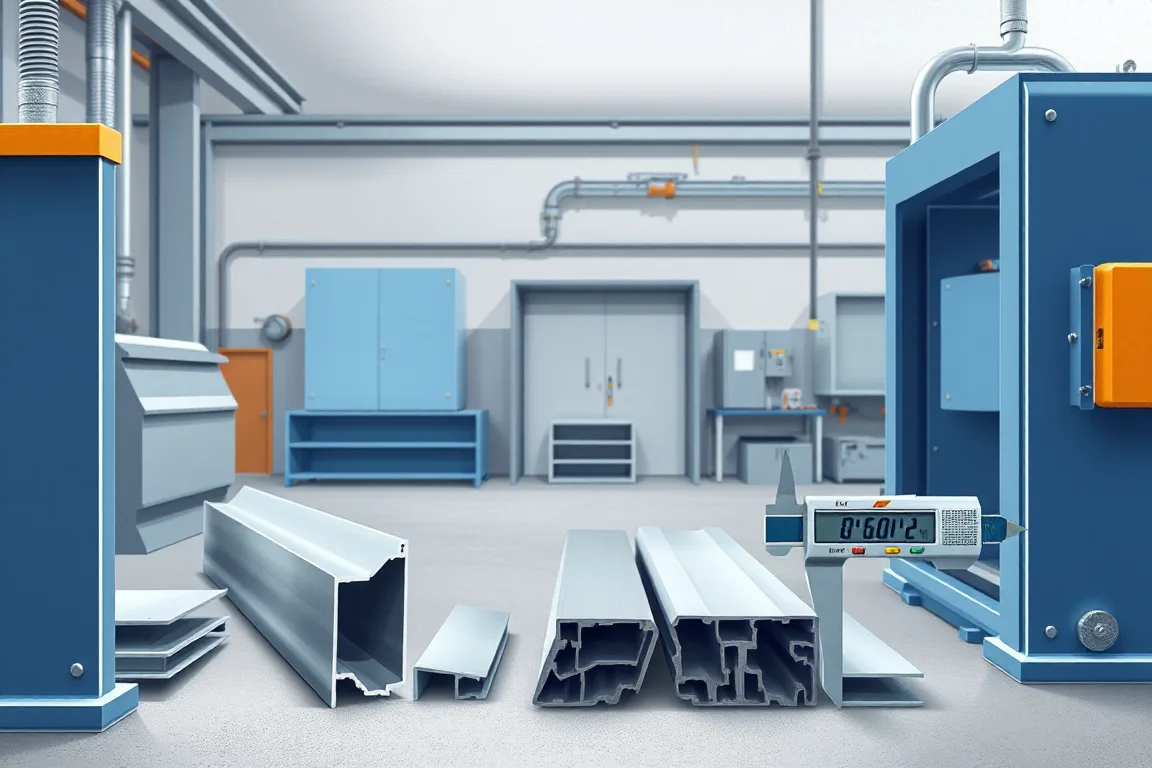
The material and thickness question sits at the centre of door frame roll forming because the finished frame is a structural and dimensional product. A door frame roll forming machine material thickness decision is not a single number. It is a combination: a specified sheet steel grade, a nominal base-metal thickness with permitted variation, a coating or finish, and a profile whose rebate, jamb returns and hardware preparations must accept a real door, seal and hinge set. The machine must form that combination into a consistent section, cut it to length, and support assembly into a frame that stays square and true in service.
This guide explains what thickness does inside the forming line, where it interfaces with punching and cutoff, how to compare options, what a quote should cover, and how to diagnose typical thickness-related defects without hazardous intervention. It deliberately separates component production from assembly, certification and in-service performance, because they are different questions with different evidence.
Why thickness is a system decision, not a single number
Base-metal thickness influences almost every stage of the line. Thicker sheet needs more forming energy, wider bend allowances, larger bend radii and more careful springback compensation. Thinner sheet can be easier to bend but more prone to oil-canning, twist and edge waviness. The same nominal thickness in a softer or harder grade behaves differently, so a line that forms one grade well has not thereby demonstrated equal capability across every harder or softer material. For this reason, thickness should be stated with the grade, the strength range and the permitted thickness variation, not as an isolated value.
Coating and protective film add another layer. Galvanised, painted or film-covered sheet changes friction, surface marking and weldability. The exposed face deserves separate attention: the side intended to face outward should be specified, because marking, roller contact and film orientation all differ. Thickness plus coating plus exposed face is the real input to tooling design.
What thickness does to each forming stage
In a typical door frame line the sequence is blank or coil preparation, feature punching, frame forming, cutoff and corner assembly. Thickness affects each stage in a different way.
- Punching. Hinge, latch and fixing features are punched or notched either before or after forming. Thicker material raises punch force, increases burr risk and changes hole edge quality. The decision to punch before or after forming is driven by feature location and by how much the section distorts in the rolls.
- Forming. The number of passes and the roll design must match the thickness and yield strength. Narrow returns and multiple bends challenge tool access and can force compromises in roll diameter or pass spacing.
- Cutoff. A profile-supported cutoff must handle the wall thickness without crushing or deforming the section. End quality and any secondary operations depend on how the cut is supported.
- Corner assembly. Corners are usually joined by welding, cleats or mechanical fasteners. Thickness affects weldability and joint stiffness, so the corner detail should be fixed before tooling is finalised.
Thickness tolerances and what they mean for the finished frame
Mill thickness tolerance is a range, not a point. If the incoming coil varies across its width or along its length, the formed section will vary too. That variation can show up as inconsistent rebate depth, variable gap at the seal land, or a frame that twists after assembly. Specifying nominal thickness without the permitted variation leaves the line exposed to drift that no amount of roller adjustment can fully absorb.
Grade matters alongside thickness. Higher-strength steel resists forming, increases springback and can require different roll geometry. A machine demonstrated on a mild grade at one thickness cannot be assumed to handle a high-strength grade at the same thickness. Ask for written combinations that are actually supported rather than a list of unrelated maximum values.
Matching the profile to the door, hardware and seals
The frame profile is not generic. The rebate must accept the door leaf or glazing system, the seal land must suit the gasket, and the jamb returns must provide fixing and finish. Hinge and latch preparations must align with the hardware. If the profile drawing and the assembly drawing are not available, the manufacturing route cannot be chosen on evidence. Roll forming produces a continuous section; hinge preparation, latch features and corner assembly are separate operations, so the line design has to accommodate both the section and the features.
Punching, notching and cutoff interfaces
Whether notching happens before or after forming changes tooling access, scrap handling and dimensional control. Pre-forming punches are easier to position but can distort when the section bends. Post-forming punches need access inside the formed shape and support to avoid collapse. The cutoff then has to cut the formed section cleanly and support it so the ends stay square and undistorted. These interfaces should be described in the sequence, not treated as separate purchases.
Corner joints and how they affect material choice
Corners are where the frame becomes a frame. Welded corners demand material that welds consistently without cracking or excessive distortion. Mechanical corners need thickness and section stiffness that hold the joint tight. A fire-door frame machine does not certify a fire-rated assembly; rating depends on the complete tested and approved door system, including installation. The material and corner detail therefore have to be assessed against the intended end use, not just against the forming line.
Comparing machine and tooling options
Buyers usually compare a dedicated line, a flexible line with interchangeable tooling, and a line designed around one profile family. Each has trade-offs.
- Dedicated line. Optimised for one profile and one material family. Simpler changeover, but limited future flexibility.
- Interchangeable tooling. Handles several profiles but adds setup time, storage and alignment risk. Thickness range may narrow because each tool set is designed for a band.
- Single-grade line. Efficient for one grade and thickness. Moving to a harder grade typically needs tooling validation, not just a roller adjustment.
The right choice depends on the range of frames, the hardware, the finish and the expected volume. A line that forms one grade at a given thickness has not thereby demonstrated the same capability for every harder or softer material, so any comparison should be based on supported combinations.
What a quote should cover for material and thickness
A quote scope should state the profile, the material grade and strength range, the nominal base-metal thickness and permitted variation, the coating and exposed face, the process sequence from coil to corner, the cutoff method, and the acceptance criteria. Output should be defined as accepted parts per shift using the actual profile and material, not as a model rating. If the quote lists a thickness range without saying which grade it applies to, the scope is incomplete. Installed power requires a confirmed equipment schedule based on the stated voltage, frequency and phase.
Acceptance checks before and after assembly
Acceptance should inspect the formed section and the assembled frame. Check rebates and seal lands, confirm hinge and latch preparations align with actual hardware, and test a representative corner joint. Measure the finished frame after assembly as well as the unjoined section, because assembly can introduce twist or spring that the section alone does not reveal. Record surface finish and the exposed face, and keep representative samples from the intended coil supplier.
Practical checklist for specifying thickness
Use this checklist when preparing a specification or reviewing a proposal.
- State the steel grade, strength range, nominal base-metal thickness and permitted variation separately.
- State coating, protective film and which face is intended to face outward.
- Provide the section drawing and assembly drawing, including rebate, returns, hinge and latch features and corner detail.
- Define the process sequence: blank or coil, feature punching, forming, cutoff, corner assembly.
- Confirm whether notching happens before or after forming and how corners are prepared.
- Define cutoff support and end quality, plus any secondary operations.
- Define accepted output per shift using the actual profile and material.
- State supply voltage, frequency and phase, and request an equipment schedule for installed power.
- Agree acceptance criteria for rebates, seal lands, hardware fit and a representative corner joint.
- Keep coil samples and record finish and exposed face.
Troubleshooting thickness-related symptoms
Thickness-related problems usually show as dimensional drift, surface marking or joint variation. Diagnose with evidence rather than adjusting moving machinery.
- Inconsistent rebate or seal land. Check incoming thickness variation and coating, then compare formed sections along the coil.
- Twist or bow. Look for uneven thickness across the strip, asymmetric roll pressure or inconsistent springback between grades.
- Edge waviness or oil-canning. Often linked to thin material, insufficient pass support or excessive bend strain.
- Cutoff distortion. Inspect support and blade condition rather than forcing the cut.
- Corner fit variation. Compare thickness at the corner and review the joining method against the specified grade.
Collect formed samples, incoming coil records and assembly measurements before changing anything. Component production, assembly, certification and in-service performance are separate, so a defect in one should not be assumed to be a defect in another.
FAQ: material and thickness questions
Can one door frame roll forming machine run several thicknesses?
It can run a band of thicknesses if the tooling and cutoff are designed for that band and the grade is compatible. A wider band usually means more compromise in roll design and more careful springback control. The supported combinations should be stated in writing.
Does a harder steel grade need different tooling?
Often yes. Higher strength increases forming loads and springback, so roll geometry, pass schedule and sometimes cutoff design need validation. A line proven on a mild grade at a given thickness has not thereby demonstrated the same capability for a harder material.
How do I convert a gauge number to a thickness for specification?
Do not substitute an ambiguous gauge number for a thickness and standard. State the nominal base-metal thickness and the permitted variation with the applicable standard, and keep grade and coating separate from that value.
Should punching happen before or after forming?
It depends on feature location and distortion. Pre-forming punching is easier to position but can distort during bending. Post-forming punching needs access and support inside the section. The choice should be made with the section and assembly drawings in view.
Does the machine certify a fire-rated frame?
No. A fire-door frame machine does not certify a fire-rated assembly. Rating depends on the complete tested and approved door system, including installation. Material and corner detail must be assessed against that system.
What output should I accept in a quote?
Accept accepted parts per shift using the actual profile and material, not a model rating. The quote should define the profile, grade, thickness, coating, sequence, cutoff and acceptance criteria so the output figure is meaningful.
Continue your research
- Door & Window Profile Roll Forming Machines
- Steel Door Frame Roll Forming Machine
- Window Frame Roll Forming Machine
- Hollow Metal Door Frame Roll Forming Machine
- Garage Door Track Roll Forming Machine
- Door Reinforcement Channel Roll Forming Machine
- How Door frame roll forming machine Works
- How To Choose a Door frame roll forming machine
- Door frame roll forming machine Price: What Affects the Cost?