
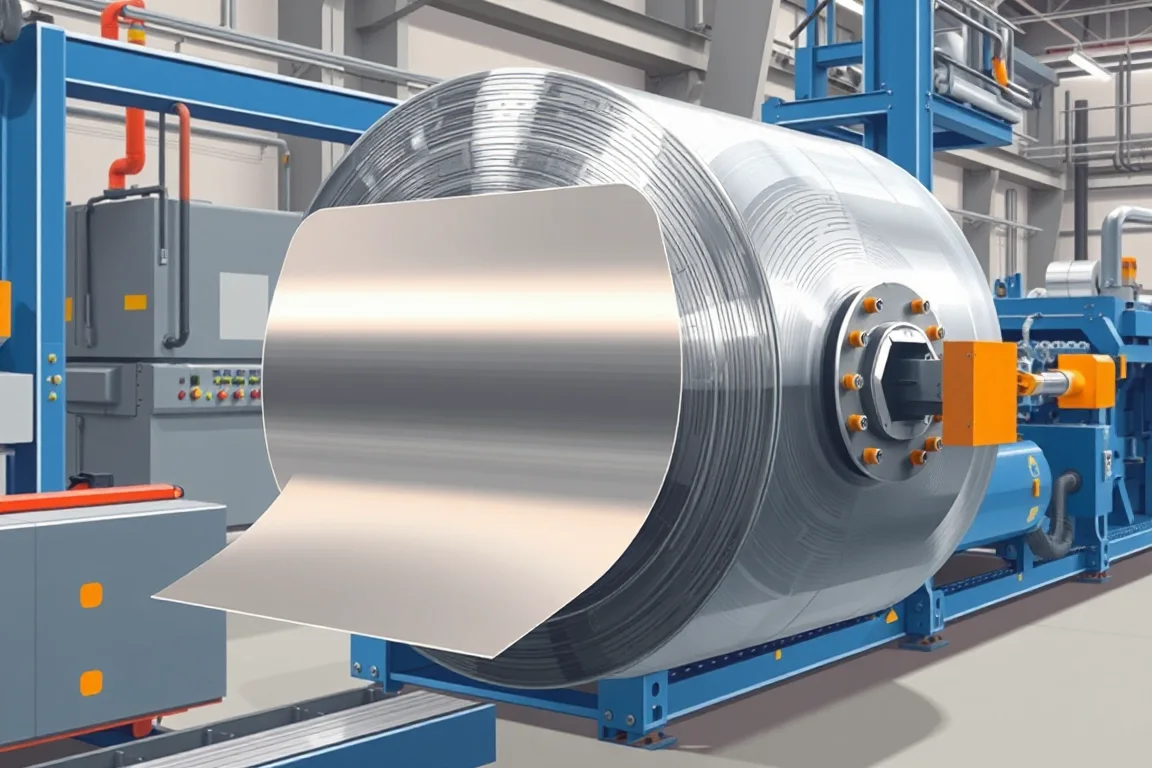
A steel coil blanking line converts a continuous coil of flat-rolled steel into discrete flat pieces—blanks—that become inputs to stamping, forming, laser cutting, or fabrication. The line must reliably decoil, flatten, feed, cut, and stack material while preserving surface quality and dimensional accuracy. This page explains how blanking differs from slitting and simple cut-to-length, the interfaces between major components, and the checks that separate a capable line from one that merely moves metal. It does not assume any specific machine rating or factory capability; all performance must be verified against your actual coil and blank requirements.
What blanking actually produces and how it differs from nearby processes
Blanking yields a flat part with a defined outline. That outline may be a simple rectangle, a trapezoid, or a more complex shape requiring notching, punching, or contour cutting. A straight cut-to-length line produces rectangular sheets only by cross-cutting the strip; it cannot create curved or angled edges without additional stations. A slitting line, by contrast, divides a wide coil into narrower coils or strips, not individual pieces. Recognizing which geometry you need is the first decision: if your downstream operation accepts a rectangular sheet, a cut-to-length line may suffice; if it requires a shaped blank, you need either a blanking press integrated with the line or a separate contour-cutting step after shearing. The term "blanking line" is sometimes used loosely, so always confirm the included operations from the layout drawing.
Coil input variables that shape every downstream decision
The coil itself dictates the line's mechanical demands. Width, thickness, coil mass, inside and outside diameter, and the required strip or blank all interact. Thickness must be paired with grade and strength rather than treated as an isolated number: a high-strength, thin material may require different leveling forces and roll configurations than a mild, thicker coil within a similar thickness window. Surface condition matters too. If the coil has a decorative, painted, or easily marred surface, contact rolls, guides, and stacking equipment need appropriate surface finishes and handling precautions. Incoming coil defects—edge waviness, crossbow, coil breaks, or camber—can be mistaken for process-induced problems, so establish a baseline inspection of the raw coil before adjusting the line. The selection requirements for this application treat thickness and material as buyer-specified items that require supplier verification; no universal envelope exists.
Safe coil loading, payoff, and threading interfaces
Coil loading is not a background task. A coil car, mandrel, or payoff reel must position and support the coil safely while allowing controlled unwinding. The interface between the coil and the payoff affects tension stability, which in turn influences flatness and length accuracy. Threading the strip through the line involves pinch rolls, guides, and sometimes a peeler or hold-down to prevent coil telescoping. Poorly managed payoff can introduce scratches or tension spikes that propagate through leveling and cutting. When evaluating a line, ask for a layout that shows how the coil is loaded, how the strip is threaded, and how scrap from any trimming or notching is evacuated. These elements often dictate real cycle time more than the maximum strip speed, which describes only one portion of the operating cycle.
Leveling versus slitting: distinct functions, distinct quality outcomes
Leveling and slitting solve different problems and should not be conflated. A leveler uses a series of rolls to reduce coil set, crossbow, and edge waviness, improving flatness for the blank. Slitting uses rotary knives to cut the strip longitudinally into narrower widths. Some blanking lines include a leveler but no slitter; others may include slitting if the incoming coil is wider than the required blank width, allowing edge trimming or division into multiple strips. Each function has its own setup parameters: leveler roll penetration and backup roll pressure differ from slitter knife clearance and overlap. If your blank requires a specific edge condition, determine whether slitting is part of the route or whether the coil arrives at the needed width. A line that lists both functions still requires you to confirm that the leveling rolls and slitter arbors are arranged to handle your material without interference.
Length control, cutoff, and shaped-blank considerations
For rectangular blanks, length control is typically achieved by a feed roll system that measures strip advance, followed by a shear or cutoff press. The cutoff must produce a clean edge with acceptable burr and squareness. The achievable cut length and end quality depend on the shear design, the material grade, and the strip thickness. If the blank is not rectangular, the line may need notching, punching, or a contoured die in a press station. A straight shear cannot create a curved edge. Where a shaped blank is required, confirm whether the line includes the necessary secondary operations or whether the blank is produced by a separate press or laser after cutting to length. The selection requirement for this application notes that "a straight cut-to-length line cannot create every contoured blank without additional equipment," so the drawing must be compared against the proposed stations.
Stacking, scrap handling, and bundle movement as part of the line
Producing a blank is not complete until it is stacked or bundled in a way that preserves flatness and surface. A stacker or magnetic belt conveyor must handle the blank without scratching or bending it. Scrap from edge trimming, notching, or cutoff slugs must be evacuated continuously; if scrap accumulates, it can interfere with the cut or damage the strip. These material-handling elements are frequently omitted from initial quotations, making an apparently low price incomplete. Ask for an equipment schedule that explicitly lists coil loading, threading aids, scrap conveyors, stackers, and any bundle movement equipment. The real production cycle includes these steps, not just the strip speed during cutting.
Assembly boundaries and what a supplier scope should cover
A blanking line is often assembled from modules: decoiler, leveler, feeder, shear, stacker, and controls. The boundary between mechanical supply and electrical integration can vary. One supplier may provide the line mechanically but require a separate integrator for drives, PLC, and safety circuits. Another may offer a complete package. Clarify who is responsible for interconnecting wiring, guarding, and safety interlocks. The selection requirement for power states that the buyer must provide voltage, frequency, and phase, and that installed power requires a confirmed equipment schedule. Do not accept a verbal assurance; require a written list of motors, drives, and control panels. This boundary affects installation time, commissioning, and future troubleshooting.
Application-specific inspection: what to check and why
Inspection should reflect the blank's critical features. For rectangular blanks, check length, squareness, and flatness. For shaped blanks, check the contour, hole positions, and edge quality against the drawing. Separate incoming coil defects from process-induced changes: a wavy edge that existed on the coil should not be attributed to the leveler unless the leveler was intended to remove it. For slitting operations, inspect width, edge burr, and recoiling quality if strips are recoiled. Burr height and edge condition affect downstream forming and painting. Flatness should be measured in the agreed condition—for example, on a surface plate or with a straightedge—and compared to the drawing tolerance. Scrap evacuation and stacking quality are also inspection points because a scratched or bent blank is not acceptable output. The acceptance criteria in the selection requirements emphasize distinguishing incoming flatness issues from changes introduced by processing.
Comparing production routes: cut-to-length, blanking, and slitting
Three common routes exist for converting coil to flat product. A cut-to-length line shears rectangular sheets from a leveled strip. It is typically simpler and may have a lower capital cost, but it cannot produce shaped outlines without secondary operations. A blanking line adds notching, punching, or contoured cutting, often in a press station, to produce a shaped blank in one pass; it demands more complex tooling and setup but can eliminate a separate operation. A slitting line produces narrower coils or strips, which may then be fed to a separate blanking or stamping process. The choice depends on blank geometry, production volume, and whether downstream equipment can accept a rectangular sheet. If your annual volume is low and your part is rectangular, cut-to-length may be adequate. If your part has a contoured shape or requires holes, a blanking line with the necessary stations may reduce handling. If your incoming coil is wider than your blank, slitting may be required as an intermediate step. Compare the total equipment scope, including scrap handling and stacking, rather than only the cutting station.
Practical checklist for specifying a steel coil blanking line
- Define the blank: rectangular or shaped? Include a drawing with critical dimensions and tolerances.
- List coil parameters: width, thickness, grade, strength, mass, inside and outside diameter, and surface condition.
- Confirm the required output: accepted blanks per shift with the actual material and profile, not a demonstration substitute.
- Request a layout showing payoff, leveling or slitting, length control, cutoff, notching/punching (if any), scrap evacuation, and stacking.
- Verify power requirements: voltage, frequency, phase, and a confirmed equipment schedule for installed power.
- Agree on inspection methods: length, squareness, flatness, burr, and contour features. Define how incoming coil defects are distinguished from process-induced damage.
- Clarify assembly boundaries: who supplies and integrates drives, controls, guarding, and safety interlocks?
- Include changeover steps, setup scrap, and unloading time in the cycle-time estimate.
- Compare the written equipment scope against all secondary operations needed for a finished part.
FAQ: practical questions about steel coil blanking lines
Can a cut-to-length line produce shaped blanks?
No. A cut-to-length line uses a straight shear to cross-cut the strip, yielding rectangular sheets. Creating a curved or angled outline requires additional equipment such as a press with a contoured die, a notching station, or a laser/plasma cutter. If your blank is not rectangular, confirm that the proposed line includes the necessary stations or plan a separate shaping operation.
How do I distinguish incoming coil defects from damage caused by the line?
Inspect the coil before processing. Record edge waviness, crossbow, camber, and surface marks on the as-received coil. After processing, compare the blank's flatness and edge condition to that baseline. If a defect appears only after leveling or cutting, investigate the line's roll condition, tension, or knife setup. The selection requirements for this application specifically call for separating incoming flatness issues from process-induced changes.
What is the difference between a leveler and a slitter on a blanking line?
A leveler reduces coil set and improves flatness by bending the strip over a series of rolls. A slitter cuts the strip longitudinally into narrower widths using rotary knives. They address different quality attributes: leveling affects flatness, while slitting affects width and edge condition. A blanking line may include one or both, depending on whether the incoming coil needs flattening and whether the required blank width is narrower than the coil.
What should be inspected on first-off and steady-production blanks?
Inspect length, squareness, and flatness for rectangular blanks. For shaped blanks, check the contour, hole positions, and edge burr. Also examine surface condition for scratches or marks. Measure with the agreed gauges and in the agreed condition. First-off pieces may differ from steady production after the line reaches thermal stability, so inspect both a first-off sample and a representative sample from steady running.
Why does maximum strip speed not describe real production output?
Maximum strip speed refers only to the cutting or feeding portion of the cycle. Real output includes coil loading, threading, acceleration and deceleration, changeover, scrap removal, and stacking. These steps can dominate the cycle time. The selection requirements note that coil loading, threading, recoiling, and bundle movement can dominate real production, so define accepted output per shift with the actual profile and material.
What electrical information must I provide when specifying a blanking line?
State the available voltage, frequency, and phase. Installed power requires a confirmed equipment schedule listing motors, drives, and control panels. Do not rely on a verbal estimate. The equipment schedule becomes part of the technical agreement and helps ensure that the plant's electrical supply matches the line's requirements without unexpected upgrades.

Continue your research
- Coil Processing & Auxiliary Equipment
- Steel Coil Slitting Line
- Cut To Length Line
- Narrow Strip Steel Coil Slitting Line
- High Speed Steel Coil Slitting Line
- Heavy Gauge Steel Coil Slitting Line
- How Coil processing line Works
- How To Choose a Coil processing line
- Coil processing line Price: What Affects the Cost?
Configuration & specification inputs
Match the configuration to your section drawing, material and production requirements.
| Parameter | Requirement / confirmation needed |
|---|---|
| Profile geometry | Blanking may produce simple rectangular sheets or shaped blanks. Determine which geometry is required; a straight cut-to-length line cannot create every contoured blank without additional equipment. |
| Material | Defined coil grades and surface conditions within a verified capacity envelope |
| Thickness & grade | Buyer to specify base-metal thickness and grade; operating range requires supplier verification. |
| Process route | Safe coil loading → payoff → leveling or slitting → length control/recoiling → handling |
| Cutting | Confirm profile-supported cutoff, cut lengths, end quality and any secondary operations. |
| Output | Define accepted output per shift with the actual profile and material. |
| Electrical supply | Buyer to state voltage / frequency / phase. Installed power requires a confirmed equipment schedule. |
| Acceptance | Check length, shape, squareness or other drawing features in the agreed condition. Separate incoming flatness issues from changes introduced by processing. Scrap evacuation and stacking are part of producing usable blanks. |