
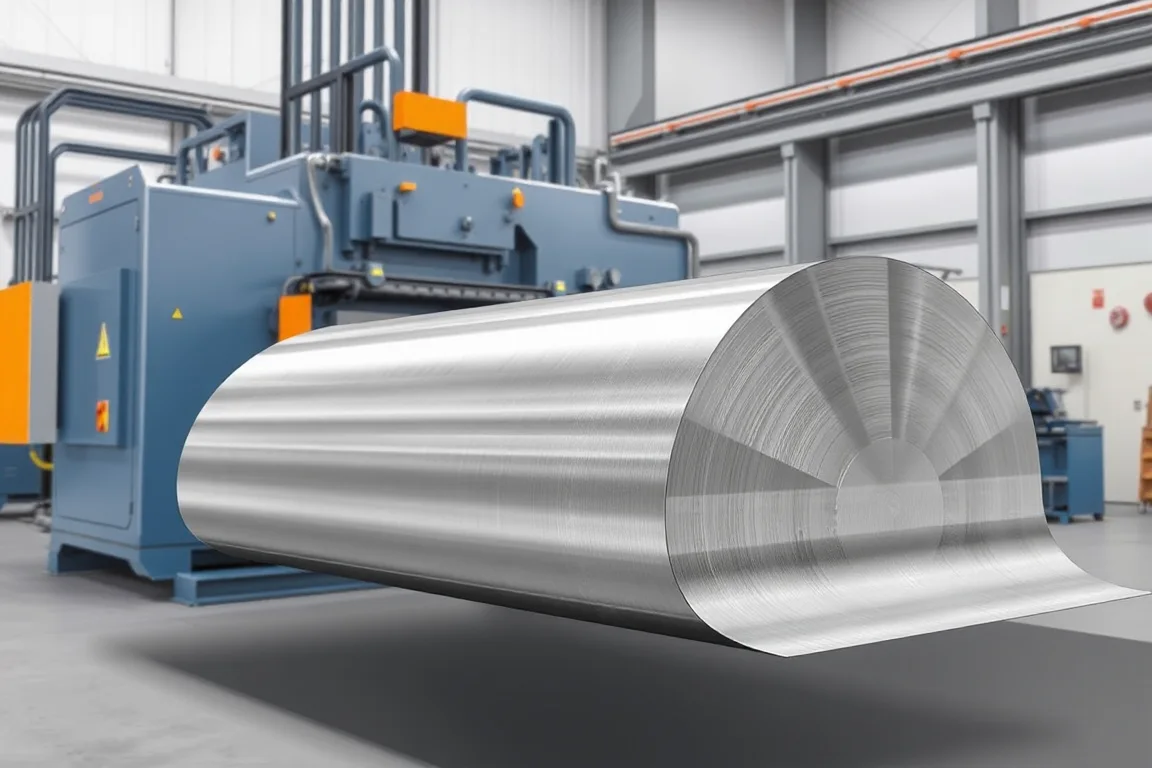
A coil leveling machine sits between coil handling and the next value-adding operation, and its job is narrow enough to define precisely: reduce shape defects that come from coiling so the strip or blank lies flat enough for the following process. It does not create a finished part by itself. It changes flatness, and sometimes internal stress distribution, while the rest of the line determines dimensions, edges and surface condition. Selecting one well means separating what the leveler actually controls from what payoff, feeding, cutting, recoiling and handling control.
What the finished profile actually means for a leveler
Before any machine discussion, describe the finished profile in the terms the leveler must satisfy. That means strip or blank width, base-metal thickness range and the material grades to be run, plus the flatness condition the downstream operation tolerates. Coil set, crossbow and edge wave are different defects with different causes, and they do not all respond to the same roll configuration. Coil set is a lengthwise curvature inherited from winding; crossbow is a transverse bow across the width; edge wave is a lengthwise waviness concentrated near one or both edges. A machine arranged mainly to remove coil set may leave edge wave largely untouched, and a roll pattern aimed at edge wave may not suit heavy crossbow. The finished profile statement should also note whether the strip is later slit into narrower widths, cut into sheets, stamped, roll-formed or simply fed into another machine, because each downstream operation has a different tolerance for residual shape error.
Interfaces the leveler must respect upstream and downstream
A leveler is an interface machine. Upstream, it depends on payoff from a decoiler and on how the strip is threaded and tensioned. Downstream, it depends on the feed, cut-to-length shear, recoiler or stacking device. The critical interfaces are the strip path height and alignment, the way strip is supported between operations, and the tension or slack condition the leveler sees. Leveling works by bending strip alternately over rolls, so entry and exit conditions matter: a leveler fed with inconsistent tension or a wandering strip edge will produce inconsistent results even if the roll setting is correct. The exit side is equally important, because strip that is leveled and then pulled unevenly or recoiled with poor tension can pick up new shape problems. For that reason the leveler should be assessed together with the payoff and the handling equipment, not as an isolated box.
Production route from coil to accepted output
A typical route runs from safe coil loading through payoff, leveling, and then either length control with cutting or recoiling, followed by handling of the finished strip or blank. The leveler occupies one position in that chain, and the route should be documented so every operation is visible. Coil loading, threading, recoiling and bundle movement often dominate the real production cycle, so a line described only by a maximum strip speed can look faster on paper than it behaves in practice. Output should be defined as accepted pieces or accepted length per shift using the actual profile and material, not as an isolated machine rate. When comparing quotations, list every operation needed to reach a finished part and check which ones are inside the written equipment scope and which are assumed by the buyer.
Tooling and roll-arrangement alternatives
Leveling rolls can be arranged and adjusted in different ways, and the alternatives suit different problems. A simple straightener with a limited number of rolls and a single adjustment tends to handle mild coil set in thinner material. A machine with more rolls and finer independent adjustment gives better control over short-cycle shape variation and can address crossbow and edge wave more deliberately, at the cost of more setup attention and more knowledge required from the operator. Backup rolls, roll diameter, roll surface condition and the means of setting roll penetration all influence what the machine can do and how repeatable it is. Surface-sensitive material may need special roll surfaces or handling precautions to avoid marking. The right comparison is not more rolls versus fewer in the abstract, but which arrangement addresses the specific defects in the incoming coil and the flatness the downstream operation needs.
Where leveling stops and separate operations begin
It is easy to overload a leveler with expectations. Slitting creates narrower strips and is a separate operation with its own inspection criteria. Cut-to-length creates sheets and belongs to a different machine or line section. A decoiler supports controlled payoff and does not level. Leveling changes flatness. These functions are not interchangeable, and a quotation that blurs them can hide missing equipment. Component production, assembly, certification and in-service performance are also distinct stages: a leveler can be built and assembled, but its contribution to a certified or in-service product depends on the whole process route and on the material actually run. Keep the leveler's role limited to shape correction within the verified capacity envelope, and treat everything else as separate scope to be confirmed.
Changeovers and setup between products
Changeover is where a leveler earns or loses its place in a production plan. Moving from one material grade, thickness or width to another requires a defined setup procedure, and the time and scrap involved should be recorded rather than estimated. Setup scrap is real output lost, and it accumulates quickly when changeovers are frequent. Ask how the roll setting is selected and verified when the product changes, and follow the equipment maker's procedure rather than improvising. Do not adjust moving machinery; setup and adjustment should be done in the manner and sequence specified for the equipment, with the line in the appropriate state. Recording changeover steps, setup scrap and unloading time gives a realistic picture of how the line behaves across a product mix, not just on one stable run.
Inspection and distinguishing incoming defects from process damage
Inspection should be planned around what the leveler is supposed to change. For cut-to-length output, inspect length, squareness and flatness. For slit output, inspect width, edge burr and recoiling quality. A practical problem is separating defects that arrived with the coil from defects introduced by the process. That distinction needs a defined method: inspect incoming coil samples, record their shape condition, and compare first-off and steady-production pieces against them. Use representative material finishes in any trial, and inspect with the agreed gauges. If a defect appears only after leveling, the roll setting, strip path or downstream handling is a candidate cause; if it appears in the incoming coil, the leveler may not be able to remove it and the capacity envelope needs review.
Accepted output and production targets
Accepted output is the only production figure that reflects the whole line. Define it per shift with the actual profile and material, including the operations around the leveler. A target based on a single machine's capability ignores coil loading, threading, cutting, stacking and coil or bundle movement. When reviewing a proposal, compare the written equipment scope with all secondary operations needed for a finished part, and confirm what the buyer supplies. Omitted material-handling equipment can make an apparently low price incomplete. The same logic applies to power: the buyer should state voltage, frequency and phase, while installed power requires a confirmed equipment schedule rather than an assumption based on a similar-looking machine.
Comparison of practical alternatives
Several alternatives are worth comparing directly. A standalone leveler fed from an existing decoiler suits operations that already have payoff and cutting equipment and only need shape correction. A leveler integrated into a cut-to-length line suits operations that want flatness and length control coordinated. A leveler placed ahead of a slitting line suits operations where narrow strips must be flat before slitting. Beyond machine type, compare the roll arrangement, adjustment method, surface protection, handling equipment and safety provisions explicitly. Each alternative shifts cost and responsibility: a standalone unit may need manual handling while an integrated line may need more floor space and a larger power supply. The right choice follows the incoming coil condition and the required output, not a preference for more equipment.
Practical selection checklist
- State the finished profile: strip or blank width, base-metal thickness range, material grades and required flatness.
- Identify which defects matter: coil set, crossbow, edge wave or a combination.
- Describe the full process route, including payoff, leveling, cutting or recoiling, and handling.
- Confirm the cutoff requirements, cut lengths, end quality and any secondary operations.
- Define accepted output per shift with the actual profile and material.
- State the electrical supply: voltage, frequency and phase, with installed power from a confirmed equipment schedule.
- Record changeover steps, setup scrap and unloading time for the real product mix.
- Agree inspection criteria and the method for separating incoming coil defects from process-induced damage.
- Compare the written equipment scope against every secondary operation needed for a finished part.
Frequently asked questions
Does a leveler remove all coil shape defects?
No single roll arrangement addresses every shape defect equally. Coil set, crossbow and edge wave have different causes and respond differently to roll penetration and roll pattern. The leveler should be selected for the specific defects present in the incoming coil and the flatness the downstream process tolerates, and some residual shape variation may remain.
How is leveling different from slitting or cut-to-length?
Leveling changes flatness. Slitting creates narrower strips, and cut-to-length creates sheets. They are separate operations with separate inspection criteria and separate equipment. A production line may include several of them, but one does not substitute for another, and each must be assessed on its own contribution.
What determines whether a leveler can handle a given material?
Material grade, base-metal thickness and surface condition together define the working envelope. Thickness and width must be paired with grade and strength, because a machine suited to one combination may not suit another. The operating range requires supplier verification against the actual material, and surface-sensitive material may need specific roll surfaces and handling precautions.
What should be inspected on leveled output?
For cut-to-length work, inspect length, squareness and flatness. For slit work, inspect width, edge burr and recoiling quality. In both cases, compare incoming coil samples with first-off and steady-production pieces so that defects present in the coil are distinguished from damage introduced by the process.
Why does a maximum strip speed not describe real output?
Because the operating cycle includes coil loading, threading, cutting or recoiling and bundle movement, and those steps often dominate the shift. A machine speed describes one part of the cycle only. Accepted output per shift, measured with the actual profile and material, is the more useful production figure.
What should be included when comparing quotations?
Compare the written equipment scope against every secondary operation needed for a finished part, and check which items the buyer is expected to supply. Coil cars, scrap handling, tension systems, recoilers, cleaning access and safety provisions should be listed explicitly, because omitted handling equipment can make a quotation look lower than the real installed cost.

Continue your research
- Coil Processing & Auxiliary Equipment
- Steel Coil Slitting Line
- Cut To Length Line
- Narrow Strip Steel Coil Slitting Line
- High Speed Steel Coil Slitting Line
- Heavy Gauge Steel Coil Slitting Line
- How Coil processing line Works
- How To Choose a Coil processing line
- Coil processing line Price: What Affects the Cost?
Configuration & specification inputs
Match the configuration to your section drawing, material and production requirements.
| Parameter | Requirement / confirmation needed |
|---|---|
| Profile geometry | A leveling machine is selected for the material’s strength, thickness and flatness problem. Distinguish coil set, crossbow and edge wave before assuming a generic straightener will correct them all. |
| Material | Defined coil grades and surface conditions within a verified capacity envelope |
| Thickness & grade | Buyer to specify base-metal thickness and grade; operating range requires supplier verification. |
| Process route | Safe coil loading → payoff → leveling or slitting → length control/recoiling → handling |
| Cutting | Confirm profile-supported cutoff, cut lengths, end quality and any secondary operations. |
| Output | Define accepted output per shift with the actual profile and material. |
| Electrical supply | Buyer to state voltage / frequency / phase. Installed power requires a confirmed equipment schedule. |
| Acceptance | Use representative material finishes in the trial. Ask how setup is selected and verified when the product changes, following the equipment maker's procedure. Include cleaning, access and maintenance requirements in the operating-scope comparison. |