
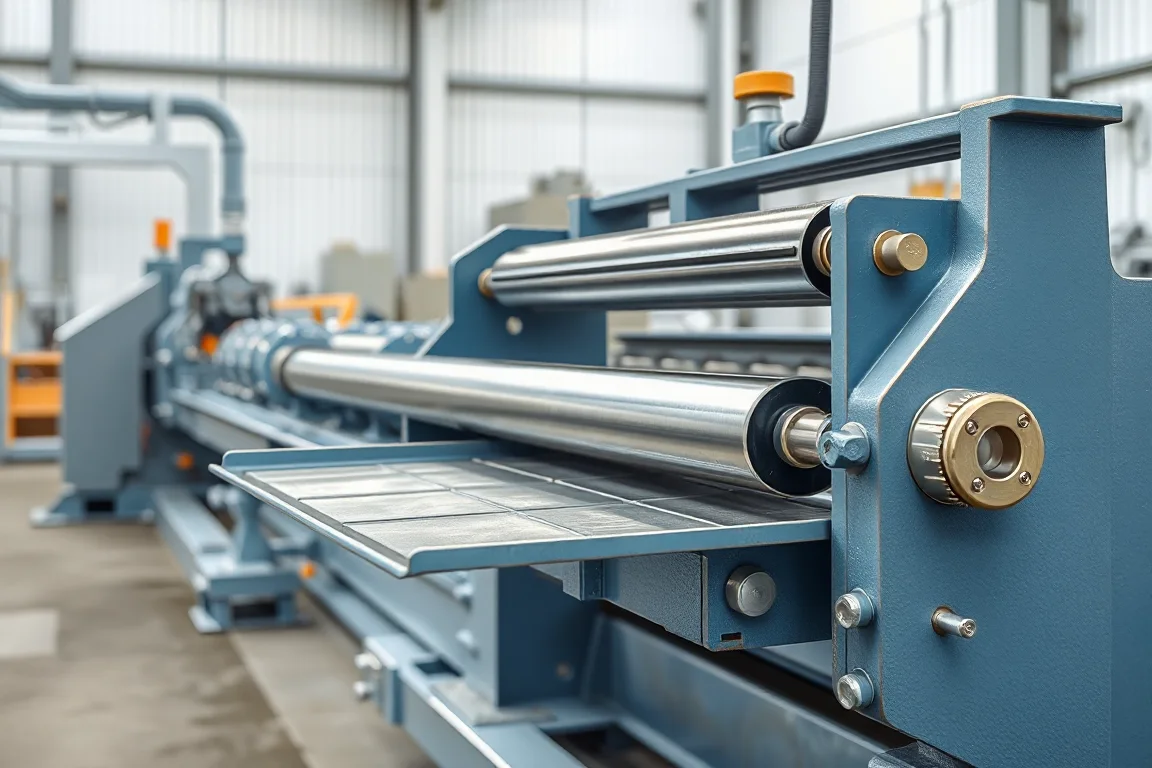
A greenhouse guide rail is a linear metal profile that carries or guides a moving component, such as a carriage wheel, slider, trolley or drive element, and may also support a hanging load. It is not the same component as a drainage gutter, a film-lock channel or a crop support section, even though all of them can be produced on roll forming equipment. The greenhouse guide rail roll forming machine exists to convert coated or protected steel coil into a rail section with a consistent running surface and connection features. The machine is only one part of the route; the drawing, the interface with the moving component and the greenhouse environment determine whether the finished rail is acceptable.
Where a guide rail sits in a greenhouse and what it must do
A guide rail is selected around the component it carries or guides. The relevant questions are mechanical and environmental: what wheel, slider or drive interface runs on it, what load it carries, how it is supported at intervals, and what exposure it sees. In a greenhouse, humidity, condensate, nutrient solution and cleaning chemicals can all reach the rail. That makes the surface protection and the material grade part of the rail definition, not an afterthought. A rail that is dimensionally correct but poorly protected may still fail at the running surface or at connection points. The production line therefore has to be assessed against the real greenhouse interface, not only against a generic profile shape.
The production route from coil to finished rail
The usual sequence for a greenhouse guide rail roll forming machine is coil preparation, connection punching, section forming, cutoff and greenhouse-interface checks. Each stage has a different effect on the finished rail. Coil preparation controls material condition, coil width and surface protection before forming. Connection punching creates the holes that attach the rail to brackets, posts or greenhouse structure. Section forming generates the running surface, side walls and any stiffening geometry. Cutoff produces the rail ends and determines whether they are square, burr-free and ready for joining. Interface checks confirm that the formed rail actually mates with the moving component and the support system. A production line that performs these stages in a controlled order gives a more repeatable rail than one where punching or secondary work is treated as an unrelated step.
Why a guide rail is not a gutter, film-lock or crop support profile
Greenhouse profiles are often grouped together because they are all long, thin metal sections, but their functions are unrelated. A gutter drainage shape is designed to collect and channel water, so its section and joints are evaluated for drainage and sealing. A film-lock channel is designed to retain film with a compatible locking element, so its acceptance depends on the retaining hardware. A crop support channel carries plant or trellis loads in a growing environment. A guide rail is defined by the moving or supported component that runs along it. Treating one of these as a substitute for another usually produces a rail that does not fit its intended interface. The manufacturing process can be similar, but the drawing, inspection and application limits are different.
Drawing and material inputs that drive the machine configuration
The drawing inputs for a guide rail include the running surface geometry, the overall section, the connection holes and any features needed for end joining or bracket attachment. The material input is a specified protected metal section; the buyer specifies base-metal thickness and grade, and the operating range requires supplier verification. Plastics and growing channels are made by a different process, so a metal roll forming line is not a substitute for a plastic extrusion system. The environment also influences material selection: humidity, condensate and chemicals affect corrosion behaviour, so a generic galvanized description may not capture what the rail actually needs. The machine configuration should follow the drawing and the material, not the other way around.
How the forming stages affect the finished rail
Section forming determines the running surface and the rail stiffness. The forming sequence has to develop the section gradually so that the coated surface is not damaged and the profile does not twist or distort. Connection punching needs to produce holes that match the greenhouse drawing and remain aligned after forming. Cutoff needs to be supported by the profile so that the cut end does not collapse, burr or lose shape. If the rail is long, handling and cut length organization become part of the production plan. Any secondary curving, joining or bracket fabrication should be identified separately, because those operations may lie outside the forming scope. The goal is a rail that is dimensionally stable from end to end, not just at the first-off piece.
Assembly boundaries and secondary operations
A roll forming machine produces a formed and cut rail. It does not automatically produce the brackets, the carriage, the drive system or the installed greenhouse assembly. Bracket fabrication, hole drilling for accessories, curving, end joining and motion-system assembly are separate from rail forming. Some production lines can integrate punching, but the scope still has to be written down. When comparing quotations, separate the forming scope from the secondary operations needed for a finished, installable rail. Otherwise the production line may be approved on a scope that does not match the actual greenhouse design. The boundary between forming and assembly is where many project misunderstandings occur.
Inspecting rails against the greenhouse interface
Acceptance checks should trial-mate rail ends and the actual moving component. That means the running surface, the wheel or slider, and the connection points are all checked together, not in isolation. Inspect burrs and local misalignment at cutoff, because those defects can affect joint quality and handling. Check the connection holes against the greenhouse drawing, including their position and any clearance needed for brackets. For rails used in growing areas, evaluate suitability for the actual nutrient and cleaning environment, since exposure varies by house and by crop system. First-off pieces and a representative steady-production sample should be measured with the agreed gauges. A rail that passes only on a demonstration substitute material may not represent the specified product.
Comparison of production alternatives
A dedicated roll forming line suits a guide rail that has a stable section and a defined interface. Compared with press braking, roll forming can produce long, consistent sections with a better surface finish and fewer discrete operations. Compared with a general-purpose line with interchangeable tooling, a dedicated line may offer more repeatability but less flexibility if the drawing changes. Compared with buying a finished rail or a welded fabrication, in-house roll forming can give more control over material and section, provided the line is configured for the real profile and the secondary operations are handled. Each route has trade-offs in setup, changeover, surface protection and interface control. The right choice depends on the drawing, the material and the expected production pattern.
Practical checklist before approving a production line
- Provide the guide rail drawing, including the moving component interface and connection holes.
- Specify the base-metal thickness and grade, and confirm the operating range with the supplier.
- State the greenhouse environment, including humidity, condensate and cleaning chemicals.
- Define the coil material and surface protection, and check that it is suitable for forming.
- Confirm the process route: coil preparation, connection punching, section forming, cutoff and interface checks.
- Clarify cutoff requirements: profile-supported cutting, cut lengths and end quality.
- Identify secondary operations such as curving, joining or bracket fabrication, and state whether they are in scope.
- Define the production target with the actual profile and material, not a substitute.
- State the electrical supply: voltage, frequency and phase.
- Agree inspection gauges and first-off and steady-production sampling.
- Trial-mate rail ends and the actual moving component before approval.
- Record changeover steps, setup scrap and unloading time as part of the acceptance.
Frequently asked questions
Can the same machine make gutters and guide rails?
It may be possible to share a machine frame or some line equipment, but the tooling, drawing and acceptance checks are different. A gutter is defined by drainage and joints, while a guide rail is defined by the moving component interface. Treating them as the same product can lead to a rail that does not guide correctly. The production line should be configured for the specific profile and its interface.
What does the machine need to know about the moving component?
The machine needs the drawing that defines the running surface and the connection points, because those features are formed and punched into the rail. The moving component itself is a separate assembly item, but its interface dimensions determine the rail geometry. If the interface is not defined, the rail cannot be accepted against a real use. The greenhouse drawing should show how the rail mates with the carriage, slider or drive element.
How is a guide rail different from a film-lock channel?
A film-lock channel is shaped to retain film together with a compatible locking element. A guide rail is shaped to carry or guide a moving component. The two may use similar roll forming equipment, but the section, the inspection and the application limits differ. Film-retaining hardware fit is not the same check as rail interface mating. They should be quoted and inspected as separate profiles.
What should be checked on the first-off and production samples?
Check the running surface, overall section, connection hole position and cut end quality against the drawing and the agreed gauges. Trial-mate the rail ends and the actual moving component. Inspect for burrs and local misalignment at cutoff. For growing areas, also evaluate the surface condition for the nutrient and cleaning environment. A representative steady-production sample should be checked in addition to the first-off piece.
Are secondary operations part of the roll forming line?
Not necessarily. Bracket fabrication, curving, end joining and motion-system assembly may be outside the forming scope. Some lines integrate punching, but the quotation should state exactly what the machine produces. The boundary between forming and assembly should be written down so that the finished rail can be produced as designed. If the greenhouse design requires additional operations, they need to be planned separately.
How should the material be specified for a greenhouse guide rail?
The buyer specifies base-metal thickness and grade, and the operating range requires supplier verification. A generic galvanized description may not capture humidity, condensate or chemical exposure. Plastic growing channels use a different process, so a metal roll forming line is not a substitute for a plastic extrusion system. The material choice should follow the environment and the intended rail function.

Continue your research
- Greenhouse Profile Roll Forming Machines
- Greenhouse Gutter Roll Forming Machine
- Greenhouse Channel Roll Forming Machine
- Greenhouse Film Locking Channel Machine
- Greenhouse Crop Support Channel Machine
- Greenhouse Purlin Roll Forming Machine
- How Greenhouse roll forming machine Works
- How To Choose a Greenhouse roll forming machine
- Greenhouse roll forming machine Price: What Affects the Cost?
Configuration & specification inputs
Match the configuration to your section drawing, material and production requirements.
| Parameter | Requirement / confirmation needed |
|---|---|
| Profile geometry | A greenhouse guide rail is selected around the moving or supported component. Provide the wheel, slider or drive interface and the environmental exposure requirements. |
| Material | Specified protected metal sections; plastic growing channels use a different process |
| Thickness & grade | Buyer to specify base-metal thickness and grade; operating range requires supplier verification. |
| Process route | Coil preparation → connection punching → section forming → cutoff → greenhouse-interface checks |
| Cutting | Confirm profile-supported cutoff, cut lengths, end quality and any secondary operations. |
| Output | Define accepted output per shift with the actual profile and material. |
| Electrical supply | Buyer to state voltage / frequency / phase. Installed power requires a confirmed equipment schedule. |
| Acceptance | Trial mating rail ends and the actual moving component. Inspect burrs and local misalignment at cutoff. Separate rail forming from the fabrication of brackets and motion-system accessories. |