
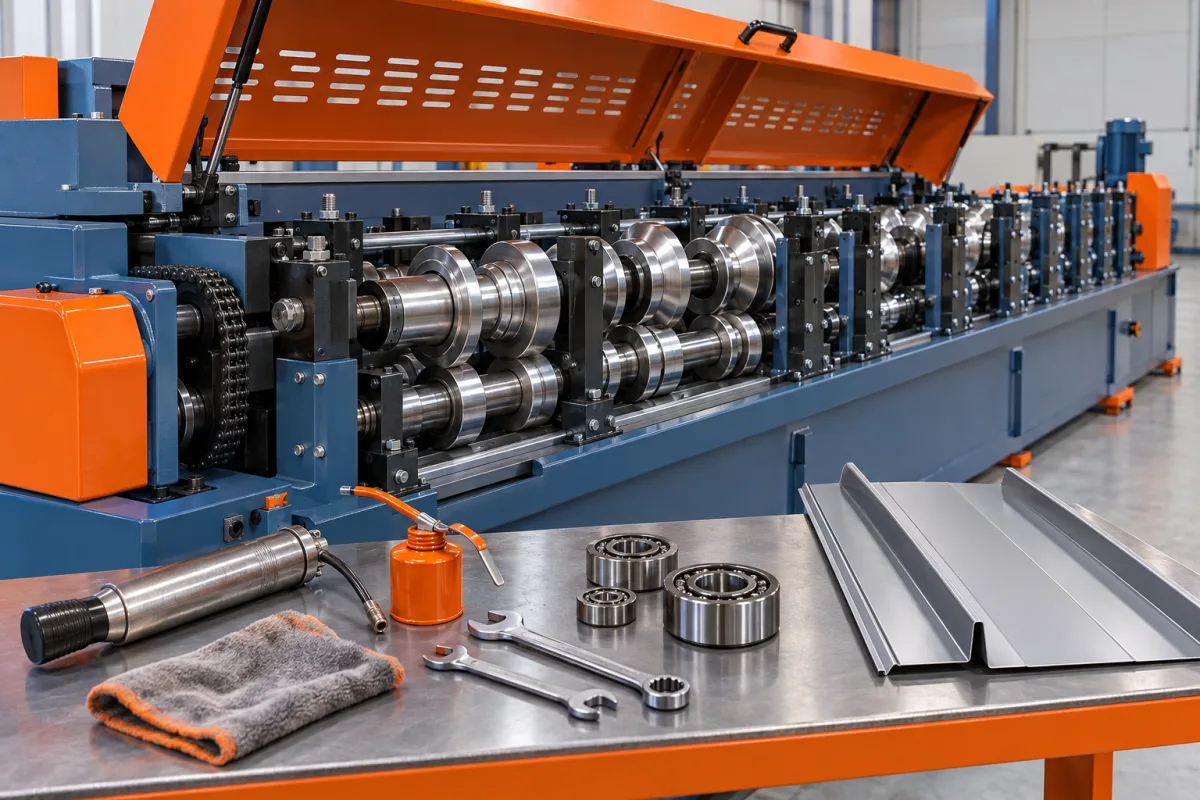
Standing seam maintenance should keep the panel former, its profile tools and any field seamer identifiable as separate but related assets. Each has its own service requirements, while the final joint depends on their compatibility. A practical plan links equipment condition to an accepted open panel and a representative assembled seam.
Maintain each machine under its own instructions
Use the manufacturer's procedures for isolation, lubrication, inspection and replacement. The panel former and field seamer should not share an assumed universal service schedule. Their duty, components and operating environments can differ.
Assign work to qualified personnel and identify the exact machine and configuration in the record. Portable equipment may move between crews or sites, making clear asset identification particularly important. A note that the seamer was checked is not useful if several units are in service.
Separate operating observations from maintenance access
Operators should report unusual noise, alarms, repeated stops or changes in panel behavior from permitted positions. Inspection and cleaning near moving rolls or other hazardous areas require the approved shutdown and isolation procedure. Slow speed does not make hands-on cleaning safe.
Define how equipment is removed from service when protective devices or other critical conditions are defective. Project schedules should not encourage bypassing safeguards. The responsible team should control investigation and return to operation.
Check coil support and entry references
Inspect loading and payoff equipment according to its documentation and intended coil envelope. Record abnormal findings that could affect the material path. Keep entry and exposed-face references clear so a move between sites does not lead to an undocumented setup.
Review the portable layout against the equipment's requirements before production. Transport and repositioning can change the surrounding support and access arrangements even when the machine itself has not been modified. The operating checklist should distinguish site preparation from internal maintenance.
Preserve profile-tool identity and condition
Standing seam tools control functional hooks and returns. Replacement or service should retain the correct profile revision and component identity. Similar nominal seam heights do not make tool parts interchangeable.
Record what was changed and which product checks are needed afterward. A tool service affecting one edge should lead to verification of the complete joint, not only that local dimension. The opposite edge and mating clip remain part of the acceptance relationship.
Inspect contact surfaces through approved procedures
Contamination or damaged contact surfaces can mark the finish or affect forming. Clean and inspect only by the equipment's authorized method. Record recurring conditions so the team can investigate their source instead of repeatedly treating the same symptom.
Include the panel's downstream support path. A correctly formed seam can be damaged after leaving the mill. Maintenance responsibility should cover the relevant takeoff equipment and protective surfaces, with clear ownership when they are supplied separately.
Keep cutting components matched to the seam
Cutting and support parts must suit the approved section. After service or profile change, verify their identity and inspect complete panel ends. A central sample cannot demonstrate that the edge remains usable where installation begins.
Record length and end-shape results separately. A successful cut cycle does not by itself prove acceptable seam geometry. Use representative material and lengths when releasing the route after work that could affect these features.
Maintain the field seamer as a distinct asset
Where the roof system uses mechanical closure, keep the seamer's service and setup records separate from the panel former. Confirm compatibility with the exact panel system before use. Follow its instructions for inspection, adjustment and replacement through qualified personnel.
Do not use seamer maintenance as an assumed remedy for an incorrect open panel. Inspect the input section first when investigating a closure issue. Likewise, an accepted panel does not remove the need to confirm the closing equipment's condition.
Protect references during transport and storage
Use the specified transport and storage arrangements for equipment, tools and accessories. Identify tool sets and mating-component references so parts from different profiles are not mixed. Record damage found after movement before starting a new production run.
Keep documentation and approved configuration backups accessible to the crew through the supplier's recommended process. A portable operation should not depend on a single person's memory for profile recovery or spare-part identification.
Release maintenance through open and closed samples
Choose checks proportionate to the service work while retaining the normal quality-release process. Measure the pan and both edges, inspect cut ends and finish, then assemble the joint using the specified attachments and closing method.
- Confirm machine, profile and material identity.
- Verify relevant post-service equipment checks.
- Produce representative identified panels.
- Inspect open geometry and the handling result.
- Assemble and inspect the specified seam.
- Record release and any unresolved restrictions.
Use service history to improve readiness
Link recurring fit, surface or end-damage problems with the maintenance history and material records. A pattern can guide investigation, but verify the cause before changing the plan. Replacing the same component repeatedly may indicate a broader issue requiring specialist review.
Stock spares using verified part numbers for the actual tool and seamer configurations. Review the list when adding a new profile. An obsolete component that looks similar is not a reliable substitute during a time-sensitive site job.
Frequently asked maintenance questions
Can the former and seamer use one combined service interval?
Only where their own documentation supports the relevant tasks. They are different assets with different requirements. Coordinate their records without inventing a universal interval.
Why assemble a joint after servicing one forming edge?
The edge works with its opposite side and the attachment. A local measurement may miss an assembly effect. A representative joint check verifies recovered compatibility.
Does moving a portable machine require another product check?
Follow the maker's setup and release requirements. The new layout and handling route can differ, so a representative first-off check provides useful evidence before committing a full order.
What should a crew carry for technical recovery?
Accessible equipment instructions, verified profile references, required inspection tools and the approved spare parts relevant to its work. The exact kit should follow the supplier's requirements and the operation's documented service experience.
Continue your research
- Standing Seam Roll Forming Machines
- Standing Seam Roll Forming Machine
- Snap Lock Standing Seam Machine
- 25mm Snap Lock Standing Seam Machine
- 38mm Snap Lock Standing Seam Machine
- 1 Inch Mechanical Lock Standing Seam Machine
- How Standing seam roll forming machine Works
- How To Choose a Standing seam roll forming machine
- Standing seam roll forming machine Price: What Affects the Cost?