
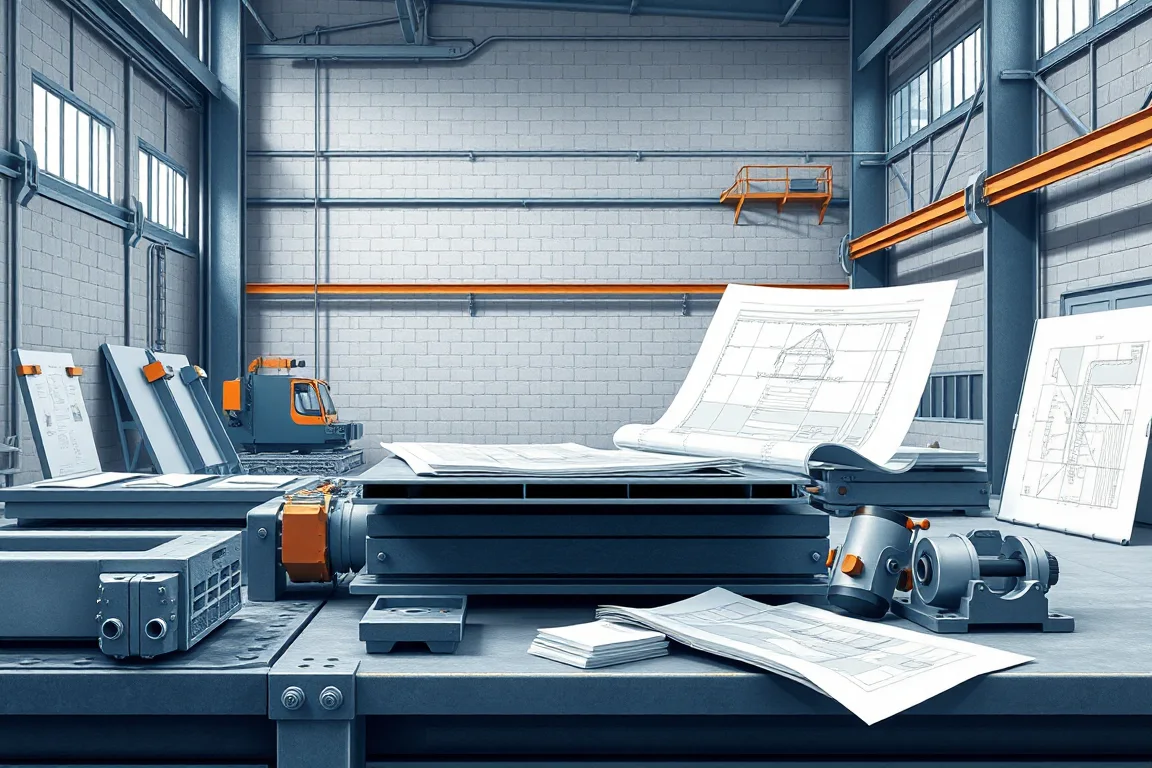
A scaffolding roll forming machine price is not a single number that can be attached to a model name. It is the sum of a defined production scope: material feeding, punching or embossing, roll forming, cutoff, end fitting, joining, inspection and the utilities and handling that connect them. Quotes vary because suppliers price different scopes, not necessarily because one machine is fundamentally more expensive than another. The sensible approach is to obtain a comparable scope and calculate the cost per accepted scaffold plank, including end attachments and verified walking surfaces, rather than comparing headline equipment figures.
Why no reliable list price exists for these machines
Scaffolding plank production sits between standard roll forming and fabricated assembly. The profile carries ribs, an anti-slip pattern, hooks or end plates and support interfaces. A buyer may specify base metal thickness and grade, finish and joining procedure. Each of those variables changes tooling, stations, drives, cutoff design and downstream equipment. Because the purchased system is built around a drawing, a price without that drawing is only an indication of scope, not a comparable offer. Suppliers may quote a forming line alone, while the buyer assumes end-fitting and joining equipment are included.
How a scaffolding plank production line is sequenced
A practical sequence begins with decoiling and feeding, then punch or emboss operations for hooks, ribs and anti-slip features. The strip or pre-cut blank enters the roll forming section, where stations progressively create the plank or channel geometry. A cutoff separates the formed length. From there, end plates, hooks and support interfaces may be attached using separate joining equipment and fixtures. Inspection and any secondary operations follow. Interfaces matter: punching must be coordinated with the forming sequence so hole positions and embossed features remain aligned after bending. A cutoff that is not profile-supported can distort the end, which then affects joining.
Documenting the purchased scope before requesting a price
A useful quote separates engineering and tooling, machine equipment, auxiliary handling, transport, installation, utilities, training and acceptance. Engineering and tooling cover the drawing review, station layout, punch and emboss tooling and any joining fixtures. Machine equipment is the roll former, punching or embossing unit, cutoff and controls. Auxiliary handling includes decoiler, run-out table, stacking or transfer equipment. Transport, installation, site utilities, operator training and acceptance testing are often priced separately. When these categories are merged into one figure, neither buyer nor supplier can tell what has been included.
Anti-slip punching, embossing and hook forming
Anti-slip features may be produced by punching, embossing or a combination, and they should be coordinated with the forming sequence. If the pattern is formed before the plank ribs are bent, the tooling must be designed so the pattern remains effective after forming. Hooks and end plates may need separate manufacturing and joining equipment. A supplier quoting only a plank former may be excluding the operations that make the plank a usable scaffold component. Clarify whether hook forming is integrated into the line or performed on separate equipment, and who provides the joining fixtures.
End-fitting equipment, joining fixtures and verification
End fittings convert a formed section into a scaffold component. Joining methods might include welding, riveting or mechanical fastening, each with its own fixtures, handling and inspection needs. Verification of the finished component includes the walking surface, ribs and attachment interfaces. Load and slip requirements apply to the finished component and system; they cannot be inferred from a formed sample alone. A quote should state whether joining equipment, fixtures and inspection provisions are included, and whether acceptance is based on dimensional checks, surface inspection or component-level verification.
Output: accepted planks per shift, not forming speed
No verified model rating is available because output depends on the actual profile, material and joining method. A high forming speed does not help if joining and inspection are the production constraint. The relevant number is accepted output per shift: finished, inspected planks including end attachments. To estimate this, map the cycle time of each operation, including punching, forming, cutoff, joining, inspection and handling. The slowest step governs. If joining takes longer than forming, adding forming speed increases work-in-progress rather than finished output.
Cost per accepted output versus headline equipment price
The lowest equipment price is not necessarily the lowest cost per accepted part. Changeover time, scrap during setup, handling requirements and secondary operations all affect total cost. A line with integrated punching and joining may carry a higher initial price but produce fewer rejects and require less labor. A cheaper forming line may need additional fixtures, manual joining and extra inspection, which appear as operating cost. Without a defined scope, a numerical price range can obscure more than it explains. RollVanta does not publish invented equipment prices.
Power, utilities and site readiness
Installed power requires a confirmed equipment schedule. The buyer should state voltage, frequency and phase, and the supplier should provide a schedule showing the connected load for each unit. Compressed air, hydraulics, extraction or cooling may also be required. Site readiness includes floor loading, foundation or anchoring provisions, and clearance for material handling. These items are often excluded from an equipment price but are necessary for installation and acceptance.
Transport, installation, training and acceptance
Transport cost depends on shipping volume and destination. Installation may require supplier supervision, and training may be priced per day or included in commissioning. Acceptance criteria should be agreed before shipment: which dimensions, surface features and attachment interfaces are checked, using what method, and at what stage. If acceptance is not defined, the buyer may discover that a formed sample meets a visual check but not the finished component requirements.
How to compare alternative quotes
Compare quotes on scope, not only price. Determine whether each offer includes engineering, tooling, punching or embossing, cutoff, end-fitting equipment, joining fixtures, handling, installation, utilities, training and acceptance. For each excluded item, estimate the cost and time to source it separately. Consider changeover scrap and handling requirements, not only purchase price. A quote that appears lower may exclude operations that are essential to producing an accepted scaffold plank. A quote that appears higher may include integration that reduces labor and rejects.
Application-specific limits: Ringlock and cuplock connections
Ringlock and cuplock refer to connection systems, not proof that a ledger or plank is made on a sheet-profile roll former. Confirm whether the component is tube or open-section construction. Scaffolding planks may be formed from sheet or produced from tube and plate, and the equipment differs. A roll forming machine for plank ribs may not be suitable for producing tubular ledgers. Clarify the product family before comparing machine prices.
Practical checklist for a comparable quote
- One drawing and scope checklist used for every quote
- Base metal thickness and grade stated by the buyer
- Punch, emboss and hook operations listed separately
- Cutoff type and end quality requirements
- End-fitting and joining equipment included or excluded
- Handling, stacking and transfer equipment
- Site utilities and installed power schedule
- Transport, installation and training
- Acceptance method and stage
- Excluded tools, utilities and secondary operations recorded
FAQ: specific questions about scaffolding roll forming machine price
Does a higher forming speed reduce the cost per plank?
Not necessarily. If joining, inspection or handling cannot keep pace, faster forming creates work-in-progress rather than finished planks. The cost per accepted output is governed by the slowest operation in the sequence, including end attachment and verification.
Are anti-slip punching and forming included in one machine price?
They may be quoted as separate units or integrated. The buyer should confirm whether the punch or emboss unit is included, whether it is synchronized with the forming line, and whether the tooling is designed for the pattern and material. A price for a forming machine alone may exclude the punching equipment.
Can a scaffold plank former also produce ledgers or tubes?
Generally no. Plank formers are designed for open sheet profiles. Ledgers and tubes may require different equipment. Ringlock and cuplock describe connection systems, not the production method. Confirm the component construction before comparing machines.
What does the lowest equipment price usually exclude?
Common exclusions include engineering and tooling, end-fitting and joining equipment, handling systems, installation, utilities, training and acceptance testing. The buyer should record every exclusion and estimate the cost to complete the scope separately.
How should output be specified in a quote?
Output should be stated as accepted planks per shift, including end attachments and inspection. This requires defining the profile, material and joining method. Forming speed alone is not a reliable indicator of finished production.
Why do prices vary so much between suppliers?
Variation usually reflects differences in scope, not just profit margin. One supplier may include integrated punching and joining; another may quote only the roll former. The only reliable comparison is a scope-matched quote with all inclusions and exclusions listed.
Making a decision without a reliable public price list
Because no verified public price list exists for these application-specific lines, the practical decision is made through scope definition and cost per accepted output. Prepare one drawing and scope checklist for every supplier. Ask each to state what is included and what is excluded. Calculate the total cost of ownership for the first year, including installation, training, expected scrap and any secondary operations. A machine that integrates more of the production sequence may carry a higher initial price but reduce labor and handling. A machine that appears cheaper may require additional equipment and labor that erase the difference. The goal is not the lowest quote but the most predictable path to accepted scaffold planks.
Continue your research
- Scaffolding Roll Forming Machines
- Scaffold Plank Roll Forming Machine
- Scaffolding Deck Roll Forming Machine
- Ringlock Scaffold Ledger Roll Forming Machine
- Cuplock Scaffold Ledger Roll Forming Machine
- Scaffold Frame Profile Roll Forming Machine
- How Scaffolding roll forming machine Works
- How To Choose a Scaffolding roll forming machine
- Materials and Thickness for Scaffolding roll forming machine