
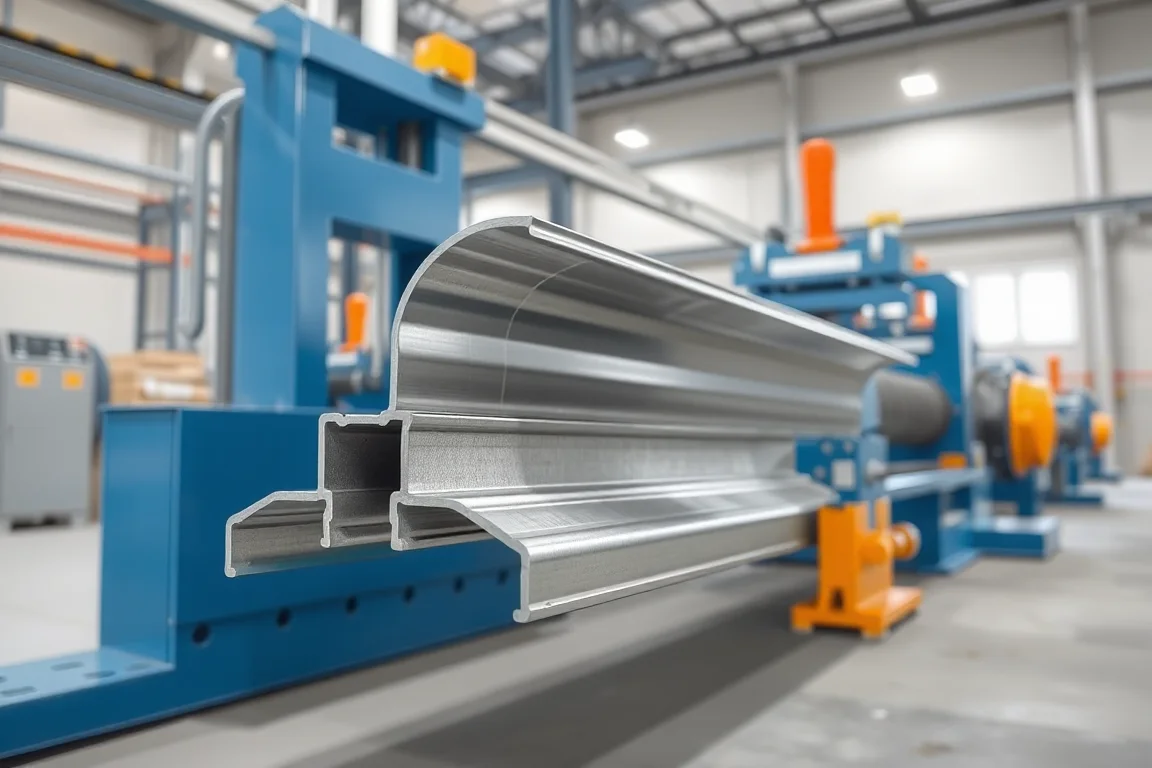
What This Machine Actually Produces
A cuplock scaffold ledger roll forming machine is often mischaracterised as a plank former. In practice, the cuplock ledger is a structural member defined by its tube and its forged or fabricated end connections. The roll forming machine’s role depends on the approved component design. If the ledger is a tubular member with welded or forged blade ends, a roll forming line may produce only ancillary components or may not be the primary production route at all. If the design uses a cold-formed channel or proprietary section functioning as a ledger, roll forming becomes central, but the end connection remains a separate assembly step. The equipment category is therefore a production route, not a finished-component specification. The starting point is always the approved scaffold-system drawing, which fixes the interface geometry, the material grade and the joining method.
Distinguishing Ledger Production from Plank and Toe Board Production
Scaffolding components share a family resemblance but serve different functions. A plank provides a walking surface and anti-slip features. A toe board acts as a containment edge. A ledger ties standards together and transfers load through its end connections. Roll forming suits sheet-based sections such as planks, toe boards and some frame profiles because it can integrate ribs, hooks and embossed patterns into a continuous strip. A conventional tubular ledger usually requires tube production, cutting and welded end fittings. Treating a plank former as a ledger line is a category error that leads to mismatched equipment scope. The neighbouring topics, including ringlock ledger roll forming and scaffold frame profile roll forming, each carry their own interface logic. The cuplock ledger’s defining feature is the cuplock end connection, not the longitudinal body alone.
Drawing and Material Inputs the Line Must Satisfy
The drawing defines the strip width, the formed section geometry, the position of any holes or embossments and the end-connection interface. Material grade, base-metal thickness, coating and joining procedure must be specified together, because a change in any one affects forming behaviour and assembly. The buyer specifies base-metal thickness and grade; the operating range requires supplier verification. A machine cannot be selected from a generic material label. Structural steel intended for a load-bearing scaffold member behaves differently from mild sheet in terms of springback, edge condition and tooling wear. If galvanising follows welding, the process plan must account for the full finished component, because hot-dip coating can distort thin sections and affect hole and thread fit. The line supplier needs the drawing, the material specification and the intended joining route as a single package.
Process Route: Punch, Emboss, Form, Cut, Join, Inspect
The process sequence typically runs punch or emboss, then plank or channel forming, then cutoff, then end fitting or joining, then inspection. Each stage constrains the next. Punching and embossing must be coordinated with the forming sequence so that hole positions remain accurate after bending and springback. A hole punched before forming can shift if the material stretches around a bend. The cutoff must be compatible with the formed profile, producing the required cut length with acceptable end quality. Any secondary operation, such as deburring or hole reaming, belongs in the written scope. End fitting and joining are separate from forming. Welding fixtures, jigs and inspection stations are part of the production line even when they are not roll forming equipment. A line that stops at cutoff has produced a formed section, not a finished cuplock ledger.
Assembly Boundaries and the End Connection
The cuplock end connection is the interface that joins the ledger to the standards. It may be a forged blade, a cast fitting, a fabricated plate assembly or another approved design. Its manufacture and joining process must be confirmed before the roll forming line is specified, because the connection determines the tube or channel geometry, the hole pattern and the required cut length. Assembly boundaries should be explicit in the quotation: does the supplier provide only the roll forming machine, or also the joining equipment, fixtures and gauges? A machine that forms the body but cannot accept the end connection in the same production flow creates a handling and alignment problem. The finished component is inspected as an assembly, not as a formed sample. Inspecting the connector positions and assembly fit using the intended system components is the only meaningful functional check at this stage.
Inspection Priorities for Ledger Components
Inspection should cover the formed section dimensions, the walking or bearing surfaces where applicable, any ribs or embossments, hole positions and the attachment interfaces. For a tubular ledger with end fittings, the critical checks are connector position, weld or joint quality and assembly fit with the intended cuplock standards. Load and slip requirements apply to the finished component and system; they cannot be inferred from a formed sample alone. This means a formed-section inspection plan is necessary but not sufficient. The production plan should include first-off inspection, a representative steady-production sample and agreed gauges. Joining procedures and finished-part checks belong in the same documented plan. Structural use must follow the scaffold system’s approved design.
Cutoff and Secondary Operations
The cutoff station must be selected for the specific profile, not for a generic section. Cut length accuracy, end squareness and burr condition affect downstream assembly. If the ledger body requires holes for the end connection, those holes may need to be punched before forming, drilled after cutoff or produced by another method. The cutoff choice interacts with the joining method: a welded end fitting may tolerate a different end condition than a mechanical fixing. Secondary operations such as threading, chamfering or coating preparation should be listed explicitly. A production line that omits these steps from the equipment scope will require manual workarounds that undermine output and consistency.
Alternatives to a Dedicated Roll Forming Line
For a tubular cuplock ledger, the conventional alternative is tube cutting and welded end fitting using standard tube mills or purchased tube. This route may be simpler and more widely available than a dedicated roll forming line, particularly for modest volumes. Another alternative is a general-purpose press brake or folding route for short runs, accepting lower consistency and higher labour. A dedicated roll forming line becomes attractive when the ledger body is a cold-formed section with repeatable features such as ribs or embossments, or when integration with punching and cutoff reduces handling. The comparison should weigh the finished component’s drawing, the annual volume, the joining method and the inspection burden. A roll forming machine is not automatically the right answer; it is one production route among several.
Output, Power and Quotation Scope
Output should be defined as accepted finished components per shift, using the actual profile and material, including end fittings and inspection. Forming speed alone is misleading if joining and inspection are the production constraint. The buyer states the required electrical supply, voltage, frequency and phase; installed power requires a confirmed equipment schedule rather than an assumption. The quotation should list the roll forming machine, punching or embossing stations, cutoff, joining equipment, fixtures, handling, gauges and any coating or secondary operations. A high forming rate does not help if the end-fitting station cannot keep pace. Setting the production target from the finished part backward is the practical way to size the line.
Practical Specification Checklist
- Approved scaffold-system drawing showing the ledger body and end connection
- Material grade, base-metal thickness and coating or finish requirement
- Joining procedure and whether welding, mechanical fixing or another method applies
- Punching or embossing features and their position relative to the forming sequence
- Cutoff requirements, including cut length, end quality and secondary operations
- End-fitting equipment, fixtures and assembly method
- Inspection plan covering formed section, connector position and assembly fit
- Agreed output based on finished inspected components per shift
- Electrical supply details and confirmed equipment schedule
- Written equipment scope compared with all secondary operations needed for a finished part
FAQ
Is a cuplock scaffold ledger roll forming machine the same as a plank roll forming machine?
No. A plank roll forming machine produces a walking surface with ribs or anti-slip patterns. A cuplock ledger is a structural member defined by its end connection to the standards. The ledger body may be tubular or cold-formed, but the cuplock interface and joining method distinguish it from a plank. Selecting a plank former for ledger production usually results in a mismatch between the formed section and the required end fitting.
Can a roll forming line produce the complete ledger including the cuplock ends?
It depends on the approved design. Roll forming can produce the body and any integral formed features, but the forged or fabricated end connection is typically a separate manufacturing and joining operation. The production plan must include that joining step, the fixtures and the inspection of the finished assembly. A roll forming machine alone rarely delivers a finished cuplock ledger.
What material information does the supplier need before quoting?
The supplier needs the material grade, base-metal thickness, coating or finish requirement and the joining procedure, together with the approved drawing. These inputs interact: a grade suitable for welding may behave differently in forming, and a coating applied after welding can affect fit. The buyer specifies thickness and grade, and the operating range requires supplier verification against the actual material.
How should output be specified for a cuplock ledger line?
Output should be stated as accepted finished components per shift, using the actual profile and material and including end fittings and inspection. Forming speed alone is not a reliable basis because joining, handling and inspection often constrain throughput. The production target should be derived from the slowest step in the finished-component flow, not from the nominal line speed of the roll former.
What should be inspected on a finished cuplock ledger?
Inspection covers the formed body dimensions, hole positions and any embossments, the connector positions and the assembly fit with the intended cuplock standards. Weld or joint quality should be checked according to the approved joining procedure. Load and slip performance applies to the finished component and system, so it cannot be inferred from a formed sample alone. Structural use must follow the scaffold system’s approved design.
When is a dedicated roll forming line the right choice?
A dedicated line is worth considering when the ledger body is a repeatable cold-formed section, when punching or embossing is integrated into the strip, and when the finished-component volume justifies the tooling and setup. For modest volumes or tubular ledgers with welded ends, tube cutting and conventional joining may be simpler. The decision should follow the drawing, the volume and the inspection burden, not the machine category alone.

Continue your research
- Scaffolding Roll Forming Machines
- Scaffold Plank Roll Forming Machine
- Scaffolding Deck Roll Forming Machine
- Ringlock Scaffold Ledger Roll Forming Machine
- Scaffold Frame Profile Roll Forming Machine
- Scaffold Toe Board Roll Forming Machine
- How Scaffolding roll forming machine Works
- How To Choose a Scaffolding roll forming machine
- Scaffolding roll forming machine Price: What Affects the Cost?
Configuration & specification inputs
Match the configuration to your section drawing, material and production requirements.
| Parameter | Requirement / confirmation needed |
|---|---|
| Profile geometry | Cuplock ledger production depends on its tubular member and end connections. Confirm the approved construction and joining process; a plank roll former is not a substitute. |
| Material | Specified structural steel with the required finish and joining procedure |
| Thickness & grade | Buyer to specify base-metal thickness and grade; operating range requires supplier verification. |
| Process route | Punch/emboss → plank or channel forming → cutoff → end fitting/joining → inspection |
| Cutting | Confirm profile-supported cutoff, cut lengths, end quality and any secondary operations. |
| Output | Define accepted output per shift with the actual profile and material. |
| Electrical supply | Buyer to state voltage / frequency / phase. Installed power requires a confirmed equipment schedule. |
| Acceptance | Inspect connector positions and the assembly fit using the intended system components. Keep joining procedures and finished-part checks in the production plan. Structural use must follow the scaffold system's approved design. |