
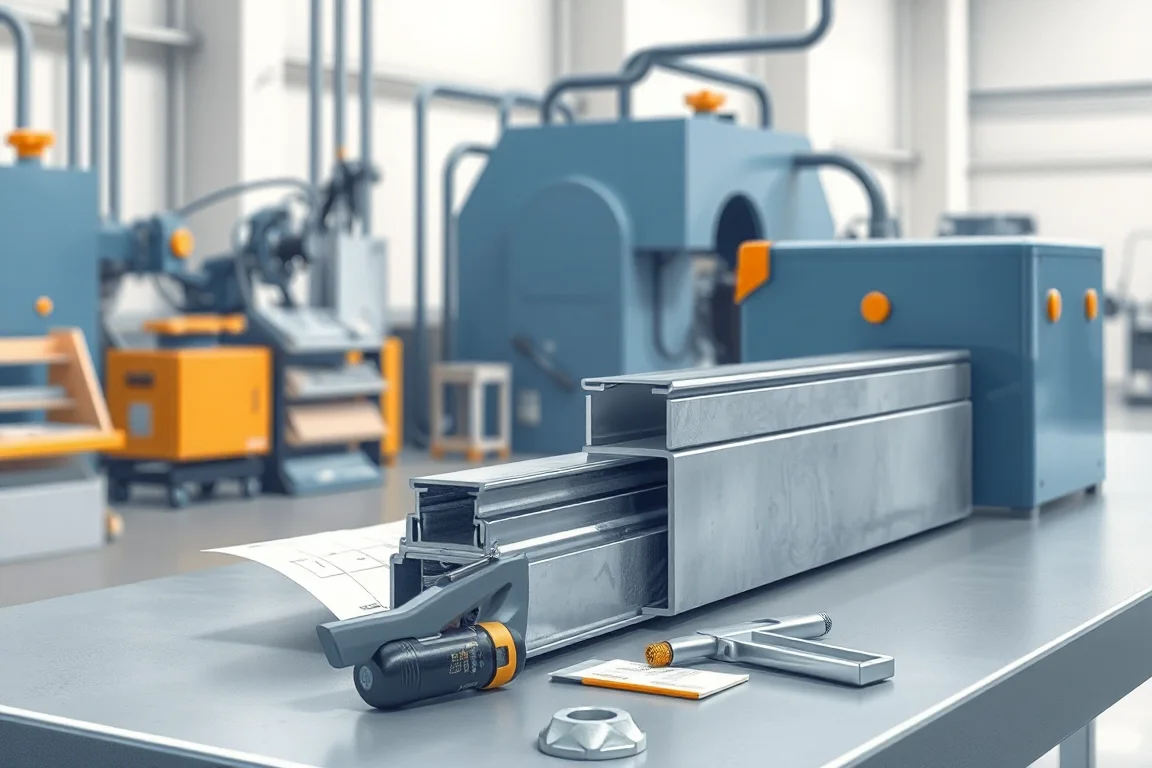
Choose a custom profile roll forming machine by matching a defined part family to a complete production route. The decision is not simply between a small and a large mill. Geometry, material, feature operations, order mix and tooling changes determine which arrangement is practical and which proposal actually covers the component you intend to sell.
Decide which parts belong in the project
List the required part numbers and drawing revisions. Group variants by geometry, material and secondary features rather than visual resemblance alone. A family with shared overall width may still need different returns, hole patterns or cutoff support.
Separate launch requirements from possible future products. Future flexibility is useful only when its meaning is explicit. Ask which later profiles can use adjustments, which need replacement tooling and which are outside the proposed machine's reviewed scope.
Check that the manufacturing route fits the part
Identify the continuous section and the local features along its length. Discuss whether forming from strip is appropriate for the intended geometry and order volume, and which operations are required afterward. Do not force a component into a roll-forming description merely because it resembles a channel.
Compare alternatives where the route remains uncertain. The useful question is how to deliver accepted parts economically and consistently, not how to maximize the number of operations labeled as roll forming. Keep the comparison tied to the same drawing and quantity assumptions.
Create a combined material and geometry matrix
Pair each section with its intended grade or alloy, thickness and finish. Include important strip-width and coil-format requirements. This matrix prevents a proposal from appearing to cover the project through separate maximum values that have never been demonstrated together.
Select representative trial cases from the matrix. Include the normal workload and the combinations that create distinctive difficulties, such as a narrow return, demanding surface or feature close to a bend. Ask the supplier to explain the evidence for each boundary case.
Choose dedicated or shared tooling deliberately
A dedicated arrangement may suit stable, repeated production of one section. Shared equipment can reduce duplicated machinery but adds changeover and tooling-management work. Compare the actual batch pattern rather than assuming flexibility is always the better investment.
Ask for a tool-change matrix showing forming, feature-making and cutoff changes for each transition. Include tool storage, handling, setup references and first-good-part inspection. A quick main-tool exchange does not guarantee a short complete production change.
Define how features and cut ends will be produced
Review holes, slots, notches and end preparation individually. Confirm their final datums, tool access and sequence relative to forming. Require the proposal to identify the equipment needed for the saleable part, including any separate station.
Cutoff choice should be evaluated through required lengths and end quality, not just a headline cycle rate. Include short parts, long parts and any ends that must fit a joining or assembly fixture. The trial should reveal local deformation that is invisible in a continuous sample.
Compare accepted output under the real order mix
Use quantities, lengths, features and changeovers representative of expected work. Record the boundary from material entry to accepted output. A profile that forms quickly may still be constrained by punching, cutting, inspection or unloading.
For example, compare a day of repeated small batches with a day of one uninterrupted profile. The same machinery can produce different shift totals under those schedules. Keep both scenarios visible if both occur in the business.
Check the installation and operating interfaces
Review the full layout, including coil loading, tool movement, supports, finished-part removal and service access. Obtain the actual utility requirements from the agreed equipment scope. A forming-mill footprint alone does not describe the space needed for the production route.
Identify who supplies foundations or site preparation where required, lifting arrangements, guards and integration work. Use the responsible equipment and site specialists for safety-related decisions. A clear responsibility list prevents installation assumptions from becoming late project surprises.
Agree measurable acceptance before ordering
Define the characteristics, measurement methods and trial cases that establish success. Include geometry, features, cut ends, finish and the required assembly fit. Clarify how startup, changeover and steady production will be assessed.
Retain approved samples with their drawing, material and setup identities. If a trial uses a substitute material or simplified part, record exactly what remains unproven. Avoid treating an attractive sample as evidence for every proposed product combination.
Evaluate support through concrete deliverables
Ask what setup records, drawings, service instructions and replacement-tool information are supplied. Identify training scope and the process for resolving a later tooling or material issue. Dependence on undocumented adjustments makes repeatable production harder to maintain.
Consider consumables, spares and tool repair as part of the operating plan. Compare what is included and what must be purchased separately. Service promises are more useful when connected to specific deliverables and responsibilities.
Make the final comparison traceable
Build a comparison sheet with one row for each part or production requirement. Record whether each supplier has included, excluded or left it unresolved. This exposes differences that disappear when proposals are summarized only by machine length, power or price.
Resolve critical gaps before selecting the line. Where uncertainty genuinely requires development trials, describe the trial, decision point and scope of possible changes. That creates a manageable custom-engineering project rather than a purchase based on broad assumptions.
Frequently asked selection questions
Is adjustable equipment always preferable?
No. Its value depends on the approved part range and change frequency. Compare complete changeover work and output with a dedicated arrangement for the actual order mix.
Can a similar sample replace a trial of my part?
It can inform the discussion, but differences in geometry, material and features remain to be evaluated. Keep those differences explicit in the acceptance plan.
What makes quotations difficult to compare?
Different boundaries for tooling, secondary operations, handling, installation and inspection. Normalize the scope around the same accepted finished component before comparing prices.
What should remain unresolved rather than guessed?
Unconfirmed material combinations, difficult features and production performance that require trials. Record the question, responsible party and validation step instead of converting uncertainty into an unsupported specification.
Continue your research
- Custom & Industrial Profile Roll Forming Machines
- Custom Profile Roll Forming Machine
- Hat Channel Roll Forming Machine
- C Channel Production Line
- Z Channel Production Line
- Electrical Cabinet Frame Roll Forming Machine
- How Custom profile roll forming machine Works
- Custom profile roll forming machine Price: What Affects the Cost?
- Materials and Thickness for Custom profile roll forming machine