
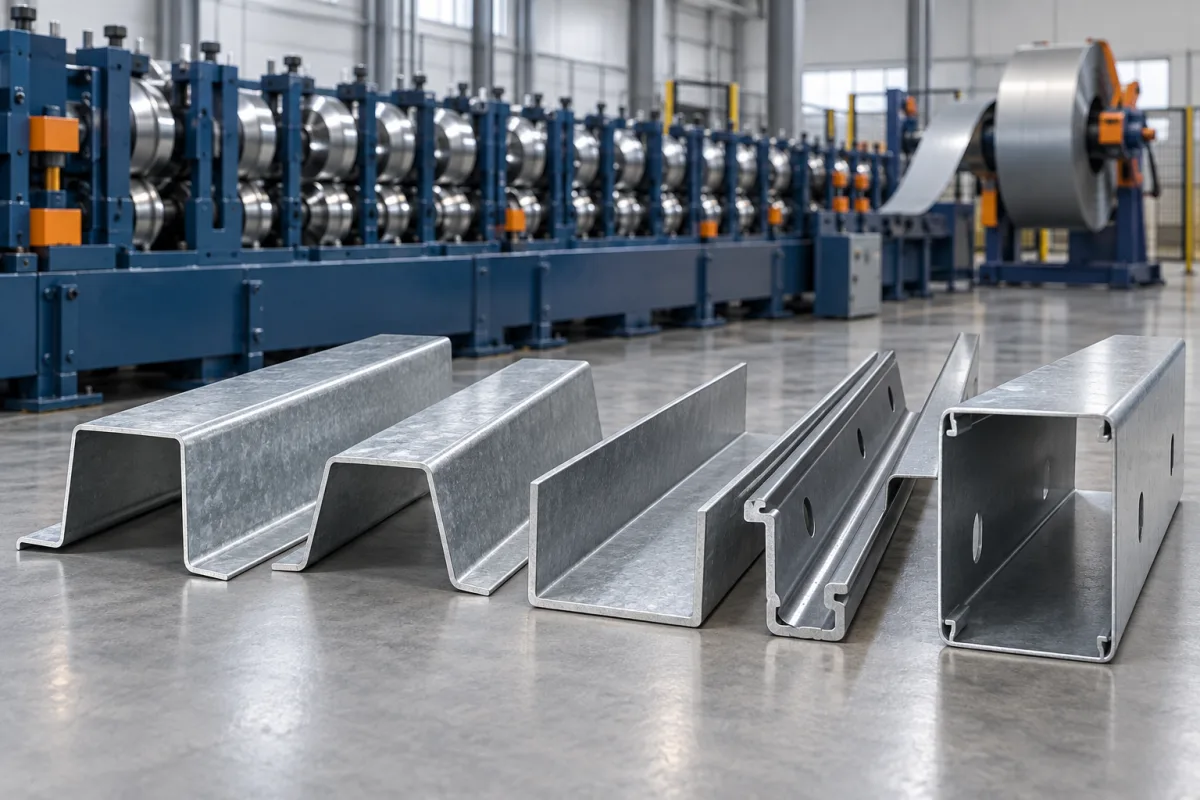
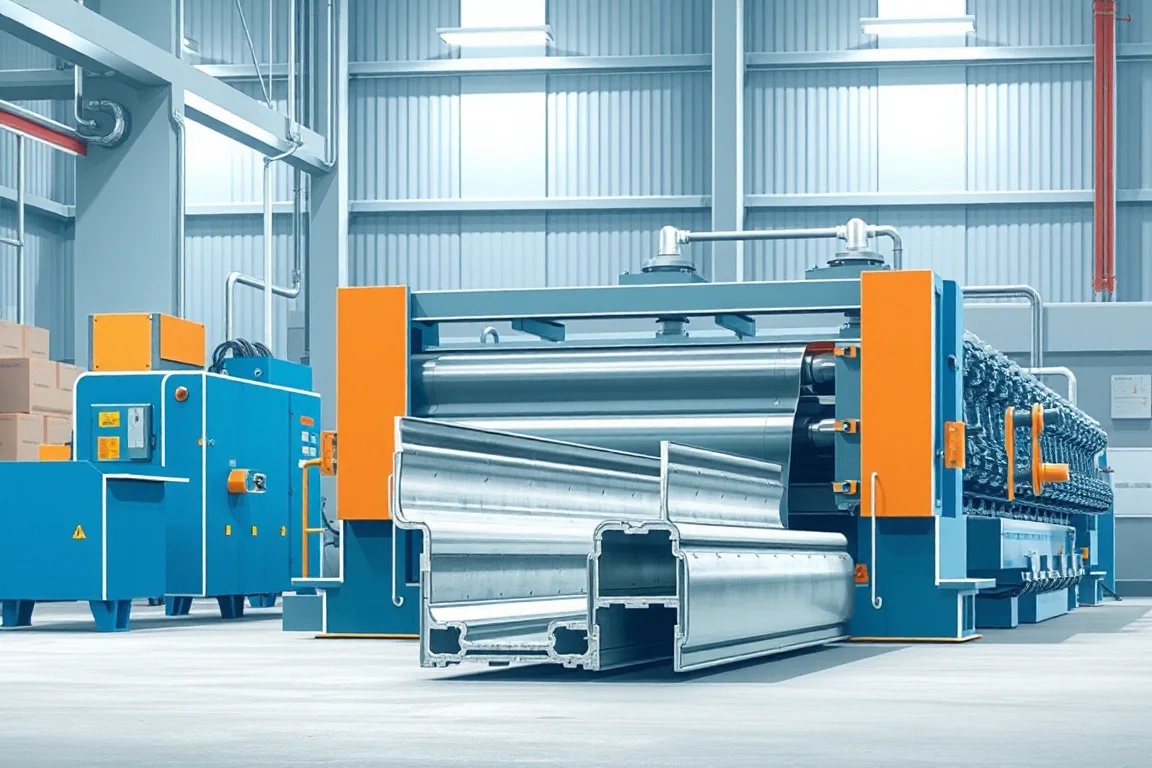
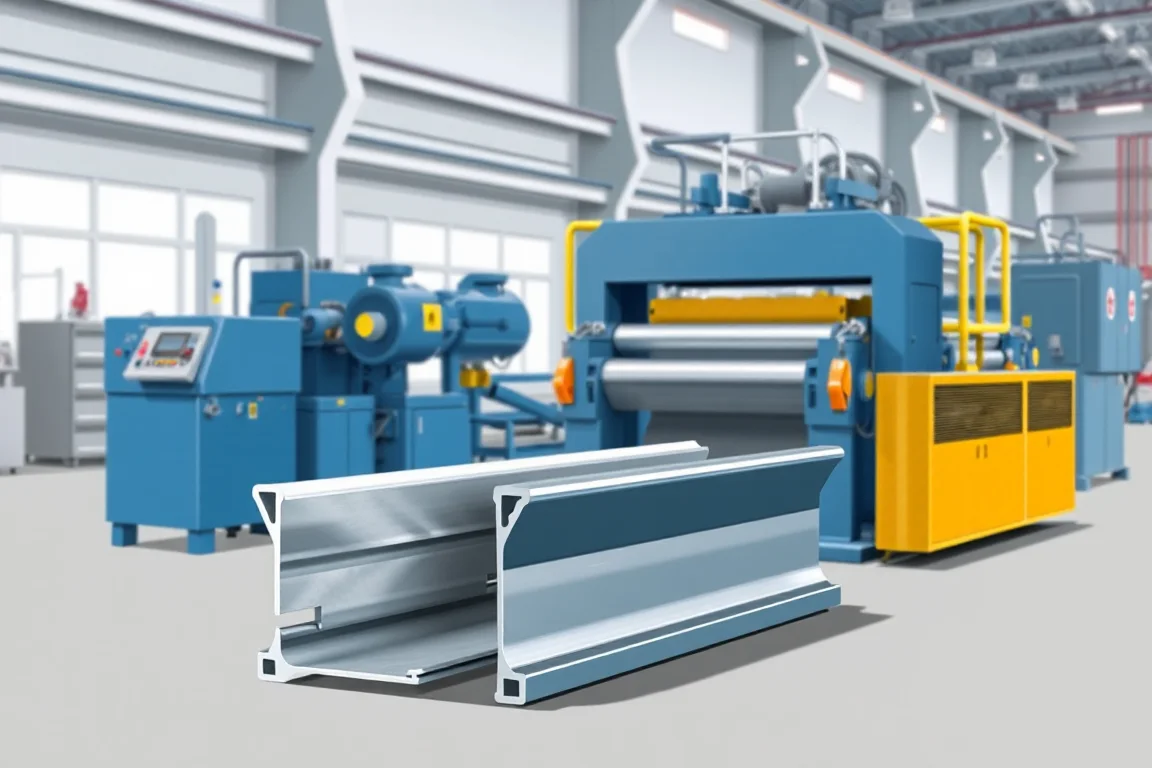
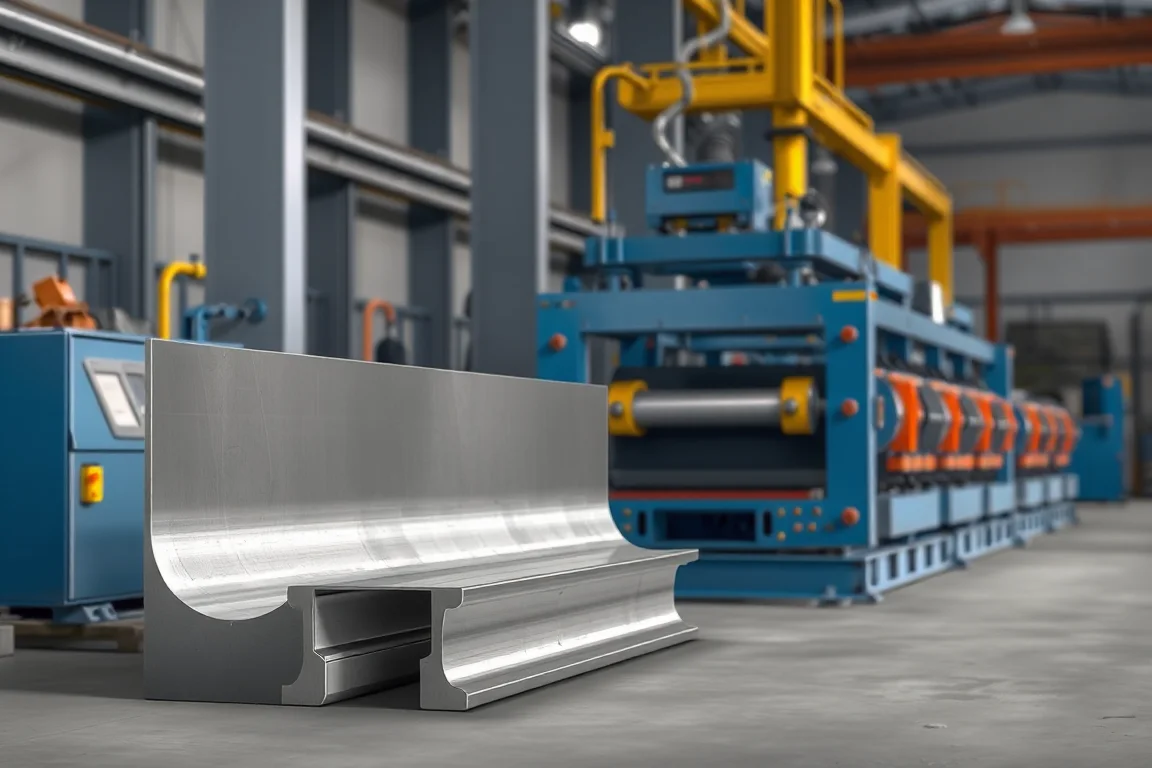
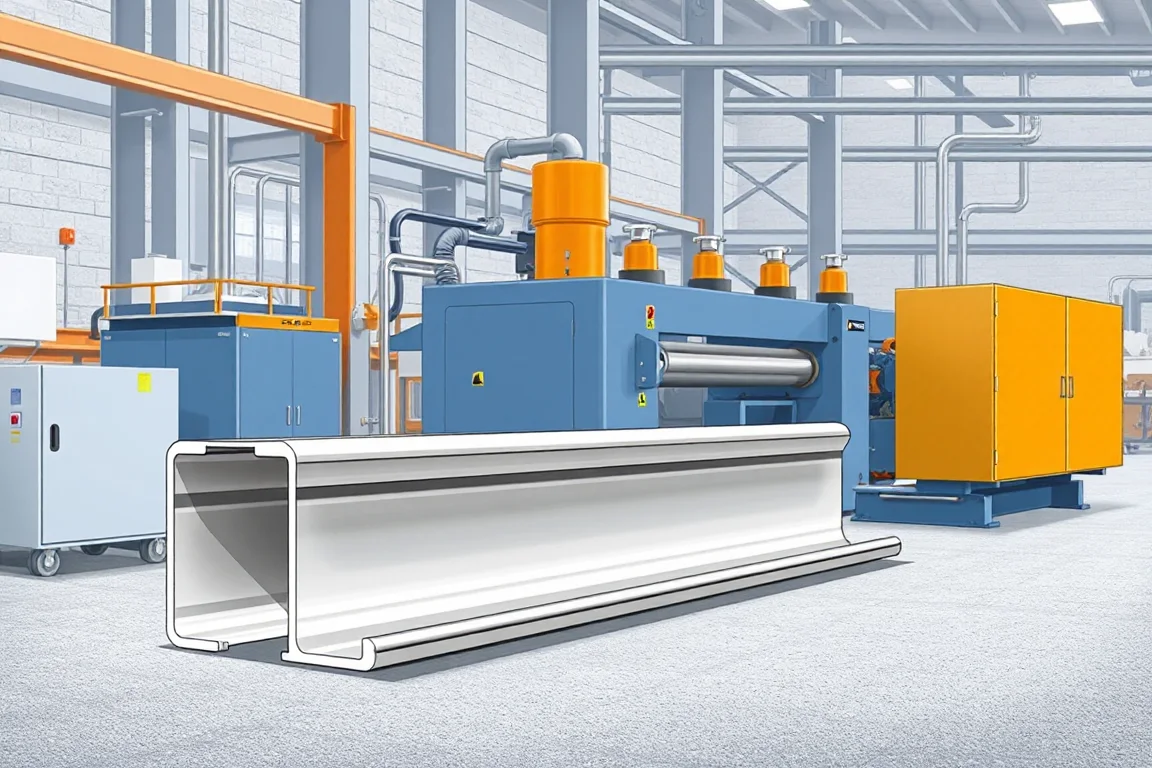
Custom profile roll forming is a process choice for a defined metal component, not a promise that every shape can be made on one machine. A repeated cross-section, suitable material and a production pattern that justifies dedicated tooling are useful starting points. Hat, omega, U and other industrial sections still need complete drawings and functional assembly references.
Start with function and geometry
Identify what the profile connects to, supports, encloses or guides. Mark the surfaces and features that determine that function. A sketch can communicate the idea, but tooling approval needs controlled dimensions, bend radii, material and inspection references.
- Custom Profile: assess process suitability and the full development route.
- Hat Channel: define bearing feet, central web and attachment interfaces.
- Omega Profile: resolve the actual returns and mating geometry behind the name.
- U Channel: specify inside clearance, leg dimensions and end or hole requirements.
Compare roll forming with alternative processes
Consider volume, batch size, length and how often the section changes. Repeated long runs may justify dedicated roll tooling, while frequently changing short batches can favor another route. Press braking, stamping, extrusion or fabrication may be relevant depending on the actual product.
Changing geometry along the length, closed features or special ends may introduce secondary operations. Identify them early rather than treating the main former as the complete solution for an undefined part.
Review bend development and tool access
Ask how the section develops progressively from strip and how tools reach the required features. Internal returns or re-entrant areas may need particular attention. Station count alone does not explain feasibility or final quality.
Distinguish dimensions controlled by roll geometry, strip preparation, adjustments and later processes. A proposed width range does not necessarily make every return or internal clearance independently adjustable. Use a complete variant matrix.
Pair material with the required result
Specify grade or alloy, thickness, surface condition and incoming variation. Review bend requirements and the exposed finish together. A trial in another material may not represent springback, marking or the final mating interface.
Define the condition in which the component is inspected. Free-state geometry can differ from a part forced into a fixture. The measurement method should reflect the functional requirement and be reproducible between the buyer and supplier.
Approve the finished part and its secondary work
Inspect holes, ends, joining and other operations required before the profile can be used. Trial the relevant mating components. A correct central section is not sufficient when a downstream feature determines assembly.
Keep setup references and approved samples for recurring variants. Demonstrate important changes through the first accepted complete part, including the required inspection and any secondary-tool changes. This provides a practical measure of flexibility.
Build an engineering and production scope
Separate development, roll tools, punch and cutting tools, fixtures and future variants in the quotation. Define which feasibility work is required before final tooling approval. A low initial scope can leave substantial engineering or fabrication obligations unpriced.
Prepare the functional drawing, material combinations, annual and batch quantities, lengths, finish and assembly references. The detailed pages below help convert a broad custom-section idea into a process decision and an acceptance target that can be demonstrated.
Continue your research
- Custom Profile Roll Forming Machine
- Hat Channel Roll Forming Machine
- Omega Profile Roll Forming Machine
- U Channel Roll Forming Machine
- C Channel Production Line
- Z Channel Production Line
- Electrical Cabinet Frame Roll Forming Machine
- Elevator Profile Roll Forming Machine
- How Custom profile roll forming machine Works
- How To Choose a Custom profile roll forming machine
- Custom profile roll forming machine Price: What Affects the Cost?
- Materials and Thickness for Custom profile roll forming machine
- Production Speed and Output of Custom profile roll forming machine
- Roller, Tooling and Forming Design for Custom profile roll forming machine
- Common Defects and Troubleshooting for Custom profile roll forming machine