
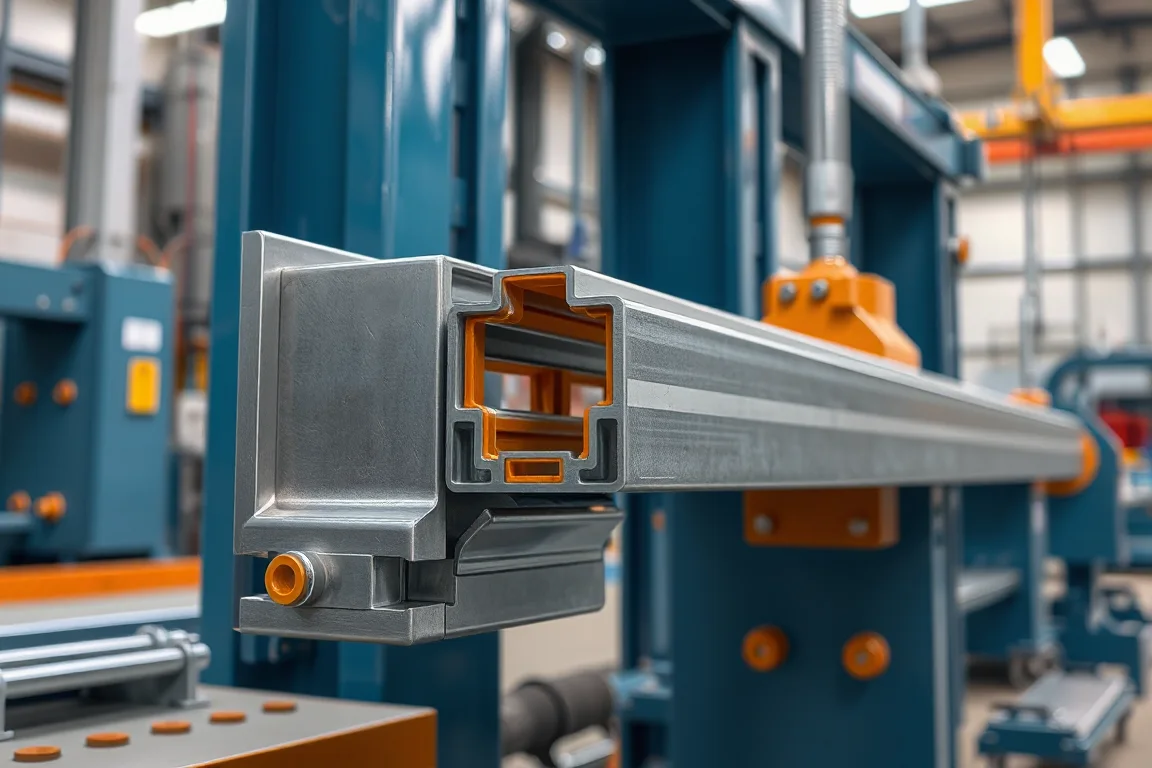
Maintenance of a solar roll forming machine is not a single schedule; it is a set of conditions that keep the finished rail or post section matching the drawing. The work that matters most is the work that protects the mounting interfaces: the slot punches, the lip-forming tools, the cutoff, and the reference datums that tie the section to the hardware it carries. A checklist is useful only when it is built around the actual machine manuals and the actual profile, and when every adjustment or replacement is followed by a first-piece check.
What maintenance has to protect on a solar mounting section
A solar rail or post is a structural member with several functional features that are not obvious from the outside. The slot pattern locates clamps and connection hardware. The lips and returns provide stiffness and often give a surface for clamp engagement. The connection datums, such as a hole edge or a formed shoulder, determine how the module or bracket sits. If any of those features drift, the section may still look acceptable while no longer fitting the hardware. Maintenance is therefore about preserving geometry at the contact and reference points, not just keeping the line running.
This is why a generic maintenance article cannot substitute for the equipment maker's intervals, isolation procedure or lubrication specification. Those documents reflect the actual drive train, bearing arrangement, punch design and control system. The checklist below is a framework for organizing that work, not a replacement for it.
Leveling, punching, forming and cutoff: how the sequence shapes maintenance
In a typical solar roll forming line for coated structural steel, the sequence runs from leveling through connection punching, channel forming, cutoff and mounting-interface inspection. Each stage has an interface with the next, and maintenance attention has to respect those interfaces.
Leveling sets the incoming strip condition before forming. If leveling is neglected, the variation appears later as inconsistent section straightness that no amount of forming-roll adjustment can fully correct. Punching is where slot position and hole quality are established; the punch and die condition, the strip location and the tooling alignment all affect whether slots land on the drawing datums. Forming then produces the channel or rail profile, and the condition of the forming rolls and lip tools controls springback, edge condition and overall section shape. Cutoff separates the finished length and determines end quality, which affects how the part sits in a connection. Inspection is the final gate, and it is also the feedback loop that tells you whether upstream maintenance worked.
Tooling condition: slots, punches and lip-forming tools
Slot punches and lip-forming tools carry the features that mounting hardware depends on. Their condition should be checked as a group, because a worn punch and a worn die together produce a slot that may still measure acceptably at the edge while losing the fit that hardware needs. Look for evidence of wear at the cutting edges, change in the burr pattern, and any shift in how the punch enters the strip. Do not rely on the part still being produced; compare against the last known good setup.
Lip-forming tools deserve the same attention because they often create the surface that a clamp engages. If a lip tool wears or shifts, the lip may open, close or become inconsistent along the length. That change may not show in a simple section-width measurement but will show when hardware is trial-fitted. Keep the tools clean, keep the locating surfaces free of build-up, and record any replacement or shimming so that later changes can be traced.
Reference datums and hardware fit trials
The most reliable maintenance practice for solar sections is to tie inspection to the same datums used in the section drawing. Slot position should be checked from the drawing datum, not from a convenient edge. Lip geometry should be checked where hardware engages, not only where it is easy to measure. This keeps the inspection meaningful even when the profile is complex.
A hardware fit trial is a practical complement to dimensional checks. Using approved samples of the clamps, bolts or brackets that the section is designed to accept, confirm that the slot pattern, lip and connection datums still allow correct assembly. This is also where a common problem appears: worn samples can gradually become the inspection standard. If the sample itself is damaged or modified, it will approve parts that no longer meet the original requirement. Preserve approved hardware samples in controlled condition and replace them when they can no longer represent the drawing.
First-piece verification after any maintenance
Any maintenance that can affect product dimensions should end with a first-piece verification before normal production resumes. The first piece should be checked for clamp fit, slot position, section straightness and cut-edge condition. This is not a formality. A tooling change, a roll adjustment or a punch replacement can shift geometry in ways that only appear when the part is assembled. The first-piece check closes the loop between the maintenance action and the product requirement.
Wind, snow, corrosion and foundation requirements are outside the scope of machine maintenance. Those must be evaluated by the mounting-system designer. The machine's job is to produce the section to the drawing; the designer's job is to confirm the section is adequate for the site. Keep those responsibilities separate so that a maintenance checklist is not mistaken for a structural review.
Safe restart and guarding discipline
Maintenance planning should include the conditions for safe restart. Guards and emergency systems are part of the equipment, not obstacles to production. Never bypass guarding to keep production running; a line that is producing parts with guards removed is not in a maintainable state. Work on the machine should be assigned to trained personnel, and the isolation procedure should follow the equipment maker's instructions. If a fault requires adjustment while the machine is moving, that is a sign the setup procedure or the tooling condition needs review, not a reason to intervene in motion.
What to record and why records change decisions
Records turn maintenance from guesswork into a trend. Log inspection results, replacements, setup changes and first-piece outcomes. When a defect appears repeatedly, the log shows whether it follows a particular tool, a particular material lot or a particular shift. It also shows when an inspection standard has drifted because a sample or gauge was replaced. Document any change that could affect product dimensions, because that is what allows a future investigation to distinguish a tooling change from a material change.
Practical maintenance checklist for a solar roll forming line
- Build the interval list from the actual equipment manuals, including lubrication, inspection and consumable replacement.
- Include guards, emergency systems and isolation provisions in every maintenance review.
- Check slot punches and dies together, and look at burr pattern and punch entry, not only slot size.
- Check lip-forming tools where clamps engage, and record any shimming or replacement.
- Verify slot position from the drawing datum, not from a convenient reference edge.
- Run a hardware fit trial with approved samples kept in controlled condition.
- Replace inspection samples when they no longer represent the drawing.
- Complete a first-piece check after any change that can affect dimensions: clamp fit, slot position, straightness and cut-edge condition.
- Log inspections, replacements, setup changes and first-piece results.
- Assign work to trained personnel and document changes that affect product geometry.
Alternatives to a fixed-interval checklist
A fixed calendar interval is simple but can be wasteful or late. Condition-based maintenance, where inspections are triggered by measured wear or part quality, can be more precise but requires reliable measurement and record-keeping. A first-piece-driven approach, where acceptance testing after each setup governs whether production continues, is strong for geometry but does not cover lubrication or wear that has not yet affected the part. In practice, most operations combine the three: manual intervals for lubrication and safety systems, condition checks for tooling, and first-piece verification for product geometry. The right balance depends on how much the line runs, how abrasive the material is, and how tightly the drawing tolerances are held.
How to assess whether the checklist is working
A working checklist produces fewer surprises. Look for a stable first-piece acceptance rate, consistent hardware fit, and a log that shows problems being caught before they become scrap. If the same defect keeps returning, the checklist is either missing a cause or the inspection standard has drifted. If first-piece checks pass but assembly still finds problems, the inspection may not be referencing the right datums. If maintenance is frequent but quality does not improve, the actions may not be addressing the features that matter.
Frequently asked questions
How often should a solar roll forming machine be maintained?
There is no single interval that applies to every machine. The equipment maker's manuals define lubrication and inspection intervals for the actual drive, bearing and tooling arrangement, and those should be the starting point. Operating hours, material coating and how tightly the profile tolerances are held will shift the practical frequency. A useful approach is to set manual intervals for lubrication and safety systems, then adjust tooling inspection based on first-piece results and recorded wear.
Why do slot punches matter so much on solar mounting sections?
Slots locate clamps and connection hardware, so their position and condition directly affect assembly. A punch that has worn or shifted can produce a slot that still looks acceptable but no longer matches the hardware. Checking punch and die condition together, and verifying slot position from the drawing datum, keeps this interface under control.
What should be checked on the first piece after maintenance?
Check clamp fit, slot position, section straightness and cut-edge condition. Those four checks cover the interfaces most likely to be affected by a tooling change or adjustment. If any of them is outside the drawing requirement, correct the setup before resuming normal production.
Why can worn hardware samples become a problem?
If the sample used for fit trials is itself worn or modified, it will approve parts that have drifted away from the original requirement. The sample becomes a new, looser standard without anyone deciding that the standard should change. Keeping approved samples in controlled condition and replacing them when they no longer represent the drawing prevents this.
Can routine production continue if guarding is removed for access?
No. Guards and emergency systems are part of the equipment, and bypassing them to keep production running creates a condition that is not maintainable. Maintenance and setup should follow the equipment maker's isolation and restart procedures, and work should be assigned to trained personnel.
Does machine maintenance cover wind, snow and corrosion requirements?
No. Machine maintenance keeps the section within drawing geometry and surface condition. Wind, snow, corrosion and foundation requirements must be evaluated by the mounting-system designer. Keeping that boundary clear prevents a maintenance checklist from being treated as a structural approval.
What is the most useful record to keep?
A log that combines inspection results, replacements, setup changes and first-piece outcomes. That record shows whether a defect follows a tool, a material lot or a shift, and it reveals when an inspection standard has drifted. Documenting changes that could affect product dimensions is what makes later investigation possible.
Continue your research
- Solar Mounting Roll Forming Machines
- Solar Strut Channel Roll Forming Machine
- Solar Mounting Rail Roll Forming Machine
- Solar C Channel Roll Forming Machine
- Solar U Channel Roll Forming Machine
- Solar Hat Channel Roll Forming Machine
- How Solar roll forming machine Works
- How To Choose a Solar roll forming machine
- Solar roll forming machine Price: What Affects the Cost?