
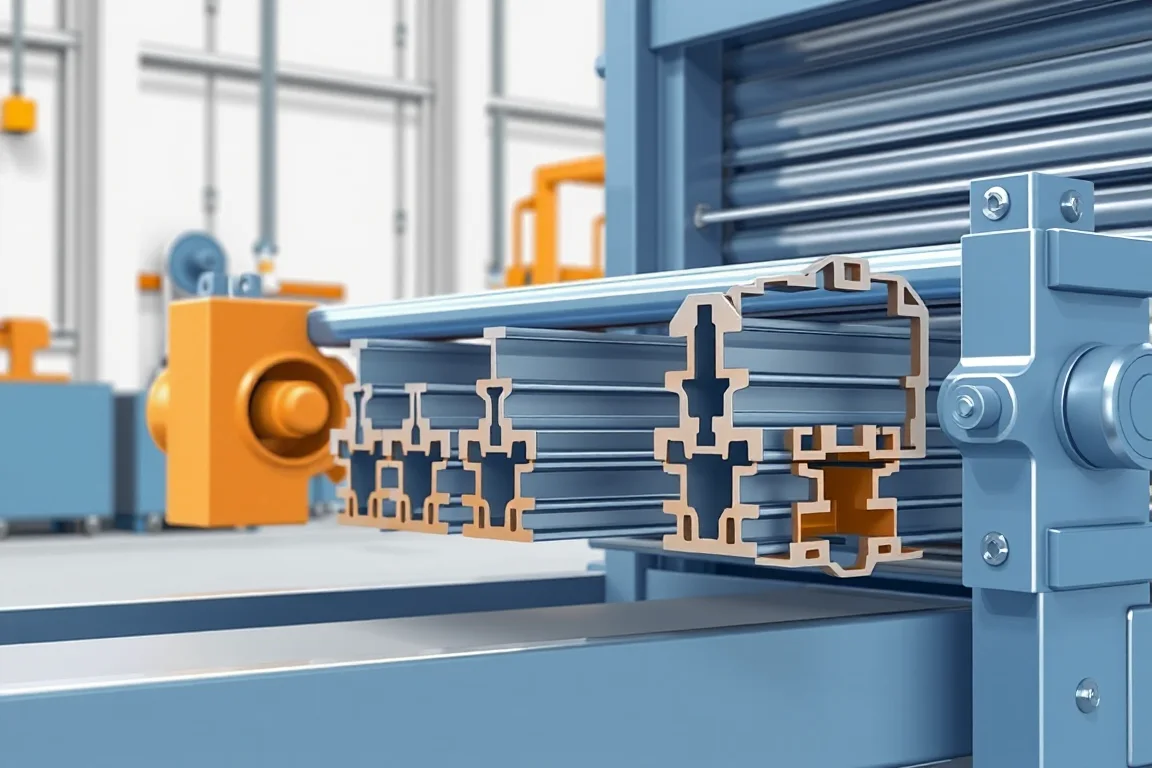
Choosing a roller shutter roll forming machine is not a matter of picking a headline speed or a familiar model number. The machine has to turn a specified coil into slats that interlock, articulate, coil and fit the intended guides without damaging the coating or distorting the edges. The decision therefore starts with the finished curtain and works backwards through the profile, the material envelope, the forming and cutoff sequence, and the equipment outside the forming line itself. This guide explains what each selection factor controls, where the trade-offs sit, and how to compare proposals without relying on unverified performance claims.
Start from the finished curtain, not the machine
A roller shutter curtain is an assembly of many identical slats. Each slat must hook into the next with enough engagement to resist wind load and normal handling, yet free enough to rotate as the curtain coils. That balance is set by the profile geometry — hook shape, face curvature and guide clearance — and it is only visible when several slats are joined. A line that produces a perfect-looking single length can still deliver a curtain that binds, opens at the interlock or rattles in the guide. Before evaluating any machine, define the slat drawing, the intended guide profile, the end-lock detail and the way the curtain will be lifted and stored. That definition drives every downstream choice.
Profile family and interlock geometry
Roller shutter slats are not one universal section. Flat-faced, curved-faced and insulated slats each require different roll passes. The interlock is the critical feature: the hook needs a controlled radius and a consistent developed length so it engages without excessive play. Roll forming a hook is more demanding than forming a simple channel because the material has to bend back on itself, and the roll sequence must support the strip through that turn. Buyers should ask how the proposed roll set develops the interlock, how the last passes control hook angle and how the tooling accommodates the intended material grade. A machine that forms a shallow hook may suit light domestic shutters but not a heavier commercial curtain.
Face curvature matters because it affects slat stiffness and how tightly the curtain coils. A deeper curve can stiffen the slat but may increase the coil diameter and change guide clearance. Perforation, if required, further alters stiffness and can distort the hook or the face if the perforating station is placed or supported poorly. These are profile decisions, not machine-brand decisions, and they should be settled on the drawing before tooling is committed.
Material envelope: coated steel and aluminum
Coated steel and aluminum behave differently in a roll forming line. Coated steel generally requires more forming force and more careful roll contact to avoid marking or cracking the coating, while aluminum tends to be softer, lighter and more prone to edge damage and galling. The machine specification should reflect the material the buyer actually intends to run, not a generic range. The base-metal thickness and grade should be stated by the buyer, and the supplier should confirm the operating range against the drawing. Insulated or foam-filled slats involve additional processing beyond simple forming, so they belong in a separate scope discussion rather than being assumed to come off a standard single-skin line.
Coating protection is part of the material decision. Rolls that contact the coated face need appropriate surface finish and clearance so the coating is not scuffed or pinched. Cut ends must be clean enough to accept end locks without distortion. A machine that runs uncoated steel acceptably may not preserve a painted or laminated surface, so the material envelope should always be described in terms of the finished surface, not just the base metal.
Forming sequence and station interfaces
A roller shutter roll forming machine typically runs forming, interlock development, optional insulation or perforation, cutoff and then curtain assembly. Each interface is a potential source of mismatch. The forming section must deliver a strip with consistent width and hook angle to the cutoff; the cutoff must support the profile so the cut does not crush the hook or leave a burr; and any secondary operation must not pull the profile out of alignment. When these stages are designed as separate items, the hand-off between them becomes the buyer's risk.
The practical question is where the line stops being a forming machine and starts being an assembly system. If slat assembly, end-lock fitting or curtain linking is done outside the quoted equipment, that work still has to be planned, staffed and matched to the line's output. Selection should therefore map the full process from coil to finished curtain, not just the forming stations.
Cutoff, cut length and end quality
Cutoff is often underestimated. The cutoff tool must be shaped to the profile so it supports the hook and face during the cut. A cutoff designed for a simpler section can deform the interlock or leave a sharp edge that interferes with end locks. Buyers should confirm the cutoff is profile-supported, ask how cut length is set and held, and establish what end quality is acceptable. If secondary operations such as notching, punching or end forming are needed, they should be identified in the quote rather than treated as an afterthought. Cut-length accuracy and repeatability matter because slat length variation shows up as a wavy or uneven curtain when many slats are assembled.
Output and the accepted-output definition
Output figures on a brochure are not the same as accepted output. Accepted output means the number of good finished pieces the line produces in a shift, running the actual profile and material, with changeovers and normal stoppages included. No verified model rating is supplied here, and buyers should not treat a nominal speed as a production promise. Instead, define accepted output per shift against the intended product mix and ask each supplier to state the assumptions behind their figure. A line that is fast on one simple slat but slow to change over may deliver less accepted output across a real order book than a more modest line with quicker setup.
Power, utilities and the equipment schedule
The buyer should state voltage, frequency and phase. Installed power cannot be confirmed from a machine description alone; it requires a confirmed equipment schedule covering the forming line, cutoff, any secondary operations and auxiliary equipment. This matters because electrical supply, compressed air, extraction and floor space all affect installation cost and feasibility. A quote that excludes these items is not directly comparable with one that includes them.
Acceptance testing that reflects the real product
A meaningful demonstration assembles multiple slats with the intended guide and end locks, then checks movement and clearances as a curtain, not as individual lengths. The interlock coating and cut ends should be inspected for damage. Buyers should agree acceptance measurements before committing to tooling, so that pass or fail is objective rather than a matter of opinion at handover. If the supplier cannot demonstrate the actual profile and material, the demonstration is indicative at best.
Acceptance should also cover changeover. Request a changeover demonstration for the intended product mix, because setup time and repeatability often determine whether a line is practical for a varied order book.
How to compare alternatives and quote scope
Quotes are difficult to compare when they cover different scopes. A practical method is to build a comparison matrix with three columns: required, included and excluded. Ask each supplier to answer against the same drawing revision and the same material envelope. Separate a confirmed capability from a proposed future option, and treat any production step that depends on equipment outside the quote as part of the comparison. If the quote excludes slat assembly, end-lock fitting, insulation or perforation, those costs and risks still belong to the buyer.
The main trade-off is between a dedicated line optimised for one slat family and a more flexible line that handles several profiles with changeover. A dedicated line can simplify tooling and setup but limits the product range; a flexible line may accept more work but demands more changeover discipline and more careful acceptance testing. Neither is universally better — the choice follows the order book and the intended product mix.
Practical selection checklist
- Confirm the slat drawing, guide profile, end-lock detail and curtain assembly method.
- State the base-metal thickness, grade and finished surface for each material to be run.
- Describe the interlock development and how hook angle is controlled.
- Check that cutoff is profile-supported and that cut length and end quality are defined.
- Identify any insulation, perforation, notching or secondary operations.
- Define accepted output per shift against the actual profile and material.
- Provide voltage, frequency and phase, and request a confirmed equipment schedule for installed power.
- Agree acceptance measurements before tooling is committed.
- Require a changeover demonstration for the intended product mix.
- Build a required / included / excluded matrix and compare quotes on the same revision.
Frequently asked questions
Can one roller shutter roll forming machine run both steel and aluminum?
It can be proposed for both, but the tooling, roll clearances and cutoff support have to suit each material. Aluminum is softer and more prone to marking and edge damage, while coated steel demands coating protection and sufficient forming force. The buyer should state both materials and confirm the operating envelope rather than assuming a single setup is optimal for both.
Why does the interlock matter more than the face shape?
The interlock is what makes the curtain work as an assembly. If the hook geometry is inconsistent, slats may open under load, bind when coiling or fail to seat in the guide. The face shape affects stiffness and coil diameter, but a well-formed face cannot compensate for a poorly developed interlock.
Is a higher output figure a reliable reason to choose a line?
Only if it is defined as accepted output on the actual profile and material, including changeovers. A nominal figure on a simple section says little about performance across a varied order book. Buyers should ask suppliers to state their assumptions and compare like for like.
What should be included in the quote beyond the forming machine?
The quote should distinguish required, included and excluded items. Typical exclusions include slat assembly, end-lock fitting, insulation, perforation, secondary operations, utilities and installation. Any production step outside the quote still has to be resourced by the buyer.
How should acceptance testing be structured?
Assemble several slats with the intended guide and end locks and check movement, clearances, interlock coating and cut ends. Agree the acceptance measurements before tooling is committed, and require a changeover demonstration for the intended product mix. Testing individual lengths alone does not prove curtain performance.
When is a standard single-skin line not enough?
Foam-filled slats and sandwich garage-door panels require insulation and joining processes beyond simple forming. These constructions need additional equipment and a different scope. If the product range includes them, confirm the insulation and joining steps separately rather than assuming the forming line covers them.
Continue your research
- Roller Shutter Door Roll Forming Machines
- Roller Shutter Slat Roll Forming Machine
- Rolling Shutter Guide Rail Roll Forming Machine
- Flat Roller Shutter Slat Roll Forming Machine
- Curved Roller Shutter Slat Roll Forming Machine
- Perforated Roller Shutter Slat Machine
- How Roller shutter roll forming machine Works
- Roller shutter roll forming machine Price: What Affects the Cost?
- Materials and Thickness for Roller shutter roll forming machine