
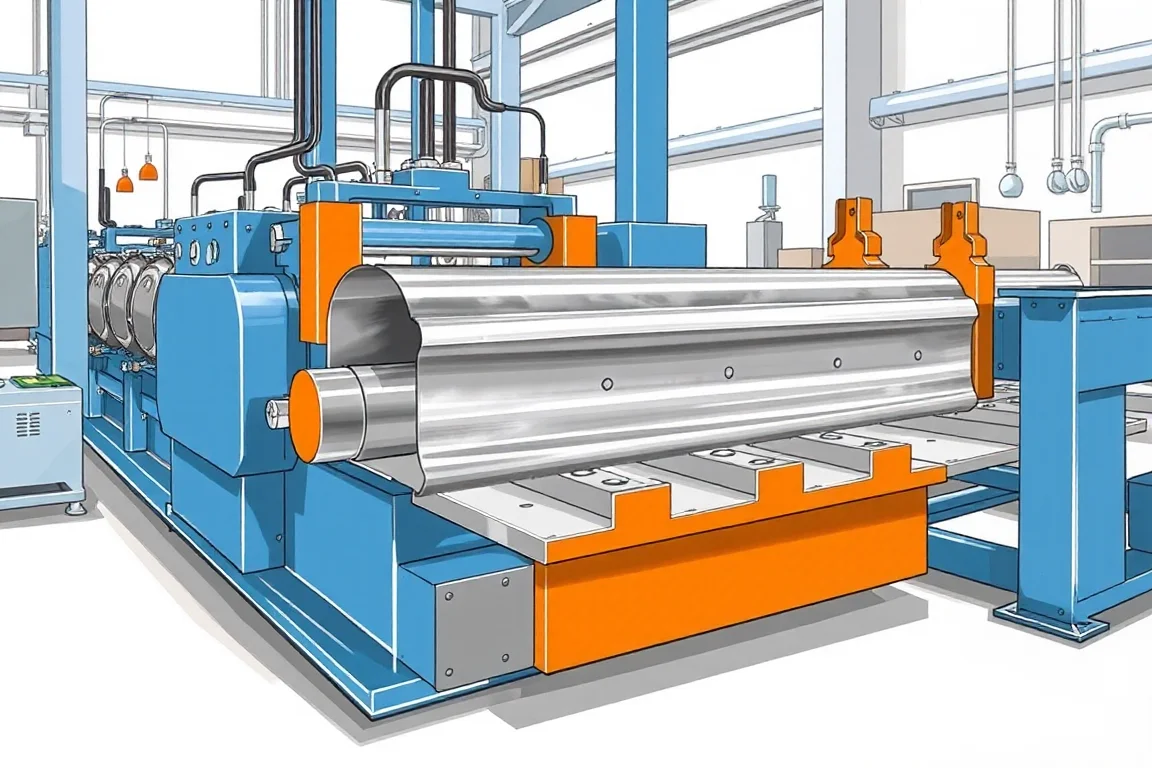
A guardrail C post roll forming machine produces the specified cold-formed C-shaped post for a defined roadside barrier system. The post is one component of that system, alongside the rail, connectors, spacers and installation arrangement. Its section, material, holes and end details must follow the approved product drawings.
The machine should not be selected by comparing only web width and thickness. Connection orientation, coating route and traceability matter as well. A correctly formed generic C channel is not automatically an interchangeable guardrail post or evidence of a barrier's crash performance.
Which C-post geometry needs to be fixed?
Show web width, flange dimensions, lips or returns, radii and the installed orientation. Include all holes and any special end shape. The drawing should identify the reference used to measure length and connection positions.
If the barrier system uses more than one post variant, maintain separate identifiers and drawings. Similar-looking posts can have different lengths, holes or orientation and should not be mixed under a generic C-post label.
How does the post connect to the barrier?
Provide the approved rail, spacer or bracket interface where it determines hole position and section orientation. Use representative mating components during manufacturing acceptance. The trial should establish that the post reproduces the required interface.
Do not substitute a convenient connector or relocate holes to make assembly easier. Those details belong to the barrier system design. Equipment selection should follow the controlled component specification.
What should the hole and end schedule contain?
- Hole or slot size, shape and orientation.
- Positions from the specified post end and section datum.
- Required unmodified zones.
- End squareness or special end geometry.
- Part identity and material traceability markings.
Check feature positions on the finished formed post. A flat-strip measurement can be useful for process setup, but the final component and its mating relationship are the acceptance reference.
How should the production route be arranged?
Coil handling and entry preparation feed the defined punching and forming operations. Progressive rolls create the C section, and the cutting arrangement produces the specified post lengths. Any downstream coating or additional fabrication must be separately identified.
Ask the supplier to explain the actual feature and cutting sequence. The position of operations affects access, end condition and cycle time. Trial production-intent features rather than approving the line from an unpunched channel.
How should material and corrosion protection be specified?
State the required steel grade, thickness and coating route from the component specification. Precoated strip and coating after fabrication are different process arrangements. The manufacturing plan must identify the correct one and the responsibilities at each stage.
Where a downstream coating process is required, review its dimensional and handling interfaces with the responsible supplier. The roll-forming trial should preserve traceability and deliver the specified pre-coating component rather than assume the coating step corrects manufacturing deviations.
What forming deviations should be inspected?
Measure web, flanges, lips, angles, straightness and twist using agreed supports. Inspect local flare or deformation near the cut ends. The C opening and connection surfaces should match the drawing without being forced into a gauge that conceals the delivered shape.
Keep material identity with the sample results. If several grades or thicknesses are required, include representative combinations in the trial. A satisfactory result in one coil does not establish an unspecified material range.
Can one line make other guardrail posts?
A U or sigma post has different geometry and may require different rolls, guides, punches and cutoff parts. Ask for an explicit product matrix rather than assuming that all open posts belong to one adjustable setup.
Demonstrate changeover through a fully featured accepted post and the intended connection fit. Include material change, inspection and startup scrap where they are part of the normal transition.
How should similar post orders stay separate?
Define a clear bundle label linking the post to its drawing revision, material batch and coating status. Posts with similar sections but different hole positions should not rely on visual recognition alone. Check the label against a representative finished member before the bundle leaves the production area.
What should acceptance and traceability include?
- Confirm the exact barrier-component drawing and revision.
- Verify material identity and coating-process scope.
- Measure section, holes, length and end geometry.
- Fit the intended rail or spacer connection.
- Inspect straightness and condition after handling.
- Verify part marking and bundle identity.
- Record accepted posts and remaining deviations.
Keep manufacturing acceptance separate from barrier-system qualification. A machine trial does not replace the applicable assessment of the complete roadside safety system.
Frequently asked questions
Can a standard C purlin be used as a guardrail post?
Not by appearance alone. The barrier system requires its specified section, material, features and installation arrangement. Any substitution belongs to the relevant product-design process.
Does the machine include galvanizing?
Only if a broader process is explicitly included. State whether the product uses precoated strip or post-fabrication coating and identify the responsible equipment and supplier.
Can hole positions be adjusted for another rail?
Only to an approved component drawing for that system. A convenient machine adjustment does not establish that the changed post is suitable for another barrier assembly.
What proves connection accuracy?
Finished-part measurements and a fit check using the specified rail, spacer or bracket. Keep the drawing revision and material identity with those results.
Does a successful trial certify crash performance?
No. It demonstrates manufacture of the defined component. Complete barrier-system performance requires its own applicable qualification and controlled installation design.
Manufacture the specified barrier component
A useful C-post line brief connects section forming to controlled holes, material, coating and identity. That creates a clear manufacturing target while keeping safety-system approval with the complete designed barrier.

Continue your research
- Guardrail & Crash Barrier Roll Forming Machines
- W Beam Guardrail Roll Forming Machine
- Thrie Beam Guardrail Roll Forming Machine
- Guardrail Sigma Post Roll Forming Machine
- Guardrail U Post Roll Forming Machine
- Guardrail Spacer Block Roll Forming Machine
- How Guardrail roll forming machine Works
- How To Choose a Guardrail roll forming machine
- Guardrail roll forming machine Price: What Affects the Cost?
Configuration & specification inputs
Match the configuration to your section drawing, material and production requirements.
| Parameter | Requirement / confirmation needed |
|---|---|
| Profile geometry | Approved barrier C-post web, flanges, returns, installed orientation and end details. |
| Material | Barrier-component steel grade and specified corrosion-protection route. |
| Thickness & grade | Drawing-controlled base-metal thickness paired with the approved grade and section. |
| Process route | Traceable coil preparation, registered features, C-post forming, cutting and defined coating handoff. |
| Cutting | Post lengths and end geometry with controlled flare and connection-hole references. |
| Output | Accepted identified posts for the stated feature, material and variant schedule. |
| Electrical supply | Utilities for post forming, punching, cutting and handling; coating separately scoped. |
| Acceptance | Controlled section, holes, ends, rail or spacer fit, straightness and bundle identity. |