
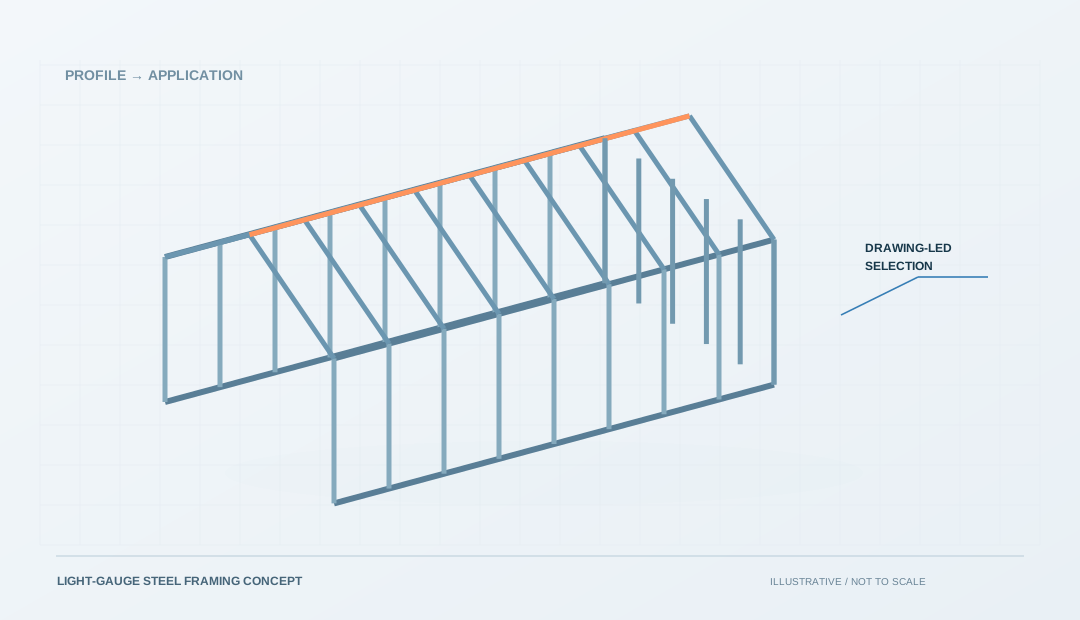
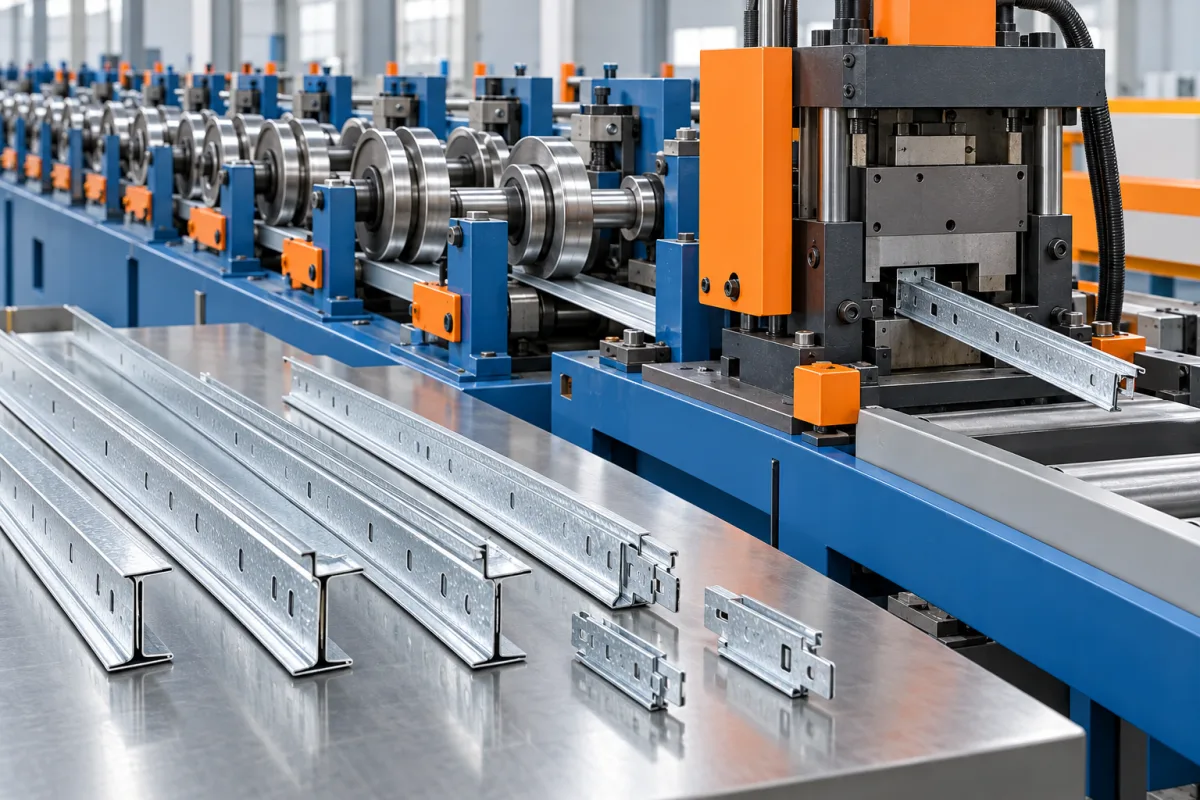
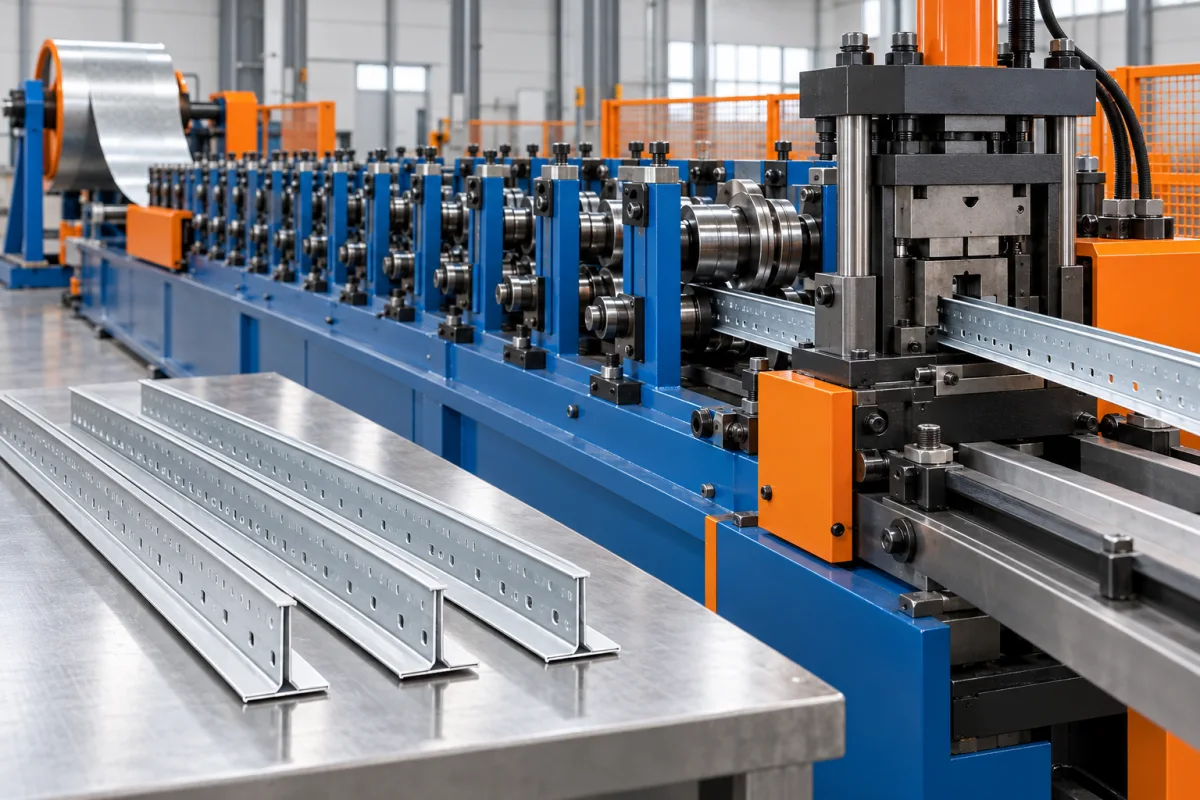
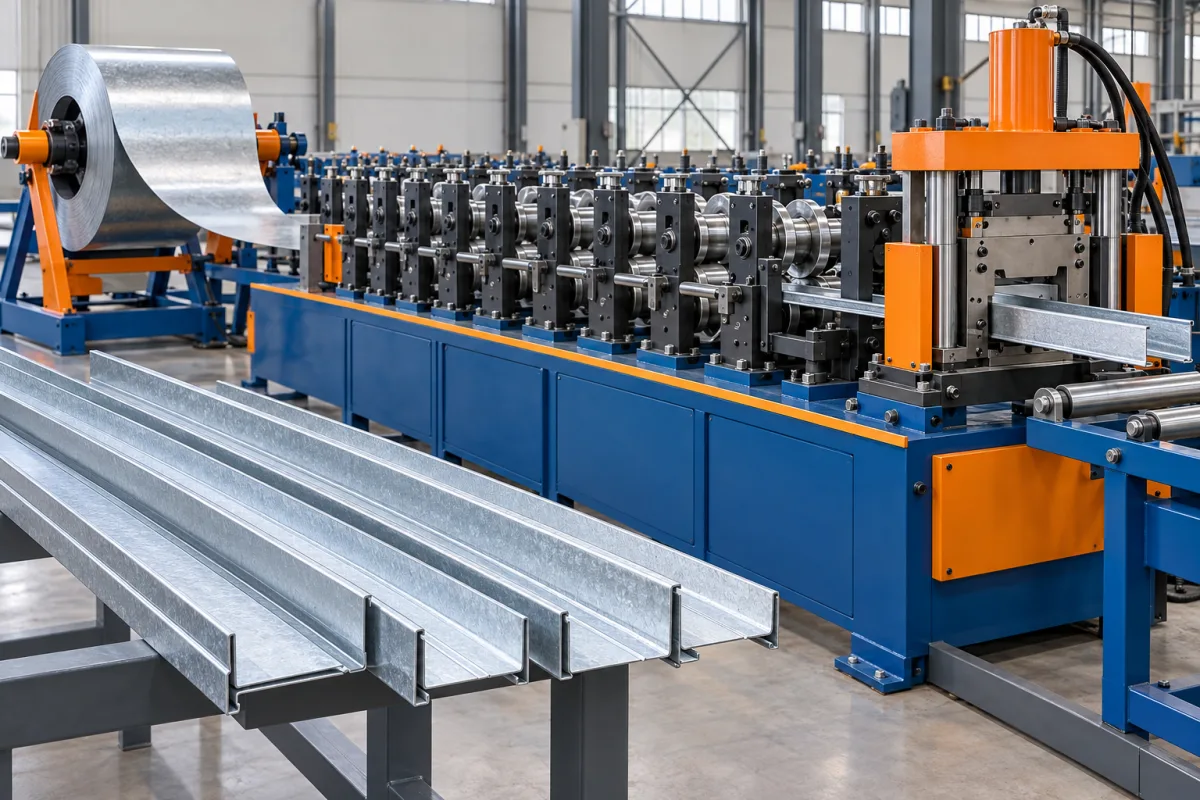
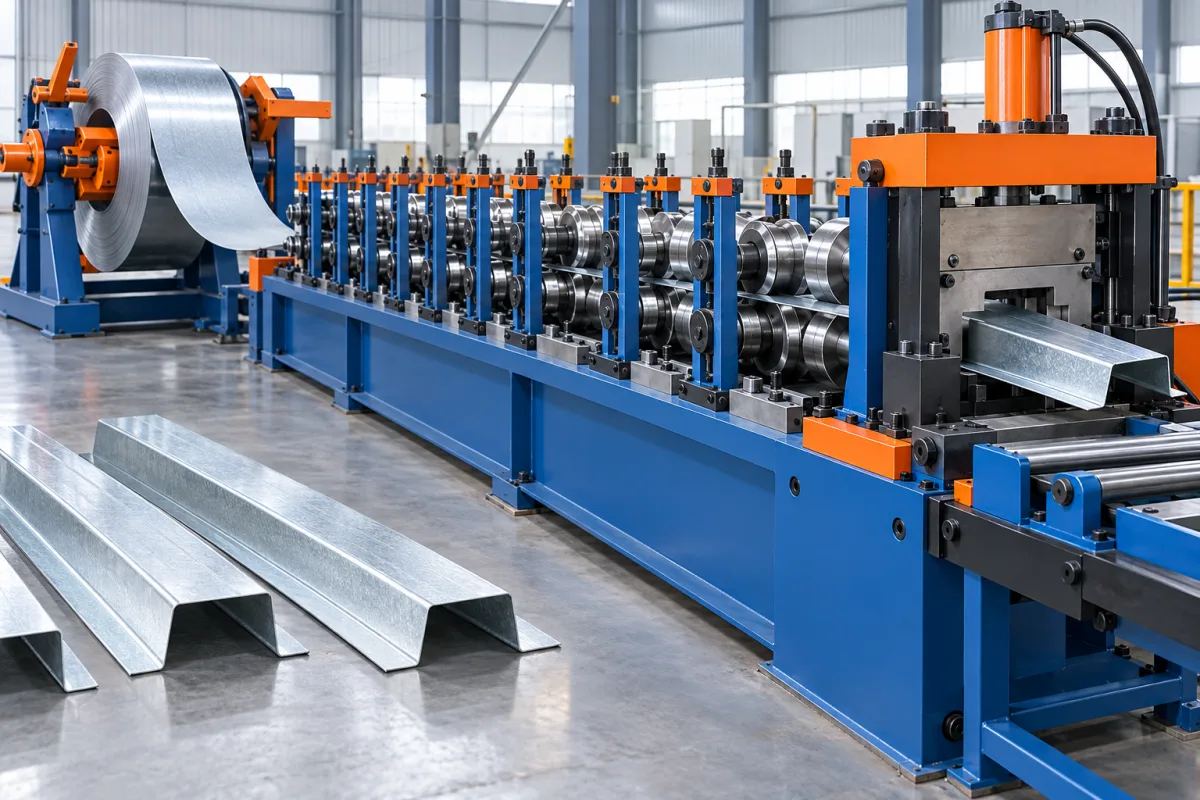
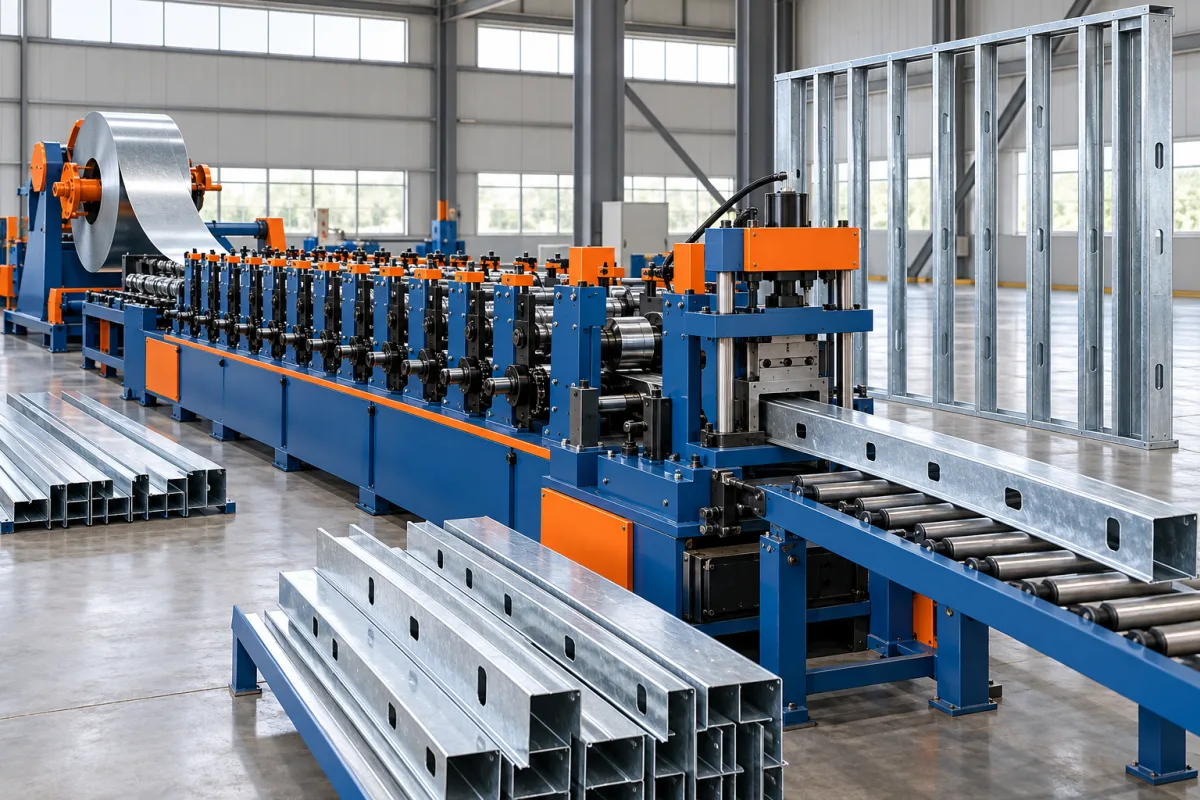
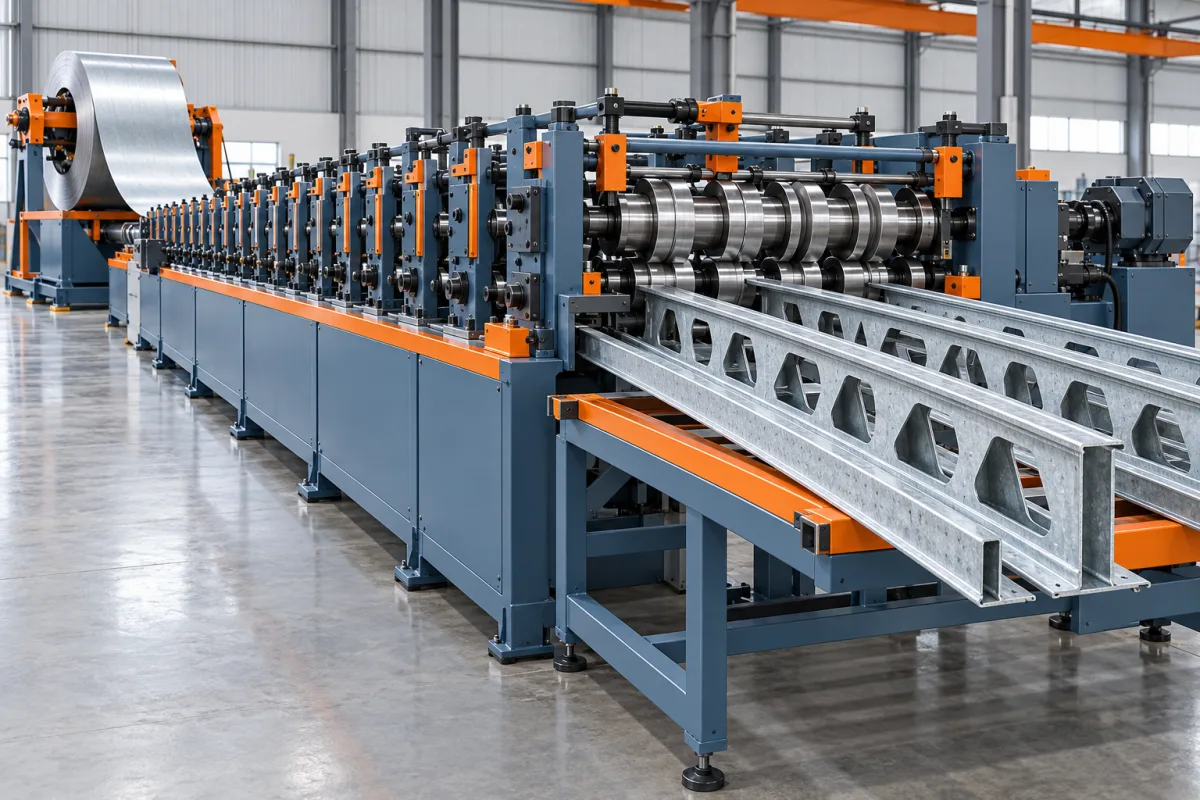
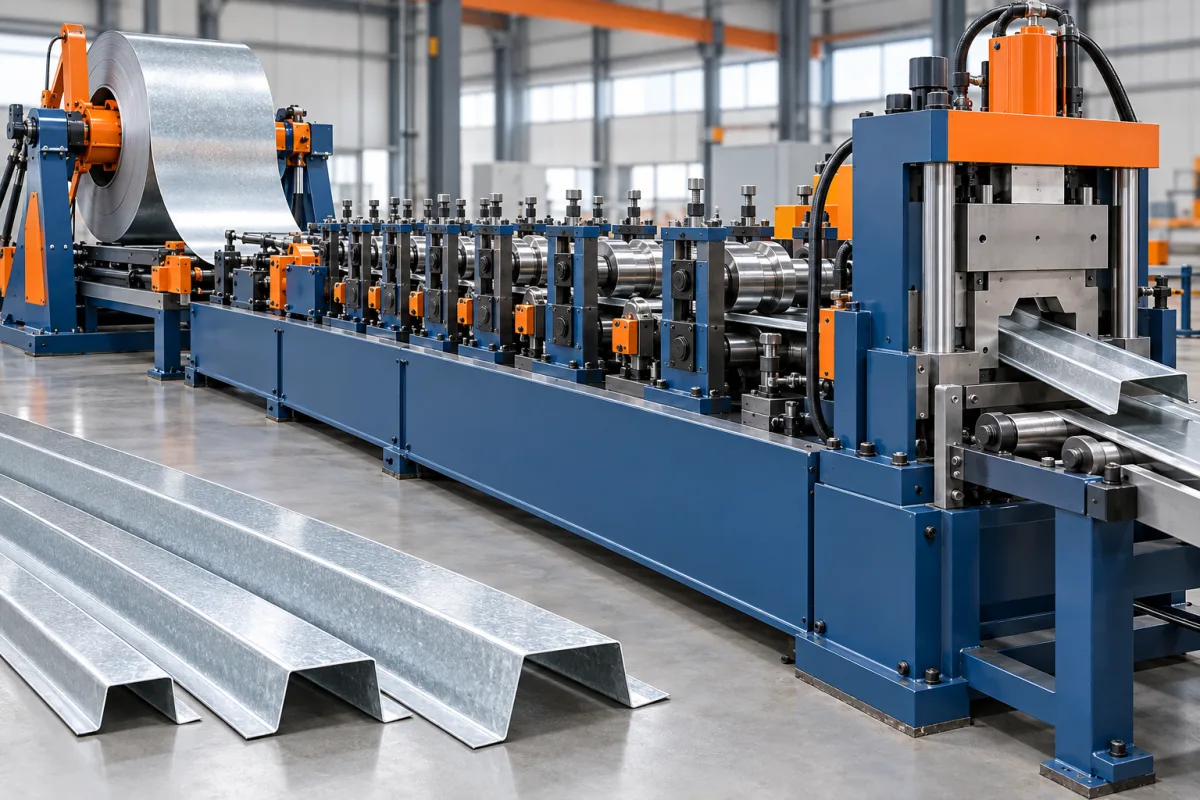
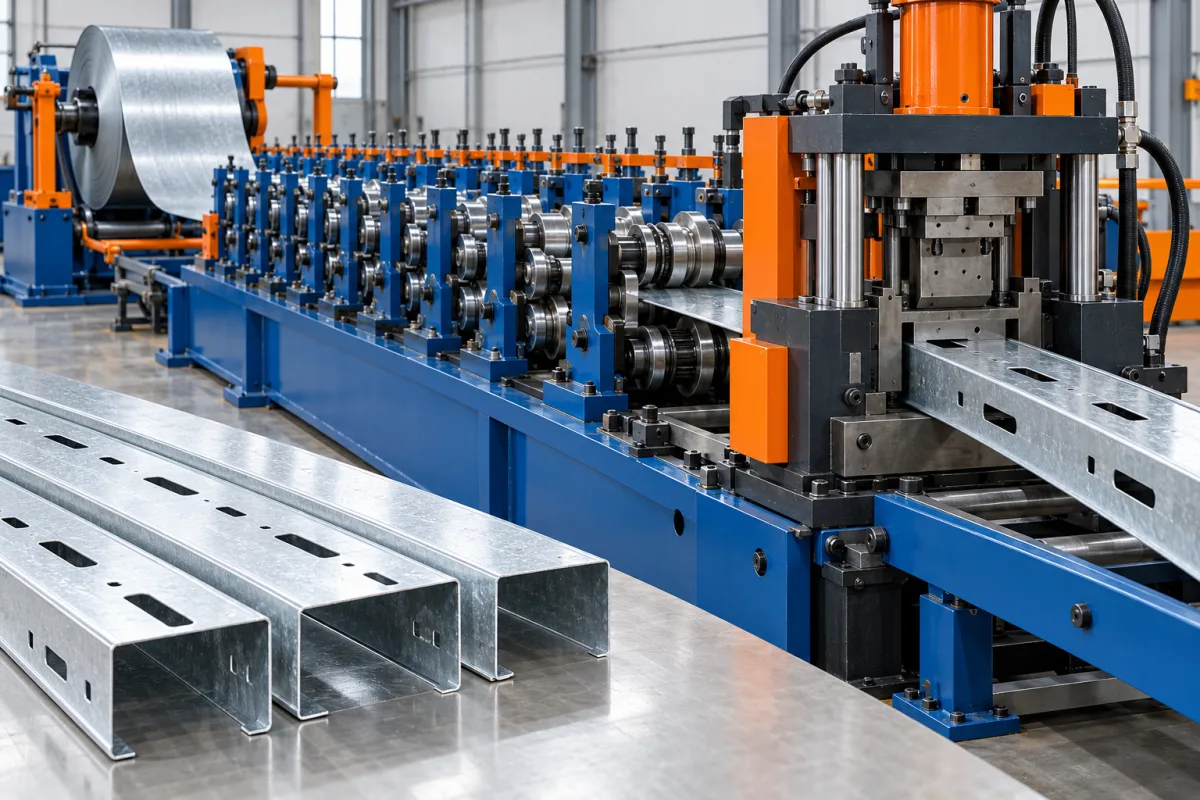
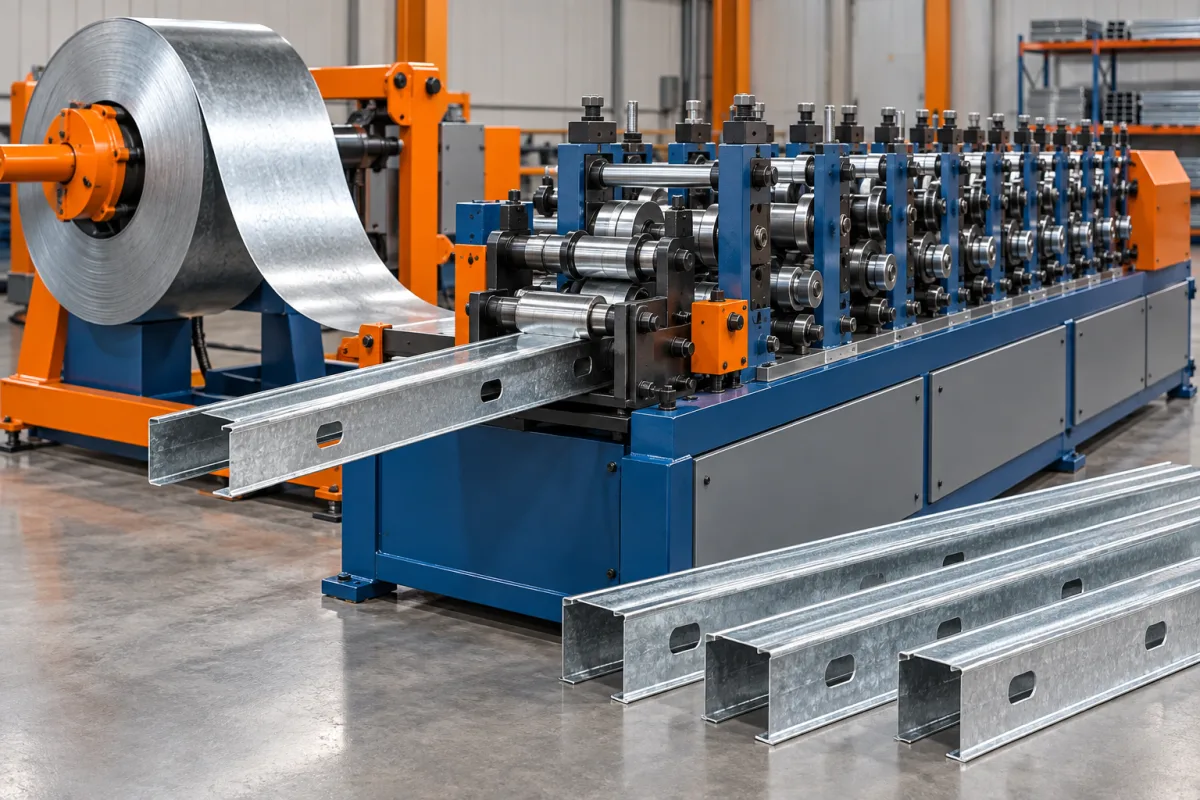
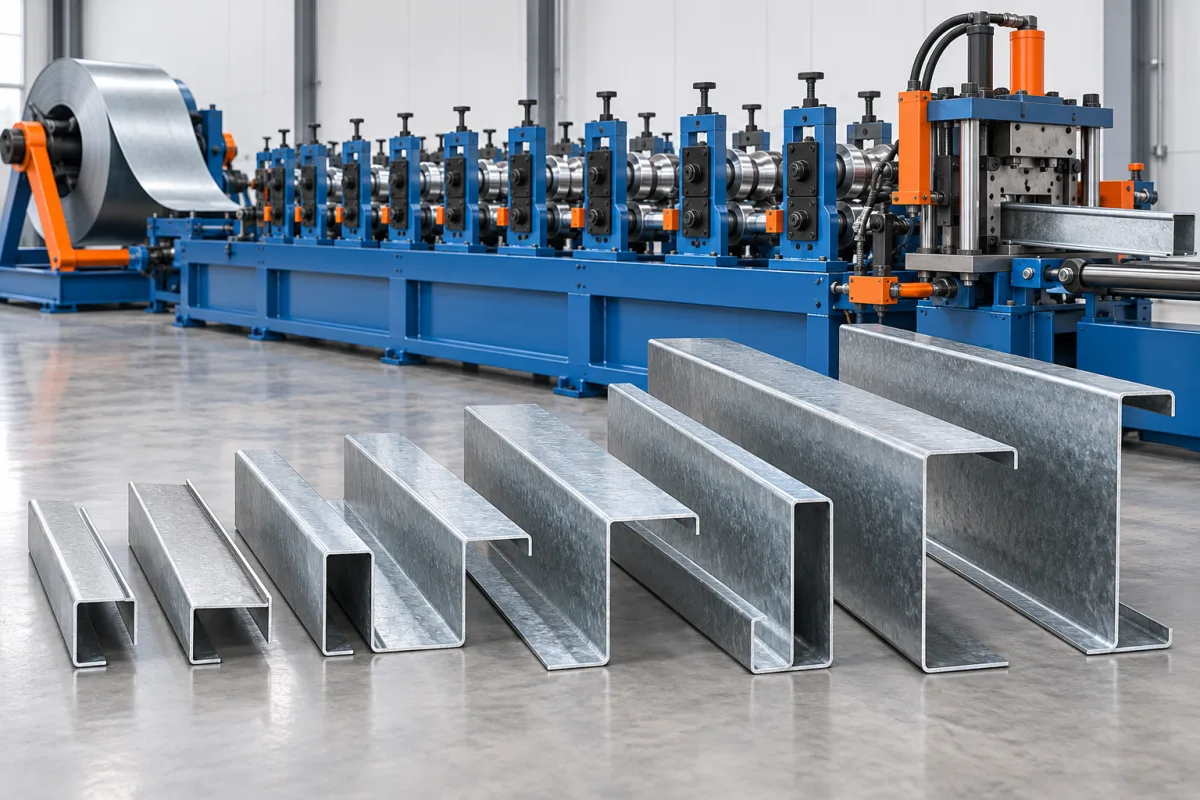
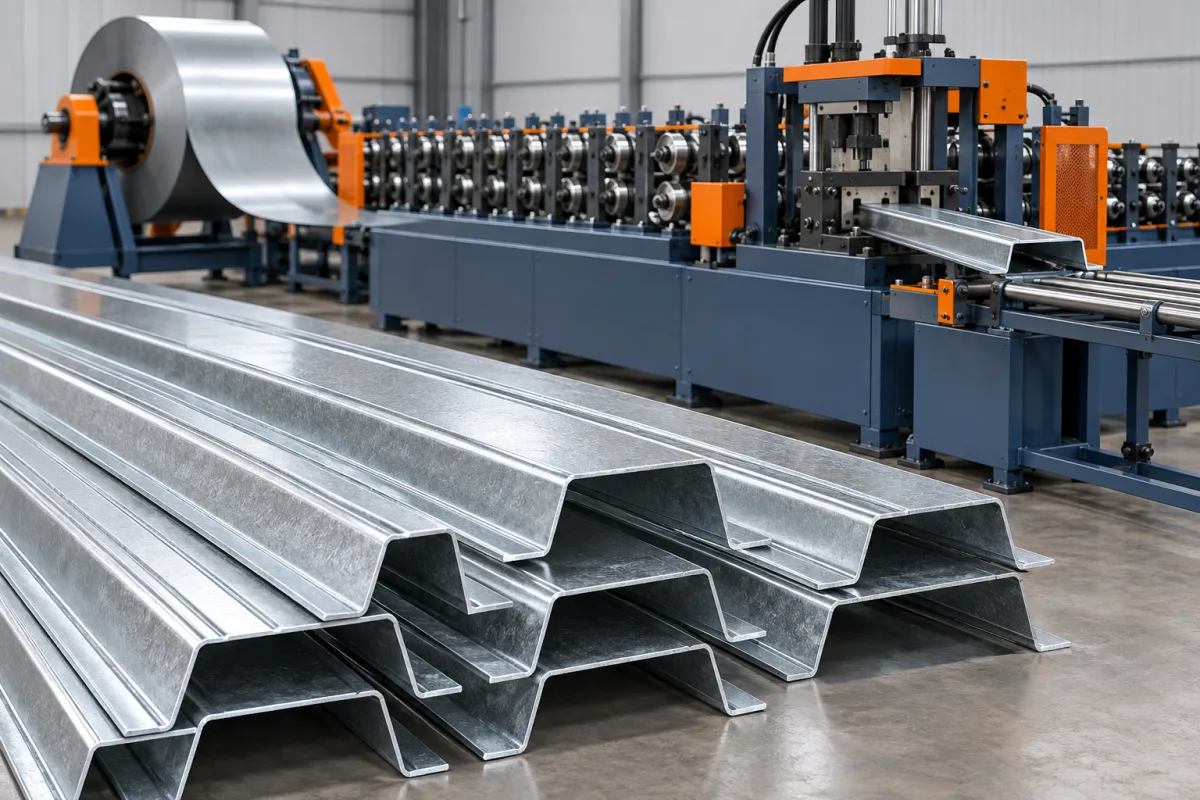
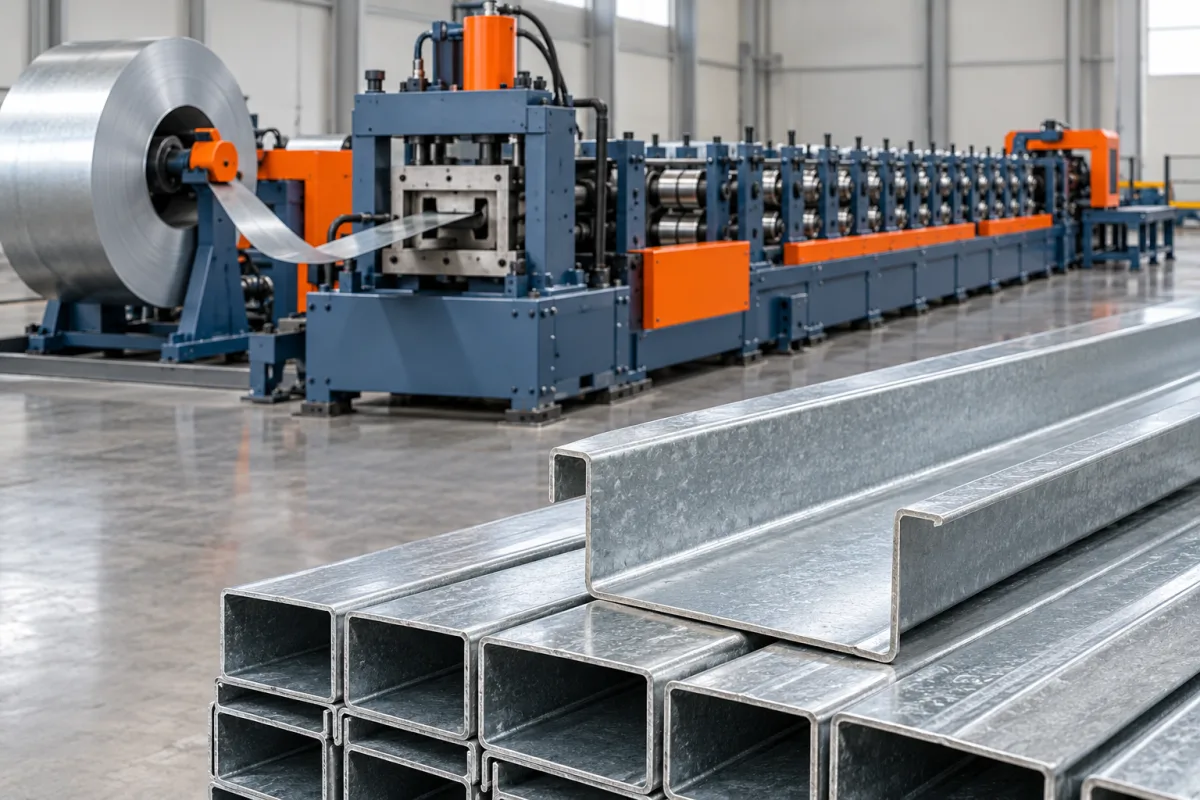
Find the production questions behind a particular profile, size family or manufacturing arrangement. Application names are a starting point: a complete drawing must still identify the geometry, mating parts, material and features that make the finished component useful.
Read profile names as a starting point
A nominal cover width, section depth or seam height does not describe every bend and interface. Compare the rib or flange pattern, returns, radii, laps and feature locations. Where a new part must match an existing system, include a reference sample or controlled mating drawing.
Distinguish shape from production method
Some applications concern a joint or finished section; others concern tapering, curving, variable sizes or rapid changeover. Identify which requirement changes the tooling and which introduces another process. This avoids assuming that a standard forming line includes a specialized downstream operation.
Pair the material with the geometry
Review the actual combinations of grade or alloy, base-metal thickness, coating and dimensions. Separate demonstrations at unrelated limits do not prove that every possible combination has been covered. A compact production matrix makes the important trial cases visible.
Use related equipment and guides together
The application pages explain the local requirements; the machine directory shows the broader equipment family. Follow with the technical guides when you need a method for comparing output, preparing an enquiry or agreeing acceptance checks.