
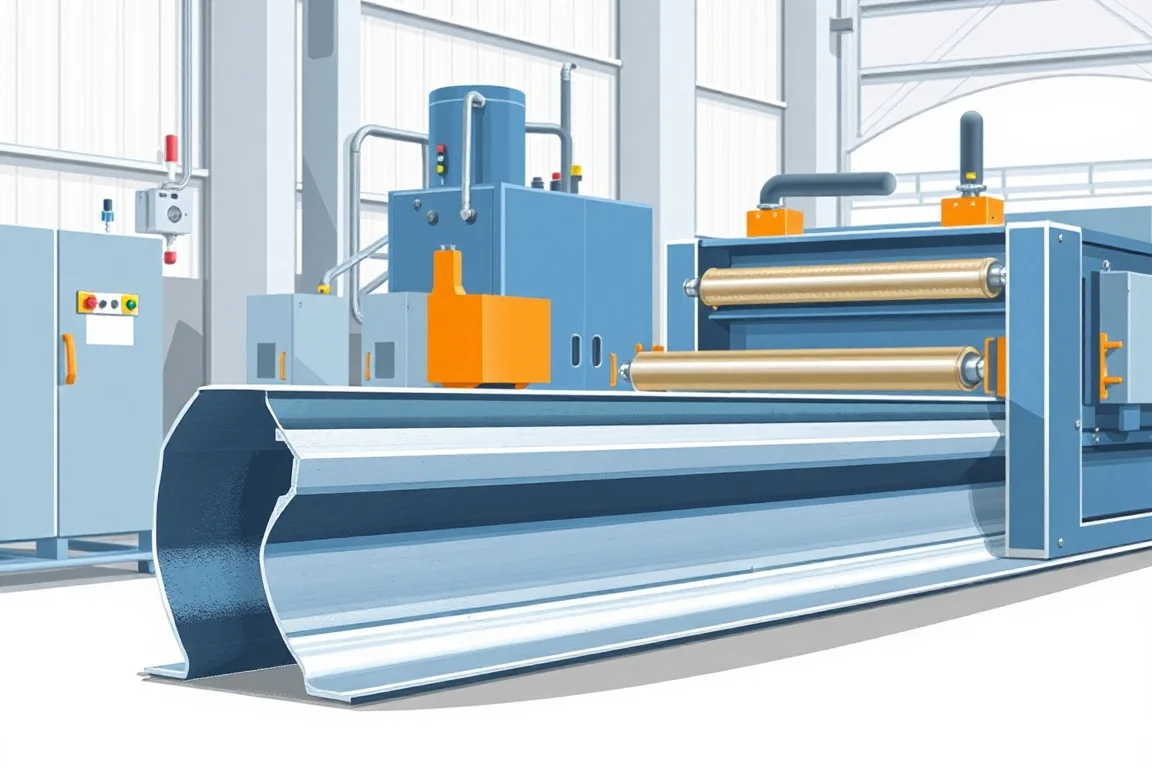
A crash barrier roll forming machine is best understood as equipment for manufacturing specified metal components of a barrier system. Depending on the project, those components may include corrugated rails or cold-formed posts, but the phrase does not describe one universal machine capable of making every part of a complete safety installation.
The purchasing task is to translate an approved component catalogue into practical production routes. Rail profiles, posts, spacers, terminals and transitions should be separated, then linked through material control, finishing, inspection and delivery planning. This approach makes equipment scope and missing operations much easier to understand.
What does the project mean by crash barrier?
Clarify whether the intended products belong to a roadside vehicle-restraint system, an industrial protection arrangement or another defined application. Similar commercial language can refer to different components and performance requirements. The machinery enquiry should use the actual drawings and intended product family.
For roadside systems, the rail is only one part of the arrangement. Posts, connections, end treatments and installation details contribute to the approved system. A roll-forming proposal should focus on manufacturing the specified parts rather than implying that any produced profile carries a universal crash rating.
How should the component catalogue be divided?
Create separate groups for corrugated rails, open-section posts and other fabricated or formed parts. Identify which components can share equipment and which need distinct processes. A W beam and a sigma post are both steel profiles, but they have different geometries, feature patterns and handling requirements.
- Rails: section, length, splice details and attachment features.
- Posts: profile, end condition and connection datums.
- Spacers and connectors: their own forming, punching or fabrication route.
- Special components: terminals, transitions and shaped pieces defined individually.
- Finishing: coating and any required final component operations.
- Verification: manufacturing inspection and separately assigned system qualification.
This catalogue prevents an attractive beam-machine quotation from being mistaken for a complete barrier-manufacturing factory.
Which documents should control equipment selection?
Use controlled component drawings, material specifications, feature schedules and finishing requirements. Include assembly references for splices and attachments. Identify the revision of each document so tooling is not developed from an obsolete sample or an informal sketch.
Provide a realistic demand mix: quantities by component, lengths, materials and frequency of changes. This information helps determine whether shared equipment, dedicated routes or purchased subcomponents are practical. A total annual steel tonnage alone does not reveal the workload at each operation.
Where product qualification or external approval is required, assign that work explicitly. The machine supplier's manufacturing capability and the barrier system's performance evidence are related project considerations, but they are not interchangeable deliverables.
What does a rail production route include?
A typical component route coordinates coil handling, entry preparation, punching, progressive forming, cutting and collection. The exact order depends on the profile and equipment design. The final rail must meet its section, feature and end requirements after all included operations.
For a line covering more than one corrugated profile, identify the tools and settings used by each. Include feature dies, guides, cutoff components and discharge supports in the transition. A change in the main roll set does not complete a product change if the hole pattern or cutting support remains wrong.
Demonstrate an accepted rail with its intended splice components. This checks the combined effect of section, end and hole geometry while dimensional inspection establishes where any deviation originates.
How should post and accessory production be planned?
Posts need their own profile and feature review. Open channels, lipped sections and offset posts can require different tool sets. End treatments, base plates or other fabricated details should be included only where the component drawing calls for them.
Spacers, brackets and connectors may be better served by dedicated punching, bending or other operations. Evaluate the actual shape and order volume rather than assuming roll forming is the right process for every small component.
Special terminals and transitions deserve separate scope. Their geometry and manufacturing route can differ from the repeating straight rail. Leaving them under an unspecified accessories heading makes both cost and completion responsibility unclear.
How should material traceability work across the factory?
Connect incoming material identity to the component order and retained inspection records. Similar-looking parts can use different grades or thicknesses, so appearance alone is not a reliable way to distinguish them. Labels and physical separation should support the same information.
Specify the material envelope for each production route as actual combinations of grade, thickness, width and surface condition. Do not combine independent maxima into an assumed capability. Trial the combinations that represent normal and demanding production.
Preserve identification through finishing and subcontracted operations. A factory can lose useful traceability if bundles leave for coating with only an informal description and return mixed with another component batch.
Where should coating and final inspection sit?
Follow the coating route required by the component specification. Define which parts arrive coated and which are finished after fabrication. The layout and commercial scope should show transport, storage, inspection and any subcontracted stages.
Use intermediate checks to prevent defective parts from advancing, but retain the required final inspection after all relevant operations. Geometry or surface condition can change during handling and processing. An accepted raw formed part is not automatically an accepted finished barrier component.
Record responsibilities for coating verification and disposition of nonconforming parts. These should be operationally clear, even when the wider business prefers simple software and minimal administrative steps.
How can line balance be evaluated?
Convert the product forecast into work at each route: rails, posts, accessories, finishing and inspection. One fast rail former cannot compensate for a shortage of posts or an overloaded coating stage. Useful output is the set of accepted components needed to fulfil an order.
For planning only, an order requiring 400 rails, 600 posts and specified connection parts remains incomplete if only the rails are finished. The component quantities come from the selected system and order, not a universal ratio. Use the actual bill of materials to compare production plans.
Include changeovers, coil replacement, rejected parts and bundle movement in the schedule. The stage that constrains delivery may change between a large repeat order and a short mixed order.
What should a multi-product changeover prove?
Choose representative transitions from the intended catalogue. For each, list tools, guides, controls, cutting components and inspection references. Measure the time to the first accepted part, not just the time required to move or exchange one tool assembly.
Return to the original configuration and verify its recovery. This checks whether the production team can repeat an accepted setup after other work. Retain clear setup records and reference parts for every route.
If simultaneous production is claimed, confirm the actual shared resources. Separate forming paths may still depend on one payoff, punching unit or discharge area. A layout should show what can run concurrently and what must be scheduled sequentially.
What belongs in the investment comparison?
Separate common infrastructure, product-specific machines, tooling, finishing and verification. Include coil loading, material storage, lifting, utilities, inspection aids, training and commissioning. List purchased components that remain outside the factory's scope.
Compare suppliers against the same component catalogue and demand assumptions. A quote for one rail profile is not equivalent to a coordinated package for rails, posts and accessories. Clear boundaries are more useful than an impressive but undefined complete-plant label.
Future expansion should have explicit assumptions. Identify which new components fit existing equipment with tools and which require another process. That makes expansion planning practical without promising universal capability.
What should project acceptance deliver?
- Approved component and material matrices.
- Representative parts from every included production route.
- Section, feature, length and end-condition measurements.
- Controlled splice and attachment fit checks.
- Required changeover and repeat-production demonstrations.
- Final handling, identification and finishing records.
- Accepted component sets for a representative order, with unresolved items listed.
The result should demonstrate a working manufacturing flow. System-level crash qualification and project installation approval remain separately assigned activities, not implied consequences of the machines producing recognizable shapes.
Frequently asked questions
Does one crash-barrier machine make the whole system?
Usually the project requires several defined routes or purchased components. Rails, posts and special fittings have different geometry and operations. Ask for an itemized component-to-equipment map rather than assuming one former covers everything.
Can a line produce both W and thrie beams?
A configured arrangement can, but the tools, feature patterns and changeover process must be specified. Demonstrate each required product and the recovery between them with the actual material.
Are barrier posts an optional rail-machine tool?
Not inherently. Post profiles need a separate engineering review and may require another line. Their compatibility with a rail machine cannot be assumed from the shared use of steel coil.
Does machine acceptance certify crash performance?
No. It verifies manufacture of specified components. The complete barrier's performance depends on its defined system, materials, connections and required qualification evidence. Keep those responsibilities distinct.
How should factory capacity be stated?
Use accepted component sets or completed orders for a stated product mix. An isolated rail speed omits posts, accessories, finishing and inspection, any of which may constrain deliveries.
What is the first planning document?
Create a component catalogue with drawings, materials, quantities, finishing and inspection requirements. Map each item to a production route or supplier. That document provides the clearest basis for selecting and balancing the equipment.

Continue your research
- Guardrail & Crash Barrier Roll Forming Machines
- W Beam Guardrail Roll Forming Machine
- Thrie Beam Guardrail Roll Forming Machine
- Guardrail C Post Roll Forming Machine
- Guardrail Sigma Post Roll Forming Machine
- Guardrail U Post Roll Forming Machine
- How Guardrail roll forming machine Works
- How To Choose a Guardrail roll forming machine
- Guardrail roll forming machine Price: What Affects the Cost?
Configuration & specification inputs
Match the configuration to your section drawing, material and production requirements.
| Parameter | Requirement / confirmation needed |
|---|---|
| Profile geometry | Defined catalogue of rails, posts, spacers and separately scoped special components |
| Material | Component-specific specifications with linked incoming and finished-part records |
| Thickness & grade | Approve the material envelope separately for each production route |
| Process route | Component-specific forming and features, secondary work, finishing, inspection and order grouping |
| Cutting | Define length and end operations by component rather than a universal cutoff scope |
| Output | Accepted component sets for a stated barrier order and manufacturing mix |
| Electrical supply | Develop site utilities from all included routes and shared infrastructure |
| Acceptance | Verify representative parts, splice and attachment fit, route changes and complete identified order sets |