
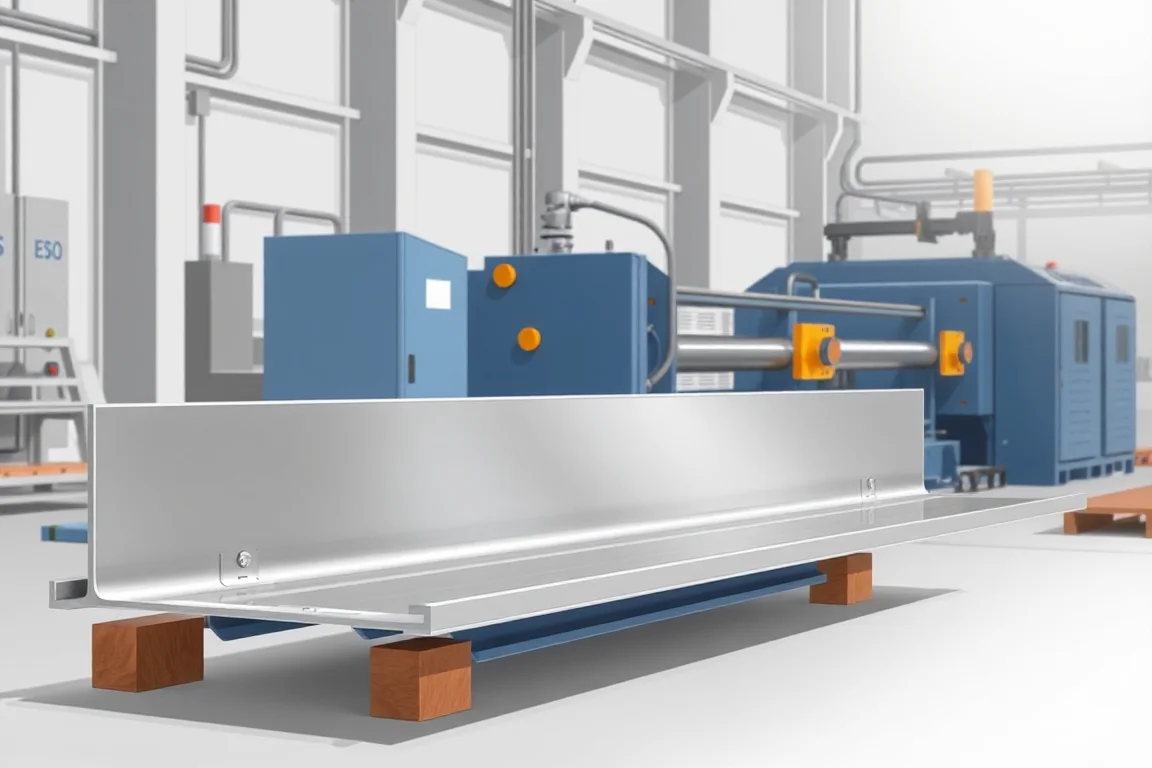
A shelf panel roll forming machine produces the shaped metal surfaces used as shelves or decking within a specified storage system. The panel may include longitudinal flanges, returns, stiffening details and end features that allow it to sit on beams or connect to other supports. Those interfaces define the manufacturing task more precisely than panel width alone.
The equipment should be selected around the complete shelf construction. A one-piece formed panel, a panel with separately attached stiffeners and a perforated deck can require different operations. The project needs to state which finished product leaves the line and which work remains elsewhere.
What shelf construction is intended?
Begin with the cross-section and plan view of the finished shelf. Identify the usable surface, longitudinal edge forms and end relationship to the supporting rack or cabinet. If the product includes reinforcement or attached components, show them in the assembly drawing.
Separate shelf panels from beams and uprights. They may belong to the same storage catalogue, but their material, tooling and handling requirements differ. A shared application does not make one machine a complete shelving factory.
Which dimensions and features should be controlled?
- Usable surface width and finished panel length.
- Longitudinal flanges, hems, returns and stiffening geometry.
- End folds, notches or support interfaces.
- Perforations or fixing features where required.
- Material, thickness and surface finish.
- Separate stiffeners or other attached parts.
Distinguish internal, external and effective dimensions. A panel's overall width can include returns or overlaps that do not form part of its usable shelf surface. Use the drawing's intended references rather than a catalogue label.
What can roll forming produce directly?
Roll forming is suited to the repeated longitudinal profile. Features across the ends, local notches or attached stiffeners may need punching, bending or joining operations in addition to the main forming passes. The proposal should explain how the complete panel is made.
Where a line integrates end forming, identify the required blank or feature preparation and the supported size range. A machine that forms two long edges does not automatically produce a four-sided tray-like shelf with all end details complete.
Review the construction before choosing automation. A simple product with a separate end operation may suit one production volume, while an integrated route may suit another. Compare complete accepted panels rather than isolated forming stages.
How does the production sequence work?
- Confirm the released shelf configuration and material.
- Prepare the strip or blank and produce required holes and notches.
- Develop the longitudinal edges and specified stiffening features.
- Cut or complete the required length and end operations.
- Attach reinforcement where included in the design.
- Inspect surface, dimensions and support fit.
- Identify and pack accepted panels.
The exact order depends on the equipment and product. Ask the supplier to show how end preparation and longitudinal forming remain coordinated when width or length changes.
How should material and surface condition be specified?
List grade, thickness, width and finish for each shelf family. The material affects forming response and the visible shelf surface, while coating or later finishing can influence appearance and fit. Use the actual production material in trials.
Inspect broad surfaces and bends separately. Scratches, local dents, visible waviness and coating damage are different observations and may originate at different stages. Agree support and viewing conditions before deciding whether a panel meets the appearance requirement.
Retain material identity with accepted samples. If a later batch shows a changed surface or edge condition, compare incoming stock, forming and handling instead of assuming that every visible issue is a roll-tool fault.
What changes when panel width changes?
A width-adjustable arrangement may reposition the edge-forming paths while retaining their shape. That does not necessarily change flange depth, hem geometry or end construction. Request a matrix showing which dimensions adjust and which require tools.
Coordinate width with input material, perforation layout, notches and end-forming settings. A wider shelf can require more than moving the side tools. Demonstrate the complete transition through to a finished panel that fits its intended support.
For length changes, verify end references and any reinforcement positions. A correct cut length does not guarantee that all local features moved to the right place.
How should reinforcement be included?
If the design uses separate stiffeners, identify their profile, length, location and joining method. They may require another former, cutting process or purchased component. The shelf-panel line should not be credited with reinforcement manufacture unless it is actually included.
Inspect the panel before and after attachment. Joining can affect flatness, appearance and dimensions, so a satisfactory unreinforced sheet is not the final acceptance result. Use the approved process and the relevant inspection plan.
Do not infer shelf capacity simply from the presence of a rib or stiffener. The completed shelf and support arrangement require their applicable engineering verification. Manufacturing checks should establish conformity to that selected design.
What should a support-fit trial show?
Place production-intent shelves on their specified beams, brackets or cabinet supports. Check seating, clearance and the relationship between adjacent panels where several form one deck. Inspect the intended retention or fixing details without improvised alteration.
Measure the individual panel as well as the assembly. A shelf that rocks or does not seat may have an edge error, an end-detail error or an incorrect support component. Separating those causes is more useful than bending the panel until one sample fits.
Include representative short and long panels. End and support behavior can differ across the length range, and a small sample may not reveal handling or alignment problems.
How should perforated shelves be reviewed?
Specify the complete hole or slot pattern and its relationship to folds and ends. Perforation can alter the material presented to the forming process, so a trial on plain stock is not a complete demonstration of the perforated product.
Inspect burrs, local distortion and finished feature positions. Keep any required clear zones at bends or support surfaces tied to the product drawing. A visually regular pattern is not enough if it conflicts with the final edge or attachment geometry.
What should handling and packing prevent?
Support the broad shelf surface and protect visible edges during collection. Define nesting orientation, separators where needed and stack size. Excessive packing force or poorly placed supports can damage panels after they have passed dimensional inspection.
Labels should distinguish size, material, finish and support-system reference. Similar panels can have different end returns or reinforcement, so visual similarity is not a reliable sorting method. Keep setup pieces and rejects outside accepted stacks.
Inspect normal packed output after movement. The saleable product is the delivered panel, not merely the shape that left the final forming stand.
How should output and investment be compared?
Use accepted complete shelves for a representative size and feature mix. End work, reinforcement attachment, finishing and packing can each constrain the route. A high edge-forming speed does not establish the finished-panel rate.
For planning only, 200 shelving units requiring five panels each need 1,000 accepted panels of the correct type. That count does not define shelf capacity or the rest of the unit's components; it illustrates how panel demand connects to finished-product planning.
Compare quotations for the same end operations, reinforcement, perforation and handling scope. Identify inspection aids, tool changes and future panel variants separately so different levels of integration remain understandable.
What should acceptance cover?
- Usable dimensions and complete edge geometry.
- End folds, notches and support interfaces.
- Perforation and reinforcement details where included.
- Surface condition and final alignment after joining.
- Fit with intended supports and neighboring panels.
- Required size changes and repeatable recovery.
- Packed condition, identification and accepted output.
Retain the drawings, settings and support reference used in the trial. They provide a practical baseline for later orders and quality investigations.
Frequently asked questions
Does roll forming make all four shelf edges?
The main process develops the longitudinal section. End folds or other local details need a defined additional operation, which may be integrated or separate. Confirm the complete finished-panel route.
Can one line make several shelf widths?
A configured adjustable line may do so while retaining selected edge geometry. Changes in flange depth, hems or end details can require tools. Review the complete size matrix and demonstrate finished panels.
Are reinforcement channels included?
Only if their manufacture and attachment are explicitly scoped. Separate stiffeners need their own drawings, production route and joining checks. A panel former alone does not complete that assembly.
Why inspect shelves on their supports?
The interface combines panel edges, ends and support geometry. Individual dimensions remain necessary, but a controlled fit trial reveals whether those components seat as intended without alteration.
Does a formed rib establish shelf capacity?
No. Capacity depends on the complete shelf and support design with its relevant evidence. Machine acceptance checks manufacture of the specified product rather than assigning a load rating from appearance.
What should an enquiry include?
Provide section and end drawings, material, finish, size range, perforations, reinforcement and support references. Add order quantities and packing requirements. This defines a complete shelf-panel production scope.

Continue your research
- Storage Rack & Shelving Roll Forming Machines
- Rack Upright Roll Forming Machine
- Pallet Rack Beam Roll Forming Machine
- Teardrop Rack Upright Roll Forming Machine
- Pallet Rack Box Beam Roll Forming Machine
- Pallet Rack Step Beam Roll Forming Machine
- How Storage rack roll forming machine Works
- How To Choose a Storage rack roll forming machine
- Storage rack roll forming machine Price: What Affects the Cost?
Configuration & specification inputs
Match the configuration to your section drawing, material and production requirements.
| Parameter | Requirement / confirmation needed |
|---|---|
| Profile geometry | Shelf surface, longitudinal returns, end features and support references |
| Material | Specified panel grade, thickness and actual visible-surface finish |
| Thickness & grade | Approve material and panel-size combinations with any reinforcement design |
| Process route | Features and preparation, edge forming, end operations, reinforcement where required and packing |
| Cutting | Preserve end-support geometry and feature references across length changes |
| Output | Accepted complete shelves including end work, joining and surface inspection |
| Electrical supply | Confirm utilities for forming, end operations, reinforcement attachment and collection |
| Acceptance | Measure edges and ends, check reinforcement and surface, fit intended supports and inspect packed panels |